FT Wine Investment – mature wines and more

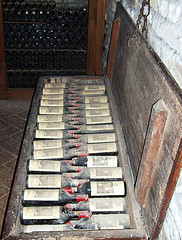
old wineA special section on Wine Investment hits newsstands in today’s Financial Times and the enlightened folks on the other side of the pond have put the full contents online. Huzzah!

Even if you aren’t that into wine as an investment, the section offers a lot of bang for the free buck. The lead article by Jancis Robinson is about Hong Kong as an emerging center for wine (as we discussed here with a focus on riesling) and I’d like to return later to some of the other issues raised in other pieces. For now, I thought the round-table with three American collectors, including the “Big Boy,” Rob Rosania (his Salon 1996 strategy we also already discussed), provided a quick observation worth noting.

Older vintages are woefully undervalued is one sentiment that the collectors bring up. I have felt the same way since I bought a beautifully mature 1971 Giacomo Conterno Barolo last year for $300, which is a mere fraction of other collectible wines upon release today.

Raymund Tuppatcsh, one of the collectors in the roundtable, says that’s going to change soon. “I think you are going to see a correction to the upside like you’ve never seen – a tripling or quadrupling of prices over the next 18-24 months.” Yikes. Time to buy more wines from our birth years now?

(image)

The neglected wine pairing: food writing

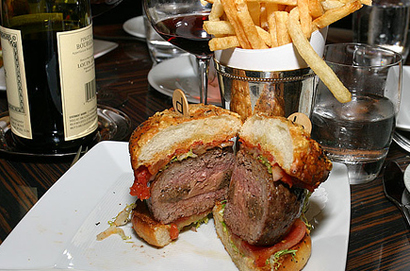
db burger
Why does so much food writing neglect wine? A lot of restaurant reviewers gladly discuss the decor but don’t discuss the wine program even though wine can easily account for a third or more of the diners’ final bill. Most food blogs don’t look to include a discussion about wine either even when they are writing for home cooks who can escape the exorbitant mark-ups of wine in restaurants. Many wine blogs, by contrast, have shifted the discussion about wine away from simply tasting notes of berries and leather and the concomitant scores to talk about pairing food and wine. Why no wine love from the foodies?

I put the question to Ed Levine who runs the food juggernaut SeriousEats.com. Ed is friends with such wine luminaries as Josh Wesson of Best Cellars and Daniel Johnnes of Daniel Boulud’s restaurants who have poured him many great wines, trying to convert him to wine’s pleasures. To no avail. With good humor, Ed told me “I’ve never had a wine that takes food to the next level. I’ve never had a wine that impresses me like a great hamburger.” He also cited cutting wine as a good way to cut calories.

While Ed just doesn’t like wine, which is fair enough, he suggested that other food writers might be intimidated by it. That may be true since there are a lot of details about wine, from the producer name, to the vintage, to the grapes and where they were grown. But that shouldn’t stop an thumbs up or thumbs down for a certain wine and why it did or didn’t work with a certain dish. A lot of food writers are all too happy to have an opinion about a hamburger and if they don’t like it, then it’s a bad hamburger. By contrast, if they don’t like a wine, I fear they think it reflects badly on them as if they should know more about it. That’s too bad.

At least food writers aren’t alone: wine is woefully underrepresented in food TV shows, and, as we’ve discussed before, it’s not likely to change on the Food Network. How about the Travel Channel? When Tony Bourdain advises his viewers about which wine goes with still-beating snake heart, then we’ll know a page has been turned in the way foodies think about wine.

What makes food writers neglect the cork in favor of the fork: a lack of interest? Price? Intimidation/lack of confidence? Rampant teetotalerism?

(image)

Two wine classes in Chicago this fall – with books!

the beanThis fall, I’ll have the good fortune to return to Chicago. No, I won’t be contender on Top Chef though I do hope to eat in some of the city’s great restaurants or BYOBs.

Both of the trips will be anchored by classes at the University of Chicago’s Graham School, which are open to everyone who chooses to register. On September 20, I’ll lead a Saturday afternoon seminar called “France and America: Wine Politics and a Tasting Showdown.” We will talk about themes from my upcoming book, Wine Politics, and then have a wildly fun, blind and competitive tasting of wines from the two countries. The wine budget for these events is good and in the past we have had some excellent mature wines in a variety of sizes. All participants will receive a signed copy of the book as part of the enrollment. Details and registration.

On December 6, we’ll be talking and tasting holiday wines in another Saturday seminar. This time the discussion will be centered around my second wine book, “A Year of Wine,” which will be published in November by Simon & Schuster. As with the September event, the wines will be fun and participants will receive a signed copy of this book too. Details and registration.

Although this may seem like eons from now, apparently we get a nicer room if signups are strong early. So sign up! See you there!

(image of the bean)

Kickin assyrtiko in Santorini

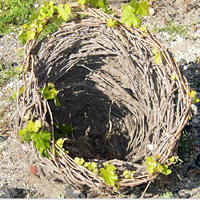
assyrtiko grapeI had a wine that came from a nest today. The vineyard manager would probably call it basket or even ampelies. But to me it looked like a nest. Granted, I was only looking at a photo–if only I could have arranged a field trip to the vineyard.

Blown to bits by a volcano in 1640 BC, the sliver of a Greek isle that is today Santorini has many old vines. They struggle. They cling to the earth. And the vineyard workers prune them into these nest/baskets intentionally to help them against the elements, notably the near-constant wind blowing over the treeless slopes. The other element is water. The vines survive the scorching summer days by collecting moisture in the nests at night when the fog rolls in. Sounds quite dramatic and I’ll have to check it out with Mrs. Vino one day. And the sunsets. And the food. But back to the wine!

Domaine Sigalas, Assyritiko-Athiri 2007, $16 (find this wine)
This dry wine has a nice creaminess on top of good acidity that makes it extremely user friendly. The importer, Ted Diamantis, told me that it’s the Athiri grape that gives it that richness. The Domaine farms organically.

For wine geeks, the other wine, a straight assyritiko varietal wine (find this wine), has some off-the-charts briney qualities with a faint smokiness and minerality–the gout de terroir of Santorini, no doubt. Ted suggested pairing it with shellfish with high iodine-levels, like oysters. Sounds like a plan.

In lieu of their own winery website, here’s a link to Domaine Sigalas on the useful site All About Greek Wine.
Check out a nice pic of a Santorini vineyard over here.

Foie gras, corks, critters, seasons, Brunello – sipped and spit

lego policeSIPPED: Sauternes
Chicago’s foie gras ban has been repealed in a 37 – 6 vote by the City Council, overturning the 48 – 1 vote that put the ban into effect two years ago. The prices of Sauternes, the unctuous sweet wine often served as an accompaniment, just went up an additional ten percent. [Sun Times, thanks Stephen!]

SIPPED: Cork back for an encork
When a member of the Culinary Institute of American saw my cork iPhone case in February, she exclaimed that it would be the perfect product for recycling their corks! But apparently someone had other plans as the 900 corks pulled there a day will now be recycled in a new program called ReCORK America, sponsored by a cork producer to underscore the “natural” qualities of cork. But what is the carbon footprint of sending all that cork into be recycled into floor tile (and sidebars for wine blogs). Wouldn’t the CIA be better reusing them as festive holiday wreaths–or those iPhone covers?!?

SPIT: Critter labels
On the heels of our worst wine label contest comes more advice, this time from Wines & Vines. One item: a label designer Down Under has a “no critters” policy after seeing the kangaroo reinvented some “50,000 times.” [Wines & Vines] Related: ”

SPIT: Brunello di Montalcino
Not content with the FAA’s Global War On Toiletries, US federal authorities are now turning their eyes on another liquid: Brunello di Montalcino! A recent scandal has revealed blending of grapes other than sangiovese, the only one permissible under the local DOC rules in the wine. Now, as a result, the feds are threatening to block US imports of the pricey Italian wine as of June 9. “Part of our mandate is to make sure all labels are truthful, accurate and not misleading to the American consumer,’’ Mr. Resnick of the US Alcohol and Tobacco Tax and Trade Bureau told Eric Asimov. Um, OK, how about starting with Korbel “California Champagne”? [NYT]
gordon ramsaySPIT: asparagus in December
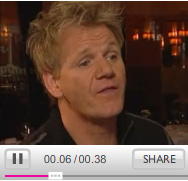
In a piece that, oddly, has not received much attention here in the US of A, celebrity chef Gordon Ramsay–known for his high-end restaurants in several countries as well as cursing like, well, a chef–lays into out-of season like nobody’s bidness calling for it to be outlawed in the UK. While absolutely laudable in principal, the legislative angle may be the wrong way to achieve this policy goal. And let’s hope eating local in his case doesn’t mean eating any more horse! [BBC]

SIPPED: Wine into water
Wine & Spirits magazine will be holding two public tastings in Los Angeles and Seattle that sound like fun with good people and good wines. Since I gave up bottled water for thirty days and lived to tell the tale, I like the secondary cause too: $5 of each ticket will go to local water conservation organizations. [Wine & Spirits Hotpicks]
(image 1)
The worst wine labels – a contest – let the voting begin!

Thank you for your submissions in the worst wine label contest! Here we have it: the finalists!

I recruited two judges to help whittle down the field to five labels and they are now available for your voting after the jump. But first, the judges: Steve De Long, known to many for his fine aesthetic work on the various products at De Long Wine Company; and Guillaume Jourdan, a partner at Vitabella, a PR and marketing firm in Paris who has consulted wineries on improving their labels. Since he’s foreign, I guess he’ll be our Simon Cowell. To the voting! Read more…

Stocking up on Salon 1996

salon 1996Rob Rosania, a 38 year-old collector aka “Big Boy,” sold off around $5 million of his champagne and still wines at auction a couple of weeks ago. And yet he still remains one of the biggest collectors of champagne around.

This factoid from a recent Bloomberg article piqued my interest: Rosania owns 400 cases of the excellent champagne Salon 1996 (minus the five he sold at auction) out of a total of 5,000 produced. Poking around on the web revealed other sources saying that there were 8,000 cases produced. And these are six-bottle cases that we’re talking about. The champagne retails for $250 – $300 (search for the Salon 1996).

It’s a fascinating strategy for investing in wine. Rosania has somewhere between five and eight percent of this blue chip wine outstanding–and that percentage rises every time a cork of it is popped elsewhere. That’s probably a good percentage of the production to have to really benefit from a future price move yet not control the market entirely. It would be hard to take an equivalent percentage of a first growth Bordeaux wine since the production volumes are higher. All it takes is a big cellar and a cool $700k or so.

Even if the economy stagnates, wine such as this will probably always have buyers. Could it double in value in ten years? Even if it doesn’t Rosania can always have fun popping open the bottles of this fine wine with his saber.

I’ve tried a tasting-sized-pour of the 96 Salon and it is a brilliant champagne. In a wine investing video game, I might be tempted to adopt a similar strategy. If, in some fantasy world, you were going to take ten percent of a wine, which would it be?

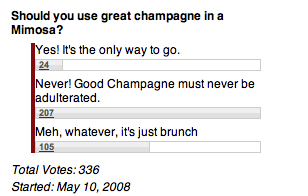
Mimosas, champagne or prosecco?

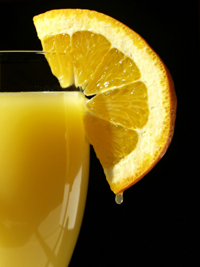
mimosaThe always erudite Eric Felten bemoans the Mimosa, “the official semi-alcoholic drink of brunch” as “an ordeal.” True enough because of OJ from a carton and cheap, off-dry bubbly. Then he spells out his recipe for success with the drink: freshly squeezed orange juice and good dry champagne.

In my limited cocktail making, I have come to learn that the fresher and better the ingredients, the better the cocktail. But I’ve also learned that there really aren’t that many great wine cocktails. While I agree in principal with Eric’s suggestion for the Mimosa makeover (though his suggestion of Veuve Clicquot is hardly the driest champagne around in these days of brut zero), I can’t bring myself to put OJ in my Bollinger (his second, and much better, champagne suggestion). If I have a fresh OJ and a glass of fine champange I’d rather enjoy them separately and never the twain shall meet. For me, it’s a nice dry cava or prosecco that is the best way to go with the fresh OJ in a Mimosa.

What do you say? Is the Mimosa where you’d put your Bollinger?

Poll now closed

Image: istockphoto


winepoliticsamz

Wine Maps


Monthly Archives

Categories


Blog posts via email

@drvino on Instagram

@drvino on Twitter


winesearcher

quotes

One of the “fresh voices taking wine journalism in new and important directions.” -World of Fine Wine

“His reporting over the past six months has had seismic consequences, which is a hell of an accomplishment for a blog.” -Forbes.com

"News of such activities, reported last month on a wine blog called Dr. Vino, have captivated wine enthusiasts and triggered a fierce online debate…" The Wall Street Journal

"...well-written, well-researched, calm and, dare we use the word, sober." -Dorothy Gaiter & John Brecher, WSJ

jbf07James Beard Foundation awards

Saveur, best drinks blog, finalist 2012.

Winner, Best Wine Blog

One of the "seven best wine blogs." Food & Wine,

One of the three best wine blogs, Fast Company

See more media...

ayow150buy

Wine books on Amazon: