Allergies and wine: glycoproteins
 While sulfites cause a severe allergic reaction in a small number of wine drinkers, one of the puzzles of wine consumption has been what causes headaches (aside from drinking too much). As we have discussed before, histamines that naturally occur in wine could be a cause of some allergic reactions. Now there is something else to consider: glycoproteins!
These proteins, fused with sugars, occur in other fruits such as bananas, tomatoes, and kiwis. And they have been connected to other allergies. Now, a research led by Giuseppe Palmisano of the University of Southern Denmark and published in the Journal of Proteome Research has identified the types of glycoproteins in wine. Here’s how The Economist summed it up for lay people:
To do so he started with a cheeky little chardonnay, treated it with ice-cold trichloroacetic acid and ethanol to precipitate any glycoproteins, then digested those glycoproteins into smaller molecules called peptides that can be analysed by mass spectroscopy. He screened the results against a database of known allergenic proteins. Three stood out. One is similar to allergenic proteins found in latex and pears. Another looks like a second latex protein and an olive protein, both known allergens. The third resembles one of the most rampant allergens of them all, a ragweed protein that causes hay fever.
It’s worth noting that there are likely to be big differences in glycoprotein sequences among wines and that this research was performed on only one wine, a “Chardonnay white wine” as the paper describes it. Further, it was a young wine with the analyses performed within a month of the wine’s “production…to avoid any protein loss.” Asked via email why he chose that particular wine, Palmisano replied “it was the wine we had at that time so we could immediately start the study.”
Once the glycoproteins in a wine are identified, could they be removed to make the wine “allergy-free” as several media accounts have claimed? Palmisano writes via email: “The drawback is that the taste and aroma could be affected by this removal, so it is important to understand how the environment will change upon removal of these compounds.”
More research is clearly needed in this area. Palmisano has no plans for clinical trials.


 Clos de la Roilette: Alain Coudert produced two stunning wines from his Fleurie vineyard. The regular cuvée has a gorgeous nose followed by delicious balance of fruit, freshness, and intensity that will convince many a Beaujolais skeptic. I bought a magnum of this wine for the biggest impact at my Thanksgiving table. The “cuvée tardive,” visible from across the aisle thanks to the new neck label, is a superb wine to tuck away for a few years in the deepest, darkest spot in your cellar. It’s more dense, structured and closed now than the regular bottling but will doubtlessly evolve into a a real stunner.
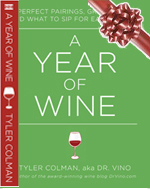 Are you wondering what to get your loved ones for the holidays? Why not get a personally inscribed copy of Dr. Vino’s guide to A Year of Wine: Perfect Pairings, Great Buys, and What to Sip for Each Season. Packed with wine picks and hailed as “witty, lively and loaded with common sense” by the Chicago Tribune, this brand new, mint condition hardback can be yours for $20–lower than the list price!