Dr Vino's wine blog
wine talk that goes down easy
Barbera, two ways: Conterno and Sandrone
Barbera is one of the most food friendly red grapes since it can have wonderful red and black fruit aromas, invigorating acidity and lightness in tannin. Sandwiched between the “lesser” Dolcetto and the late-ripening Nebbiolo in the hierarchy of Piedmont red grapes, Barbera sometimes gets overlooked. But after tasting two impressive examples recently, I’m going to keep an eye out for it.
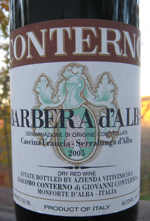 Old school choice
G. Conterno, Barbera d’Alba, Cascina Francia, 2005 ($30; find this wine)
A traditional producer, Giacamo Conterno makes some of my favorite Barolos and this Barbera from the Cascina Francia vineyard is also a gem–at a fraction of the price of the Barolos. Light in color, with aromas of dark fruits and some savory notes, the terrific wine has great poise through good acidity, some youthful vigor, and a well integrated, lingering finish. I really liked it now (a great choice for fall) and bought some extra bottles for continuing to watch it evolve over the next decade. Pairs well with fatty foods–how could you go wrong with a mushroom risotto?
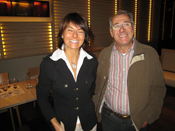 Less old school choice
Sandrone, Barbera d’Alba, 2006 ($35; find this wine)
Luciano Sandrone is a self-described modernist and a traditionalist. This is another style of Barbera, one with more oomph, but attractive nonetheless in its more sultry rendition, particularly for drinking in the nearer term. Barbara Sandrone told me that they had good acidity but ripeness in 2006; the twenty day fermentation occurred in stainless steel then the wine proceeded to a malolactic fermentation in 500 liter oak barrels. The aromas really soar from the glass in this showy wine with richness and integration on the palate.
Nov
26
2008
6
Cru Beaujolais: some factoids
A few quick things about cru Beaujolais, the smaller, distinctive growing areas of Beaujolais.
1. The Burgundy producers are coming!
Prices are relatively low for grapes and real estate. That fact has attracted investment to the region from producers looking to expand: Earlier this year the Champagne (and Burgundy) house Henriot purchased the Chateau de Poncie, a key property in Fleurie. When I asked Joseph Henriot earlier this year about the motivation for the purchase, he pointed to the distinctive terroir (he loves Moulin-a-Vent and Morgon as well as Fleurie) but also the tremendous discount the property had compared to land in Burgundy.
 2. Cru Beaujolais can age, maybe even longer than you think
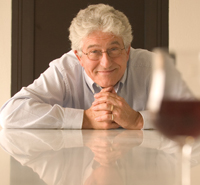
Louis Jadot was one of the earliest notable Burgundy producers to acquire property in the Beaujolais region, notably in Moulin-A-Vent. I tried their Chateau des Jacques 1996 a few months ago and was wildly impressed. Jacques Lardiere, the winemaker (pictured right), told me that the best wines can last decades!
3. I’ve got a cru Beaujolais vertical going–in magnum
Magnums, twice the size of regular bottles, are generally baubles for captains of industry. But you can get a top cru Beaujolais in magnum for less than a lot of second label Bordeaux. Combine this price appeal with the age-worthiness and you can understand why I have several magnums of Deccombes, Desvignes, and a mini-vertical (three vintages!) of Clos de la Roilette cuvee tardive. Cru Beaujolais magnums also make great gifts; to wit, I just got a magnum of Lapierre Morgon 07 at Appellation Wine and Spirits yesterday.
4. Gamay is wildly food friendly!
And at 12.5 percent alcohol, you can have a couple of glasses too and still be able to function after dinner.
5. It’s mostly less expensive than red Burgundy!
6. How would you change the region?
In 1395, Duke Philip the Bold outlawed the humble gamay grape from Burgundy, protecting the premium pinot noir by fiat. What would you do differently if you were the Duke of Beaujolais? I asked Jacques Lardiere what he would do differently if he made his wine in Moulin-a-Vent outside of the appellation system, which mandates certain controls, such as planting the grape gamay. He said, “I would plant pinot noir.”
Don’t forget to join us tonight at 8 PM on Twitter Taste Live raising a glass of local wine or a cru Beaujolais! use #ttl in your comments or follow me.
Nov
20
2008
Do punny labels and good wine make a good blend? The case of Leitz
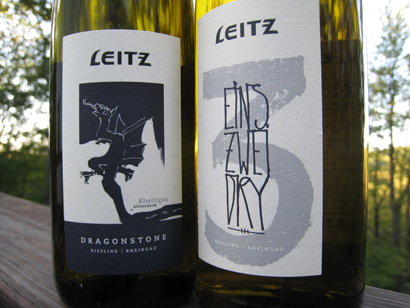
“I immediately assume that the wine is garbage if the punniness is high,” one of my friends said recently. Fair enough, as we have discussed before. But then there is the case of Johannes Leitz.
While many European labels can be confusing for New World consumers who are more used to varietal labeling, German labels crank up the degree of difficulty by adding terms such as Kabinett, Spaetlese, and–my favorite, linguistically–Trockenbeerenauslese. Although these terms express roughly the degree of sweetness, they only do so for the wine before fermentation (aka the weight of the must), so the level of residual sugar after fermentation may not be as sweet or dry as one might expect. Throw in some vineyard names on top of those terms and it makes running for Blue Nun understandable–from a purely linguistic standpoint.
Johannes Leitz, by contrast, makes some easy reading labels as well as tasty wines. He turned the Rudesheimer Drachenstein vineyard into simply “Dragonstone”–a cool label, easy name and easy drinking Riesling that I often recommend particularly as a wine for newbies. The single site, estate bottled wine is sweet in 2007 but obtains balance with some tangy acidity and minerality (find this wine). Pair with takeout.
New for 2007 is his multilingual punny “Eins, Zwei, Dry” (find this wine) The Riesling is, in fact, dry (well, 7 grams of residual sugar, barely above the threshold of perception). Dry Rieslings often seem to only come from the New World and Leitz only first produced this dry wine in the spectacular 2007 vintage (more details from the importer, Terry Theise’s page). The wine has more minerality and verve. I’d find this one most refreshing on a hot summer day with the Dragonstone one for the spring and the fall, when I prefer more richness.
Johannes Leitz has wit. And he makes clear labels good wines. He has my vote for federallabelminister! But I also think he is a rare exception, joining Rosenblum and possibly Bonny Doon, to the rule about puns and wine quality.
Do witty labels and good wine make a good blend? Or is the wine best left to do the talking?
Nov
2
2008
Where in the wine world were we: Beaujolais and Burgundy!
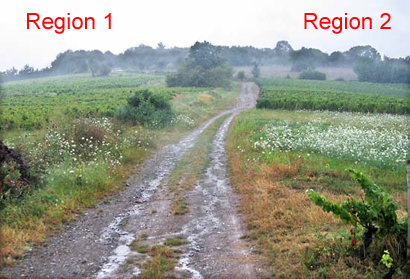
Congratulations to Viinipiru from Finland and Michael temporarily from Kansas who both nailed the answer in this mystery photo! Dylan also got half credit! The answer is that region one is Beaujolais and region two is Burgundy. The photo is reproduced here with permission from Bertrand and originally appeared on his posting about Beaujolais renegade Philippe Jambon. Here’s how Bertrand poignantly described the scene:
“Nearby, we drive on a gravel road which materialize the odd Beaujolais-Burgundy divide here: On the right lie the Saint Véran and the Pouilly-Fuissé Chardonnay vineyards, from the Burgundy Appellations, and you can virtually touch the prosperity on this side of the road, and on the left lie the Gamay vineyards of the Beaujolais, many of them being abandoned and visibly struggling to stay afloat… When the Appellation drives the destiny…”
Oct
30
2008
Putting water in my own wine boycott
Events have conspired, the plot has thickened and now I call on you to say “non” to only one-third of Beaujolais Nouveau this year!
As you may recall, last week I asked you to ditch Beajolais Nouveau this year because of the high carbon footprint of the wine. The rush to bring this proto-wine to the world’s shops on the same day, November 20 this year, means that airfreight is commonly used, increasing the greenhouse gas emissions of the wine by at least fourfold for New York and many times more to places like San Francisco, Santiago, and Tokyo.
Word floated in to the Dr. Vino tower that major changes were afoot this year in Beaujolais with this year’s Nouveau. So I picked up the phone and called France (at the low rate of 2.3 cents per minute). First up, I spoke with Inter Beaujolais, a regional trade authority, where I learned that Beaujolais Nouveau last year had a volume of about 48 million bottles, about a third of the region’s production. Further, the Nouveau for EU destinations is not permitted to leave the region until November 13 this year, giving it a week to get places like Amsterdam and Athens. But non-EU destinations were given a special extra week this year and could leave the EU on November 6. Could it really get to store shelves in New York City by November 20?
To find out I called Georges Duboeuf, the largest shipper of Beaujolais Nouveau with around three-quarters of the Beaujolais Nouveau market. Read more…
Oct
26
2008
Improbable food-wine pairings! Value vino and legumes edition
We often talk about those impossible food wine pairings; here are three improbable food wine pairings that I had recently that worked.
 Food: sauteed green lentils
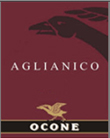
Wine: Ocone aglianico 2003 (about $15; find this wine)
Every year at about this time we make a lentil minestrone that is so good that it has even gotten approving nods and slurps from carnivores. But it takes a lot of time, ingredients and three pots. This quick version uses the same green French lentils but is a lot easier with just some onion and garlic and a quick boil all in one pan. The result is dish rich in earthiness and umami. The biodynamically grown Ocone aglianico (about $13; find this wine) really picked up on it and registered one of those desired pairings that improved both the food and the wine.
 Food: Trader Joe’s Dal mahkani
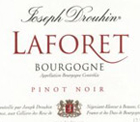
Wine: Drouhin, Laforet, Bourgogne rouge (about $13; find this wine)
We’ve talked about Indian food before; in fact, we’ve even talked about Trader Joe’s Indian before! And while pinot noir under $25 is pretty rough terrain without terroir, pinot noir under $15 mostly something straight out of Fear Factor. But this, the lowliest Drouhin made, would surely outclass most pinot sold by the glass. To my surprise, the lightness of the red really worked with the dal!
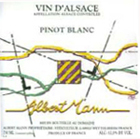 Food: homemade vegetarian chili
Wine: Albert Mann, pinot blanc, Alsace 2007 (about $16; find this wine)
I uncorked a Bandol red with six years of age on it that I thought might work with vegetarian chili; it didn’t. The tannins on this mourvedre were still too huge and the fruit was miserly. But I shifted gears and tried this biodynamically grown pinot blanc that was at the bottom of the Dr. Vino cave and it was a great match! Full and rich, but with a good accompanying zip, pinot blanc balanced the spiciness of the chili. The only complaint from the guests on this one was that it was too easy to drink.
Oct
23
2008
Boycott Beaujolais Nouveau — drink local wine
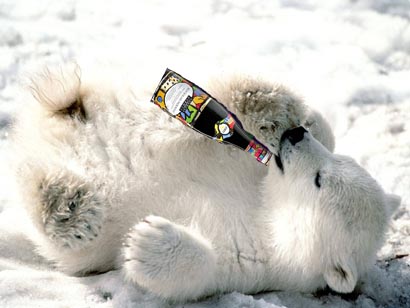
This November 20, cases of Beaujolais Nouveau will fall from the sky and land as endcaps in wine shops everywhere. This fall, I encourage you to say no to the Nouveau–and reach for a local wine instead.
Beaujolais Nouveau is a travesty on at least two levels, one gustatory and one environmental. The grapes for this proto-wine were harvested only three months prior to the airdrop. In some years, they are not ripe enough and need to have their alcohol levels boosted by sugar. And most of the Nouveau is made with machine-harvested grapes carbonic maceration, commercial yeast strains and enzymes to give it a confected taste. Don’t get me wrong: I think gamay is one of the most food-friendly red grapes and a great value but mostly when it hails from one of the smaller subzones of Beaujolais.
Regulations prohibit the bottling of the wine more than one week before the arbitrary date, when signs all around the world used to proclaim triumphantly “le Beauolais noveau est arrivé†(the Beaujolais nouveau has arrived!â€) Now, the dreadful slogan is “It’s Beaujolais nouveau time!†which sounds perilously close to a rip off of a Miller ad.
The short allowable time between bottling and release sets off a global sprint to transport the wine as far afield as Tokyo, San Francisco and Santiago. This has involved motorcycles, trucks, helicopters, regular jet planes and even, in a previous era, the Concorde!
As my research on the carbon footprint of wine has shown, airfreight is hardly the best way to transport any wine even if it were good. A bottle of Georges Duboeuf flown to New York has four times the carbon footprint than if it were sent by ship.
But the idea of a global wine celebration on the third Thursday of November is too appealing to ignore. So let’s ride on the coattails (jetstream?) of this global wine celebration but raise a glass of local wine instead. Wine is now grown in all 50 states and many of us who don’t live on the West Coast overlook our local producers. And many of those wines are likely to go well with the Thanksgiving repast.
So say no to Nouveau and join me in raising a glass of local wine this November 20! Do it for the polar bears.
See the UPDATE to this post.
Oct
17
2008
Wine tasting group and a winning Bordeaux under $20
Value wine stories: they’re even hotter items with wine writers these days than grower champagne or skin fermented sauvignon blanc! So here’s another two cents–or two under $20–from me.
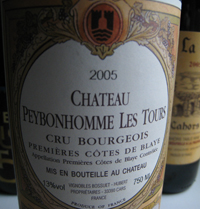 One of my neighbors with a cellar particularly strong in California wines that he bought when he lived there in the 1970s, has been convening a monthly wine tasting of enthusiasts for a few years now. Unfortunately I’m not often able to go because of a scheduling conflict with my teaching, but last week was an exception so I joined the convivial gathering with the theme of currently available Bordeaux under $20.
Despite the fact that some 500 growers a year in Bordeaux go out of business, Read more…
Oct
15
2008

Wine Maps
Monthly Archives
Blogroll
Categories
- American wine
- announcements
- Argentine wine
- auctions
- Australian wine
- Beer
- best wines
- Bling
- books
- Bordeaux
- bottled water
- Box wine
- Burgundy
- business of wine
- Celebrity wine
- Champagne
- Chicago
- China
- cocktails
- cognac
- corks
- corkscrews
- dining
- eco wine
- events
- foie gras
- food and wine
- French wine
- German wine
- giveaway
- grapes
- green wine
- guest post
- highlights
- how to
- Italian wine
- leaders and liters
- Mature wine
- meetups
- New York City
- On notice!
- photo captions
- podcasts
- Polls
- Port
- Portuguese wine
- power list
- reader mail
- rose
- sake
- Sommeliers
- South Africa
- Spanish wine
- spirits
- tasting sized pours
- The real wine world
- TV and movies
- Uncategorized
- videos
- vinexpo
- Weather
- wine and health
- wine and sports
- wine and tech
- Wine Blogging Wednesday
- wine blogs
- wine classes
- wine collecting
- wine gifts
- wine in india
- wine labels
- wine picks
- wine politics
- wine quizzes
- wine random
- wine science
- wine scores
- wine shops
- wine technology
- wine travel
- Wine under $10
- wine writing
- winemaking
- winespeak
 Blog posts via email
@drvino on Instagram
@drvino on Twitter
Advertise

quotes
One of the “fresh voices taking wine journalism in new and important directions.” -World of Fine Wine
“His reporting over the past six months has had seismic consequences, which is a hell of an accomplishment for a blog.” -Forbes.com
"News of such activities, reported last month on a wine blog called Dr. Vino, have captivated wine enthusiasts and triggered a fierce online debate…" The Wall Street Journal
"...well-written, well-researched, calm and, dare we use the word, sober." -Dorothy Gaiter & John Brecher, WSJ

Saveur, best drinks blog, finalist 2012.
One of the "seven best wine blogs." Food & Wine,
One of the three best wine blogs, Fast Company
Books for wine geeks
Wine books on Amazon: