BREAKING: Jay-Z profits from Armand de Brignac!
 In an extensive waste of the journalism world’s precious resources, Zack O’Malley Greenburg has uncovered what we have known since 2006: Armand de Brignac is mediocre Champagne at best and Jay-Z profits from it!
Greenburg has a chapter of his forthcoming book on Jay-Z published in The Atlantic (although, mysteriously, it has been removed from their site and is available here). As we discussed back in 2006 (“Jay-Z puts an Ace in play“), drawing on stories in the WSJ and BusinessWeek, “Ace” is an absurdly priced nonvintage Champagne that came out of nowhere and relies on Jay-Z’s star power to sell it. If he has a financial stake in it, so what? People who buy it are overpaying to drink image rather than a quality wine, hardly the first time that has happened.
Here’s how Lyle Fass summed it up in Greenburg’s piece: “Everybody should take a lesson who wants to sell wine that sucks. Because it is probably the most brilliant marketing in the history of wine.”
Previous Ace coverage: Jay-Z puts an Ace in play
Reader mailbag: finding Ace of Spades champagne
Ace of Spades expands into a full house
Douchebauchery chronicles

 Last year,
  Wine Library TV has kicked the Jets bucket!

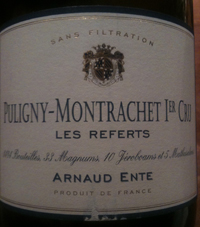 It’s not every evening I get to taste ten white Burgundies with a decade or so of age. For one, they’re often expensive. But they’re also a category that has not been aging well in the bottle, thanks primarily to the issue of “premox,†or premature oxidation, the cause of which is little known despite plaguing bottles since the 1996 vintage. So I delighted to have the chance to taste through several bottles at a collector’s house recently to assess the risk and reward of white Burgundy. From this admittedly small sample of premier and grand cru wines from good vintages, I’d say the risks outweigh the rewards. One factor is that the wines are quite expensive, almost calling out for cellaring; bright, fresh acidity can be found much less money with Bourgogne blanc (or Chablis), for example. So it is frustrating when wines that appear fresh in the first lap of five years or so after vintage, appear to grow tired too fast.