BREAKING: Jay-Z profits from Armand de Brignac!

In an extensive waste of the journalism world’s precious resources, Zack O’Malley Greenburg has uncovered what we have known since 2006: Armand de Brignac is mediocre Champagne at best and Jay-Z profits from it!

Greenburg has a chapter of his forthcoming book on Jay-Z published in The Atlantic (although, mysteriously, it has been removed from their site and is available here). As we discussed back in 2006 (“Jay-Z puts an Ace in play“), drawing on stories in the WSJ and BusinessWeek, “Ace” is an absurdly priced nonvintage Champagne that came out of nowhere and relies on Jay-Z’s star power to sell it. If he has a financial stake in it, so what? People who buy it are overpaying to drink image rather than a quality wine, hardly the first time that has happened.

Here’s how Lyle Fass summed it up in Greenburg’s piece: “Everybody should take a lesson who wants to sell wine that sucks. Because it is probably the most brilliant marketing in the history of wine.”

Previous Ace coverage: Jay-Z puts an Ace in play
Reader mailbag: finding Ace of Spades champagne
Ace of Spades expands into a full house
Douchebauchery chronicles

Who’s the loser in The Great Pinot Switcheroo?

Raj Parr is the wine director at Michael Mina’s restaurants and a partner at RN74, a Burgundy-centered restaurant in San Francisco. When RN74 opened a couple of years ago, Parr drew attention by saying that he wouldn’t carry pinot noirs or chardonnays over 14% alcohol.

So, as we mentioned earlier, it was interesting that Adam Lee of Siduri Wines (pictured, right, via Facebook) got up to a little skulduggery (as Jordan Mackay tweeted when it happened). The NYT details that at a recent panel discussion and tasting about balance in pinot noir, Lee presented a 13% and a 15% pinot noir of his to the audience. Parr apparently leaned over to Siduri and said that he’d like to purchase some of the 13% wine. Lee then told Parr that he had, in fact, steamed off the labels, so the wine that Parr had just requested to buy was the one over 15% alcohol. Ta-dah! With Parr’s permission, Lee told the audience what had transpired. (After speaking with someone who also attended, the audience wines appeared to be correct and untampered with.)

So, what to make of this? To me, dogma is the big loser here. Sure Parr got punk’d. But he has the confidence to immediately laugh off Lee’s ruse and let Lee share what transpired with the whole room. Further, even though Parr drew a line in the pile of pommace about alcohol levels a couple of years ago, based on a tasting with him last month, I’m inclined to believe that he’s not as dogmatic as the RN74 policy makes him seem.

What’s your take on what transpired?

“The Gadfly in the Pinot Noir”

Counterfeits, smashing, slashing, chugging — sipped & spit

SIPPED and SMASHED: Lafite empties
After tasting older vintages of collectible wines before an auction, the bottles are routinely smashed. Why? An empty bottle of Lafite 1982 fetches $1,500. [CNN]

SIPPED: counterfeit bottle
William Koch, the billionaire wine collector, bought a bottle of 1870 Lafite from a Christie’s auction for $4,200, discovered it was fake, and sued the auction house. A judge has now thrown out the suit, saying that Koch knew the bottle was fake before bidding. Here’s hoping anyone else bidding on it also knew! [Bloomberg]

CHUGGED: Box wine up 18% last year. [PR web]

CUT: subsidies
The Texas wine industry has received $4.2 million in state funds the past two years. However, the subsidy is likely to be cut to zero. Fun fact: there are estimated to be 1.3 million wine tourists a year in Texas. [Dallas Morning News]

DAMAGED: some tentative information on the state of Japan’s sake breweries. [sake-world.com]

HR 1161: the threat to wine shipping, Part II

Last year, a rag-tag coalition introduced a piece of legislation that threatened wine shipments. It’s not even Halloween but the scary news is that, like Poltergeist II, this horror show is baaaaaack.

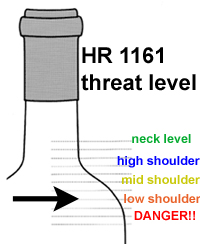
Now known officially as HR 1161, and unofficially as the Wholesaler Protection Act, the bill seeks to restrict legal challenges to the interstate shipment of wine (and beer and spirits) and keep the legislation that affects wine shipping at the state level. The reason that’s scary is because the judiciary is the consumer’s best ally in the fight to liberalize wine shipments–with more options to purchase wines, many consumers will get lower prices and a better selection than what is available in their local markets. Legislators, desperate for (re)election, frequently accept donations from wholesalers who seek to prevent freeing up trade in wine. The Beer Wholesalers wrote the legislation last time and the text is virtually identical this time.

The Wine and Spirits Wholesalers Association recognizes the threat Read more…

Gary Vee unplugs from Wine Library

Wine Library TV has kicked the Jets bucket!
After 1,000 episodes of Wine Library TV (I had a good time with him on episode #771), Gary Vaynerchuk has decided to hang up his signature Jets bucket. Well, sort of. Many of his fans had wondered if one day Gary might leave the wine world entirely to jump to other, more lucrative pursuits such as public speaking, social media evangelism and promoting books from his 10-book deal with HarperCollins. Instead, Read more…

Helping Japan, with sake and support


My wife and I were in Tokyo on September 11, 2001, preparing to come home the next day. Needless to say, our return was delayed. During that extra time in Japan, so many locals expressed their sympathy and condolences to us for what had happened in the US.

The tragedy in Japan over the past week is horrifying and I find it extremely dispiriting. But it would be good to do something for them, no matter how small. Giving to a charity, such as the Red Cross, Unicef, or Doctors without Borders is a generous idea.

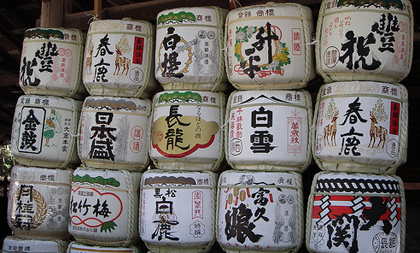
Blake Gray had another: try a sake in the next week. According to an account on Twitter, over three dozen sake brewers have been damaged or devastated by the recent disasters. And Japanese consumers may not be wanting to splurge on premium sake right now. So the theory is that having an artisanal sake here, could keep demand flowing for the traditional industry. Several restaurants in SF are donating parts of the proceeds from special events. If you’re looking to try one at home, here’s an article Blake wrote about daiginjo a few years ago or try to head to a specialty shop, such as Sakaya on the East Village (some wine shops now have small, refrigerated sake sections). If you have other suggestions sake or how to help Japan, hit the comments.

USA becomes the biggest wine consuming country! We’re #1!!!

We did it! Congratulations, America! According to analysts Gomberg, Fredrikson, we are now the biggest wine consuming country in the world! USA! USA! (hat tip: winebusiness.com)

We’ve overcome challenges as a country. Even a scant four decades ago our parents had trouble finding good wine here. And our domestic wine industry, which makes about two-thirds of wines sold here today and is the fourth largest in the world, had yet to reach acclaim on the world stage. But now we put away more of the stuff than France and Italy despite the fact that we can’t easily buy wine via stores on the internet. Triumph over adversity, part deux!

What with a large domestic population, it’s understandable that we could do it. But we still need to work on that per capita consumption rate, where we’re currently below the likes of Ireland and Equatorial Guinea. So let’s raise a glass in honor of America!

Assessing risk and reward in white Burgundy

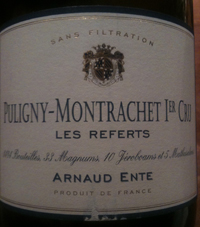
It’s not every evening I get to taste ten white Burgundies with a decade or so of age. For one, they’re often expensive. But they’re also a category that has not been aging well in the bottle, thanks primarily to the issue of “premox,” or premature oxidation, the cause of which is little known despite plaguing bottles since the 1996 vintage. So I delighted to have the chance to taste through several bottles at a collector’s house recently to assess the risk and reward of white Burgundy. From this admittedly small sample of premier and grand cru wines from good vintages, I’d say the risks outweigh the rewards. One factor is that the wines are quite expensive, almost calling out for cellaring; bright, fresh acidity can be found much less money with Bourgogne blanc (or Chablis), for example. So it is frustrating when wines that appear fresh in the first lap of five years or so after vintage, appear to grow tired too fast.


What’s your assessment of the risk and reward of white Burgundy?

The whole lineup—complete with a surprise!—follows after the jump. Read more…


winepoliticsamz

Wine Maps


Monthly Archives

Categories


Blog posts via email

@drvino on Instagram

@drvino on Twitter


winesearcher

quotes

One of the “fresh voices taking wine journalism in new and important directions.” -World of Fine Wine

“His reporting over the past six months has had seismic consequences, which is a hell of an accomplishment for a blog.” -Forbes.com

"News of such activities, reported last month on a wine blog called Dr. Vino, have captivated wine enthusiasts and triggered a fierce online debate…" The Wall Street Journal

"...well-written, well-researched, calm and, dare we use the word, sober." -Dorothy Gaiter & John Brecher, WSJ

jbf07James Beard Foundation awards

Saveur, best drinks blog, finalist 2012.

Winner, Best Wine Blog

One of the "seven best wine blogs." Food & Wine,

One of the three best wine blogs, Fast Company

See more media...

ayow150buy

Wine books on Amazon: