Talking Chenin Blanc with Ken Forrester of South Africa

Ken Forrester likes Chenin Blanc. Just don’t call it Steen.
His Stellenbosch vineyards, four miles from the ocean, are planted 50% to Chenin Blanc, also known as Steen locally to people other than Ken (he finds the local name too confusing.) In his opinion, the best Chenin needs cool and sunshine, which may sound like a paradox. But Ken says that’s what happens in the best years in the Loire, which is often cool, and in South Africa, which has abundant sunshine and a few cooler vineyard sites. Read more…

Lafite 08 speaks Chinese, wine profits, Bode Miller, Holland-sipped & spit

SIPPED: wine lifestyle…in New Hampshire
Bode Miller, the gold medal skier who once admitted to racing while hungover, plans to become a vintner in his home state of New Hampshire. It’s all downhill from here… [Reuters]

SIPPED: profits
Where are the profits in the American wine biz? While many prospective investors like Bode Miller are drawn by the glamor of the winery lifestyle, Warren Buffett’s Berkshire Hathaway thinks otherwise: the company has just bought their second wine and spirits distributor, this time in Tennessee. [Bloomberg]

SIPPED: symbols
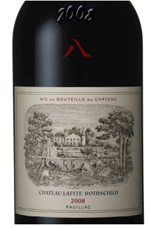
The price of Chateau Lafite 2008 rises 20% after the announcement of a Chinese symbol (the lucky number eight) on the bottle. What’s the Chinese symbol for OMG?!? And we will have to wait until 2018 to see other Bordeaux producers add Chinese characters? [Decanter]

SIPPED: Dutch wine?!
Mover over Heineken, here comes something boozier. Dutch ingenuity now means that Holland not only makes wine but has over 90 wineries. Dutch wine is served on KLM, and, apparently, not just out of patriotism or curiosity value. [Monsters & Critics]

FOR SALE: one of the World’s Great Wine Estates…asking price: $10 million. [The Australian]

HOW TO: bring wine onboard a plane

If there’s one thing that frustrates wine enthusiasts when traveling by air–and, no, we’re not including pat-downs–it’s the liquids ban. Take wine enthusiasts, put them in a giant metal tube for hours on end, thrust their knees into the seat back in front of them and then attempt to ply them with tiny bottles of undifferentiated, $8 wine (credit cards only, please!).

A possible end to the liquids ban was floated a few weeks ago and with it the prospect of salvation for wine enthusiasts on planes. But Janet Napolitano, Homeland Security chief, threw her own Ziploc of cold water on the idea.

Odd as it may seem, there are some options to BYOW on board. Domestically, there are a few wine shops beyond security, such as the chain of Vino Volo locations or the Yadkin Valley wine shop in Charlotte, that sell wine to go. Pick up a bottle at one of these and it will be more fun than a grande latte–as long as you just like looking at the latte, that is. According to Mark Ashley, editor of Upgrade: Travel Better and our Senior Wine and Planes Correspondent, FAA regulations require flight attendants to pour all alcohol onboard planes. He says that back in a bygone era of travel, the flight attendants might have cooperated with a wink and a nod if asked to pour a passenger’s wine for them. But today, he says that is unlikely given the rise in unruly passengers and the general peevishness of the in-flight crew.

The ideal for flying with wine would be to bring a bottle from home. No airport markups. Better selection. But the only place that is going to happen is a foreign country. Japan has allowed liquids on planes (for domestic flights only) since introducing liquid bomb detectors in 2006 (!). Mark Ashley says that another country that allows liquids on board domestic flights is New Zealand, though he is unsure of whether the alcohol consumption policies in these two countries are set nationally or are airline policy.

One indication came on Twitter last year when Hristo Zisovski, a New York-based sommelier, tweeted, “Just got onto the plane carrying a open, half full bottle of Pinot Noir. Gotta love NZ airlines!”

What are your experiences, tips or thoughts about upgrading wine in flight? And please, belts off, shoes off, jackets off as you approach the comments section.

Related: “HOW TO: successfully check wine on a plane

Waterlogged or machine concentrated? Ken Wright takes a stand

Ken Wright of Ken Wright Cellars has a video interview on the tech blog Gizmodo. Why would this graybeard of the Oregon wine industry and godfather to the biggest little wine town in Oregon (Carlton) be talking to a tech blog? He discusses using a vacuum concentrator to reduce unwanted dilution in juice after late-season rains, which can make the grapes waterlogged prior to harvesting. (Depending on desired ripeness, picking before the rains may or may not be another option for avoiding bloated grapes.) The device, imported from Italy, essentially reduces the wine to below atmospheric pressure, allowing for low temperature boiling thereby removing the excess water from the tank and leaving a more concentrated juice behind. Gizmodo mentions that there are at least a half-a-dozen other vacuum concentrators in Oregon.

Wright elaborates on why the machine is a good thing: “We spend a year of our life farming. It seems really silly to accept something sub-standard when you can make a difference, when you can do something to heal the issue.”

I give Ken Wright a tip of the ol’ winemaker’s baseball cap for detailing a part of his winemaking practices: What happens in the cellar is not discussed often enough in detail (indeed, even his own web site espouses minimal handling in the cellar).

What do you think, in general–would you rather have a machine-concentrated wine from a waterlogged vintage or the wine that mother nature intended?

In-store wine customers: you are chumps

“Greetings in-store customers: You are all chumps.”

I’ve never actually heard a wine store broadcast that message over a loudspeaker. But that’s the message some are sending with their pricing.

The other day, I found a great wine at the sharp price of $18.39 a bottle via a local wine store’s web site. When I dropped by, the wine was on the shelf for $22.99. I mentioned that I had seen it online for the lower price and the staffer, without hesitating, rang me up at the lower price, punching in a 20 percent discount. That’s the equivalent of the fifth bottle free!

We have discussed this issue before. Contrary to some perceptions, New York’s State Liquor Authority does not regulate the prices that retailers charge. Thus the dual pricing phenomenon persists, so consider this a friendly reminder: check the store’s website if you think the price looks high, are making a large purchase or buying an expensive wine. Internet shoppers tend to be more savvy thanks to the price-leveling power of google and wine-specific search tools such as wine-searcher.com. (Full disclosure: I make a tiny amount of money–-pennies, literally–-as an affiliate of wine-searcher.com.)

On the one hand, I understand why stores do this: An internet customer is a self-service customer who doesn’t tax the staff’s resources whereas an in-store customer might want to chit chat about which wine goes with chicken and take up the staff’s time. But it somehow feels a little dirty to have the dual price structure. Caveat emptor!

Wine bottle deposits come to Arizona [poll]

You want that wine on the shelf in Flagstaff, AZ? It’ll be $7.99–plus a $2 refundable deposit.

No, it’s not as if officials Arizona have implemented a bottle deposit law that would increase recycling and/or reuse while raising millions of dollars for state coffers.

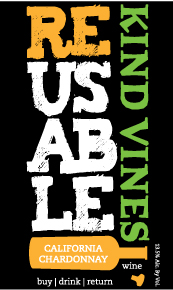
This is a voluntary recycling program called Sustainable Packaging Solutions profiled on AZdailysun.com. Starting November 1, a group will debut a white and a red under the label Kind Vines, exclusively at Bashas’, a grocery store. Brought in from California in bulk, the wines will be bottled locally where the bottles will also be cleaned and refilled.

Are you into this idea, in theory? Have your say in the latest poll!

[poll id=”18″]

Starbucks wine bar, Japan’s embassies, hospital, Dagueneau – sipped & spit

SIPPED: venti Cabernet?
Starbucks stores do 70% of their business by 2 PM. So will they be transitioning more locations to wine bars at night? USA Today explores the latest.

SPIT: good times
Japanese embassies are ordered to reduce wine inventories since some have enough to supply thirty years of consumption. [AFP]

SIPPED: good times
A hospital in Indiana allows patients to bring in their own wine to pair with hospital food. Talk about an impossible pairing! [AP]

SIPPED: continuity
Didier Dagueneau, of Pouilly-Fumé, died in 2008 at the age of 52. His son, Louis-Benjamin, now 25, took over the winemaking and his first two vintages are “superb,” writes Jacqueline Friedrich. [LAT]

SIPPED: wine names for software
The internal code name at Apple for Mac OS 10.7 is “Barolo,” apparently. To which bchapnj quipped on Twitter: “Does that mean it won’t be ready for 5 – 10 years?”

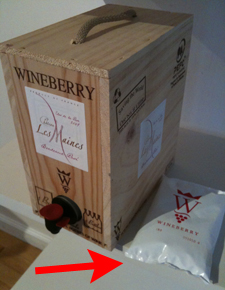
Wineberry, the box wine in a wood crate

Wine in a box? Try wine in a crate.

After my GMA segment last week, I thought I would elaborate a little more on one of the box wines that I tasted for the first time this fall: Wineberry box. The lineup includes about six wines, red, white and rosé, all from France. They are priced at about $40 for a three-liter box. (Search for the wines at retail.)

Eric Dubourg, president of Wineberry America, a wine importer and distributor based in New York, says that he wanted to change box wine, “to get away from bag-in-box as student or grandmother wine.” Read more…


winepoliticsamz

Wine Maps


Monthly Archives

Categories


Blog posts via email

@drvino on Instagram

@drvino on Twitter


winesearcher

quotes

One of the “fresh voices taking wine journalism in new and important directions.” -World of Fine Wine

“His reporting over the past six months has had seismic consequences, which is a hell of an accomplishment for a blog.” -Forbes.com

"News of such activities, reported last month on a wine blog called Dr. Vino, have captivated wine enthusiasts and triggered a fierce online debate…" The Wall Street Journal

"...well-written, well-researched, calm and, dare we use the word, sober." -Dorothy Gaiter & John Brecher, WSJ

jbf07James Beard Foundation awards

Saveur, best drinks blog, finalist 2012.

Winner, Best Wine Blog

One of the "seven best wine blogs." Food & Wine,

One of the three best wine blogs, Fast Company

See more media...

ayow150buy

Wine books on Amazon: