Yeoman wine, harvest festival, more brainwashing, advice — sipped & spit

SIPPED: snappy advice
GQ.com has a fun list of 25 wine tips that may run counter to expectations (cool photos too). If you like your tips in book form, I mentioned many of these items in Dr. Vino’s guide, A Year of Wine.

SIPPED: Yeoman wine
James Conaway, who wrote Napa a couple of decades ago, now turns his eyes and palate to Virginia and its wines on the pages of Garden & Gun (really, who doesn’t get their wine news there?).

SPIT: brainwashing
As we did here recently, Matt Kramer also expresses distaste with the idea of “brainwashing” among wine consumers [WineSpecatator.com]

SPIT: left on the block
Sign o’ the times? Lafite fails to sell at auction in Hong Kong. “There weren’t so many buyers.” [Bloomberg, WSJ]

SPIT: AOC
So what if Anjou producer Olivier Cousin wrote “Anjou Olivier Cousin” on his box? Well, the authorities that preserve origins already have a monopoly on those initials so his wrist has been slapped the spanking paddle has been broken out with large fines threatened. [levindesamis]

SIPPED: Bacchanal and bananas
The Montmartre Harvest Festival is underway in Paris, celebrating the one remaining vineyard there, complete with kids’ programming, a parade for Bacchus and a tribute to France’s overseas holdings (not sure of the wine angle there…).

SPIT: brown bags
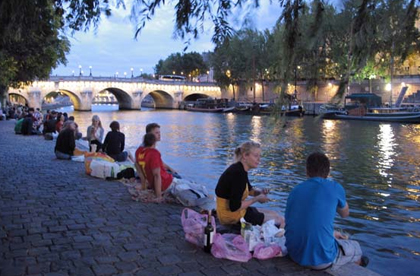
Wine picnics in Paris: what NYC could emulate if it weren’t for open container laws…enjoy a last gasp of summer this weekend! [Enjoy the photo above and more at WineTerroirs]

Wine politics: Oregon congressman supports HR 1161 & more!

Representative Kurt Schrader (right), whose district bisects the Willamette Valley, has taken an odd stand: he’s signed on as a co-sponsor of a bill that would hurt small wineries.
HR 1161, which we have discussed previously, would limit judicial challenges to state laws on the interstate shipping of wine (and beer and spirits). If this bill were to pass, it could impact wine shipments negatively and irrevocably. Consumer choice could be reduced; many small wineries depend on the wider margins of direct sales to keep in business. HR 1161 was written by beer distributors.

While distributors are well-organized and the bill has over 100 sponsors, wine consumers might have thought they could consider on representatives whose districts include wine production as allies. Apparently not.

Vintners in Oregon’s fifth district are dismayed, as the Statesman Journal reports. “This is all about money,” Jim Bernau of Willamette Valley Vintners said. A spokesman for Schrader said the representative “does not allow contributions to his campaign (to) impact the decisions he makes on questions of public policy.”

In other wine and money news, Steve Grossman, Massachusetts state treasurer whose office regulates liquor sales, raised $45,000 from the industry at an event last month according to Boston.com. The sum represents a quarter of the total he has raised this year. Few out of state wine retailers will ship to Massachusetts as a result of its wine shipment laws and a federal court had to overturn state policy that limited wine shipments. An aide to Grossman said it will not affect his policy decisions.

The dearth of recommendable California wines under $12

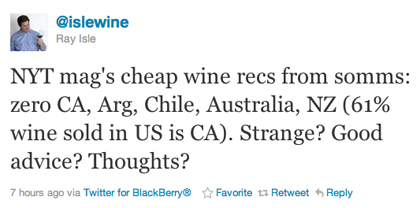
The New York Times magazine ran an charticle on Sunday that compiled the picks of 18 wine industry types. The category? Wines under $12.

But the list raised questions for Ray Isle of Food & Wine, since he tweeted:

The lack of California wines is understandable for a couple of reasons. Yes, California makes a lot of wine and much of it is under $12. But, as we have discussed before, precious little of the California wine under $12 is estate wine; rather it is often assembled from far-flung vineyards in steel tanks so large they could double as nuclear silos. The two American wines on the list, from NY and OR, are both from single estates.

The people on the list, mostly wine directors at restaurants, don’t exactly champion tanker wine. They are trend-setters or at the very least someone who wants to help a diner or customer discover something new that they might only find at a restaurant or specialty shop. Also, the composite nature of the list means that one author didn’t save spaces for certain categories as each contributor gave a top pick. As to the absence of other new world countries, perhaps that was a function of the taste preferences of the people surveyed too.

Anyway, good wine under $12 is always of interest and Ray raises some good questions. What do you think?

Prohibition’s lingering bad taste [Ken Burns]

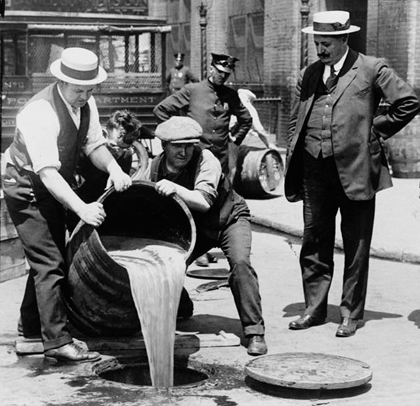
If you’ve turned on PBS during the past couple of nights, you’ve probably encountered slow zooms and pans of black and white photographs. And the people in those photos may have been women protesting saloons or men using hatchets to destroy barrels of whiskey. Yes, these are scenes from Ken Burns and Lynn Novick’s three-part series, Prohibition.

I’ve seen the first episode (available here online), entitled “A Nation of Drunkards,” that chronicles the social and political forces that led to enacting Prohibition. Part of it was that men were drinking Herculean amounts of whiskey. As Ken Burns told Stephen Colbert, men were each putting away 180 bottles of whiskey a year. To which Colbert replied: “How did we conquer the West?” Another factor was the rise in political activism among women. The episode is well done and very much worth watching.

But the one that I am most looking forward to is the concluding episode that airs tonight. It’s not because Read more…

Why importer Jose Pastor says “no, gracias” to Wine Advocate scores

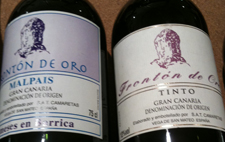
This week, our “set of titanium corkscrews” award goes to Jose Pastor. The 30-year-old Bay Area resident has a difficult business life selling Americans on the virtues of wines from such little-known grapes as Listan Blanco, Baboso, or Mantonegro from the Canary Islands and Mallorca. And since 2009, he’s added another challenge: selling his wines without Wine Advocate scores.

Citing fatigue of “living by the rule of the trade,” he told me at the recent tasting of his wines in New York that he has not journeyed to Maryland to present his portfolio to the Wine Advocate for two years. It’s also a philosophical difference over scoring.

“Wine is an agricultural thing,” he said. “You can’t score a tomato.”

He added that spending 30 or 40 seconds tasting a wine failed to capture everything about it. “You have to have a respect for the work that has been done. That’s hard to do without being there, meeting the people and seeing the land.”

So how does he sell his wine? He says that good retailers care how the wine got to the glass, not just whats in it, he says. He works with retailers such as Chambers Street Wines in NYC and Terroir in SF as well as restaurants.

“Things are really changing. People in the trade want to know more first-hand, to visit, to learn, to taste. And consumers too.” He says that it’s easier to undersand wine talk when it is coming from a fellow consumer, who describes a wine with food–or even over food, sharing the wine together. Then there are no points, no “chocolate and vanilla” descriptors.

“Back in the day, there were only two or three guys with a voice. Now there are many. It’s great for wine!”

* * *

The diversity that he celebrates in wine appreciation is also evident in his wines that represent one of the most exciting Spanish portfolios available in the US today. Read more…

John Slover, Solomonic sommelier

King Solomon was known for his wisdom. And when he ordered a baby cut in half, he made a woman cry.

John Slover is the Solomonic sommelier, though his splitting things in two is more likely to make people happy. When at Bar Henry, he introduced a bottle-splitting program, wherein diners could order 375ml of a regular bottle for only half the full-bottle price (No upcharge! The remaining 375ml is then available to other diners.). This encourages diners to experiment, by, as an example, having a half a bottle of white with appetizers and a half a bottle of red with the main course.

He’s continuing the wisdom of this strategy at Ciano, where he is the wine director at the restaurant that opened last year with Shea Gallante in the kitchen. Slover said wine sales have been strong, adding that the bottle-splitting program “has made money, certainly not lost any.” Two diners sometimes buy a full bottle and then order another half that they wouldn’t have normally ordered to try something new.

Slover divided the wine list into a “market” list where the splitting is allowed and a “reserve” list where it it is not. Unless he can broker a share on one of the pricey bottles. And he has done so, for example, selling a DRC Echézeaux 1985 for $1,200 per half to two tables. One evening, knowing a Rhone fan dining in the restaurant, he proposed a half of 1995 Henri Bonneau, reserve des Célestins, a Châteauneuf-du-Pape. The diner said, “Bring it on.” Then Slover proposed it to another diner who might be interested and he said “absolutely.” They enjoyed it so much they then went halvsies on a 1985 Rayas.

Let’s just hope Slover keeps his saber sheathed while doing his trademark bottle splitting. That would make us all weep.

Ciano, 45 E. 22nd Street, 212-982-8422

A transitional red: SP68


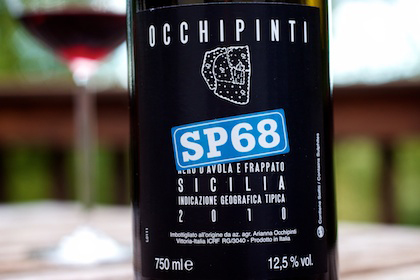
As the fall weather starts to arrive, here’s a great wine for the seasonal transition: SP68 red from Arianna Occhipinti. Hailing from an organic vineyard in Sicily, the wine blends the summer joy of Frappato with the more structure of Nero d’Avola. Serve it slightly chilled for maximum enjoyment. The 2010 is a bit more tannic than the 2009 but both are easy, fun drinking. (Search for this wine at retail)

In 2004, Arianna Occhipinti made her first Agricola Occhipinti wine at the ripe old age of 21. Her uncle, Giusto, makes the wines at COS, a traditional winery in Sicily. She makes her wines naturally; find out more about her in this Q&A. I poured this wine at a tasting in NYC recently and the group really liked it. I also showed them the picture of Arianna (right) and one person, commenting on her youthful looks, said it looked as if she’d never been up against a co-op board.

Holy SPIT: wine in the Eucharist

The Phoenix diocese just got news from their bishop: you can survive on bread alone. During Mass, that is, since he is removing wine from the communion, save for a few times a year.

Bishop Thomas Olmsted has taken the action as part of a new translation of the Mass that will start in coming months. The Arizona Republic reports that no other diocese in the country will be removing wine from the Communion. Since 1975, bread and wine have been available to parishioners during Catholic Communion. Bread and wine are believed to be transformed during the service into the body and blood of Christ. There is no obligation to take both and the Diocese of Phoenix’ press release underscored that “… bread alone makes it possible to receive all the fruit of the Eucharistic grace.”

Criticism mounted of the wine-less mass. So the chalice may not disappearing a Mass near you soon. Unless you live in Phoenix.


winepoliticsamz

Wine Maps


Monthly Archives

Categories


Blog posts via email

@drvino on Instagram

@drvino on Twitter


winesearcher

quotes

One of the “fresh voices taking wine journalism in new and important directions.” -World of Fine Wine

“His reporting over the past six months has had seismic consequences, which is a hell of an accomplishment for a blog.” -Forbes.com

"News of such activities, reported last month on a wine blog called Dr. Vino, have captivated wine enthusiasts and triggered a fierce online debate…" The Wall Street Journal

"...well-written, well-researched, calm and, dare we use the word, sober." -Dorothy Gaiter & John Brecher, WSJ

jbf07James Beard Foundation awards

Saveur, best drinks blog, finalist 2012.

Winner, Best Wine Blog

One of the "seven best wine blogs." Food & Wine,

One of the three best wine blogs, Fast Company

See more media...

ayow150buy

Wine books on Amazon: