Talking dirty: Rioja soil map


Mosel winemakers love to talk about the blue slate of their soils. A discussion of Chablis couldn’t be had without mentioning Kimmeridgian. Coonawarra has its terra rossa and Rutherford has its dust. But what about the soil in Rioja?

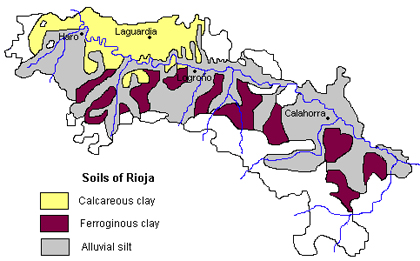
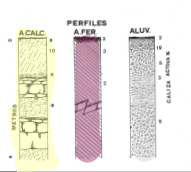
rioja soil terroirAs Telmo Rodriguez recently discussed at length, to his lament, the Rioja winemaking process favors process over place. So as a companion to that post, here is a relatively little-known soil map that Don Manuel Ruiz Hernandez put together. (In a funny contrast to how some New World vineyard owners are obsessed with mapping vineyard soils, this one is from 1972, the blink of an eye geologically speaking, I guess.) It shows three types of soil: chalky clay soil (yellow); ferrous (or ferruginous) clay soil (maroon); and alluvial, silty soil. Describing the differences, he writes “the ones with the most moderate of yields, the Calcareous-Clay ones, are, thus, the lands from which the most special qualities is achieved.”

It’s hard to generalize since other factors, such as elevation and sun exposure, play a part in grape characteristics and the overall wine quality. But many of the structured, most age-worthy wines from Rioja come from vineyards in the calcereous soils.

It is worth noting that the official subzones (map below) don’t match the soil types. Instead, Read more…

Wine LOLz from the Twitterverse

DrVino: Michel Rolland has an autobiography coming out? A magnum oakus, surely.

CraigCamp: hear the Oxygen network picked up the rights and will turn it into a micro-series
Wink Lorch: Bet it will appear late 😉
OlivierLandry: A very ripe comment on your part, good sir. #RollandPuns …I think we’ve extracted everything we could out of this…

In meme action, consider #mostinterestingsommintheworld:
@WineauxDLynnP: He finished inventory at Berns in 40 minutes.

@JosiahBaldivino: He taught Jesus how to turn water into wine.

@DrVino: He doesn’t decant because sediment is afraid to come out of the bottle.

@alpanasingh: He is a She

@ganzer_wein: (s)he routinely sells wines for $5000 a pop from the DRC…democratic republic of Congo

@JeremySeysses: He decided not to have his own label.

Telmo Rodriguez uncorks terroir in Rioja

telmo rodriguez
Telmo Rodriguez was in full cry when I met him in New York City recently. Although the 50-year-old “driving winemaker” studied enology in Bordeaux, worked a vintage at J.L. Chave in the Rhone, and for 25 years has made his own wines across Spain, what was on his mind when we spoke was Rioja:

“What do we know about Rioja? Just a few brands? Nobody wants to talk about site, or villages. Rioja is the next thing to discover. We don’t know Rioja. If you think you know Champagne and you only drink Moet et Chandon or Veuve Clicquot, you don’t know Champagne! You need to know the specific vineyards.”

Andre Tamers, who imports Rodriguez’ Remelluri wine, agrees: “This is the way that Spain has to move forward: away from brands and toward the land.”

Starting with the 2010 vintage, Rodriguez Read more…

Saveur finalist, Bordeaux 2011, Packers – sipped & spit

SIPPED: award
According to the illustrious Hosemaster of Wine, wine bloggers are barking poodles calling out for attention. So, yay, the editors at Saveur have included this blog as a finalist in the best wine and beer blog category. Woof! Click through to vote and see the complete shortlist (which includes some good ones but doesn’t include Hosey, sadly). [Saveur.com]

SPIT: vintage of the century
The commercially savvy Bordelais scheduled en primeurs during the quasi-holiday week before Easter. Why? Well, some rushed to pre-judge expressing “no interest” in the wines, while others went and tasted with full reports due soon. Rumor has it that some top chateau will cut prices by as much as 50 percent on the first tranche of 2011.

SIPPED: waistlines and increasing demographics
If NFL viewers are going to put down the Lite beer and pick up a wine glass, they might reach for a wine from Three Fat Guys, a new wine from three former Packers who weigh in at a cumulative 1,000 pounds. The linemen say they’re doing it because they like wine, not to make money, and with a paltry 126 cases made, they may actually mean it! [Arizona Republic]

Massachusetts wine shops worth seeking out

Massachusetts is a state coveted by wine retailers: with strong tech and finance as well as other industries, major research centers and the jet-set destinations of Martha’s Vineyard and Nantucket, it’s fair to say there’s a large population interested in wine. However, the state is one of the hardest for retailers to ship wine into. Fortunately for the locals, this lack of external competition doesn’t lead to a poor selection and high prices; some of the state’s wine shops offer some terrific wines and, even reasonable prices can be found. And as of last year, there’s no sales tax on wine (and beer and spirits) in the state, so that helps stretch the consumer’s wine dollar seven percent farther than other states. When I’m traveling, I always love to check out the local wine stores; here are a few that I have visited in my wanderings in and through the state in the past year.

The Wine Bottega, 341 Hanover St, Boston.
This terrific, small shop seemingly ripped out of Brooklyn and placed in the North End has a “manifesto” for “real” wine and is a points-free zone. The well-curated selection of the delicious esoterica of the wine world makes it a great stop for cru Beaujolais, wines of the Loire, sherry and more. Offers 10% discount on mixed cases as well as 15% on solid cases. Definitely worth a stop if you’re in the North End but they also ship.

Vintages, 53 Commonwealth Ave, Concord, MA
Owner Eric Broege clearly doesn’t get tired of talking customers out of obvious, big name wines in this well-heeled town because he doesn’t stock many. Instead, he offers lots of enticing wines from small Italian growers as well as some great domaines and estates in the Loire, Burgundy, Jura, Germany and the Left Coast. He has a small selection of craft beers too and even a few box wines from vignerons stashed beneath the counter. If every town in America had a shop like this, the nature of our wine discussion would be a whole lot different.

Gordon’s, 894 Main St., Waltham, MA
A bigger store, the list prices on some items appear to be a very full markup. But case purchases receive a 20% discount, which really gets your attention. I bought a mixed case of wines here while driving by last winter and was happy with the selection (including a few bottles of the rare Do Ferreiro Cepas Vellas, possibly one of the best two best white wines from Spain). One note: if you see a wine such as the Marcel Lapierre Morgon on the store’s website that might make you want to stop off of 95, call first to make sure it’s in stock. Good craft beers too, some at super-low prices.

The Brown Jug, 1 Jarves St., Sandwich, MA
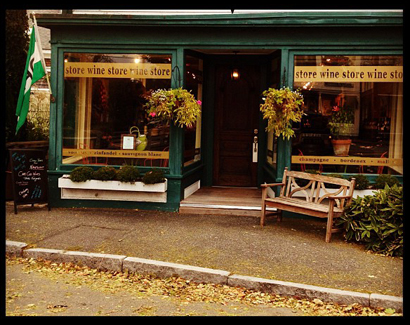
The Cape, for all its charms and attractions, remains surprisingly underserved by good wine stores. Through the thicket of package stores selling beer, plonk and lottery tickets on the Cape, the Brown Jug in Sandwich (pictured above) stands tall as the best that I have found. They have Vouvray etched into the plate glass window at the front of the store; inside, there are quite a few enticing selections ranging from Chablis to Domaine Huet and several Spanish wines from importer Jose Pastor. Good craft beers too. And several epicurean delights at the sister shop next door.

If you live in Massachusetts or go there a lot, which are some of your favorite stores and why? What do you think of the selections and prices in the state?
Do wine writers write only for the one percent?

Gawker ran a piece recently that rips into the idea that the “one percent” don’t have enough money to live on. What provoked it was a Canadian one percenter who wrote in Toronto Life about his plight, and details his living expenses and several others posed for the magazine and detailed their expenses. One line item that caught my eye–as well as those of numerous commenters at Gawker–was that a one percenter admitted to spending $800 a month on wine. Assuming a bottle every evening, that works out to $26 per bottle, or adding them all up, about $10,000 a year. Granted, this one percenter lives in Toronto so he has to buy his wine at the LCBO, which has higher prices than in the US.

Still, it does raise a question or two about wine writing: how often do wine columns recommend wines north of $26? Assuming the answer is pretty often, then are wine columnists writing for the one percent? (In fairness, Canada’s threshold for inclusion in the one percent is only about half what it is in the US and we’re extrapolating this all from one single guy’s spending on wine.)

Certainly some columns, such as the current Wall Street Journal’s, might be more openly trying to target the one percent than others. Still, a lot more than one percent of wine recommendations are north of $26 a bottle (and still a lot above $52, if we use that as the American one-percenter wine threshold) even wine writers aren’t consciously targeting the “one percent” reader. While it’s true that a reader can pick and choose from a list of recommendations, it’s still worth bearing in mind that if a reader were to have a $15 bottle of wine every other night, the total spend on wine a year would be $2,730, a significant figure for most household budgets. (Clearly, a $30 bottle every other night would be $5,460 and every night would be $10,920, etc.) While we wine writers often delight in wines from specific places, as opposed to “brands” that can source from multiple vineyards or even wine regions, we should strive to highlight those elusive wine picks, the singular bottles at reasonable prices. Then we would be doing our small part for decoupling “wine” from “snob” in America.

Related: “Why so few tasty American wines under $12? Wine importer Bobby Kacher

Veggie burgers – impossible food-wine pairing?!?

Okay, we just did an “impossible” challenge but it reeked of pipi and April foolery. So here’s something more useful: five veggie burger recipes via the Times, where the article was as high as number two on the most emailed article list over the weekend.

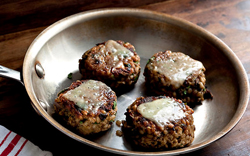
Seeing it on the way to the Trade Joe’s, we decided we would try it out here at the Dr. Vino World Headquarters. We made the “curried lentil, rice and carrot burgers” and they were pretty good (though the cumin smell will linger in the kitchen for days). It was so impossible for me to pair with wine that I went with a Bengali Tiger, the supremely balanced and utterly delicious IPA from Sixpoint brewery in Brooklyn.

There are other challenges on the list: Beet, Rice and Goat Cheese Burgers; Quinoa and Vegetable Burgers With Asian Flavors; Mushroom and Grain Cheeseburgers. Each has a particular aspect making it difficult, but at least a couple can offer some fun red wine pairings for vegetarians. Unless you think they are…impossible?!?

‘Virgin boy eggs’ from China: impossible food-wine pairing?

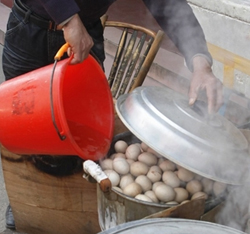
Ah, spring is in the air. And people around the world are thinking about eggs. Here, we have bunnies who lay colored and chocolate eggs. In China, it turns out, the springtime air in Dongyang fills with the smell of hot urine and the gastronome’s mind in that city then turns to…eggs. Let’s hear the recipe for this “delicacy” from Reuters: “Basins and buckets of boys’ urine are collected from primary school toilets. Eggs are then soaked and cooked in the urine.” A vendor touted the health properties, saying “If you eat this, you will not get heat stroke.” A shopper who was buying 20 eggs pushed the health angle further: “we will not have any pain in our waists, legs and joints. Also, you will have more energy when you work.”

Given China’s growing interest in wine, perhaps they need a little help with the wine pairing? If you were a sommelier in Dongyang, what would you serve with urine-boiled eggs–or is it impossible?!! A sauvignon blanc with notes of pipi de chat?


winepoliticsamz

Wine Maps


Monthly Archives

Categories


Blog posts via email

@drvino on Instagram

@drvino on Twitter


winesearcher

quotes

One of the “fresh voices taking wine journalism in new and important directions.” -World of Fine Wine

“His reporting over the past six months has had seismic consequences, which is a hell of an accomplishment for a blog.” -Forbes.com

"News of such activities, reported last month on a wine blog called Dr. Vino, have captivated wine enthusiasts and triggered a fierce online debate…" The Wall Street Journal

"...well-written, well-researched, calm and, dare we use the word, sober." -Dorothy Gaiter & John Brecher, WSJ

jbf07James Beard Foundation awards

Saveur, best drinks blog, finalist 2012.

Winner, Best Wine Blog

One of the "seven best wine blogs." Food & Wine,

One of the three best wine blogs, Fast Company

See more media...

ayow150buy

Wine books on Amazon: