A tale of two Pichons – peace in Pauillac

Rivalries and conflicts simmer throughout the world. At least one was resolved peacefully last week in a historic vertical tasting of the wines of the two Pichons.

pichon_baronAround 1850, faced with the inheritance laws of the Napoleonic code, Baron Pichon split his Pauillac estate among his five children: his three daughters got the larger share of the property but his two sons inherited the chateau itself and two-fifths of the vineyard. This action not only set up a rivalry between the two properties but also doomed legions of wine consumers to confusion between the two adjacent estates now colloquially known as Pichon-Baron or Pichon-Lalande. Read more…

Dog food: an impossible food-wine pairing?

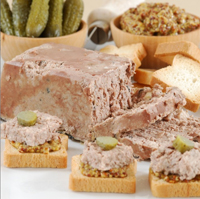
pate_dogfoodAccording to a study, it’s hard to distinguish pâté from dog food when served blind.

Robin Goldstein, author of The Wine Trials and chef/owner of a fake, Wine Spectator award-winning restaurant, is the lead author on the working paper from the American Association of Wine Economists.

The researchers served pureed Newman’s Own dog food alongside duck-liver mousse, pork-liver pâté, puréed liverwurst, and Spam. Of the 18 volunteers (who are these people?), only three could correctly identify the dog food.

So the question on the minds of wine lovers–and dogs–everywhere is: which wine pairs with dog food? A Sauternes? Late-harvest Gewurztraminer? Or is it…impossible?

Koreans work fast – and other book news

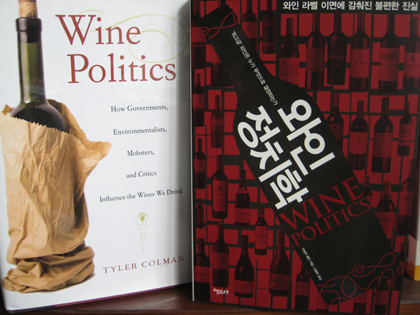
winepoliticskorean
Yesterday, the UPS man dropped off a box of books in Korean. I was amazed. Not so much at the fact that I got a stack of books in Korean. But the books had my name on the front–or so I understand.

It was only November when I first heard about the Korean edition of my book, Wine Politics: How Governments, Environmentalists, Mobsters, and Critics Influence the Wines We Drink. And now it has been printed–and with a better cover, I might add. Wow, that was fast.

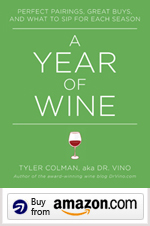
In news about my other book, A Year of Wine: Perfect Pairings, Great Buys, and What to Sip for Each Season, we have blog reviews!

Jeff at goodgrape.com writes: “It has ascended to the top of my intro. guide favorites list…Not only is his crystalline writers voice clear, concise and accessible, but he’s truly done something inventive with the introductory wine guide genre by interspersing his wisdom very suitably within the context of the calendar.”

Cathy Huyghe writes: “…this book makes wine fun. Relevant. Not stodgy. Easy reading. And by the end of it – or by the end of the month if you prefer – you’ll have learned something new. When it comes to books on wine, you cannot ask for anything more.”

Vinography posts Tim Patterson’s review of Wine Politics: “Dr. Vino knows his stuff–and rest assured, the writing is clean, clear and lively, not the least pedantic, and in no way requiring an advanced degree in econometrics.”

And, finally, you can check out a video Q&A with me done by the good folks at Organic Wine Journal. They also have some other vids there about cow horns with Mike Benziger or how to spit with Lyle Fass so you might just click away from mine to surf around their site.

Wine giveth years; meat taketh away

SIPPED: wine
Bloomberg reports : “Half a glass of wine a day may add five years to your life, a new study suggests. Drink beer, and you’ll live only 2 1/2 years longer.” Take that, resveratrol pill–a lot more fun!

SPIT: red meat
The New York Times reports on another study: “the men and women who consumed the most red and processed meat were likely to die sooner.”

Maybe that’s why red meat needs wine–a net effect on mortality?

Three reds under $20 – De Forville, Potel, Baudry

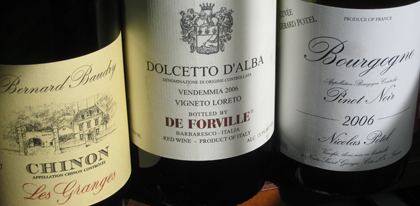
baudry_potel_forville
Okay, these wines have little to do with each other besides being red and under $20. Oh, and they’re tasty and balanced. And suitable for throwing in your basement with 90 days’ worth of canned food. (canned beans: an impossible food-wine pairing?)

De Forville, Dolcetto d’Alba, 2006. (about $17; find this wine) I’m not always a huge fan of dolcetto, aka “the little sweet one” but, perhaps more aptly, “the little tannic one.” But this one really struck a chord with truffle and earthy notes and a good balance of acidity, fruit and tannin. Second day open, just as good, which is always a good sign. Importer Neal Rosenthal’s site has some more specs on this family producer; I picked up this bottle at Pasanella & Son.

Nicolas Potel, cuvee Gerard Potel, Bourgogne, 2006. (about $19; find this wine) Given that Potel is a leading negociant house in Burgundy and from several tastings of 2006 red Burgundies, I was optimistic that this wine would work out when I added it to my virtual shopping cart. It did. Dark fruit aromas, good acidity and tannins make this a standout in that rough-and-tumble category of pinot noir under $20.

Domaine Bernard Baudry, “Les Granges,” Chinon 2007. (about $17; find this wine) Bernard Baudry is one of my favorite Loire producers of red wine and offers consistently good values across the line. Even in 2007, a difficult year for some, was strong at Baudry. This “Les Granges” has good depth and succulence, which combine to make it a natural match for unadorned grilled meats–or even those cans of beans. This wine was also going strong on day two…On a related note, the Baudry 07 Clos Guillot bottling, alluring, fresh and vibrant with a great crack of pepper on the finish, bears mentioning. But since it costs $27, we’ll have to talk about that in another post.

A gift from France to the US

On a forgotten page of nytimes.com yesterday, wedged in between stories entitled “Liberals Attempt Overthrow” and “Octopuses Taught to ‘Read,’” ran an unexpected wine story. To the tape:

PARIS Within the next month, Americans at Pacific coast ports will be able to enjoy gratuitously 3,600 bottles of French wines as the result of a generous gesture of the “little fellows,” or small producers of France. The consignment of wine left Le Havre yesterday [April 26] on the French liner Wisconsin after being inspected and tasted by representatives of the press.

Only the story wasn’t breaking news; it was part of a roundup of “100, 75, 50 Years Ago.” This item dates from 1934, a few months after the repeal of Prohibition. Unfortunately, their offering of “Château du Liot Haut-Barsac 1929 Riesling, Chambertin 1923 Champagne brut and 1835 Cognac” didn’t spark US wine consumption, which languished for several more decades. Now, let’s get back to those octopuses from 1959…

Max Riedel washes his snake in the bathtub

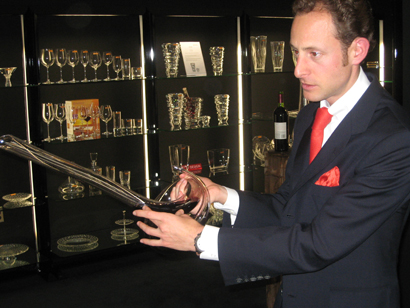
max_riedel
Recently, at a crystal glass tasting at the Riedel Manhattan showroom, Maximilian Riedel unveiled his latest $500 decanter called “Eve.” It resembles a coiled snake with a two foot protruding shaft. Needless to say, it was mouth blown. “Eve” derives from Adam and Eve; the snake theme came because Riedel was born in 1977, a year of the snake in the Chinese calendar.

He poured the wine from the bottle into the shaft and rolled it around in the double decanting chamber, which he designed and said was patented.

The question arose of how to clean the snake decanter. He said that he cleans his in the bathtub. (He admitted an intercultural faux pas when in Japan the week prior by saying as much to his local audience; apparently taking anything from the kitchen into the bathroom is taboo.) Ah, memories of the Seinfeld scene of Kramer trying to save water by washing lettuce in the shower…

Riedel goes to restaurants, he said, because he wants to be entertained. When dining, he asks to keep the decanter of wine he’s ordered on the table, saying, “I want people to see that I am spending more than $12 on wine!”

More to come about the Riedel taste test. In the interim, Riedel did offer some tips on how to clean Riedel crystal glasses.
* He said he puts his right in the dishwasher.
* If you have the time to hand wash, that works too. He cautioned against washing them the same evening since he said the sink can appear very small and the glass very big.
* For red wine glasses, fill the glass to the top with warm water and soak overnight to remove tannins. Dry with two dish towels, starting with the base, and working up to the balloon. Don’t hold the base while drying the balloon; rather, cup it if you can to avoid separating the stem from the balloon, which could cause a nasty injury.

Related: “Varietal stemware: genius or hucksterism?

Policy and practice at the Wine Advocate – Parker responds

In a recent posting, I published my correspondence with Robert Parker and Jay Miller concerning an apparent divergence between the ethical guidelines set down by Parker and the actions of some of the contributors to The Wine Advocate.

One claim that came up several times in the over 130 comments was that Mr. Miller took one or two trips to Argentina, organized and paid for by Wines of Argentina, a trade group representing over 100 wineries that also receives government funding according to their web site. I contacted Wines of Argentina and they confirmed that they paid for and organized the two trips and several people in the trade there also confirmed them. Robert Parker has also now admitted as well but referred to them as “vineyard tours.” There was apparently more to the trips than just that–multiple sources said that there were lunches and dinner at wineries, and I was also told by several people that Miller was ferried around the country by private jet during one visit.

I alerted Miller yesterday that Wines of Argentina had told me that the trips were comped and asked him for comment. Not long thereafter, Parker posted a message that indicated that Miller would no longer be able to take “vineyard tours paid by Wines of Argentina.”

Parker laid down ethical guidelines years ago–guidelines that are the source of so much of his authority and that have set the standard against which all other wine critics are judged. The divergence between the action of some contributors to the Wine Advocate and the stated policy was (and perhaps still remains) a legitimate and important issue given the power of the publication; if the Wine Advocate was bending the rules, that was something his readers had a right to know.

Over the weekend, on his web site, Parker characterized those of us raising these concerns as the work of “extremists who could care less about the truth.” On the contrary, the truth was precisely what I’ve been after. Perhaps the larger issue then is Parker seemed to resent that people wanted to know the truth. While Parker lamented the state of journalism, the examples he cites of good journalism seem to be anything that speaks well of him.

But journalism is precisely what I’ve been doing all along. I went to Parker and Miller with legitimate questions and they were evasive. I spoke with Wines of Argentina and the truth came out. That’s called journalism. Instead of lashing out with invective (“extremists” or “jihadists” or eliding wine bloggers with the Taliban) at me and others who have raised very legitimate issues, Parker should take this episode as indicative of the respect he commands and the seriousness with which the wine community takes the ethical standards he established long ago.

Since Mr. Parker has shown an affection for ending his interventions with quotes, here’s an aphorism that he might remember from his days as a lawyer: “If you have the facts on your side, pound the facts. If you have the law on your side, pound the law. If you have neither on your side, pound the table.”


winepoliticsamz

Wine Maps


Monthly Archives

Categories


Blog posts via email

@drvino on Instagram

@drvino on Twitter


winesearcher

quotes

One of the “fresh voices taking wine journalism in new and important directions.” -World of Fine Wine

“His reporting over the past six months has had seismic consequences, which is a hell of an accomplishment for a blog.” -Forbes.com

"News of such activities, reported last month on a wine blog called Dr. Vino, have captivated wine enthusiasts and triggered a fierce online debate…" The Wall Street Journal

"...well-written, well-researched, calm and, dare we use the word, sober." -Dorothy Gaiter & John Brecher, WSJ

jbf07James Beard Foundation awards

Saveur, best drinks blog, finalist 2012.

Winner, Best Wine Blog

One of the "seven best wine blogs." Food & Wine,

One of the three best wine blogs, Fast Company

See more media...

ayow150buy

Wine books on Amazon: