Pancakes: impossible food-wine pairing?!?

It’s National Pancake Week starting March 1–who knew? The timing coincides with the week before Mardi Gras, since pancakes have been a temptation worth avoiding during lent for 2,000 years now.

Site reader John G. requests that we get a jump on this hedonism a little early. I’m a pancake purist myself making them from scratch since it is so easy and tasty. After many years of suffering through inferior syrup (and–be damned–fake maple syrup!), I’ve discovered Grade B maple syrup. Darker in color and richer in flavor, it’s the best kept secret in syrup because the “B” thing reeks of inferiority. But don’t be fooled, it’s the real deal and well worth the tariff.

As to the pairing, I think nothing goes better with a stack of pancakes than a cup of hot, black coffee. But perhaps you are more daring than I. What do you think–which wine would you pair with pancakes, or is it impossible?!?

Headaches, histamines and GM yeast [ML01]

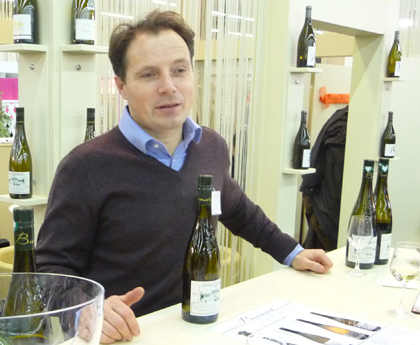
Hennie van Vuuren (right) suffers headaches after drinking young red wine. As a result, the professor in Biotechnology at the University of British Columbia has spent a large part of his professional life researching why. His solution: ML01, a genetically modified yeast.

It’s a coincidence that as Mark Bittman laments the lack of labeling of GM foods at nytimes.com, a story making the rounds in the Canadian press touts a “new” strain of genetically modified yeast for wines called ML01. According to the Vancouver Sun story by Randy Shore, ML01 is so prevalent that “If you drink red wine from the United States or Canada, there’s a good chance you’ve tried ML01 wine already.” You wouldn’t know about it because of the lack of labeling requirement.

I corresponded with Hendrik van Vuuren to learn more. Read more…

Move over Old Spice guy, here comes Zin man

Okay, this isn’t going to knock the Old Spice guy out of the advertising Hall of Fame. But, hey, it’s the best wine ad I’ve ever seen! I raise a glass of 14.4% alcohol zinfandel in the ad’s honor.

Addendum: cork marketers, take note!
UPDATE: I posted a few more details about making the ad.

Vandals, counterfeits, NZ, rack fail, new blog – sipped & spit

SPIT: wine shelf
Looks like they’ll need a mega cleanup in aisle 7! [Fail blog/youtube]

DESTROYED: international treasure
In Austria, vandals have uprooted and chopped to bits a 500-year-old vine. Hit the comments on what their punishment should be. [AP]

UPGRADED: the wine blogosphere
Mike Steinberger, wine columnist at Slate.com, has started a new blog. He says it is mostly for tasting notes, but he has already served up some juicy commentary about wine fraud. Add it to your feed reader! [WineDiarist.com]

SPIT: spelling
A BBC story highlights potential counterfeits of $8 supermarket wine in the UK. The tip off? Misspellings on the label.

SPIT: wine in New York supermarkets
Misspellings or not, wine is not likely to be sold in New York grocery stores this year since it was not included in Governor Cuomo’s budget. However, a group is still pushing the legislature to adopt a measure. [NACS]

SIPPED & SPIT: New Zealand’s bountiful vintage
Grape harvest in New Zealand may surpass 300 metric tons this year. Related: as volumes have been rising, bottled prices for exports have been falling. [Bloomberg]

Taylor Fladgate’s fine 20-year-old tawny

I don’t drink a lot of port. But a glass of tawny every now and then can be fun, even in the absence of Stilton, a roaring fire or a bearskin rug. In December, I poured some ports at the end of a tasting and they were more popular than I had imagined. One fifty-something participant commented how much he liked them but that he didn’t have the time in the winter to sit around and drink them. So he resolved to try a port in the summer. Indeed, that’s what those in the trade often do in Portugal, putting a 10- or 20-year-old tawny in the fridge and serving it chilled on a summer afternoon.

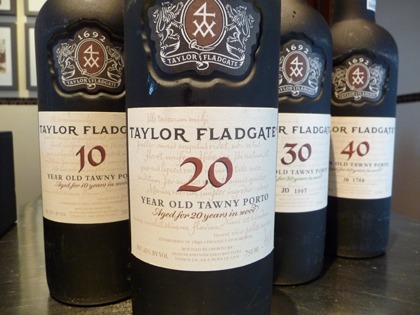
Last week I had the chance to taste through the lineup of Taylor’s tawny ports, from the 10-year-old to the 40-year-old. I’ll cut to the chase: I thought the 20-year-old was the most complete package, especially considering price. Read more…

Say hello to Scion, not a cheap car but a $3,200 port


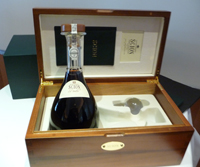
On Wednesday, Adrian Bridge, managing director of Taylor-Fladgate, unveiled to New York wine writers a new port. Or make that an old port: it was made in 1855, before phylloxera ravaged European vineyards.

An elderly lady of a “respected family” in the Duoro recently died with no heirs. She left much of her estate to Portuguese social security and the lawyers wanted to sell off the casks of old port to liquidate assets. Family records showed that the casks dated to 1855, a single vintage tawny, or cask-aged style. (Technically, a Colheita, a single-vintage, cask aged port. Vintage port, by contrast, does most of its aging in the bottle.) Through evaporation, the wine became concentrated yet the casks contained enough port to fill 1,400 bottles. The management at Taylor originally purchased the casks to add to their 40-year-old tawny, but, upon tasting it, they decided it merited a special bottling and have done so calling it “Scion.” In case you were thinking about picking up a six-pack on the way home for work–at a mere $3,200 a bottle, more than Krug Clos D’Ambonnay!–think again, since only two hundred bottles are destined for the US market.
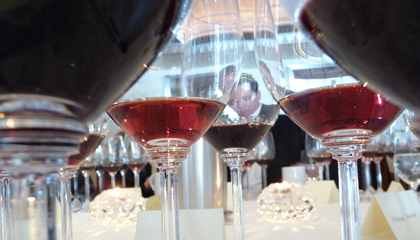
As you can see in the above photo, the Scion (middle glass) was even darker than the the 20-year-old and 30-year-old Tawnies in the glasses to either side of it. The aroma to me was subtle and, no doubt as a result of my being influenced by the story of casks reposing in a cellar, smelled sort of dusty more than anything else. But after some swirling, I was able to coax out some of the plummy complexity. On the palate, the wine was very much alive. The acidity was really striking for such an old wine, a fact that may come from different grape varieties, more likely, from a cool cellar, Bridge said. The wine exhibits some toffee, dried fruit notes, spice, faint orange zest, coffee grounds and not much sign of oxidation–surprising complexity for such a mature wine. And a rare treat to be able to drink it.

More to follow in a future post about their other, affordable tawnies.

Domaine des Baumard: under screwcap since 2005


Florent Baumard makes gorgeous, beautifully precise wines from Savennieres, Coteaux du Layon and Quarts de Chaume, among other appellations. His family has been making wine there since 1634. But since 2005, in a move somewhat at odds with the region and age-worthy wines, he’s been putting the wines all under screw cap.

The experiment first started in 2003. Frustrated by the different evolution of wines under cork, Baumard started with the Clos du Papillon bottling from Savennieres: Half the production went under cork, half under screw cap (aka Stelvin closure). Within two years all the still wines were under screwcap. I tasted the 2007 Clos du Papillon Savennieres and didn’t find it reduced but it was tight, presumably from youth. I also had a 1999 Clos de Saint Yves Savennieres, bottled under cork, that wasn’t showing too much evolution; instead it was rich, layered and deliciously complex as chenin blanc can be. So is it the right call? Who knows. One day in the future, it would be fascinating to taste some of those ’03s bottled under different closures.

I tweeted about the screw caps–not exactly breaking news, but interesting nonetheless–and someone joked if Florent wasn’t just a little bit Australian. No, he replied, but after his saga with verdelho, he admitted he admires their freedoms.

Loire: 2008, 2009, 2010 and more!

The Loire has such diverse wines–red, white, pink, sparkling, sweet–that there’s enough to keep a wine enthusiast’s attention for a long time. Add to that a refreshing level of acidity in the wines and there’s a lot to interest a foodie too since the wines pair so well with food. And of course they offer some of the best values in the wine world.

I had the opportunity to meet vignerons and taste over 300 wines last week in situ. Some of the wines were embryonic, barely finished fermenting and difficult to assess. Others had glorious amounts of age on them, a decade or three, including Domaine Huet and Domaine Baudry. (As I mentioned in a previous post, most of my time was at the wine trade show, the Salon des Vins de Loire, which tends to favor breadth over depth. But I did get to poke around in a couple of troglodyte caves hewn from limestone.)

I also blind tasted 70 Loire wines at the NY offices of Wine & Spirits a couple of weeks before I left. As a general sketch for such a large region, I’ve reached the following conclusions about the three vintages now or soon to be on the market: 2008 was noted by higher acidity and in some subregions, lower yields; 2009 has slightly rounder wines, which can be a good thing or a bad thing depending on your perspective and the wine; and 2010 is an exciting vintage, somewhere in between the two previous ones stylistically. I will add some more flesh to these bare bones in a future posts, particularly for Muscadet, some cabernet franc, and one heirloom variety. So stay tuned for some related posts in coming days and weeks.


winepoliticsamz

Wine Maps


Monthly Archives

Categories


Blog posts via email

@drvino on Instagram

@drvino on Twitter


winesearcher

quotes

One of the “fresh voices taking wine journalism in new and important directions.” -World of Fine Wine

“His reporting over the past six months has had seismic consequences, which is a hell of an accomplishment for a blog.” -Forbes.com

"News of such activities, reported last month on a wine blog called Dr. Vino, have captivated wine enthusiasts and triggered a fierce online debate…" The Wall Street Journal

"...well-written, well-researched, calm and, dare we use the word, sober." -Dorothy Gaiter & John Brecher, WSJ

jbf07James Beard Foundation awards

Saveur, best drinks blog, finalist 2012.

Winner, Best Wine Blog

One of the "seven best wine blogs." Food & Wine,

One of the three best wine blogs, Fast Company

See more media...

ayow150buy

Wine books on Amazon: