Is wine gluten-free?

The NYT had a lengthy piece about the impressive growth in the market for gluten-free foods, driven in large part by the wider diagnosis of celiac disease and gluten allergy in this country. Is wine gluten-free?

The short answer is: yes. Wine is made from grapes, not grains.

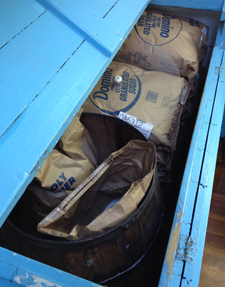
In a couple of rare instances, wine could come in contact with gluten at two points during winemaking. Apparently, barrels once had a flour-based paste to smooth the joints on barrel heads; the practice today is far from uniform. If you have a doubt, opt for a wine that doesn’t see any time in small, oak barrels, such as a Riesling. Further, gluten could be used to fine the wine, but other forms of protein, such as egg whites, are used more often. Even if a winemaker used a gluten-based substance for fining, the point of fining is to clarify the wine: the fining substance drifts through the wines, collects any unwanted particles and falls out to the bottom of the tank where it is left behind. Research using mass spectrometry found there to be less than 10 parts per million in finished (bottled) wine, below the 20ppm threshold for a food to be considered gluten-free.

Current labeling laws do not mandate that wines that come in contact with gluten are labeled as such. But the chances are pretty slim that any wines actually contain gluten. Thus it will be interesting to see if, going forward, more wines tout their gluten-free status on the label to tie-in with the food trend.
Burgundy visits – how much time does a critic take per domaine?

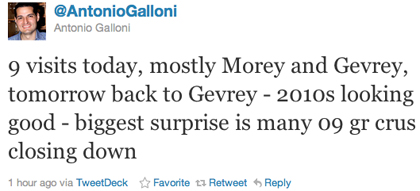
Coincidentally, two American critics are tweeting from their Burgundy visits right now. The critics are Antonio Galloni of Robert Parker’s The Wine Advocate and John Gilman, who publishes The View from the Cellar. Galloni offered this information from his trip on Twitter:

Nine visits per day, needless to say, would equal about 30 – 45 minutes per visit. So I asked how much time he spends at each domaine. He replied, “depends on the # of wines, key is to have everything ready in advance, put visits close together.”

If he was tasting the Bourgogne-level wines, village wines, premier crus and grand crus (if any) for reds and whites, and for two vintages, that was a lot of swirling and spitting! I asked if he had sufficient time to evaluate the wines. He replied, “Sure thing. Tasted ’10 reds, plus selection of 09s, no whites.” Galloni had been to Burgundy twice prior to taking over coverage of the region earlier this year.

I saw John Gilman was also awake and tweeting, so I asked him how long he takes per stop while in Burgundy. He said, “Depends on the size of the cellar–Drouhin or Jadot count as 2 stops–average is 1.5 hours- I like to take time to talk w/ vignerons.” Then he added, “most I did on single day on this last trip was 6–3 in morning and 3 in afternoon–started a 8h00 & finished up at 19h00–exhausted.”

Of wine and tulips [China]


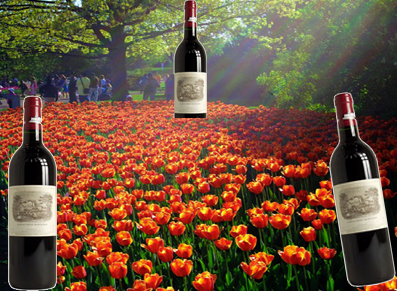
What has hints of red fruits, leather, tobacco, and tulips? Why, the wine investment market!

Elin McCoy reports from Hong Kong that a fund there will lend up to $641,000 (USD) for investing in wine–providing the investments are in the bank’s select list of 50 top names. She also reports that a new fund at Pacific Asset Management seeks to invest over $150 million in wine (it’s raising $30 million initially). There’s talk there of other funds diversifying into wine; some European wine investment funds have opened offices.

More money, chasing wines and returns while dodging counterfeits, smacks of tulip mania and the greater fool theory. When will some financial wizard develop a way to short wine?

One aspect of the wine market that defies tulip mania is the fact that even as more money appears to be rolling in, top Bordeaux prices are falling: the Liv-Ex Fine Wine 50 Index that tracks the last ten vintages of physical (not en primeur) Bordeaux first growths is down 18% in the past quarter. Interest in red Burgundy is up, as is interest in non-first growth Bordeaux. Breadth of wines is probably healthier than all the money funneling into a small group of wines and a broader index of wines is up 13% over the past year, but with declines in the past quarter. And a recent Hong Kong sale saw only 84% of lots sold. So maybe there is some sanity.

Hopefully, if it crashes, whoever is left holding the proverbial bag will have a corkscrew. And real, not counterfeit, wines.

Who’s threatening us now? “Coffee experts”!!

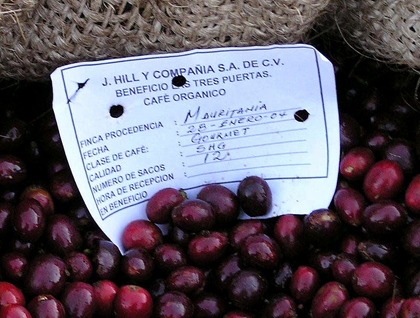
In a profile of Aida Batlle, a coffee grower in El Salvador, The New Yorker blows the lid on coffee’s imitation of wine. Check out all the ways how these above-average Joes are threatening us now:
* using word “terroir”
* rise of estate labeling
* a focus on harvesting good fruit
* existence of a barista guild certification
* frequent use of blind tastings, known as “cuppings”
* stating that coffee pros like their coffee served slightly cooler because it releases more aromatics at a lower temperature
* obsessing over gadgets, such as a $100 burr grinder

Hey, “coffee experts,” back off! We wine geeks already have all these areas covered. And on the iPad version of the story, they even have the gall to offer an instructional video of how to brew coffee. Come on, we know that wine has a monopoly on “how to serve” videos on the web! Next thing you know, “coffee experts” will be spitting their java into a Jets bucket!

One thing they dare bring to blind tasting is rigor. Get this: in the Cup of Excellence program, “judges must be able to describe samples the same way when they are presented at different tables, in different orders.” And the story’s protagonist nails her own coffee when a cheeky barista in Red Hook tried to trick her in a cupping!

But don’t worry, wine geeks, we still have one thing they don’t: point scores! Yes, I pity the “coffee experts,” since they are not able to substitute a subjective experience with the false pretense of objectivity–we still have that one covered!

Cheval Blanc, half bottles, Beaujolais, cot – sipped and spit

SIPPED: Bordeaux brands
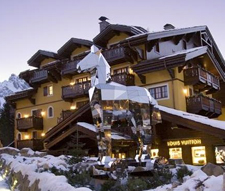
How big is your brand extension? Cheval Blanc, one of the wines in the LVMH stable, will include a Paris luxury hotel of the same name. [Decanter.com]

Oh my cot!
Things you learn in the WSJ: Cahors is the only region of France where malbec is still grown. Actually, Cahors only grows two-thirds of French malbec per ONIVINS.

SIPPED: diversity
Über-somm David Lynch will open a wine restaurant in SF where all sub-$100 wines will be available as 375ml for half price. Kind of makes you want to try two different halves, no? [SFGate]

SIPPED: Beaujolais
Beaujolais from 2009 and 2010 get thumbs up in a thoughtful LA Times article. “Beaujolais is a party,” says a natural winemaker who still seeks to capture the fun of the wine.

SIPPED: wine jobs
Senior account executive (PR), California Direct Sales Manager for an import portfolio, assistant cellarmaster internship at BALTHAZAR, executive assistant to the CEO at Acker Merrall, and more!

SIPPED: traveling with wine
HOW TO: Bring wine on board a plane
HOW TO: successfully check wine on a plane

Beaujolais nouveau in Paris


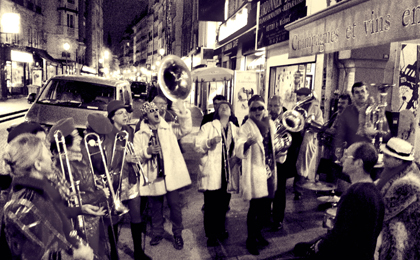
The 2011 Beaujolais nouveau debuted around the world this past Thursday. Much of it was airfreighted; American Tim Eustis discovered the lowest-carbon footprint version of the wine by riding his bike to six stores around Paris. He sent us this virtual postcard and pics.

By Tim Eustis

Beaujolais Nouveau succeeded in the United States and beyond thanks mostly to the marketing prowess of Georges Duboeuf. More fun than good, his wines are drinkable for perhaps a bottle, but no more. Then came the backlash against the flower label wine and cultured yeast 71B with its characteristic “gout de banane.” The exciting rise of more “natural” Beaujolais Noveau, that lacks the banana flavors we’d come to expect, is a pleasure to sip. I unlocked my bike and set out to survey the wines–and the joyous scene–in some exciting wine shops in Paris. Read more…

A Bordeaux convenience store sold 170 tons of sugar. Why?

A convenience store in the Bordeaux region was found to have sold 170 tons of sugar in a two-year period. Why?
The store manager says that the locals told her they were making jam. However, a court found otherwise, levying a $6,700 “suspended” fine for selling sugar to wine producers without recording their names as law requires.

Wine producers in certain zones of Northern Europe are allowed to add sugar to the grape juice (aka must) before or during fermentation, a process called chaptalization. The goal is not to have residual sugar in the wine, which would make it sweet. Rather, it is to boost the level of alcohol. Producers must declare the amount used and pay a tax of $17.50 per 220 lb of sugar added. The general impression has been that global warming has diminished the need for chaptalization as rising temperatures boost the natural sugar in grapes. During fermentation, yeasts chomp sugars to ferment into alcohol (and CO2). But one of the years in question was 2007, a cooler and rainer year than usual for the region.

Even though the authorities collect the taxes for chaptalization and other forms of enrichment, they are reluctant to divulge the figues to offer a window onto how widespread the practice is. Dismayed by the lack of official statistics, Benjamin Lewin estimates that 17 to 33% of French wine is chaptalized, depending on the heat of each vintage.

Would you pay the master’s price for a local apprentice?

Have you ever said, “I cannot wait to get home and pop open a bottle of red California Trousseau!” It’s not likely since the grape that hails from the Jura region of France is pretty rare in California: Only 49 tons were crushed last year (compare that to 400,000 tons of zinfandel; but since it fetched as much as $1,700 a ton vs an average of $442 for zinfandel, maybe the premium will attract future plantings). But maybe you should? Assuming the wines are done well, I think the expansion of grape varieties beyond the Big Six is potentially one of the most exciting stories to come out of California, nay, all of America.

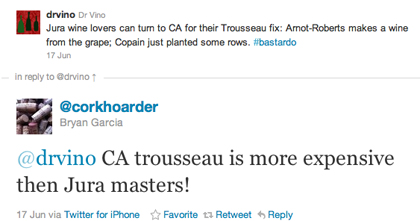
A while back, I tweeted about Trousseau (noir) from Arnot-Roberts, a wine that I liked. The Sonoma-based winery sources the fruit from Luchsinger Vineyards in Lake County’s Clear Lake AVA. Bryan Garcia, a savvy 24-year-old wine geek from NYC, tweeted back exclaiming that California trousseau is more expensive than the Jura masters!

It’s a fair point. But if all the Trousseau lovers of America bought only Jura wines, who would buy the domestic Trousseau wines–zin fans? Somehow, I doubt it. And without demand for offbeat wines, producers would would likely give up making them commercially.

More broadly, what do you think: do you have any sense of obligation to buy local or domestic wines because you like the idea or the story, even if you find them not price competitive–or even quality competitive, as Bryan suggests by invoking the “masters”?


winepoliticsamz

Wine Maps


Monthly Archives

Categories


Blog posts via email

@drvino on Instagram

@drvino on Twitter


winesearcher

quotes

One of the “fresh voices taking wine journalism in new and important directions.” -World of Fine Wine

“His reporting over the past six months has had seismic consequences, which is a hell of an accomplishment for a blog.” -Forbes.com

"News of such activities, reported last month on a wine blog called Dr. Vino, have captivated wine enthusiasts and triggered a fierce online debate…" The Wall Street Journal

"...well-written, well-researched, calm and, dare we use the word, sober." -Dorothy Gaiter & John Brecher, WSJ

jbf07James Beard Foundation awards

Saveur, best drinks blog, finalist 2012.

Winner, Best Wine Blog

One of the "seven best wine blogs." Food & Wine,

One of the three best wine blogs, Fast Company

See more media...

ayow150buy

Wine books on Amazon: