Small wineries tweet harder

underpantsgnome

What do a winery (and vacation cottage!) outside of San Diego and a Muscadine wine producer in North Carolina have in common?

They are both the quantitatively best winery adapters of social media: Eagle’s Nest Winery has over 6,000 followers on Twitter while Duplin Winery, “the world’s premier Muscadine winery located in Rose Hill, North Carolina” has nearly 4,000 fans on Facebook.

Whodathunkit! Do the small, new or off-the-beaten-path wineries tweet harder? Rounding out the top five twittering wineries are: a winery founded in 2001 in the Barossa Valley; a proto-winery in Sonoma that has yet to sell a bottle; an Iowa winery; and Mouton Noir wines based in Harlem. Read more…

Red wine powder, fraud, art exhibit, Lance – sipped and spit

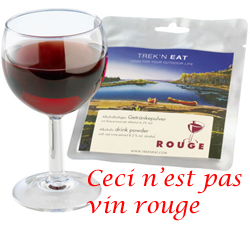
trekneatrougeSIPPED: Desperation!
The Swiss water purification company, Katadyn, has a wine-like product for non-discriminating, thirsty trekkers. They market a red wine powder that hikers can take on the trail, add some of their purified water, and voila, wine! Only they won’t call the 8% alcohol drink “wine,” mostly because the association of Chianti producers has complained. Katadyn’s defense: “We are well aware that we’re not even permitted to call the product wine. No grapes were used in its production, it’s simply a product that is flavored to taste like wine.” Coming next year: powdered beer. [Der Spiegel]

SPIT: family relations
Gary Heck of Korbel has sued his daughter, Richie Ann Samii, for defamation in postings on Craigslist. She denies the allegations in the Sonoma Press Democrat. The two are also involved in legal maneuverings over a multimillion dollar stake in the company.

SIPPED: fraud
Why do the empty wine bottles that fetch the highest prices on eBay correlate with those that are the most expensive and presumably authentic when full? An academic study (in progress) suggests counterfeiting. [Freakonomics]

SPIT: fraud
Researchers at the University of Bourgogne in Dijon have developed a way to track the barrels used for aging a wine: using a mass spectrometer. Each forest has an identifiable fingerprint for its lumber and that can be traced for 10 years after leaving the barrel. The researchers suggest that it could prevent fraud in wine, passing off a less expensive wine as a pricey one. But perhaps its best use might be to track whether the barrels came from the same pricey forest they claim to be from–or a low cost competitor. [New Scientist]

SIPPED: Wine paraphernalia on display
The Art Institute of Chicago has a two-month exhibit called “A Case for Wine: From King Tut to Today.” They describe the exhibit as the first of its kind at “tracing this beloved libation’s surprisingly significant role as a stimulus and source of artistic endeavor.”

SIPPED: red wine in the Tour
And if you were third overall in the Tour de France, what would you imbibe the evening before the rest day? Check out Lance Armstrong’s tweet for his answer: “Made it to Limoges…Gonna have dinner, drink a glass of red wine, talk to my kids, and crash out!!” Hopefully it was the real deal and not the powdered “wine.”

Obama’s gift to Berlusconi: new American wine in old floorboards

What could President Obama bring Prime Minster Berlusconi as a gift for the host of the G8 summit? Berlusconi, an affluent and powerful man, can already get pretty much whatever he wants delivered to him poolside, after all.

Obama chose to present him with something he might never have had before, a gift of American wine! Specifically, a wine from the Vermentino grape grown in North Carolina’s Yadkin Valley made by Raffaldini Vineyards.

See the video below where Thomas Salley of Raffaldini explains how State Department officials requested samples of the wine from this Italian American family. And how the wine will be presented in a wooden case using old flooring from the Oval Office. Reduce, reuse, recycle!

Also note the transcript provided by FOX 8 in High Point NC, which hilariously misquotes Salley as saying, “The Vermentino grape is Sardinia variety so it’s native the the island of sardine.”

UPDATE: Whoops, Obama gave the wine to the Italian President, Giorgio Napolitano NOT Prime Minister Berluscsoni. Berlusconi will have to bum a sip from him.

Can social media save the day for wineries?

125298482_d311563fcc_mToday’s Wall Street Journal has a piece on the luxury wine market that’s either sobering or heartwarming. If you’re in a producer, it’s probably sobering to read more about the sluggish sales, depressed prices for wines, the prospect of lost pricing power in the future, and possibility of increased merger and acquisition activity. But if you’re a consumer who is into high-end wines, it’s heartwarming to have the possibility to scoop up bargains, as one wine consumer does in the story.

The article suggests that “some of the newer operations [wineries] are using new marketing techniques to cope.” A case study:

Alpha Omega, a boutique winery in Rutherford, Calif., has begun using online services Facebook and Twitter to reach out to its customers. The winery three years ago began targeting consumers directly, and the strategy is now paying off; revenue is up 40% so far this year, compared with a year ago, in part because it doesn’t have to share many revenues with a distributor, says co-owner Robin Baggett.

Call me a skeptic, but I fail to see how the winery’s 296 friends on Facebook, 407 followers on Twitter and no blog can really help them move their wines (even if one of their tweets had a Palin-esque all caps consisting simply of “I love WINE.”) Their range of wines, crafted by winemakers Jean Hoefliger and Michel Rolland, starts with a $28 rosé and moves up to a $480 three-pack of reds in a wooden case. The WSJ article states that wines north of $25 are experiencing “a sharp falloff” so there must be some other secret sauce at Alpha Omega.

If it’s selling directly to consumers and bypassing distributors, then great. But I would imagine in this case that the 20% discount to club members speaks more loudly than their tweets.

Can social media really save the day for wineries? A story making the rounds these days is that the internet devalues everything it touches. But if both luxury and non-luxury wineries can somehow make social media work to increase their profitability while lowering prices to consumers, then that would be a heartwarming tale for all.

Apera, topaque, vintage, lickoffable – Aussie fortifieds grasp new names

Earlier this year on this blog, we put our heads together to try to come up with a name for port style wine, made in America. Well, thanks to a new bilateral accord with the EU, Australian winemakers found themselves in a similar situation of needing to find a new name. And here’s what they came up with: nothing. That’s right, they will scrap use of the word “port” and describe their fortified, port-style wines as either “vintage” or “tawny,” depending whether it is from one vintage or a blend of several and whether it is aged in bottle or in barrel.

However, other fortified wines whose names conflicted with European place names have gotten new names. Heretofore, when ordering a glass of sherry style wine made Down Under, the proper term to use is Apera, which is a gentle riff on aperitif. And the wines formerly known as Tokay, a name that clashed with the sweet wine from Hungary, will now be known as Topaque. Eegad, that sounds like something from a medicine chest, not a liquor cabinet.

But if the Australian group for renaming fortified wines had listened to one suggestion they might have come up with something zippier. At a recent tasting, a non-Australian member of our group described these unctuous sweet wines as “lickoffable,” as in you want to drizzle them on your partner’s body and lick it off. Yikes! What a way to boost…sales!

jamesgodfreyJames Godfrey (pictured right), winemaker for thirty years at Seppeltsfield in the Barossa Valley, told me that he saw the new names as an opportunity. The term sherry has “a lot of baggage,” he said, elaborating that the new name will give them an opportunity to energize their new category of aperas, including dry, medium dry and medium sweet (which replace Fino, Amontillados and Oloroso), with younger consumers.

To find the names, a trade group generated about 200 names that could still be trademarked and then ran them by some producers, journalists, sommeliers and shop owners to come up with a list of 20 finalists. Then they surveyed 600 consumers to come up with the winners, apera, topaque, vintage and tawny. (If you want to see more on their strategy for developing the “New Era” names, check out their incredibly detailed report here as pdf.)

What do you think about the new names? A clean break or sour grapes? And what of “lickoffable”?

And stay tuned for part two of this exciting story to see what I call it when I actually taste a bottle of Topaque!

Gallup: “On Mars, They Drink Beer; on Venus, Wine”

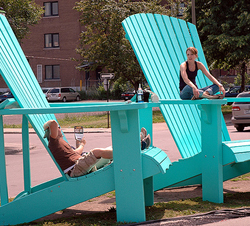
manwomanchairIf an alien landed in a room full American wine drinkers, it would meet mostly college educated, AARP eligible women, probably not from the midwest. There would be relatively few men aged 18 (!) to 49. So says the polling group, Gallup. Almost.

In their annual survey of how and what American drinks, the smokin’ pollsters at Gallup point to a gender gap where men prefer beer and women prefer wine. (For beer-wine-spirits preferences, men are 58-19-18 while women are 21-50-24. Click through for full summary and charts.)

How does this square with your experience? In my own, I find a lot of enthusiasm for wine among them there young folks. And men and women seem equally into wine. But my evidence is purely anecdotal!

As to the economic effect of the recession, they say it is hard to sort out. But their main finding is that the percentage of Americans who drink alcohol is the same as last year, at 64%. Meanwhile, over on the Big Board, The AP has this about the quarterly numbers from Constellation (STZ): “Sales for the company, whose brands include Robert Mondavi wines and Svedka brand vodka, dropped 15 percent to $791.6 million from $931.8 million on the stronger dollar as well as the sales of the value spirits business, spirits contract production services and some Pacific Northwest wine brands.”

Where in the wine world are we? Picturesque but marginal edition

mystery0701

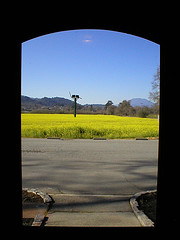
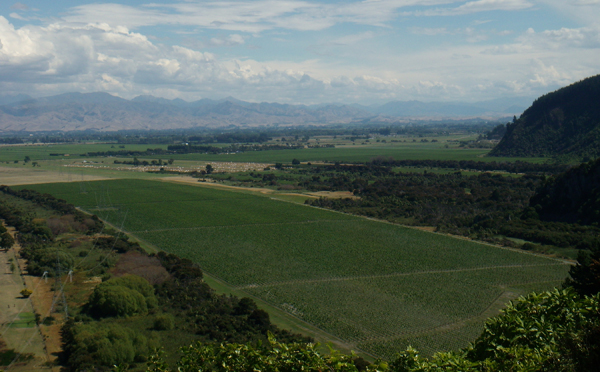
We haven’t done one of these for a while. But a site reader thought he could stump everyone with this shot from his travels (click to enlarge). As a clue, he writes “while this vineyard is in among the more picturesque parts of the region, it’s by no means the part of the region you go to to find the best wine.”

Details to follow! But in the meantime, where in the wine world was he?

UPDATE: Good guesses! The picture comes from kiwi lover Eric Arnold, author of Read more…

Bottles as bricks, jugs, sprawl, Holy wine – sipped and spit

wobo
SIPPED: reusing wine bottles
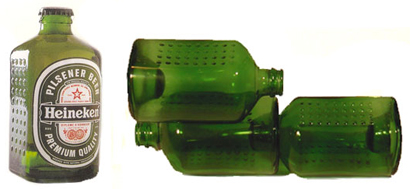
We like reusing corks. And we previously saw the 13,500 bottle wall house previously. And recently another bottle wall surfaced on reddit (though it may not be wine bottles). If this trend keeps up, a winery may soon make the equivalent of Heineken’s WOBO bottle, a brick masquerading as a bottle!

SIPPED: jugs
Dottie Gaiter and John Brecher recommend jug wines. But little jugs, really, just magnums. No Carlo Rossi. [WSJ]

SIPPED: viticultural sprawl
On Friday, the federal authorities that regulate wine gave the thumbs up to a new American Viticultural Area. And true to our rule, that the bigger they are, the more useless they are, this 29,914 square mile sprawlapalooza, our largest AVA, covers portions of Iowa, Minnesota, Illinois and Wisconsin and will be known as the Upper Mississippi River Valley. The TTB writes in the announcing document (found here as pdf) “We designate viticultural areas to allow vintners to better describe the origin of their wines and to allow consumers to better identify wines they may purchase.”

SIPPED: divine intervention
An Italian priest blamed Holy wine he had consumed at four masses that day when he was pulled over–and arrested–for drunk driving. [Daily Mail]


winepoliticsamz

Wine Maps


Monthly Archives

Categories


Blog posts via email

@drvino on Instagram

@drvino on Twitter


winesearcher

quotes

One of the “fresh voices taking wine journalism in new and important directions.” -World of Fine Wine

“His reporting over the past six months has had seismic consequences, which is a hell of an accomplishment for a blog.” -Forbes.com

"News of such activities, reported last month on a wine blog called Dr. Vino, have captivated wine enthusiasts and triggered a fierce online debate…" The Wall Street Journal

"...well-written, well-researched, calm and, dare we use the word, sober." -Dorothy Gaiter & John Brecher, WSJ

jbf07James Beard Foundation awards

Saveur, best drinks blog, finalist 2012.

Winner, Best Wine Blog

One of the "seven best wine blogs." Food & Wine,

One of the three best wine blogs, Fast Company

See more media...

ayow150buy

Wine books on Amazon: