Stitches, cover typo, Valencia, paper bottles, Burgundy – sipped & spit
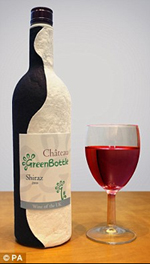
SPIT: carbon footprint
A cardboard wine bottle, similar in material to a milk carton, may soon be found in British supermarkets. Its maker claims it has only a tenth the carbon footprint of a glass bottle. [Daily Mail]

SIPPED: Valencia
Proava.org reported last month that Jay Miller would lead a “master class” of Valencia wines in the region this month. An email to Miller last week requesting comment did not garner a reply. It appears that his visit to neighboring Murcia has been canceled or postponed.

SIPPED: Burgundy in Hong Kong
Interest in Bordeaux softens while “Burgundy’s on fire and sizzling.” [Bloomberg]

SIPPED: summer fun
A fun slide show (from July): A Wine Tour of Collio, by Vespa [NYT]
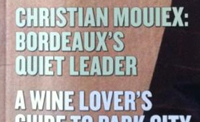
SPIT: copy editing
The cover of a recent Wine Spectator misspelled Christian Moueix, “Bordeaux’s quiet leader” and a winner of the magazine’s Distinguished Service Award.

SPIT: opening a bottle with a shoe
A reader tries to open a wine bottle with a shoe at a party and gets a trip to the hospital and six stitches for the effort. [comment]

SIPPED: rules
A 92-year-old woman in Britain was not allowed to buy a bottle of whiskey since she didn’t have ID, only a pacemaker certificate. [Daily Mail]

Lobstah and a surprising cavah

During the recent, week-long power outage, we sought refuge in an undisclosed location that may or may not have been the Commonwealth of Massachusetts. We found a bottle of “brut nature” cava German Gilabert (about $15; find this wine) at a local wine shop and got some lobstah rolls. This is hipster cava with a secondary fermentation in the bottle, six bar of pressure, no dosage and overall a very solid match!
Interestingly, a little of the cava remained in the bottle and I left it on the counter. A couple of days later, I poured it in a glass and was surprised it was bubbly! I tasted it and it showed no signs of deterioration.

I asked the wine’s importer, Jose Pastor, via email for his thoughts on why this bottle held up so well. He was puzzled by the persistence of the bubbles, pointing out that he likes to decant many (grower) Champagnes and that reduces the fizz. As to the lack deterioration, he said that many of the (natural) wines from his portfolio often actually show better after being open a couple of days.

As several small producers in Champagne are making their bubbly more wine-like with less fizz, perhaps giving sparkling wines some air and serving in wine glasses will be a good way to go. What have you found in your experiments in giving bubbly some air?

From the annals of winemaking: flash detente

St. Helena resident John Gillespie tweeted the other day: “Trade and consumer alert – bad harvest weather in CA meant lots of grapes (Napa Cabs included) went through “flash détente” machines.” Since I am a political science junkie, I thought SALT II had finally made it to Napa!

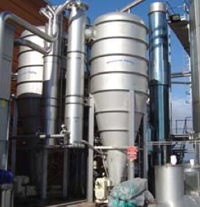
But instead of laying down weapons, some vintners appear to be ratcheting up technology as Mother Nature dealt them a third consecutive growing season that was relatively cool. Wines & Vines, a trade publication, ran a story last year on Flash-Détente, which roughly translates as “instant relaxation.” They report that by heating the grapes to 185ºF and then sending them to a vacuum chamber to be cooled, the the technology increases extraction from red grapes while minimizing bitter seed tannin and pyrazine (vegetal) odors. The finished wine also has a darker color. Because some of the water content of the grapes has been vaporized, the pre-fermented juice (called “must”) has a higher sugar content, which will result in higher alcohol or will be adjusted down in some way. Developed in France, the first Flash-Détente machines arrived in California in 2009.

Here endeth today’s Flash class on winemaking.

Are you for Champagne disgorgement dates? We are!

When you’re shopping for bubbly between now until New Year’s Eve, how will you know how long that nonvintage bottle has been on the shelf? If there were a disgorgement date on the label, you would have a better clue.

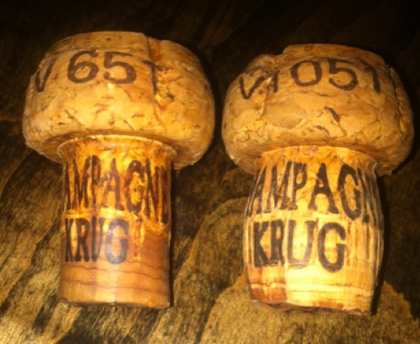
Over the weekend, Jancis Robinson tasted two Krug Grande Cuvée wines and commented on Twitter how different they were. Antonio Galloni of Robert Parker’s The Wine Advocate replied to her that the WA has not reviewed Champagne without a disgorgement date since 2009. (See exchange below.) Jon Bonné of the San Francisco Chronicle wondered how many writers it might take to adopt the same policy to force the producers’ hand in the region. It’s a stick approach.

Here’s a carrot for the producers: disgorgement dates will engage the most interested consumers. These are the ones that should be of particular interest to producers since they would look up further information on the producer web site and alert their world to their experience (good or bad) via social media.

Disgorgement dates are important. After the jump, check out Champagne writer Peter Liem, who is pro-disgorgement labeling, giving his reasons why they are important. I’m in favor of Champagne producers putting some sort of legible, comprehensible form of disgorgement dates on the (back) label. If you are too, hit the comments! Read more…

Snoozing, wine list advice, Porsche, Cal ABC – sipped & spit


SIPPED: nap time
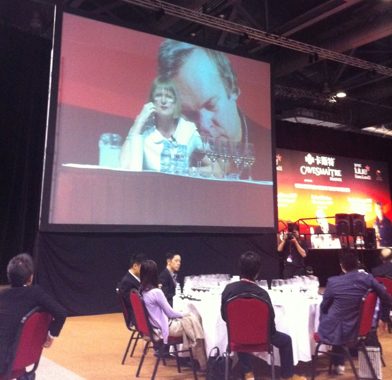
James Suckling tweets this picture and comment from Hong Kong: “Surreal picture of Bob Parker and @jancisrobinson at #wfhk11.” [Yfrog]

SIPPED: restaurant advice
Start at the back of a wine list? Levi Dalton offers some excellent and provocative suggestions on how to navigate a wine list based on his covering for my class last week when I was snowed under (literally). [SoYouWantToBeASommelier]

WANTED: 1870 Lafite
A restauranteur friend of the Pentagon chief will uncork an 1870 Lafite Rothschild for him on New Year’s Eve as a result of the successful Bin Laden missin. [CNN]

SIPPED: Malbec for Porsches
Isn’t that the trade that Adam Smith wrote about? It’s happening now in Argentina. [Bloomberg]

SIPPED: liberalization
The California Alcohol and Beverage Control has issued new regulations on “third-party” marketing and advertising of wine. It was previously a gray area but the reform clarifies and liberalizes. One commentator in this Wines & Vines story suggests that even Amazon, the retail giant that previously called off a foray into the wine biz, might be attracted back to the space now.

And from the annals of wine shop emails, guess which region is under discussion here? “…his intimate knowledge of each butt’s character was incredibly impressive…”

Three penis wine – impossible food pairing?!?

A team from National Geographic ventures into a pharmacy in Hong Kong. They try to discern the medicinal from the “magic potions.”

Bringing back memories of The Great White North, they crack open a bottle of mouse wine–yes, it is what you think it is. Then they sample three penis wine described as “a delicate blend of dog, deer, and seal penis” that helps kidneys and “male sexual power.” They describe it as “creamier” than the mouse wine. Go figure.

We usually try to pair wines with wacky foods, but what dish would you pair with three penis wine? Or is it too hard, nay, impossible?!?!

ht guyawoodward

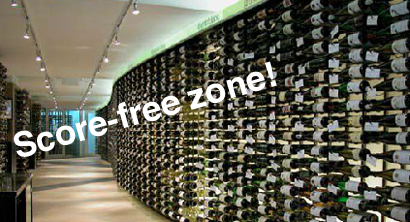
There’s no point! Wine retailers that say no to scores

An item on Bloomberg yesterday detailed how Spaniards are drinking less wine, which has prompted Spanish wineries to pursue export markets more. From this perspective, it’s partially understandable why Spanish wineries might want to pay a fee to invite Wine Advocate critic Jay Miller to their regions. They want to crack into the US market and they figure the best way to do so is to get a score from the Wine Advocate (even if one document from the regional organization referred to the scores as “Parker points”).

But that sales strategy is sooo 1990s! In my view, many American wine consumers have moved beyond scores, and an increasing number of wine shops have too. What do you think: should the wine industry move beyond scores? Are scores less relevant today to consumers in your experience than they were five or ten years ago? It seems to me that today the trade clings to scores more readily than consumers do. But one importer I spoke with recently Jose Pastor, has said no to scores.

I asked the Twitterverse for shops that do not use third-party tasting notes or scores. The unverified responses appear after the jump–hit the comments to keep the list going! Read more…

Regional group charges wineries fees for Wine Advocate tasting

How do wineries prepare for a visiting critic? In Murcia, a region in the southeast of Spain, the answer this month is: they pay.

Correspondence has surfaced from a regional association to the wineries entitled “Urgent: winery participation in Jay Miller’s visit.” Jay Miller reviews Spanish wines for Robert Parker’s The Wine Advocate. The secretary of the association lays out the following fees:
* €200-300 fee for each wine sent to taste
* €500 per wine selected for a tasting “masterclass”
* €1,000 euros for a winery to receive a visit from Jay Miller

The total sum sought from wineries was €29,000 ($40,000).

I spoke with the sender of the email, Read more…


winepoliticsamz

Wine Maps


Monthly Archives

Categories


Blog posts via email

@drvino on Instagram

@drvino on Twitter


winesearcher

quotes

One of the “fresh voices taking wine journalism in new and important directions.” -World of Fine Wine

“His reporting over the past six months has had seismic consequences, which is a hell of an accomplishment for a blog.” -Forbes.com

"News of such activities, reported last month on a wine blog called Dr. Vino, have captivated wine enthusiasts and triggered a fierce online debate…" The Wall Street Journal

"...well-written, well-researched, calm and, dare we use the word, sober." -Dorothy Gaiter & John Brecher, WSJ

jbf07James Beard Foundation awards

Saveur, best drinks blog, finalist 2012.

Winner, Best Wine Blog

One of the "seven best wine blogs." Food & Wine,

One of the three best wine blogs, Fast Company

See more media...

ayow150buy

Wine books on Amazon: