Dr Vino's wine blog
wine talk that goes down easy
Pierre Peters and Domaine du Bagnol rosé
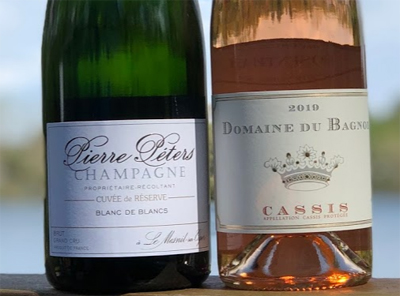
I’ve been leading a ton of Zoom tastings during this quarantine period–a Zoom boom, if you will. We had this pair with a group recently and they really hit the ball out of the park: Pierre Peters, “Cuvée de Réserve,” Champagne and the 2019 rosé from Domaine du Bagnol in Cassis. (Find these wines at retail)
The Pierre Peters has incredible depth of flavor and is on my shortlist for best mulitvintage Champagnes. As Rodolphe Peters explained to me in my visit last year, it is entirely from the estate’s 19.98 hectares–fully half the fruit comes from the famed Les Chétillions vineyard. It has a big helping of the reserve wine, which is from a “perpetual reserve” (solera) started in 1998. Rodolphe said that he really wants this “flagship wine” to be “exceptional” because it will be most people’s first experience with their wines. Based on our Zoom call over the weekend, he just made a lot of people happy.
Rounding out our Mother’s Day duo, we had a stunner from the minuscule appellation of Cassis. Snuggled right on the Mediterranean between Marseille and Toulon and a national park, the tiny appellation has only 200 hectares (500 acres) of vineyards and a dozen producers. Domaine du Bagnol’s 7 hectares (17 acres) lies a short walk from the charming fishing village, under the spectacular bluff of the Cap Canaille. The estate has been certified organic since 2014 and this wine draws on grenache (55%), mourvedre (31%), and cinsault (14%). Although 2019 was a hot vintage, the wine is really stunning. It opened a lot of eyes to the potential of rosé being a wine of substance, rather than a toss-it-back quaffer. According to Rosenthal, the importer, only 500 cases of this make it to our shores. Run, don’t walk!
May
26
2020
Comments Off on Pierre Peters and Domaine du Bagnol rosé
Pierre Peters champagne with Rodolphe Peters
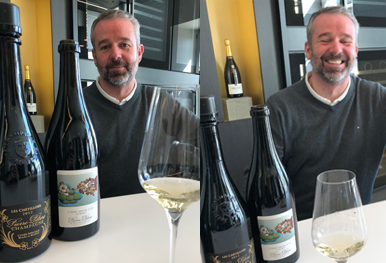
One winery I wanted to be sure to visit when I was in Champagne last month was Pierre Péters. I have always tremendously enjoyed the racy wines in the US and Rodolphe Péters not only commands a lot of respect in the wine world for his Champagnes but I had heard he had a new (sparkling) wine project in California I wanted to learn more about. Despite wanting to find it, I drove right by the winery in Le Mesnil-sur-Oger–there’s no sign and it looked like a construction site.
Rodolphe Péters, who has made the wine since taking over from his father in 2007, met me and apologized for the mess. He said the project was taking longer than expected (which renovation hasn’t?). Rodolphe is a sixth generation farmer and a fourth generation winemaker. The estate is a renowned producer of blanc de blancs Champagne from their 19.98 hectares, which contain 65 parcels on the thin topsoil and chalky subsoil of the famed Cote des Blancs area. Only his grand cru wines are available in the US market (While he does make wine that is not grand cru, that stays in the French domestic market and the US receives only grand cru wines.
Rodolphe graduated as an enologist in 1992 but didn’t dive right in to Read more…
May
29
2019
Three questions with…Evelyne de Pontbriand of Domaine du Closel

On the sidelines of her NY distributor’s recent tasting, I grabbed a quick three minutes with the supremely lovely Evelyne de Pontbriand. She is the third consecutive woman in her family to run the estate Domaine du Closel located at the Chateau des Vaults in the Loire region of Savennières.
Aging Savennières: underrated or overrated?
I think it is quite underrated. I have a whole collection of old Savennières, unfortunately not older than 50 years old but they are fantastic. I did a big tasting a couple of years ago for the 50th anniversary of the appellation with 50 vintages. it was really very interesting. I think they get another dimension when they age and they are more and more, very interesting food wines.
Botrytis: underrated or overrated?
I think botrytis is…hmm, that’s difficult. I don’t think people really know what it means. I think it might be overrated. Now that we are harvesting with no or very little botrytis, the wines are very pure and they really reflect the terroir more. And that is really our aim.
Chenin blanc: underrated or overrated?
Definitely underrated! It is a fantastic grape. Its versatility is really interesting. You have incredible sweet chenin blanc or very dry chenin blanc. You don’t really recognize the grape because it expresses the terroir, which is what I think is most interesting whether in Savennières or Vouvray or Swartland, it is going to taste very different. It always has this freshness because of its acidity.
So, maybe I need to rephrase: great grape, or the greatest grape?
Ha, I think the greatest grape of the future! It can face climate change because it has so much natural acidity so it doesn’t become flat. We are dong a big congress in July and this will be one of the questions.
May
8
2019
Warriors toast NBA title with actual champagne!

The Golden State Warriors won their second NBA title in three seasons last night. As a hoops fan, the most impressive stat for me was 147 assists on 216 made baskets–teamwork! But as a wine geek, we here at the Dr. Vino World Headquarters had to wonder…what would the team pop to celebrate in the locker room?
Would the owners cheap out as so many MLB owners do and use bubbly that could be picked up at any 7-11 on the way to the stadium?
We asked a Russian to hack the feed from the locker room to see what they sprayed. (Okay, our source was actually ESPN’s Darren Rovell.) This Warriors team did not hold back! To celebrate this title the doused each other with magnums (natch) of Moët Impérial “Golden Luminous”–a limited edition of the Moet nonvintage that Rovell says are valued at $1,200 each. (Search for this wine) Given the size of the ice bucket, that could have set the owners back about $200k, if the bubbly wasn’t donated by LVMH.
If you want to celebrate in a similar style, the “regular” Moet Imperial is about $40. Or get a more singular wine with a grower Champagne for the same price. (Or even a new wave sparkler from the Golden State!) And throw in a Warriors Champions locker room towel for $17.99 and you can have a similar experience for a fraction of the price. Ski goggles optional. Read more…
Jun
13
2017
Veni, vidi, Vietti – Vietti winery sold to Americans
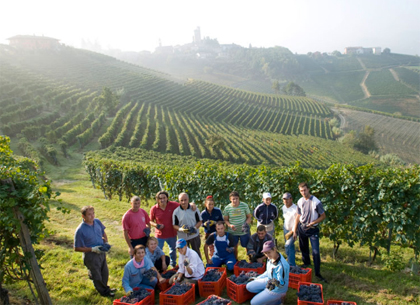
Vietti, the Barolo winery founded in 1893 and known for its single-vineyard wines, has been sold to the American Kyle J. Krause. According to Wine Spectator, the sale includes the winery in Barolo’s Castiglione Falleto, the brand and 84 acres of vineyards. Luca Currado, enologist and current head of the winery, will be staying on as CEO. The parties did not reveal the price paid.
The story is a curious since top vineyards in Barolo generally get sold to…people in Barolo. Perhaps the increased interest in the wines of Barolo is driving international investor interest in seeking real estate plays or trophy wineries. In any event, the recent dollar strength certainly helps American buyers. And the prices they are willing to pay are now high enough to pry the keys to the cellar out of the hands of some locals. Either way, Vietti seemed to really be on a roll with their wines and I am surprised to learn that they have sold.
Kyle Krause owns a chain of convenience stores based in Iowa known as Kum & Go. (The corporate umbrella of Krause Holdings includes Solar Transport, a hauler of refined fuel and the Des Moines Menace, a team in the fourth tier of the American pro soccer pyramid). It’s hard to imagine Vietti on the shelves of a convenience store but if that happens, it will certainly give Kum & Go a leg up over 7-Eleven’s wines! With 400 stores in 11 states and $2.1 billion in revenue, Kum & Go ranks 163rd in private companies in the US according to Forbes. It was founded in 1959 by William Krause as Hampton Oil Company.
 Krause and has wife Sharon have five children. Krause told Wine Spectator that “My mother’s family is Italian and I have always had a passion for Italy and for Barolo.” He has been acquisitive in Barolo, purchasing some 30 acres of vineyards last year, though not always emerging as a successful bidder. The other sites Krause owns in Barolo will now be folded into Vietti. Currado says they will increase the quality of Perbacco, their Langhe Nebbiolo. Hopefully it will remain the great buy that it is today. The Barberas are also excellent values.
Related:
Wine Spectator story on Vietti purchase
Maker of Kedall-Jackson buys Copain
Constellation Wines buys The Prisoner for $300 million
Jul
12
2016
State dinner wines for Justin Trudeau

I had fun the other day when a new channel from Canada called. The reporter asked me which wines I would serve for tomorrow’s state dinner at the White House in honor of PM Justin Trudeau, the first state visit of a Canadian prime minister in 20 years.
Without knowing the menu, I recorded a quick video hit about my selections, playing fictional sommelier for a day. Since the piece may not make it online, here were my selections (BREAKING: the official wines chosen for the dinner have now been released and they follow below): Read more…
Mar
9
2016
Value vino: Les Hexagonales, pinot noir, 2012
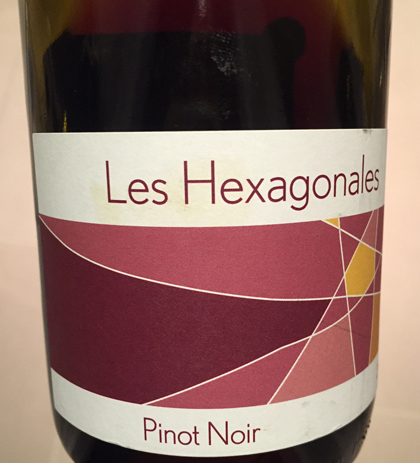
This is a bright, cheery pinot noir with lots of varietal character. You won’t mistake it for a Pommard, but that misses the point: This is a lovely value wine that is better than 99% of domestic pinot noirs under $15. Pinot under $15 (nay, $20!) is a tough category but this one comports itself well with a harmonious balance of fruit and acidity. If only varietal “pinot noir” wines offered by the glass at various clubs and airport lounges could be half as good as this. Find this wine at retail
It hails from the Loire, which is somewhat amusing. Not amusing that a good pinot hails from the Loire, since if you haven’t tried a good red Sancerre, then you are missing out. No, amusing because the back label bills it as a wine of place, which I’m sure it is, but it just doesn’t say which place that is exactly. We do learn a bit more on the importer’s site, such as that it is made by the Mérieau family on their 85-acre estate in the Touraine.
Mar
4
2016
Wine under $20: Clos de la Roilette 2014
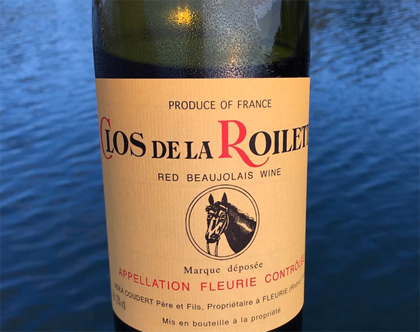
Who doesn’t love a good wine under $20? I have a doozy here for you this Friday: Clos de la Roilette, Fleurie, 2014 (find this wine).
I’ve been a fan of the producer for a while. We recently uncorked a 2009 “cuvée tardive,” a barrel-aged selection from their old vines sprinkled in the manganese and clay soils of Fleurie. It was drinking superbly. A few weeks later, with that 09 still on my mind, I stumbled on the current release (2014) of the “regular” cuvée, which is aged in large foudres after a semi-carbonic maceration. We popped it and it was a joyous addition to the last weekend of summer (yes, a couple of weekends ago). With ebullient dark fruits and enlivening acidity, the wine gives the highest distinction to “gulpable” Beaujolais. A steal at $17.99.
Oct
9
2015

Wine Maps
Monthly Archives
Blogroll
Categories
- American wine
- announcements
- Argentine wine
- auctions
- Australian wine
- Beer
- best wines
- Bling
- books
- Bordeaux
- bottled water
- Box wine
- Burgundy
- business of wine
- Celebrity wine
- Champagne
- Chicago
- China
- cocktails
- cognac
- corks
- corkscrews
- dining
- eco wine
- events
- foie gras
- food and wine
- French wine
- German wine
- giveaway
- grapes
- green wine
- guest post
- highlights
- how to
- Italian wine
- leaders and liters
- Mature wine
- meetups
- New York City
- On notice!
- photo captions
- podcasts
- Polls
- Port
- Portuguese wine
- power list
- reader mail
- rose
- sake
- Sommeliers
- South Africa
- Spanish wine
- spirits
- tasting sized pours
- The real wine world
- TV and movies
- Uncategorized
- videos
- vinexpo
- Weather
- wine and health
- wine and sports
- wine and tech
- Wine Blogging Wednesday
- wine blogs
- wine classes
- wine collecting
- wine gifts
- wine in india
- wine labels
- wine picks
- wine politics
- wine quizzes
- wine random
- wine science
- wine scores
- wine shops
- wine technology
- wine travel
- Wine under $10
- wine writing
- winemaking
- winespeak
 Blog posts via email
@drvino on Instagram
@drvino on Twitter
Advertise

quotes
One of the “fresh voices taking wine journalism in new and important directions.” -World of Fine Wine
“His reporting over the past six months has had seismic consequences, which is a hell of an accomplishment for a blog.” -Forbes.com
"News of such activities, reported last month on a wine blog called Dr. Vino, have captivated wine enthusiasts and triggered a fierce online debate…" The Wall Street Journal
"...well-written, well-researched, calm and, dare we use the word, sober." -Dorothy Gaiter & John Brecher, WSJ

Saveur, best drinks blog, finalist 2012.
One of the "seven best wine blogs." Food & Wine,
One of the three best wine blogs, Fast Company
Books for wine geeks
Wine books on Amazon: