Dr Vino's wine blog
wine talk that goes down easy
Y not? Ygrec and Yquem 2011
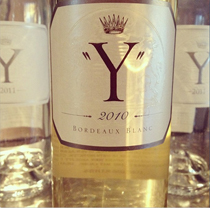 Pierre Lurton’s iPhone rang while he was talking to a bunch of journalists yesterday in New York City. He stopped and looked at it, and dismissed it saying, “It’s not important. But I had to make sure it wasn’t Bernard Arnault!â€
It’s not every winemaker who checks to see if it is France’s richest person on the line. But so it is with Lurton, who Arnault (head of LVMH) tapped in 1991 to manage Chateau Cheval Blanc and again in 2004 to take the reins at Chateau d’Yquem. That estate, maker of the famous nobly rotten Sauternes, was what Lurton was in town to discuss.
Chateau d’Yquem is not a one-trick pony. Read more…
Feb
22
2013
1
Bordeaux’s Burdigala
They say imitation is the sincerest form of flattery.
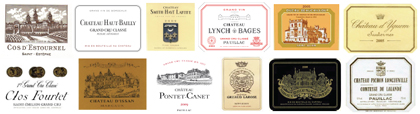
In Burgundy, La Paulée de Meursault has been the most-celebrated BYOB dinner for ages. In the past decade+, La Paulée de NYC/SF has taken the idea to the US. Then there was the Rieslingfeier. Now: Burdigala.
Next Friday in NYC, Bordeaux has made its own moment to focus on the wines of the region with the first ever La Paulée-style events called “Burdigala.” Louis Kressman and Eric Dubourg, both in the win trade in New York but originally from Bordeaux, have organized the event with Justine Tesseron whose family owns Chateau Pontet-Canet. Several chateau representatives will be in town including Jean-Guillaume Prats of Cos d’Estournel, Veronique Saunders of Haut-Bailly, Emmanuel Cruse of Chateau d’Issan, Thomas Duroux of Chateau Palmer, Alfred Tesseron, of Pontet-Canet and Pierre Lurton of Chateau d’Yquem. (full list here)
At a walk-around tasting in the afternoon, the producers will pour three of their wines, including the 2010s. Then there’s a black tie dinner at St. Bart’s church with the producers, food by Alain Ducasse, and top sommeliers pouring BYOB and ex-cellar selections. While it’s pricey ($1,000 for both events; $250 and $850 Ã la carte), the organizers say that event is a non-profit and that “all proceeds will be donated to wine scholarship.”
Feb
13
2013
Tasting Chateau Margaux 16 ways
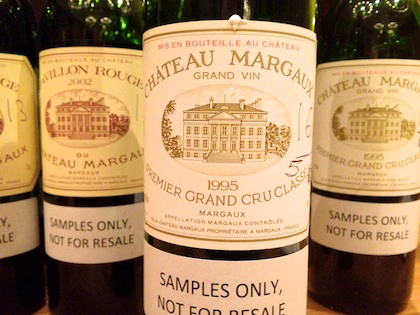
Paul Pontallier is a curious, open, and humble guy. All the more so since he is he managing director and winemaker at Chateau Margaux, where he has been for 30 years, crafting the sublime yet supremely expensive wines.
Pontallier was in New York City last week and he brought suitcase full of treats Read more…
Feb
5
2013
The Left Bank Bordeaux Cup, where talent overfloweth

I had a lot of fun a couple of weeks ago observing a bunch of business school students engage in competitive drinking. No, it wasn’t on-campus–it was the US qualifying round of the Left Bank Bordeaux Cup at the French Consulate on Fifth Avenue.
I post a gallery of photos below but my story is over on wine-searcher. Click through to find out who will represent the USA at Chateau Lafite this summer. One thing that struck me is how into wine the grad students were, with many having been in some aspect of the wine industry or thinking about giving up a career in finance to pursue the fruits of the vine more fully. It was a photo finish that evening: A cluster of teams finished very close. Read more…
Feb
4
2013
Rubble trouble: Bordeaux chateau demolished “by mistake”
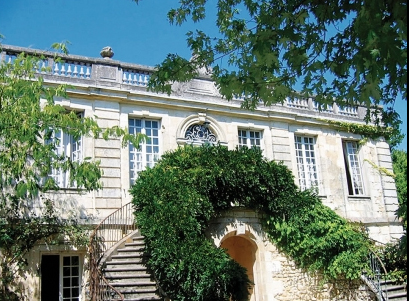
A Russian businessman bought a fixer-upper chateau dating from the 18th Century among the vines of Bordeaux. He ordered some renovations, went out of town, and returned to find the entire chateau a pile of rubble.
Reports vary on the size of the fixer-upper, but the rental site for the chateau said you could have a couple hundred friends for a seated dinner.
Builders had been instructed to remove one of the outbuildings but instead razed the whole place.
Owner Dmitry Stroskin vows to rebuild the structure as it was before. He has already ordered one and a half million euros of stone from a local mason. And probably popped a few Advil.
Chateau Bellveue rental site at 53, avenue de la Chapelle, Ã Yvrac.
[Sudouest, French news video, NBC News]
Dec
6
2012
Kids and wine education: Bordeaux program hits the vines, holds the wine
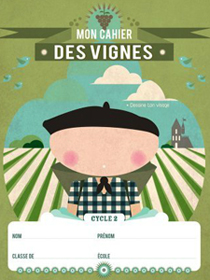 Here’s a question that we have addressed over the years on this blog: what’s the best, most responsible way to teach kids about wine? We’ve talke about an American approach that treats wine like a drug and an Italian approach that has kids singing songs and drawing pictures of Chianti fiaschi.
You’d think that wine would part of everyday education in France since the country boasts a high per capita consumption rate and we’ve all seen that picture of the kid with a bottle of wine under each arm. But, in fact, the French education system has, along with much of French bureaucratic attitude toward wine, had a shift for the puritanical in the past couple of decades.
So it is terrific to see the Bordeaux wine trade council is offering classes about wine “heritage” to kids aged 6 – 10. It’s optional, and the piece on decanter.com notes that they won’t be pitching it to schools, so it is a far cry from being a mandatory class. But let’s hope some schools do partake; learning about making wine seems like a great idea in a wine-making region/country. And what kid doesn’t love a tractor ride?
Oct
3
2012
St. Emilion’s ho hum classification
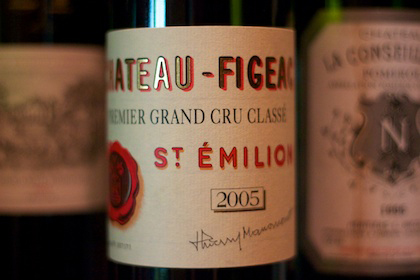
The new, vintage 2012, St. Emilion classification was handed down from Paris last week. About the most unusual thing about it is that INAO actually put the materials on their website (Hooray! Even thought they show an unhealthy taste for pdfs and the media contacts still don’t have email addresses listed.)
There hasn’t been any controversy (though some did wonder what happened to Chateau Magdelaine, which Moueix merged into Bélair-Monange). The last update, in 2006, resulted in legal challenges and a court rendering the whole reordering invalid. Lat week, Chateaus Pavie and Angelus were promoted to the top, top tier, while some other modern-style wines also ascended. (Full list after the jump.) The new classification largely follows the market prices and Parker scores for the wines.
If the authorities wanted to do something bold, they could have promoted the excellent Chateau Figeac. It would have been a posthumous honor for Thierry Manoncourt who apparently always wanted to see the estate as a Premier Grand Cru Classé (A). Also, Parker has had a burr under his saddle about Figeac, giving only two of their wines scores over 90 points and going years without reviewing the wines, which are almost always under 13.5% alcohol. And forget quality, the last time around, Figeac was not promoted to the top, top tier because their prices were not high enough!)
Or the INAO could have classified vineyards instead of simply the chateaus themselves but that would be crazy talk! (On related note, Valandraud, which was promoted to the second tier, has expanded its modest vineyard holdings by a factor of 20 over the years.)
By rewarding many wineries that already receive high Parker scores and/or high prices, the classification is of little, stand-alone use to consumers and gives some producers the opportunity to raise prices further.
Related: “How Angelus became James Bond’s choice”
Read more…
Sep
13
2012
Why the Chinese are buying Bordeaux chateaus
 The other day, when Jeeves brought me the New York Times’ “Great Homes and Destinations” section on a silver platter in my wood-paneled drawing room, I poured a spot of claret and settled into my leather wingback chair to catch up on what’s been going on.
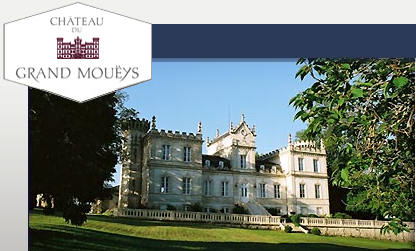
Lo and behold the Chinese have been buying properties in Bordeaux! Fully 20 of them in the last four years! That only leaves about 8,500 for them to buy. The story–quite detailed–reveals that Chinese buyers are attracted by property valuations that have fallen over the past decade, usually shop in the €5 million to €8 million range, and like a chateau on the land with a bit of history. One chap just picked up a 10-bedroom castle on 420 acres for €5.95 million! He’ll sell almost all the wine back in China. Also, with their domestic economy slowing, the Chinese have been looking to diversify their holdings and have even been buying wineries in the Hunter Valley and Napa. I wonder what kind of values they have found there.
If Jeeves hasn’t brought you the “Great Homes and Destinations” section, you can also read it with one of those computer things that I’ve heard about.
Jul
20
2012
Wine Maps
Monthly Archives
Blogroll
Categories
- American wine
- announcements
- Argentine wine
- auctions
- Australian wine
- Beer
- best wines
- Bling
- books
- Bordeaux
- bottled water
- Box wine
- Burgundy
- business of wine
- Celebrity wine
- Champagne
- Chicago
- China
- cocktails
- cognac
- corks
- corkscrews
- dining
- eco wine
- events
- foie gras
- food and wine
- French wine
- German wine
- giveaway
- grapes
- green wine
- guest post
- highlights
- how to
- Italian wine
- leaders and liters
- Mature wine
- meetups
- New York City
- On notice!
- photo captions
- podcasts
- Polls
- Port
- Portuguese wine
- power list
- reader mail
- rose
- sake
- Sommeliers
- South Africa
- Spanish wine
- spirits
- tasting sized pours
- The real wine world
- TV and movies
- Uncategorized
- videos
- vinexpo
- Weather
- wine and health
- wine and sports
- wine and tech
- Wine Blogging Wednesday
- wine blogs
- wine classes
- wine collecting
- wine gifts
- wine in india
- wine labels
- wine picks
- wine politics
- wine quizzes
- wine random
- wine science
- wine scores
- wine shops
- wine technology
- wine travel
- Wine under $10
- wine writing
- winemaking
- winespeak
 Blog posts via email
@drvino on Instagram
@drvino on Twitter
Advertise

quotes
One of the “fresh voices taking wine journalism in new and important directions.” -World of Fine Wine
“His reporting over the past six months has had seismic consequences, which is a hell of an accomplishment for a blog.” -Forbes.com
"News of such activities, reported last month on a wine blog called Dr. Vino, have captivated wine enthusiasts and triggered a fierce online debate…" The Wall Street Journal
"...well-written, well-researched, calm and, dare we use the word, sober." -Dorothy Gaiter & John Brecher, WSJ

Saveur, best drinks blog, finalist 2012.
One of the "seven best wine blogs." Food & Wine,
One of the three best wine blogs, Fast Company
Books for wine geeks
Wine books on Amazon: