Another nail in the American oak coffin?

The numbers of those preferring “ABC” (Anything But Chardonnay) white wine have been rising. As a result some American wineries have thankfully toned down the oak influence. The fewer “Home Depot” wines out there, in my view, the better (not that Home Depot would ever sell a wood as good as oak but you catch my drift.)

As evidence of the trend, an American manufacturer oak barrels used in wine production is selling part of their US holdings to focus on French oak production. Given that those will cost more to sell in the US, this is a bold move from a business perspective.

Wine enthusiasts can rejoice since French oak provides a more subtle oak influence. That’s good news for those who enjoy a glass of wine that doesn’t overwhelm the food.

Star studded

What do you get when you blend wine with Renee Zellweger, Charlize Theron, Will Ferrell, Tim Robbins, Samuel L. Jackson?

One big, fat Aussie junket apparently!

These stars and the 35 other presenters at the Golden Globes award ceremony will all receive an all-expenses-paid, "VIP wine adventure" in the Hunter Valley for a total cost of $800,000 (AUD) to the sponsors, Qantas airlines and Rosemount. Rosemount has recently been using discounts taken at the register (akin to consumer electronics) to move their wines so this certainly would add more glitz to their sales and marketing.

Maybe I should take up a career in movie award presenting?!?

Bordeaux has that sinking feeling


The Financial Times reported this morning that Chirac wants a summit with Bush to help mend relations. This couldn’t come at a better time for the Bordeaux wine makers.

Export data out today reveal that while Bordeaux wine exports fell in volume and in value across the board, the US saw the sharpest decline with a
staggering 35% deline in volume and a 59% decline in value.

Yikes. Millennium hangover. It’s definitely time for a summit — and some PR?!

Welcome

Welcome to Dr. Vino’s Wine Blog — a new and unprecedented (at least for me) way to waste time on line reading about wine when we should be drinking it.

You can visit my permanent home on the web at DrVino.com for more details, articles and value wine picks under $10. That will continue to be my main web presence for wine but I thought I would give this blog style a whirl. Or perhaps a swirl.

I plan on having this page as place for my reaction on things happening in the wine world. For example, I never got around to commenting on the important Mondavi buyout on DrVino.com. Nor other bits of juicy or timely wine news. So this blog is a good place for stuff that falls through the cracks in the winery floor, as it were.

What I won’t be doing here is boring you with tons of personal information about me or Mrs. Vino. A few juicy drips may leak out, however, such as what types of white wine we use to remove red wine stains or what types of oak casks we use to swaddle baby vino. The style will be informal, hopefully informative, and more real time than the real web site. And I look forward to hearing what you think with the ability to comment! Please do! Now entering the blogosphere…

Best wine list for 2004

From the United States to the Ukraine, the leaders of one billion people were up for grabs in 2004. With voting a hot topic, elected officials serve as the lens for this year’s best wine list. While my usual lists focus on wines under $10, this year-end list gives me a chance to recommend some more expensive selections still bearing in mind good values (or QPR as it is known in wine geek parlance: quality to price
ratio) even at higher prices. While I had lots of good—and good value—wines in 2004, I do fear for 2005 as wine consumers start to feel the full effect of the weak dollar. Here are some tips for buying in 2005: stock up at spring and fall sales to make your wine dollar stretch farther; venture off the beaten path; think red, drink red; try dry rosé; try new wines (the weak dollar will
force some foreign producers to repackage); take a peek at Portugal. As well as producing some seriously good wines, 2004 also included big stories in sports, jail sentencing, television and other areas that had irresistible wine pairings. Cheers! —Dr. Vino


Best wines, mayors
Mayors have limited budgets and provide lots of services aimed at making voters happy-all while keeping an eye on the price. Fortunately, many wines are available in this category. For American mayors, an excellent choice is the House Wine 2002 from Magnificent Wine Co ($10) a big red blend from Washington State. For those foreign or cosmopolitan mayors the I Portali, Basilicata, Aglianico del Vulture, 2002 ($10) represents great value from the boot of Italy, the Las Rocas de San Alejandro, 2002 ($9) of old vine Grenache from Spain, and the Duboeuf Julienas Flower Label
2003 ($10) all have a refinement and delicacy well above their price point (read: they drink like $30+ wines). More specifics on these wines are available in my lists of best wines under $10.

Best wine, governors
Governors preside over bigger budgets than do mayors for the most part. The most notable governor of 2004 was the "Govern-ator" in California so what better than to start this group with one from his native
Austria: Nussberg Alte Reben, Wiener Wein, 2002 ($13). Gruner Veltliner is an excellent white worth trying anywhere you used to drink oaky Chardonnay; this one is a particularly good value. Another Teutonic white worth seeking out
is the Fitz-Ritter Gewurztraminer Spatlese, 2003 ($14), whose gentle spice notes compliment Thai fusion food.

With prices rising faster than the hilly countryside in Priorat, savvy buyers are turning to Montsant. L’Alleu,
2000 ($15) is a silky-smooth bargain blend of Grenache, Caringan, and Cabernet Sauvignon. But as a category this year’s group red winners (and in the next) are the Oregon 2002 Pinot Noirs. Incredibly yummy stuff. Patricia Green, Oregon,
2002 ($18), Ponzi Willamette Valley ($26) St. Innocent Willamette Valley ($26), and Bergstrom Oregon ($24) were all excellent examples of American Pinot Noir.


you can call me gov

Best wines, presidents
Presidents go for the very best and even if they are teetotalers, they still need to impress the guests. Impressing is easy with the E. Guigal St. Joseph, lieu dit, 2001 white ($30). A blend of Marsanne and Roussanne from the Northern Rhone, the spectacular aromas of white peach and oak yield to a voluptuous texture and long finish that will easily satisfy and intrigue heads of state. Another intriguing choice is the Quinta do Vale Meao, 2000 ($40) a dense, concentrated red wine made entirely of Portuguese grape varieties in the Duoro region.


Check out my interactive map of NYC wine shops

Best wine for the Defense Department
Shafer, Relentless
2001. ($55) A blend of Syrah and Petite Sirah, this profound and indefatigable wine comes from Shafer’s prime hillside vineyard. Although it’s expensive, with a budget such as theirs, no one will notice.

Best wine for Red Sox fans

Chateau d’Yquem, 1918 ($1,029). This bottle is from the vintage of their last World Series victory. How sweet it is!

Best wine for Howard Dean
Any grands crus Bordeaux from the 2000 vintage. The quality—and the prices!—would
make anyone scream.

Best wine for ousted corporate executives who have to give back bonuses

Three Thieves, Zinfandel, NV, 1L jug ($9.99)

Best wine for Martha Stewart
During the trial: Turley,
Old Vines 1997 ($50). The 16% alcohol helps the trial.
In jail: Big House Red, 2002, $8 (or 20 packs of cigarettes)
Upon release: Louis Roederer, Cristal, 1990, ($150) by the case!

Best wine for Kobe Bryant
Chardonnay. Feeling the pressure from the ABC (anything but Chardonnay) crowd, Chardonnay’s popularity has declined. But not as precipitously as Kobe’s whose jersey used to be the top seller and now has dropped to 90th.

Best wine for owners of an iPod
Pinot Noir. The hottest product in consumer electronics needs the new "hot wine." And thanks to the movie
Sideways
, Pinot Noir is the new darling of California. Move over Merlot! Here comes something better! (and more difficult to do well)

Best ‘wine’ when Donald Trump declares "you’re fired"

Boone’s Farm, NV, Sun Pink Peach, ($2.49). Very affordable while in bankruptcy (like Trump’s Taj Mahal casino).

A Case of Wine in the Supreme Court

Several AARP-age men and women in robes are all sitting in a room talking about wine. No, this is not the start of a bad joke. This is the scene at the US Supreme Court on December 7, 2004.

Juanita Swedenburg, a former member of the Foreign Service and a Daughter of the American Revolution, owns a micro-winery in the rolling hills of Virginia horse country. Her case, Swedenburg v. Kelly, has now arrived at the highest court in the land. She and her lawyers successfully argued before an Appeals court that wine consumers in New York were disserved because they were legally barred from purchasing her Burgundy-style whites and reds directly from the winery. The same could be said of consumers in Texas, Ohio, Florida and Pennsylvania since almost three dozen states restrict the direct shipping of wine from wineries to consumers.

Forget Bordeaux 2000, this wine case has become the most essential case for wine consumers in decades. At stake is whether consumers living in the long list of states that limit direct wine sales can start to purchase wines directly from wineries out of state. Yes, America may be one big market when it comes to buying books or DVDs, but when it comes to wine, it is more like 50 sovereign states, each with its own rules.

As most American wine consumers eventually discover, the way that we get our wine involves not just a producer and retailer but also a middleman known as a distributor or a wholesaler. These intermediaries can play a useful or helpful role in bringing wine to the consumer. The only exception is that if they don’t play a helpful role, they can still exploit their position since it is legally protected.

That means that American consumers generally pay more for wine than they would without the intervention of a distributor. For a striking example of this, consider the example of the celebrated “Two Buck Chuck,” aka Charles Shaw. The producer, Bronco Wine Co. arranged an exclusive retail agreement with Trader Joe’s grocery stores with a retail price of $2 within California where no distributor is needed. But every other state requires distributor intervention even though this arrangement is between a large producer and a large retailer. The result for consumers is often Three Buck Chuck. A distributor gets a near 50% mark-up (allowing something for transport) for simply having a license. That is disservice to the consumer.

Further, as consolidation has occurred among the distributors, they have gotten bigger and as a result often don’t have room for the small producer. That means that the range of choices for a given consumer may be limited to only those wineries with large productions and diverse portfolios. The wines of niche producers may not appear at all in many states.

Hence buying directly from the producer is important. For consumers residing in the three dozen states where shipments are not legal, it means a greater range and perhaps lower prices for wine. And for the small wineries like Swedenburg’s, now numbering over 2000 in all 50 states, it expands their market and their margins considerably.

Why is it so hard to ship a bottle of wine in the US? Consumers can ironically blame the 21st Amendment of the Constitution, the one that repealed Prohibition in 1933. At the time of repeal, economic arguments were strong to help reinvigorate the economy in the depths of the Great Depression. But the political strength of the Dry movement had not been completely eroded despite the blatant failure of the Prohibition itself. Thus the 21st Amendment emerged as a compromise: Prohibition would be repealed at the federal level but states could maintain control of the production and distribution and sale of alcohol within their borders. As a result, the last state-level Prohibition persisted into the 1960s.

Yet the legacy of Prohibition still lingers and Swedenburg v. Kelly could go a good distance toward removing this residue. Framed in the terms of removing—or not—the legacy of Prohibition, it is not surprising that this battle is playing out largely on the political right.

This battle over interstate shipping has thus become a battle royale for conservatives, pitting the free traders against the social conservatives. The stakes (and the fees!) are high with Kenneth Starr (he’s baaack) and Robert Bork leading prestigious legal teams for both sides in the Constitutional struggle over the Interstate Commerce Clause versus the 21st Amendment. However, to call the opponents of free trade social conservatives is to ascribe to them the moral legacy of Prohibition, which by now is a mere fig leaf.

Those opposed to free trade represent a coalition of strange bedfellows that could qualify as “Baptists and bootleggers” given that those two groups supported Prohibition. The “Baptists,” shorthand for religious conservatives who thought alcohol of any kind to be a demon spirit, sought to keep alcohol out of their county or state. They allied with local producers of alcohol, “bootleggers,” who also wanted to limit alcohol imports but only to in the name of preventing competition and protecting their market.

In today’s alliance, the goal of those against direct shipments is entirely financial with some window dressing about underage drinking. (The Federal Trade Commission argued in a report last year that that the economic gain from direct shipping is great for consumers and states can protect minors in other ways than an outright ban.) The Wine and Spirits Wholesalers Association is decanting vast sums of money into the defense. But several Nobel Prize winning economists including George Akerlof have filed an amicus brief arguing that these distributors are simply fighting to protect their monopolistic (or, actually, oligopolistic) position. The other party protecting a monopoly is the set of 35 states fighting against potential loss in tax revenue. These are powerful adversaries with entrenched interests in maintaining the status quo.

Because the actual question before the Court is relatively narrow, claims that the three tier system (producer-distributor-retailer) will be shattered are overblown. The question before the Court in December is: “Does a state’s regulatory scheme that permits in-state wineries directly to ship alcohol to consumers but restricts the ability of out-of-state wineries to do so violate the dormant Commerce Clause in light of Section Two of the 21st Amendment.” This is the key aspect of the New York law, which allows in-state wineries to ship to consumers while out of state ones are not permitted.

If the Court does rule in favor of greater free trade, it will be an important step toward eroding Prohibition’s legacy. If the case fails, the free trade advocates, notably the Institute for Justice and the Coalition for Free Trade, will try to chaperon more cases with broader implications through the system.

How the Court will rule (before its term is up in June) is hard to predict given that the traditional right-left dichotomy does not apply. We can but hope that the men and women in the black robes are also fans of fruits of the vine—and maybe even want to be on some winery mailing lists!

Resources on direct shipping:

Institute for Justice
Coalition for Free Trade
Free the Grapes
Wine Institute background

NYTimes op/ed

NYTimes story
Detroit Free Press story
MSN story
MSN: flouting the rules
CNN story

photo credit: IFJ.
Follow-up articles:
Arguments portend legal blessing, NYTimes
Winemakers got a sympathetic hearing, Washington Post

Justices grill attorneys on 2 states’ shipping restrictions for vintners, SFChronicle

In vino gravitas, Slate

State wineries are hoping to toast a major windfall, Seattle PI
Supreme Court Weighs Restrictions on Interstate Wine Sales , NPR‘s Nina Totenberg


Value vino list number eleven

White
Nussberg, Alte Reben, 2001, Wiener Wein, $9.99 (sale price) Find this wine

Which European capital has the most vines? Paris? Prague? No, Vienna! Competing for expensive real estate with coffee shops and residences, 1700 acres of vines lie within the city limits. So it is small wonder that the Vienna wines are expensive, but is the terroir good? (A hint of tramway?) This white wine from the Nussberg vineyard on the banks of the Danube demonstrates why vines still tenaciously cling here: dry and crisp thanks to the steel tank fermentation, and excellent depth and complexity with notes of grapefruit and pears. This Gruner Veltliner knocks the socks off most whites and will no doubt impress even the most skeptical guests. Great match with seafood. Imported by VinDivino.

Big Reds
House Wine, Magnificent Wine Co, 2002. $9.49 Find this wine
Think of this wine as punk rock in a bottle with its loud label and fruit at high volume. Charles Smith, who used to manage a punk band in Demark, now owns K Vintners as well as the Magnificent Wine Co. in Walla Walla Washington. Although he is known for his Syrahs (including K Syrah–hahaha), this House Wine is mostly Cabernet. This “hedonistic fruit bomb” with juicy tannins and little oak influence is a steal at under $10.

Woop Woop, Shiraz, 2003. $9 (sale, $12 normal) Find
this wine

In my profile of Ben Hammerschalg of Epicurean Wines I discovered his excellent portfolio of wines from Australia. All of his wines represent a tremendous quality to price ratio but only this Woop Woop is around the Dr. Vino mark of $10. Usually it is around $12 but many wine shops have October sales so seize this opportunity to

scoop it up for under $10. With its colorful label, this wine has plenty of appeal with soft tannins and smooth notes of juicy blackberries and chocolate. Food friendly, try pairing it with grilled meats or salmon. The name is hard to forget and so is the wine. Importer: Epicurean Wines.

Nuhar, Rapitala, 2002. $8.99 Find
this wine

A struggle is underway in Sicily and it does not involve “la famiglia.” This struggle (as is playing out in much of the Old World) is over the use of local grape varietals versus more of an international style. This wine walks the fine line between these two camps and but ultimately falls onto the international side. The localists will be pleased with the presence of 70% Nero d’Avola while the internationalists will be pleased with the 30% Cabernet Sauvignon. Indeed, if you think Italian reds are too light-bodied this has additional heft with pleasant aromas of dark fruits. Goes great with pizza. Fredrick Wildman, importer.

Medium-bodied reds from off the
beaten path

Evel, Douro, 2001. $7 Find
this wine

The Duoro region of Portugal, once known almost exclusively abroad for producing the grapes for port, has had a recent shift to table wines. The reds are turning out quite well and they are generally good values. (It’s not that their importers have hedged the currency risk successfully; they’re just cheap with improving quality) This producer is emblematic of the transition: during the first century after its founding in 1756, Real Companhia Velha was a regulatory body for the Port trade, subsequently becoming a private company and very recently transitioning to table wines as well hiring a Californian, Jerry Luper, as winemaker and technical director. This least expensive wine in their portfolio has a relatively truncated flavor profile of red berries and some spice but is smooth and light to accompany food. Importer: Admiral Wine Merchants.

Rocche Costamagna, Dolcetto D’Alba, 2002. $8 Find this wine
The wines of Piedmont have escaped these pages for too long. One reason is obvious-although the Barolos and Barbarescos are fabulous wines in the glass, the often stratospheric pricing does not make them good values. Enter dolcetto. This full flavored red wine not only comes with an affordable price tag but also is a perfect accompaniment to autumnal cuisine. This week and next, I will feature affordable doclettos (or dolcetti to the cognoscenti). Big but not tannic, this Rocche Costamagna with notes of plum and spice will impress your guests with something from off the beaten path. Importer: Laird and Co.

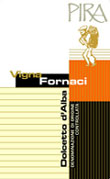
Pira, Dolcetto D’Alba, Vigna Fornaci, 2002. $9. Find this wine
The steep hillsides of this Piedmont estate are evoked in a whimsical way on the label with the presence of a backpacker. But any hiker who brings this bottle along will no doubt have fellow hikers carry the pack home out of gratitude. Inky purple in color, this young wine has plenty of fruit and sees no oak aging—only in stainless steel and the bottle. Try it with mushroom dishes and shock your dining companions with the value since it tastes like a $25 bottle. Importer: Montecastelli selections.

Sideways, the movie, the wine

sidewaysThe more you know about a given subject, the easier it is to pick out flaws in a given movie. Anyone familiar with Chicago could have noticed that the main characters of When Harry Met Sally were driving on the wrong side of town when they left the University of Chicago for New York. Similarly, chess players may have found flaws with Searching for Bobby Fischer. Or drag racers with 2 Fast, 2 Furious.


That’s why I was surprised to find fewer blatant flaws in Alexander Payne’s new wine-drenched movie, Sideways, than there are curves in a Rabbit wine opener. The movie has rightfully received high praise from movie critics including a composite score of 94 on Metacritic (harder than a Parker 94, I might add). And though there’s talk of Oscar nominations, we’ll have to see if members of the Academy can stomach such a full-bodied story even if it has a good finish.
lush country

The best thing about the movie from a wine geek’s perspective is that it will bring (hopefully lots) of viewers in touch with wine culture. The rolling hills of the Santa Ynez Valley make those who haven’t been there want to go check it out. And the number of fine wines consumed in the film would give anyone unfamiliar with the wines of the area a great list of wines to try. But beyond the cliché of wine and beautiful scenery, the movie deftly blends wine and humor, two elements that are not blended enough in wine talk. During my showing, the audience roared with laughter when the wine geek character refused to make his friend happy on date night saying, “If anybody orders Merlot, I’m leaving. I am NOT drinking any F***ing Merlot!” Merlot as a laugh line on the silver screen. How great.

Virginia Madsen’s character has a radiant paean to wine: she leans forward in her chair, has a soft light on her face and proceeds to share her passion for wine, how it is expressive of the place from which it came, how the tastes move her, and how it changes over time in the glass and in the bottle. Honestly, any wine marketing budget for TV should just clip this soliloquy since it will intrigue and possibly convert the most stubborn of beer drinkers.

Another good thing about the movie is that although it makes wine alluring, it is fundamentally a movie about two buddies and wine serves as a backdrop for their hedonistic week and a vocabulary for talking about their problems. Since it is not a movie only about wine, such as the documentary Mondovino that aired at the Cannes Film Festival earlier this year, and since it is such a good, if dark, story with terrific acting, it is bound to find an audience that is more broad than simply those who pay extra for first class delivery of Robert Parker’s Wine Advocate.

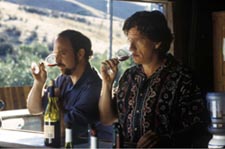
But there were some aspects of the movie that made me cringe. The wine geek in the movie, Miles (Paul Giamatti), is helpful in wine education when he tells his buddy Jack (Thomas Haden Church) that the 1992 Byron sparkling wine is made from 100% Pinot Noir grapes since champagne drinkers don’t often inquire about grape varietals. But Miles does wine appreciation no favors when he pretentiously trots out all sorts of strange aromas in a Sanford rosé—presumably their Vin Gris—at their first winery stop. (Honestly, who ever got “soupçons of asparagus” aromas in a rosé? Or “flutters of Edam cheese”?) Jack by contrast is so easy to please that almost every winery visit has him throwing back his glass and saying “tastes good to me!” Blending Jack’s enthusiasm and Miles’ knowledge but without stereotypical wine-geek condescension would have been the best depiction for Americans to see since wine is so often thought of as part of an elite lifestyle. But, hey, at least it was Paul Giamatti saying these lines and not Tom Cruise, which would have caused wine tasters from Barossa to Bordeaux to lose more than a wine sample into the spit bucket.
And then there is the quantity! Wine, and most of it excellent quality, is not only consumed in tasting rooms, bars and restaurants, but also behind the wheel, in bed, and out of a Styrofoam cup in a diner! Clearly Miles is an alcoholic as well as a knowledgeable wine enthusiast. As David Edelstein writes in his review of the movie on Slate, this is probably the first movie about out-of-control epicureans. While it is great to have a discussion of Pinot Noir or Vouvray or to see lots of spectacular wines consumed (since too often great wines just sit around as display items), it is poignant to see them often merely guzzled. But that is what gives the movie its dramatic verve after all.

One specific item wine buffs may want to trot out when seeing or talking about the film is the fact that at one point, Miles disparages Cabernet Franc for making insipid wines. But it later emerges that the gem of his humble collection is a 1961 Cheval Blanc. How ironic, given that Cabernet Franc makes up two-thirds of the wine. And the other third? Merlot. Maybe the wine consultant to the film missed that. Or perhaps the writer left it in for connoisseurs to speculate that French provenance of wine makes it appealing. After all, the eyes of this Pinot Noir enthusiast never light up more than at the mention the prized Burgundy DRC Richebourg (100% Pinot Noir) although, sadly, no vintage is given.

Net-net this is an excellent movie. We can but hope that it is the first of many movies that will incorporate wine so prominently and so well. Sideways would be a great break from the relatives over the holidays for readers of this site who clearly already appreciate wine and humor. And as with most Dr. Vino picks, the movie can be enjoyed for under $10.

Click here for a list of wines and wineries in Sideways


winepoliticsamz

Wine Maps


Monthly Archives

Categories


Blog posts via email

@drvino on Instagram

@drvino on Twitter


winesearcher

quotes

One of the “fresh voices taking wine journalism in new and important directions.” -World of Fine Wine

“His reporting over the past six months has had seismic consequences, which is a hell of an accomplishment for a blog.” -Forbes.com

"News of such activities, reported last month on a wine blog called Dr. Vino, have captivated wine enthusiasts and triggered a fierce online debate…" The Wall Street Journal

"...well-written, well-researched, calm and, dare we use the word, sober." -Dorothy Gaiter & John Brecher, WSJ

jbf07James Beard Foundation awards

Saveur, best drinks blog, finalist 2012.

Winner, Best Wine Blog

One of the "seven best wine blogs." Food & Wine,

One of the three best wine blogs, Fast Company

See more media...

ayow150buy

Wine books on Amazon: