Gregory Smolik, an average day or two

I asked Greg to send us a couple of days from his calendar so here are two days in his life as an importer of Italian wines.

7 AM – Turn on computer, go through e-mails, make breakfast.
8:30 Calls may start from Italy with questions concerning current orders if any.
10:30-11:00 – Organize the day’s events if in town
11:30 -12:00 – Go to Bensenville, IL warehouse to pick up samples and look at inventories.
At this point if my colleague Debbie is in we can go over label approvals, stock, new distributors etc.

12:45 Another quick call from Italy
1:30 – 2:00 Quick lunch
3:00 First appt
4:30 Second appt (same wines usually)
5:30 Third and last appt – depending on if I am driving or walking the city and if I’m in the suburbs makes a difference.
7:00 Dinner meeting with colleagues or doing a tasting.
9:30 Back home on computer check e-mails
10:30 – 11:00 I will leave the computer but I usually get up at some point during the night because I forgot to e-mail or check something.

WHEN IN ITALY:
6am Wake get a quick bite and start driving to first appt:
8am Arrive at first appt sample wines talk logistics.
9:30am Drive to next appt
11am Arrive at 2nd appt taste wines have lunch at 12:30 1pm with owner or winemaker.
2:30 Start to next appt, phone all next days appointments to confirm.
6pm Arrive at appt sit down sample wines may or may not have dinner with winery.
9pm Find a hotel if one is not already reserved.
10-10:30 Go over the day’s events organize all paperwork, etc then organize the next day’s events.

Go back to The Real Wine World home page to view other segments. Send in your questions or see Greg’s previous installment or see his next installment with Basilium winemaker Walter Fabbri.

Patricia Savoie, an average day or two

I asked Pat to send us a couple of days from her calendar so here are two days in her life as proprietor of Big Nose, Full Body.

TUESDAY
7:00am Clock radio tuned to NPR…
7-7:30 Check email and answer messages
7:30-8:15 Walk dog
8:15-10:00 Breakfast, read NY Times
10:00-11:00 Pay wine invoices, other bills
11:00 Walk dog
11:15 Walk to garage and drive to BNFB in Brooklyn
12:00 Open the store
12:00 – 1:30 assist customers, receive two wine deliveries, log wines into inventory
1:30 Larry arrives (assistant manager)
2:00 – 2:30 Distributor wine tasting… representative visits store with 7 wines from Italy.
2:30-3:00 Lunch at counter in store
3:00 – 4:30 assist customers, receive 2 more wine deliveries
4:30-5 Distributor wine tasting…rep with 5 wines
5:00-9:00 Assist customers, reorganize shelves.
9:00-9:30… Close register and store
9:30-10:15…drive home to Manhattan
10:15… walk dog
10:30… have dinner in front of TV
11:00 go to bed

communting here from Manhattan

WEDNESDAY
7:00am – clock radio tuned to NPR
7-7:30 Check email and answer messages
7:30-8:30 Walk dog; have breakfast at coffee shop with sidewalk tables.
8:30- 9:00 Pay wine invoices
9-11:00 Work on wine article
11:00-11:30 Walk dog
11:30-1:30…Attend wine tasting at restaurant in Tribeca. Wines from Germany and Austria. Have cheese and bread for lunch.
1:30-2:00… drive to store where Adam has opened and received 2 wine deliveries
2:00-3:30 .. assist customers, receive 3 wine deliveries and enter wines into inventory
3:30-4…Distributor tasting in store…rep brings 5 wines.
4:00-9:00 – assist customers
9-9:30 Close register and store
9:30-10:15…drive home
10:15-11… walk dog. Stop for mexican food and margarita at sidewalk cafe.
11:00 go to bed and read wine magazine

The Sanka of beer


A Bavarian brewer has developed a beer for the 1.5 billion Muslim market–alcohol free of course. But there’s a further distinctiveness to it: the drink comes in jar and not in a bottle since it is mere dry granules you are buying.

The Financial Times reports today that Gerhard Kamil, the maker of GranMalt, “has developed alcohol-free granules that make instant beer. (And it tastes better than it sounds.)”

He touts the fact that its easily transportable, has a long shelf-life, and means that brewers don’t have to set up expensive breweries in the Middle East. He thinks it will be the next German export miracle.

I can see their marketing slogan now: “Alcohol-free beer crystals: the Sanka of beers.”

Ed Lehrman, Susana Balbo’s American importer

With Susana on vacation this month, I thought we could hear from her American importer, Vine Connections. Partner Ed Lehrman spoke to me from his office in Sausalito last week.
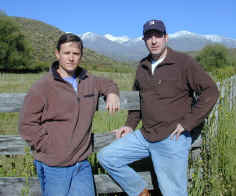
When Ed Lehrman goes to Mendoza, he stays in a hotel for half the normal tourist price. How? He lets one of his local producers make the hotel bookings for him. That’s one of the tricks of the trade Ed has learned over the past five years as he has established his company as one of the strongest importers of Argentine wines to the US.

In 1999, Ed went on a fateful journey to Argentina. He had just sold his wine retail business and decided to join one of his distributors, Nick Ramkowsky, on a trip to South America. Although they only spent five days in Argentina and neither spoke much Spanish, they were so impressed by what they saw and tasted that they decided to go into business together and start importing the wines of Argentina to the US.

Ed tasted 3,000 wines a year in his retail business, a company for mail order wine, and Nick tasted a lot too. But when they were sampling in Mendoza, “He looked at me and I looked at him, and we agreed that this is far different from wines we know as Argentine—we have to do something about this,” Ed recalled on the phone last week from his office in Sausalito, CA.

“Susana’s wines were the ones that made the biggest mark. Here was a very talented wine maker whose wines weren’t being exported.”

“Argentina in late 1990s was similar to Napa in late 1970s since people were just developing a sense of their own brands and what they had to achieve. They still are today. Really only since 1994 have they been making quality wines for export,” Ed said.

It was a hard time to make quality wine at all. There wasn’t much domestic demand for it despite the fact that Argentina has one of the highest per capita consumption rates in the world. “The Argentine consumer doesn’t have tradition of paying up. Susana stuck to high quality. Thus the benefit for her was to go to the export market and show what she can do,” Ed said.

With their knowledge of the US market and its quirks, as well as packaging and sales, Ed and Nick set up Vine Connections and started importing the wines of Argentina. Armed with color printouts of their labels, and samples of their 12 wines, they started knocking on doors to set up a distributor network from scratch. They met with tremendous enthusiasm and acceptance even though the wines were priced aggressively for a relatively unknown country starting at $22 for the BenMarco Malbec and going up to $50 retail. “Price points weren’t as tough as they are today,” Ed said.

Today VineConnections has a presence in 45 states. His portfolio of wines now is almost entirely dedicated to the wines of Argentina since Ed says that as an importer “it is increasingly difficult to be a generalist.” The Vine Connections portfolio also includes the wines of Ernesto and Laura Catena, Tikal and Luca respectively, both the children of Argentine wine pioneer, Nicolas Catena. And they are also importers of several dozen premium sakes from Japan.
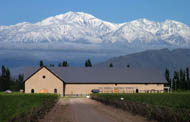
Ed describes Dominio del Plata, the winery that Susana built with her husband Pedro, as more comfortable and homey than other, more luxurious wineries. They built it right among their vineyards and also included a residential space in the winery so from their dining room windows, you can see the fermentation tanks. And it’s location on the way to the pass through the Andes to Chile, makes it very convenient. It’s small wonder that one thing on Susana’s plate for the next year is thinking how to better handle tourism requests.

Single vineyard wines are more risky in Argentina than they are in other parts of the wine world because of the risk of a snap hail storm, which can decimate a crop in 15 minutes. He cited staggering figures of a 13% annual loss rate of the total Mendoza grape crop over the last 20 years. Thus producers tend to source their grapes from several growing sites to diversify the risk. And they also resort to hail netting and even cannons, whose blasts are thought to break up hail squalls.

Despite this hail risk, which is manageable, Ed does not envy his fellow wine importers who import wines from France and Italy. “From a business standpoint, I’m not sure I would want to face the vagaries of the weather. The climate in Mendoza is similar to California. There certainly is vintage variation. Overall if you look at the consistency and quality you can achieve, it is great. We thought about the downside and there was very little.”
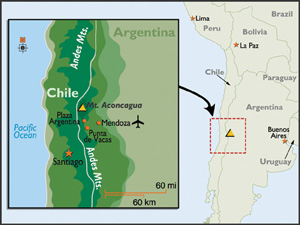
Snow, of all natural factors, has played a role in their business recently. To ship their wines to the US, Ed and Nick use the port of San Antonio, Chile. Getting there from Mendoza, trucks laden with the wine of Susana and their other producers must bypass Aconcagua, the highest mountain in the Western Hempisphere, and scale the Uspallata pass at 12,500 feet. In the summer, climbing this height takes only a few tanks of gas but is no great obstacle. However, now, when it is winter down under, it has become a bottleneck.

“It’s been hard to even find containers to fill,” Ed laments because the traffic has been so backed up this winter because of the tremendous snowfall. Normally, the pass can close for a day or two in the winter but this winter it has been closed for up to two weeks at a time. Nonetheless, ships departing every two weeks means that they don’t have to wait for a boat once they clear the Andes.

Once the wines arrive in the US, the Vine Connections team is on the road selling the wines. Ed says that he travels less than Nick since he has two children but he is still on the road about 100 days a year. Nick has been shouldering as many as 280 days a year on the road, though he will be pulling back with the hiring of new sales staff bringing their national total up to seven. It’s important for Ed and Nick that their sales staff feel the same enthusiasm for Argentina that they do so all of the staff have been there to experience it first-hand.

Ed and Nick were drawn to Argentina in 1999 by the wines but in 2002 many others were drawn by the currency collapse. “When we went from the first time, we thought we had found the Holy Grail, to make good wine consistently, and we thought we could have the place to ourselves for quite a while. But now Argentina is so much on the map and the number of foreigners who have moved in has been phenomenal. No major wine growing country is without some sort of presence,” Ed said. “I’m stunned that it took the world this long to find out.”

Gregory Smolik, in Campania

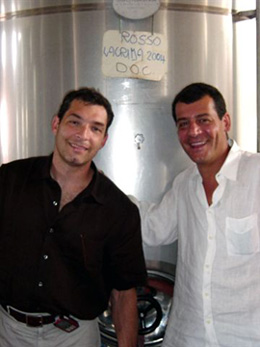
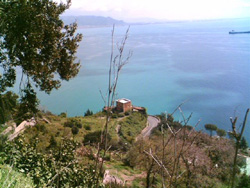
Greg recently spent some time in the “red zone” of Mt. Vesuvius peering into the original crater. No, he wasn’t leading an excavation of Pompeii. Instead, he was walking the vineyards of winemaker Gabriele DeFalco.

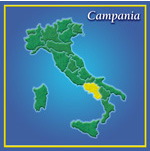
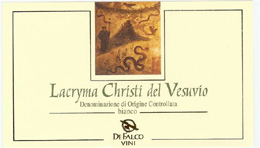
Located in Campania, above the Bay of Naples and on the flanks of Mt. Vesuvius, DeFalco is one of four wine producers in Greg’s Sauvage Selections portfolio. DeFalco, the former vineyard manager of the critically acclaimed Feudi di San Gregorio, makes both red and white wines from the Lacryma Christi del Vesuvio DOC.

This trip to see DeFalco was particularly fun for Greg since his wife Nell was able to tag along. This week-long trip, primarily to go to a family wedding but also to see DeFalco, was the first one that Nell went on since Greg started the business. “Usually he’s so booked with appointments, driving eight hours a day, and racing around without a day of rest—that it doesn’t make for a vacation at all,” Nell wrote me last week.

“It’s great to be able to visit the wineries with Nell,” Greg told me on the phone from the O’Hare international terminal. “Obviously the hardest thing about being on the road is being without her but since she helps me with the catalogue writing and images, I always love it when she can come with me to get a sense of the place herself.” Sampling the fresh regional foods together can’t be bad either as they shared a meal of sardines, two different types of clams, mussels, and local aliche with DeFalco overlooking the bay.

DeFalco left Feudi to pursue his own authentic winemaking style Greg said. Although Feudi is known for having put the local, indigenous varietals such as the white Falanghina and the red Aglianico on the wine world’s radar screen (Robert Parker gave Feudi’s $65 Serpico 2001 Aglianico 98 points), when they turned to pursue a winemaking style that produced bigger, more oak-driven wines DeFalco no longer felt comfortable. Now Greg buys most of the wine that he makes for export to the US.

“The Feudi white (Falanghina) does not have a sense of place. The DeFalco white is lighter and has notes of peach that go great with fish. The Feudi rocks the fish,” Greg summarized.

American consumers will be able to taste more of the wines this year. Greg said that the DeFalco labels had gotten final approval from the US authorities, which meant that a container of their wines could now ship. “Hopefully we can get a container out of Italy in the next couple of weeks before the country shuts down for August. Then it would arrive here in Chicago in October and be available for the holidays,” Greg eagerly reported.

Consumers will await them with baited breath—and tongues. Ten days after his return, Greg led consumers through a tasting dinner of DeFalco wines. At the recently opened Night Café in Arlington Heights, IL, Greg had them taste the white, and they approved. Then Greg had them try an olive or take a bit of salt on their tongues and then taste the wines again. “Everybody said ‘holy crap! I had no idea that food could do that to a wine!'”

DeFalco might be the producer closest to Smolik if in name only since his mother’s maiden name is DeFalco. Although he family came from Sicily, where the spelling is DiFalco, they switched to the Campania spelling of DeFalco for ease of pronunciation in America. Greg grew up speaking Italian with his mother and visiting her relatives in Sicily every summer.

Greg was headed to Sicily on Friday when I reached him at O’Hare. He’s going to be in Italy working on a new, complimentary business. He has just gotten financing for a new line of wines that he is going to import under the Cantina della Passione name. They will be accessible selections of barbera, chianti, and Pinot Grigio with a focus on quality. “I have restaurant owners telling me ‘I’ll never be able to sell Aglianico Bianco in the suburbs, Greg.’ So this new line is wine is for them: quality, accessible and higher volumes.”

“I’ve never felt so liberated in my life. I can do esoteric stuff with Sauvage Selections. Then I can also have mainstream wines in other line,” Greg cheerfully stated as they called his flight over the loudspeaker.

Summer wines at BNFB

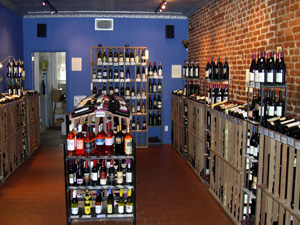
When I walked into Big Nose Fully Body on a warm summer day last week there were three new wines on the counter: a Greek white, a French rosé, and a Lebanese red. That about sums up the diversity at this charming neighborhood shop.

If I were a movie reviewer, I’d give the shop two thumbs up, way up. Or if I were Robert Parker, I’d give it a 95. By any rating system this shop scores high. I would love to have this shop right around the corner from my house.

The shop doesn’t have an enormous selection but it does have a great selection. And with almost as many different wines as there are days in the year, and conveniently located near the F line subway station, locals should consider this their own cave. Moreover, the wines are not only ready to drink but they are priced to drink. Only a few champagnes seemed to crack the $25 mark (but there were even some sparklers for under $10).

Pat does not buy her wines from an importer such as Greg nor does she buy them directly from a producer such as Susana. Instead, she buys them from about 25 distributors who act as intermediaries between the producers and the retailers. Although she works with a couple of big distributors such as Lauber, she works mostly with smaller distributors who have niche specializations or smaller, more focused “books” as their portfolios are known in the trade.

For example, she recently had a wine from California at a restaurant and inquired about who was the distributor, hoping to get it for her shop. She learned that it was distributed by Angels Share in Brooklyn and since that’s the location of her shop, she thought it would be a snap. But in the end the distributor didn’t have a listed phone number so she put it on the back burner. A few days later, she got a call from one of the two principals at Angels Share asking if he could be of assistance.

In the end, the California wine was too expensive for her shop, but Angels Share also had some Spanish wines that she liked (including the Castillo de Fuendalejon, the bottle in the bag, which I purchased at the shop and review as my wine of the week this week).

Wine distributors in New York state offer discounts for larger orders, Pat explained to me. They quite often offer a price for one case, but then discount that by about five percent if she takes three cases. Five, ten and 25 case orders all get steeper discounts but those are rare for Pat’s small shop. The shop’s temperature controlled basement stores some wine inventory that Larry, the assistant manager, keeps assiduously arranged.

But even though it is a small shop trading on a convenient location and knowledgeable staff, the prices are still good. Pat says that sometimes she wants to stock a wine that is too expensive, she will offer at a lower price than the normal markup. And she sometimes scrounges the distributors’ lists to find any interesting wines they may be trying to move and offers those at reduced prices as well.

The distributors come and pour their wines for her to sample at the shop. If she wanted, she says that she could have as many as three a day visiting her, each pouring five or six wines. While this might be reason enough alone for some entrepreneurs to purchase a wine shop, Pat says she tries to keep them at bay until she has a gap to fill. “I taste every wine that is in the shop,” Pat said.

Since she is also a wine writer, she writes up her impressions of a wine and hangs a tag in front of each bottle. Parker scores? Not in this shop. “Scores won’t tell the customer whether the wine will go with chicken salad for lunch,” she said.

The shop’s window display (and street scene in reflection!)

Oddly enough, given her background at IBM in e-commerce, Pat never really thought about selling wine through the web. “There’s just not enough space for shipping boxes,” she explained. “Occasionally our email newsletters get forwarded and we get requests, which we try to honor, but it is logistically difficult.”

About five percent of sales are rosé wines in the summer and white wines climb to parity with reds. Before I trundled off to the coffee shop next door, Pat suggested a few summer picks:

* Routas, rosé, 2004, province, $9.
* Castello de Bossi, 2001, $16 (closeout)
* Pierre Boniface, white, vin de Savoie (of course!), $12
* Notios, Pelopennisis, 2004 (white) – just in, as yet unpriced.

New York state of wine, part iii

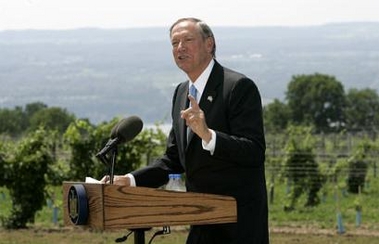
It’s official: Governor Pataki signed the bill into law yesterday that allows New York wine consumers to receive shipments of wine directly from the winery, even out-of-state wineries. (see backgrounder)

He signed the bill at Lamoreaux Landing Wine Cellars on Seneca Lake in a ceremony peppered with local winemakers and other state bigwigs. The Gov sounded a bullish tone for NY wine:

“I have no doubt that the Finger Lakes can certainly match, maybe even surpass” California’s famed Napa Valley someday, Pataki added in an interview. “It is an excellent standard to shoot for but I don’t see any reason why we can’t achieve that.” (full story)

Wow, that’s almost as ambitious as his running for president in 2008.

Others were more sanguine about the change. Willy Frank of Chateau Frank and Dr. Frank’s Vinifera Wine Cellars was fearful of competition.

“I don’t think it’s a wise law,” he said, pronouncing himself as “at best, neutral.” He added: “It will not help our industry.” (story)

Time will tell who is right. NY winemakers are certainly on the cusp of a new, more competitive chapter in the industry’s history. And consumers are becoming better served by a greater range of offerings. Belly up to the mailbox!

A new case of wine before the courts

The Supreme Court cracked open a cellar door for wine to flow directly to consumers with its ruling on May 16. Although the media attention has been great, the effects of the ruling have been limited because the high price of shipping makes it only cost-effective for consumers to purchase expensive wines. Further, with reforms only on the books now in Connecticut and New York, the actual change thus far has been a trickle. But the change could turn into a flood with another case before the courts.

The July issue of Wine Business Monthly reports that the case of Costco Wholesale Corp. vs. Hoen, pending before the federal district court in Seattle, could “put US retailers within self-distribution reach of all wineries.”

The May 16 Supreme Court decision on the consumer cases (known as Granholm vs. Heald and Swedenburg vs Kelly) will impact the Costco case. The Court supported the interstate commerce clause and ruled that states could not states discriminate between in-state and out-of-state wineries, as was the case in both Michigan and New York. Similarly, states maintain different standards for in-state and out-of-state distribution, which the Costco case may erode.

It’s technical and doesn’t have the sex appeal of allowing consumers to deal with the wineries directly, but Costco could have an impact that affects wines at all price points, not just the high-end collectible bottles.

Consider my favorite example of the celebrated “Two Buck Chuck,” aka Charles Shaw. The producer, Bronco Wine Co. arranged an exclusive retail agreement with Trader Joe’s grocery stores with a retail price of $2 within California where no distributor is needed. But every other state requires distributor intervention even though this arrangement is between a large producer and a large retailer. The result for consumers is often Three Buck Chuck. Or three-and-a-half buck chuck. A distributor gets a near 50% mark-up (allowing something for transport) for simply having a license. That is a disservice to the consumer.

R. Corbin Houchins writes in WBM that the second of four counts in the Costco case relies on interstate commerce (the other three counts pertain to Sherman anti-trust provisions and thus are not directly affected by the May 16 Supreme Court decision). Washington state wineries and breweries are allowed to self-distribute to retailers while out-of-state wineries and breweries are not: they must pass through mandatory distributor intervention.

If the Supreme Court’s recent decision acts as a precedent for the Costco case, the change for wine could be wholesale (excuse the pun). The only rub is the 21st Amendment, which devolved the power to regulate the production, distribution and sale of alcohol to the states. But how long can alcohol beg different status from other goods in interstate commerce when it is so clearly anti-competitive?

The changes would be manifold. Effectively, it would be the end of the three-tier system, at least in states that decided to permit self-distribution. A big winery could self-distribute and Two Buck Chuck would cost $2 for consumers outside of California as well as inside California. From the business side, more consolidation of retailers with each other would probably occur and they might even acquire distribution for more vertical integration.

Does that scenario sound like a doomsday, Mondovino-style horror film? Well, it could be. But it could also result in greater efficiencies, which could mean lower prices to the consumer. The United States is the only advanced industrial democracy to mandate distributor intervention in alcohol (even in Sweden, where the retailer is state owned, a thriving private market of distributors exists). Who knows, per capita wine consumption in America might even go vertical. Wine and Nascar anyone?


winepoliticsamz

Wine Maps


Monthly Archives

Categories


Blog posts via email

@drvino on Instagram

@drvino on Twitter


winesearcher

quotes

One of the “fresh voices taking wine journalism in new and important directions.” -World of Fine Wine

“His reporting over the past six months has had seismic consequences, which is a hell of an accomplishment for a blog.” -Forbes.com

"News of such activities, reported last month on a wine blog called Dr. Vino, have captivated wine enthusiasts and triggered a fierce online debate…" The Wall Street Journal

"...well-written, well-researched, calm and, dare we use the word, sober." -Dorothy Gaiter & John Brecher, WSJ

jbf07James Beard Foundation awards

Saveur, best drinks blog, finalist 2012.

Winner, Best Wine Blog

One of the "seven best wine blogs." Food & Wine,

One of the three best wine blogs, Fast Company

See more media...

ayow150buy

Wine books on Amazon: