BNFB: Introducing Aaron Hans
Breaking news: on August 9th Patricia Savoie sold Big Nose, Full Body to Aaron Hans. Pat has decided to pursue wine writing full time. We will catch up with her later to hear from her directly. Meanwhile, I went to Park Slope to meet Aaron, new proprietor of the shop…

Aaron Hans is so bursting with ideas and energy that is small wonder that his close-cropped blond hair stands straight up. But this thirty-something new owner of Big Nose Full Body has plans to tweak the shop, not give it a wholesale makeover. The clever name, the exciting range of wines, the handsome interior space, and the free tastings on Saturdays will all stay the same. But there will be minor changes including staying open seven days a week and even adding some apparel items.

Perhaps the biggest change for Aaron personally is his commute. As a sales representative for Frederick Wildman’s wine distribution he had taken as many as 10 subway trains a day to visit his accounts, both restaurants and shops. BNFB was one of his accounts and when he learned that Pat was thinking about selling he made her an offer. The five block commute for this long-time resident of Park Slope was undoubtedly a factor in his thinking.

“I’ve always wanted to own something,” he told me yesterday in the shop. An early stint in restaurants followed by a stint at a wine bar confirmed to him that he didn’t want to include food in his business. The shop seemed a good fit from that perspective too.

“You’re not going to get rich but you get to do something you really, really enjoy. I’m not stuck in a cubicle all day,” he said.

The store stocks wines from Wildman and Aaron is familiar with those. He hasn’t tasted through all the wines in the shop yet but any new wines that he adds, he will taste. He added a wine from Ridge to the store already, one that he knows and likes. The store currently gets wine from 22 distributors and he doesn’t plan on adding any more. “That’s a lot already,” he says.

I wondered, how do you value a wine shop? Aaron explained that when he purchased the shop from Pat in early August, he paid one price for the business, one price for the inventory, and the rest was thrown in as “good will.” That included odds and ends in the shop such as the racking and the computer-and even the staff. Larry, the assistant manager who was within earshot, joked that that was a lot of good will. “The staff are all great and we have no plans for changes,” said Aaron smiling.

With the busy season kicking in, he will however be buying a new computer to speed up the bookkeeping the current sluggish computer and to help with checkout. Last Saturday evening, there was a line the entire length of the shop.

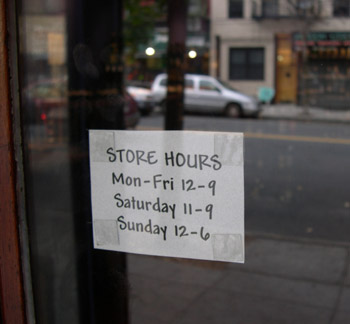
In order to cope with this busy last few months of the year, Aaron has added opening hours on Sunday. Originally it was 12-6 but he said the last two hours were very busy and he felt badly turning people away. So now the Sunday hours are 12-9. Aaron says that he could easily work 80 hours a week but has limited himself to five days a week in the shop. He has to spend some time with his wife and kids after all.

Kids are clearly on Aaron’s brain. He interrupts our talk at one point to help a woman with a stroller into the shop. Given the demographics of the neighborhood, Aaron will be working with a designer to introduce Big Nose Full Body t-shirts—and baby apparel such as onesies and toddler tees.

“Who knows maybe you’ll come back next year and we’ll be making all our money in t-shirts?” he said. It’s an exciting time for him with lots of opportunities. And yes, he has agreed to continue to participate in The Real Wine World. That’s good for us!
The Greg and Walter mini-tour

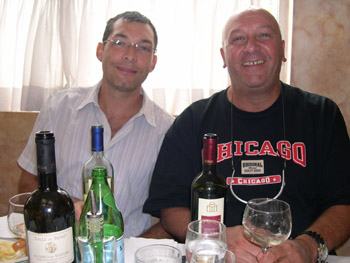
When I arrived at Convito Italiano on Chicago’s North Shore last week for a late lunch, the sun was pouring in on Greg Smolik and Walter Fabbri, winemaker at Basilium. Given Greg’s preference for “authentic” wines that reflect their growing environment, it’s no surprise that Walter, who was only on his second trip to the US, is stocky and jocular and speaks only fragmented English. He’s no Michel Rolland being chauffeured in a black Mercedes while consulting by cell phone to over 100 wineries around the globe. He is instead a product of his terroir as much as his wines.

Walter had flown in for Italian Night at Sam’s Wine and Spirits and Greg had been running him ragged ever since he touched down. The Italian Night was packed on Tuesday night, they had appointments around Chicago on Wednesday, Thursday they went to Madison, WI to visit some accounts, returning back to Chicago late on Thursday night. It’s small wonder we had a late lunch on Friday.

Greg and I had scheduled this lunch, our first face-to-face meeting, so that I could meet Walter as well as Lynda Jo Shlaes, wine director at Convito. Although it was a business meeting, the tone was clearly convivial as Greg declared Lynda Jo “like a sister” before she sat down to independently say that he’s “like a brother.”

Lynda Jo described Greg as having star-like qualities. “He’s the only importer or distributor who comes here to pour his wines and there’s a crowd.” She regularly has free wine tastings late on Friday afternoons and says that crowds mysteriously know when it’s Greg’s day and start appearing. I wondered if they had Greg-dar, similar to radar. “I ended up putting a small sign in the window but before that I’m not sure how they knew,” she confesses. “Maybe it was the meat.”

Greg, who loves pairing food with wine, admitted to bringing grilled meats for customers to try—after first tasting the wine alone. “I love it when people are amazed by what food pairing can do,” he admits.

“Greg can easily sell 10 cases of wine in one afternoon.” Lynda Jo said. Convito is not only a contemporary Italian restaurant that has been around for 25 years but also a shop selling Italian wines and gourmet foods to go.

For our lunch, Greg had brought two samples from Walter’s winery. Both the wines, called Pipoli 2003 and the I Portali 2003, are made entirely from the Aglianico grape. Aglianico has only recently come into its own starring role (admittedly off-Broadway for the moment) but once was used to illegally bulk up the wines of Brunello, Chianti and even the Rhone, Greg said. These wines come from the Basilicata in the arch of the boot that is Italy’s silhouette on the map.

Greg also wanted us to try the Pipoli Chiaro, a white wine from the red Aglianico grape, with the lunch. So Lynda Jo brought out a bottle from her stock and chilled it in an ice bucket filled with water, ice and salt (a trade secret). The Pipoli Chiaro 2004 (about $8 retail, Find this wine) looks clear in the glass but has the heft of a red wine. I had just seen the wine director of another store the previous day and she said that she was featuring the Pipoli Chiaro in her fall newsletter as an excellent white. I agreed. It’s a white wine that has a red wine personality, perfect for the transitional weather. Greg, always thinking about food pairings, suggested meat (pork), fish (bacala), and pasta with red sauce.

As our food arrived, panini for Greg and me, a salad for Lynda Jo, and grilled chicken for Walter, we moved on to the reds, starting with the Pipoli Rosso (about $9 retail, Find this wine). The most humble of Walter’s wines, it is still hand-harvested from 30 year old vines and is an excellent value at about $10 retail. It is medium bodied and is ready to drink. Greg recommends pork, lamb or pasta for the conventional or lentils or local hot peppers for a taste of rusticity.

We then moved on to the I Portali, which exhibited more heft and for about $12 retail (Find this wine), seemed the better value red to me. The volcanic soil of the Vulture growing region in Basilicata give this wine some mineral notes but the dark fruits and soft tannins give it a lot of depth and complexity. It’s aged for 10 months in large oak barrels and 4 months in small barrels.

Walter’s top wine, the Valle del Trono (about $20 retail, Find this wine), was not available for our lunch, but I’ve tasted it before and think that it tastes like a wine worth twice the price. Walter’s 2001 vintage made only 30,000 bottles of the wine, which used best grapes from the oldest vineyards. Harvested late on November 20, the grapes received 20 days of drying in the sun (akin to an Amarone), 60 days of fermentation, and 30 months of oak aging. This wine accounts for about a quarter of Basilium’s wines.

These wines are the ones that give Walter the most pleasure but Walter uses the rest of his large vineyards to pay the bills through the production mass market wines. He grows Pinot Grigio and Greco de Tufo to sell anonymously to large buyers in the UK.

Greg has great confidence in Walter’s winemaking capabilities. And after tasting through three of his wines, it’s easy to understand why.

We left Convito to head in our respective directions, which for Greg and Walter meant heading down the road to Evanston for their next appointment and then for Walter that evening, to O’Hare, and then home.

Hot grapes

Jancis Robinson predicts which off-the-beaten-path grape varietals are likely to make it big in the Weekend Financial Times. It’s definitely worth a read but here’s a snippet:

Wine professionals and serious wine aficionados are more likely to look for something a bit more outré than the most familiar grapes and, more and more, they are getting it. Ten years ago it looked as though the world’s vineyards might soon be planted with nothing but the most famous international vine varieties. Today the pendulum is swinging most definitively back towards biodiversity with the rediscovery, or at least re-evaluation of local, almost forgotten specialties (sometimes called heritage varieties – the wine world’s answer to heirloom tomatoes), and a much wider range of vines in general.

My own personal theory for this encouraging development is that it is not because the average consumer is desperate for a change from Chardonnay and Merlot. Rather the reverse in fact.

To the list I would add Aglianico from Campania and Basilicata in the south of Italy. And definitely Malbec but I suspect she left that off because it is now almost mainstream (though not quite yet in my view). When done well, Verdejo can be a refreshing blast of acidity for those tired of kiwi Sauvignon Blanc. And Greco di Tufo can offer surprising complexity for an Italian white.

In all, it’s great to celebrate diversity. What are some of your faves?

Value vino list fifteen

Crisp white

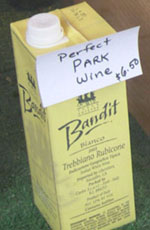
Bandit, Bianco, 1 Liter, Italian Trebbiano, 2003. $6 Find this wine
Sometimes it’s all about your expectations. George Bush strings words into sentences without making any egregious grammatical errors in a debate and lo and behold, he’s won! Same with this wine. It’s in a Tetra-Pak for crying out loud so your expectations are at rock bottom. But hey, it’s not half bad! The three thieves are actually three winemakers from California who broke through with their bold red jug wines last year. This year sees the Cal-Ital Bandit Bianco, made entirely from Italian Trebbiano grapes (brilliant marketing idea! Import surplus Italian wines rather than buying surplus domestic ones and consumers will pay a premium!). Pale yellow in color, this unoaked wine has a crisp acidity and a twang of steel tank. The Tetra-Pak makes it convenient for sticking in the picnic basket for summer concerts—just be sure to chill it before setting out since an cooling sleeve won’t fit around the box. Resealable. (Imported by Liberators, Inc, Sausolito, CA)


Wine in a box,
sans bag

Dry rosés


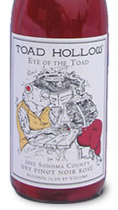
Toad Hollow, The Eye of the Toad, Pinot Noir rose, Sonoma County, 2004. $8 Find this wine
“Fine wine at a reasonable price” is the motto of Toad Hollow winery based in Healdsburg, Sonoma. This dry, crisp and refreshing rosé with notes of rose petals and strawberries is indeed easy on the palate and on the wallet (it is probably the cheapest, good Pinot Noir from California given how the prices have taken off post-Sideways. Since it is from their own vineyards, however, it will likely remain affordable unless they decide to divert the juice back to other Pinots that fetch a higher price). The flavors resemble excellent rosés from Europe though it is, surprisingly for a Pinot Noir, more full-bodied. The winemakers tip their hat at this style in the name, the eye of the toad, since French rosés are known colloquially in French as “the eye of the partridge.” A
great eye peers through the label. Enjoy with chevre or salads on the deck.

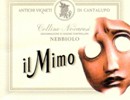
Antichi Vigneti de Cantalupo, Il Mimo, (rose) 2004. $11 Find this wine
This mime speaks volumes. On a hot summer day, there is nothing like a bottle of rosé glistening in the middle of an outdoor table surrounded
by excellent salads

and breads and good company. And with plenty of warm weather being served up this summer across the northern hemisphere, I wouldn’t be surprised if rose sales were up higher than the thermometer. Il Mimo fits the bill very nicely with it crisp acidity and smooth and balanced fruit—it is one of the top value roses from Italy
I’ve found this summer. (Importer: Summa Vitis, San Francisco)

Medium-bodied reds

Capcanes, Mas Donis, Barrica 2003. $11 Find this wine
These old vines keep pumping out excellent value vino. Located in Montsant, the value-minded person’s region next door to Priorat, these 60 year old Grenache and Syrah vines produce a profound wine. In the glass, it is transparent and deceptively light in color yet on the palate the complex flavors yield to a finish that is rare among value vino. I would serve this wine with confidence to any guests—and this vintage’s swanky new label helps it further punch above its price point. Importer: Eric Solomon, Charlotte, NC.

Finca
Luzon, Jumilla, 2004. $7
Find this wine

Lush and velvety this big red from Spain’s up-and-coming Jumilla region has great bang for the buck. If I had been traveling with a cork screw last week (which I wasn’t thanks to the TSA) this would have been my wine of choice (but since I wasn’t I factored in the corkscrew price and then opted for a screwcap from down under). This monastrell-syrah blend goes well with smoked or grilled meats and is on my list for “transitional reds for the fall” as well as “candidate for best label of the year.” Importer: Jorge Ordonez.

Teatro, Malbec. (NV). $6 Find this wine
This is an Orwellian wine. It states neither vintage nor place and comes from the eerie producer named “bodega A-72107” (though the synthetic cork was stamped “Weinert,” a reputable producer). Why the marketing department at Bodega A-71207 chose the name Teatro and then put some restaurant watercolor scene on the label is known only to them but the wine gets the job done whether you’re having a pre-teatro menu or a BBQ. The wine does exhibit some of the red fruit leatheriness of Malbec but it is really only recommended for bargain hounds who won’t pay a dime over $6 since there are several other good examples still under $10 (viz Alamos). But, hey, if wine half this good were available by the glass in restaurants, wine drinkers would be happy. Importer: Pelloneda, NY.

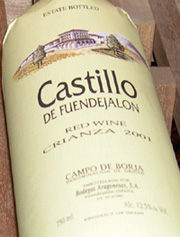
Castillo de Fuendejalon, crianza, Campo de Borja, 2001 $9 Find this wine
We’ve heard of wine in a box. And even wine in a paper bag. Well this wine bottle is packaged pre-bagged! Yes, I am recommending a wine under $10 in a paper bag (and I’m Dr. Vino, not Wino!). You may be familiar with the Rioja packaging of gold wire wrap, but this wine from Campo de Borja comes with all information printed a paper wrap. But it’s not the outside that’s important since the inside holds a pleasantly oaked, medium bodied red with notes of dark fruits and violets. A blend of old vine greache and tempranillo, this wine’s packaging makes it ready to hit the road and bring to friends at the grill. (Scoperta Importing, Cleveland Heights, OH)

Codice, Vino de la Tierra de Castilla, 2002. $8 Find this wine
This balanced red has notes of irony. It’s ironic because the term “codice” is the old word for Spanish laws and the wine is not from the strictest legal category, the denominacion de origen (D.O.), but instead from the larger and looser Vino de la Tierra de Castilla in the plains southeast of Madrid. However, since I have discovered several yummy, easy-drinking reds from this new area, it does lead wine drinkers to wonder about the values of the D.O.s. From the same family that makes Sierra Cantabria in the Rioja, this balanced, medium-bodied red is not earthshatteringly profound but it’s competently done and a good value. It is sure to be a crowd pleaser by the barbecue. A Jorge Ordonez selection (Tempranillo
Inc, Mamoroneck, NY)

Big reds

Quinta
de Roriz, Prazo de Roriz, Duoro 2003. $12 Find
this wine

This wine is international in style and if that’s ever a bad thing, it’s not in this case since I’ve tasted some pretty rough table wines from unreconstituted winemakers in Portugal. But the Duoro is really looking up and has become one of Europe’s best places for value vino (or vinho) as well as the exoticism of indigenous grape varietals, often unheralded internationally. This wine blends the Tinta Roriz, Tinta Franca, Tinta Barroca and Touriga Nacional to come up with a smooth, fruit forward red wine with excellent aromas of leather (saddle, not jacket) and dark fruit. On the palate, the pleasant tannins also have an X factor that I ascribe to the Touriga but would make it a great match for smoked or grilled meats. Kudos go to the Duoro DOC, which has one of the prettiest certification stickers on the back of the bottle. Importer: Premium Port Wines (San Francisco, CA).

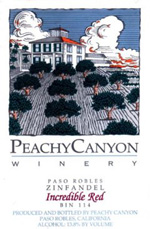
Peachy Canyon, Incredible red, Bin 114, 2002. $9. Find this wine
This will provide the American red for the 4th of July-you can supply the white and the blue. I often like a chilled white or rose in the summer to beat the heat. But then there are those meals, such as BBQ, that just cry out for a big red and the all-American Zinfandel fits the bill (although DNA research has proven the grape has its roots in Sicily and Slovenia). Peachy Canyon, a family-owned winery near Paso Robles, has a line of affordable zins. This “incredible red” is not the most full-throttled example of the grape, but is balanced with dark fruits and a peppery finish. 7,800 cases produced.

See the previous list including great summer wines

Power people

A few odds ‘n ends from round the web:

Parker power
The Economist centers its review of three new wine books in the current edition around critics. The review includes:
Elin McCoy’s The Emperor of Wine;
Thomas Pinney’s History of Wine in America; and
Paul Lukacs’ forthcoming The Great Wines of America: The Top Forty Vintners, Vineyards, and Vintages.

Mike Steinberger also had a punchy review of the McCoy book on Slate.com arguing that Parker’s power has passed. Indeed, there is historical precedent that when a force appears to be at its zenith, it is actually on the edge of decline. When Nixon declared “we’re all Keynesians now” it was the final nail in the coffin of Keynesianism. Similarly, when low-carb beer appeared, it was over for the Atkins diet (the company is now in bankruptcy).

Tom at Fermentations has been keeping up on the power struggle in Michigan.

And also via Tom, the private label of British supermarket chain Tesco’s “champagne” won in a blind tasting. The emperor has no clothes?!? (It does sell for £15 though)

Dispatches from France

Hot off the wires from France (maybe one day soon, I’ll do a longer piece on the state of play in France…):

Bordeaux has retained a PR firm and opened a US press office. The Bordelais CIVB, which comprises growers and negociants, hopes to prop up sales in what is soon to be the largest market for wine consumption.

Good weather may also help Bordeaux wines this year as the Pomerol harvest is “impeccable,” reports Decanter.

But heavy rains have put vineyards underwater in the Languedoc. Hopefully it is not as bad as the 2002 Rhone, which was largely a write-off vintage, but some Minervois vineyards are under 18 cm of water. Perhaps the story on old and new styles in Languedoc wines in the NY Times yesterday will provide some solace growers there.

Take a class with Dr. Vino

Take a class this fall with Dr. Vino! Thanks to courses in New York and Chicago, geography is even less of an obstacle! Registration deadlines are looming so sign up soon:

NYU September 22
(6 weeks)
In Vino Veritas: The New International Culture and Politics of Wine. Register now
NYU November 3
(6 weeks)
Becoming a Wine Expert: The Essentials of Wine Tasting. (in conjunction with the James Beard Foundation) Register now
University of Chicago (October 1, 2:30-7:00)
Vino latino: wines of Spain, Chile and Argentina Register now
University of Chicago (November 12,
2:30-6:30)

Critiquing the Critics.
Register now

Dr. Vino’s wine blog in Food & Wine magazine

I was thrilled to return home from the holiday weekend and see that Food & Wine magazine had rated my blog as one of the “seven best wine blogs.” What an honor!

It’s great that Food & Wine, an established print magazine with a high circulation, takes the frontiers of wine writing seriously enough to do a story on blogs. And I’m pleased to be included in the story and in fine company.

See story.

The wine “blogosphere” is a rapidly expanding universe with many great blogs. Which reminds me, I’ve got to add a blogroll of the many blogs that I like! Coming soon…(but in the meantime, check my links page)


winepoliticsamz

Wine Maps


Monthly Archives

Categories


Blog posts via email

@drvino on Instagram

@drvino on Twitter


winesearcher

quotes

One of the “fresh voices taking wine journalism in new and important directions.” -World of Fine Wine

“His reporting over the past six months has had seismic consequences, which is a hell of an accomplishment for a blog.” -Forbes.com

"News of such activities, reported last month on a wine blog called Dr. Vino, have captivated wine enthusiasts and triggered a fierce online debate…" The Wall Street Journal

"...well-written, well-researched, calm and, dare we use the word, sober." -Dorothy Gaiter & John Brecher, WSJ

jbf07James Beard Foundation awards

Saveur, best drinks blog, finalist 2012.

Winner, Best Wine Blog

One of the "seven best wine blogs." Food & Wine,

One of the three best wine blogs, Fast Company

See more media...

ayow150buy

Wine books on Amazon: