Reader mailbag: getting my wine picks on your table

Dear Dr. Vino,

Have you even considered taking your 10 for $10 list, or the most that you can find at a single store, and putting them in a case or half case that people can buy. I see that you have a “find this wine” link, but maybe people would be more inclined to buy MORE wine and sample the bunch if there is some way of YOU assembling the case online at a store and providing a link for us to purchase the box. Is this not possible? Thoughts?

yours truly, Alastair

* * * * * *

Alastair,

Great question. In fact, it is so great, I’d love to open it up to input from other readers.

I hear your frustration (and of course praise you for your fanatical dedication) and maybe it’s something I should consider. I’ve previously touched on the difficulties of making wine recommendations for the US market. I just don’t have the market clout for shops to be arranging their end-cap displays with my picks.

I source my wines from a lot of shops but I would recommend checking Sam’s Wine in Chicago or Astor Wine or Crush Wine in New York City since they ship to many states and I buy a lot of my wines from them. But that said, I could easily compile a case (or two or three!) of wines I like from each of these stores or others of my faves in NYC or Chicago or SF.

What do you think, dear reader? Would you like it if I arranged for some value wines that I recommend to be found at a vendor with more or less national shipping? Would you have liked a one-click “buy now” button for my summer wines list for example?

My only hesitation is that I only recommend wines because I like them not because I have any inventory to move or sales targets to meet. I think it’s an important distinction: I recommend wines, I do not sell them and I have no desire to cross that line.

If I arranged some of my picks with a retailer, it would indeed be easier for you. And I wouldn’t have any inventory. Or sales targets–if I couldn’t find wines that I liked from one vendor at any particular time, then I simply wouldn’t put together any cases or half-cases of my picks.

I look forward to your thoughts.

* * *

Win some wine — thru Sep 7

tags: |

Win some wine!!


This just in: Katie Couric will be hosting DrVino.com.

Actually, that’s not true. I’m still firmly in control around here!

And to show my authority, I’ve ordered a half a case of killer fall wines from one of my favorite wine stores in Manhattan, Crush Wine Co . The staff is currently awaiting my instructions on where to ship it. It could be your address! Take the quiz, get em all right, and qualify for the wine or the second place prize, a new book on food and wine pairing. Through Sep 7.


Dr. Vino’s Labor Day Wine Quiz

http://www.drvino.com/winequiz2006.php

The wines are:
2003 Chave St. Joseph “Offerus” find this wine
2004 Ex Libris Cabernet Sauvignon find this wine
2004 Brun Terres Dorees Pinot Noir find this wine
2005 Sur Bonarda find this wine
2002 Chateau Moulin Rouge find this wine
2004 Laurens Marcillac find this wine

tags: |

Parker’s next hire: the odds

With the recent announcement from Pierre-Antoine Rovani that he will be leaving Robert Parker’s The Wine Advocate (discussed here), speculation is running wild on a replacement. We make the odds:

Hugh Johnson 10,000:1
Jancis Robinson (FT) 5,000:1
Per-Henrik Mansson (freelance) 4,000:1
James Halliday 999:1
Matt Kramer (WS) 900:1
Eric Asimov (NYT) 700:1
Dorothy Gaiter (WSJ) 500:1
Robin Garr (WLP) 400:1
Bobby Kacher (importer) 300:1
Jamie Goode (Wine Science) 300:1
Jeff Leve (eRP) 200:1
Daniel Johnnes (restaurant Daniel) 100:1
Dan Berger (Vintage Experiences) 50:1
Lyle Fass (Crush) 25:1
Tim Atkin (The Observer) 20:1
Gregory Walter (Pinot Report) 18:1
Alan Meadows (Burghound) 14:1
Antonio Galloni (Piedmont Report) 13:1
Stephen Tanzer (IWC) 10:1
Michel Bettane (Revue du Vin de France) 9:1
Andrew Jefford (freelance) 5:2

tags: | |

Zinfandel, TERMINATED

With California state wine month a mere three days away, the state will be without a “historic” grape. Eegads! Amador County loses…

From the SF Chronicle

(08-29) 07:40 PDT SACRAMENTO — Zinfandel will not be designated “California’s historic wine” after legislation to do so was vetoed Monday by Gov. Arnold Schwarzenegger, who said it was “inappropriate” to single out one variety for recognition.

Initially, the bill — SB 1253 by Sen. Carole Migden, D-San Francisco — would have made zinfandel California’s official state wine, a designation the rest of the state’s wine industry strongly opposed.

Weakening the bill to simply labeling zinfandel as historic since it’s been grown in the state since the 1849 Gold Rush still did not win Schwarzenegger over.

“California wines have inspired authors, artists and Oscar-winning motion pictures,” the GOP governor said in his veto message. “Singling one out for special recognition would be inappropriate.”

Migden said the veto showed the governor didn’t have much of a sense of humor.

“It ought not to be a zin to be for zinfandel,” she quipped.

UPDATE: here’s the NYT lede on the same subject

Sorry, Zinfandel, Maybe Next Term

By JESSE McKINLEY
Published: August 30, 2006

SAN FRANCISCO, Aug. 29 — In a robust, full-bodied move with just a hint of censure, Gov. Arnold Schwarzenegger vetoed a bill on Monday that would have declared zinfandel to be the “historic wine” of California. [link]

tags: | |

Tasting sized pours

Foster’s, the Australian brewing co that swallowed Southcorp wine for A$3.2 billion last year, announced quarterly results. Beer bolstered sagging wine and management can’t think of anything better to do with their cash than buy back A$200 mln worth of its own shares. Now there are rumors that the “world’s top two” are eyeing Foster’s–the big two brewers that is, InBev and SABMiller. Hmm, what would happen to the wine assets? More turbulence could be expected. [Sydney Morning Herald]

Also down under, but riding the wave better than their neighbor, New Zealand wine exports rose to record levels in June. We recently learned about Australian researchers using worms, this week kiwi researchers are studying how to keep that “cat’s pee” smell in their sauvignon blanc. [NZ Herald]

As Labor Day approaches, many California wineries may have trouble finding labor for harvest. [SLO]

With new tax deductions for conservation easements, will vineyard owners swear that it will be forever condo-free? One already said yes. [WBM, SPD]

Michael Mondavi finds he can’t use his own name for his new wine venture. [ModBee] A sign of the times: this is becoming so frequent that Eponymous is already taken.

Want a snack? How about a foie gras Pop-Tart? No, it’s not available at your local supermarket aisle–it’s only available at the bar at the Four Seasons in NYC. “The process was to come up with a finger-friendly way to eat foie gras,” chef Brooke Vosika told Time Out New York. Foie gras baked in piecrust and served with port wine jelly $28. Sauternes extra.

tags: | |

MA: wine sales in supermarkets?

If you can’t buy wine in your local supermarket, do you think you should be allowed? Massachusetts residents will be asked essentially that question on a statewide ballot initiative this November. If I were a resident of the Commonwealth, I would vote yes.

As crazy as it may sound to residents of California, Illinois or Florida, many states in the northeast still have laws that prohibit the sale of wine in supermarkets. Wine and spirits must be sold at spearate (but equal?) stores. Chains are prohibited in New York where licensees can only have one license in the entire state. Massachusetts is somewhat better with a maximum of three locations per licensee.

Here’s why I would vote yes on “question 1” on November 7:

1. Convenience. If you are going to have wine with dinner, you can’t get more convenient than buying wine where you are also buying the ingredients for dinner.

2. Price. The prices of high volume wines would come down. The Massachusetts Food Association, a trade group that is pushing the initiative, estimates that the reform would save wine consumers between $26 – $36 million. While it’s hard to say exactly how much it would save, it’s easy to tell which wines would benefit. If a consumer wants a branded commodity wine, then they should be able to get that at rock bottom prices. The large purchases of supermarkets and big box retailers would give them the clout to deliver those low prices.

3. End the stigma of wine as “different.” Wine has made significant inroads into American life in the past decade. For that to continue, it has to be easy to buy and at a good price. Selling wine next to cheese and not in a different store will continue this positive trend.

4. The big retailers will have increased clout in the market to offset the clout that the distributors crurrently wield.

5. Sales to minors will not increase as a group against the initiative suggests. It’s funny to see shopkeepers using this rhetoric since it is usually employed by the distributors. Many supermarket chains require any alcohol purchase to be done with an ID. Some even enter the ID number into the computer system.

6. Lest you think I am being too cruel on the “mom and pop” package stores, it will actually improve the small shops that survive. Instead of selling branded commodity wines with thin margins, they will be able to move more upmarket and sell premium wines with fatter margins. They will be forced to provide a better selection, better service, and better wine events than the supermarkets. And that will be a boon for the both the curious and the enthusiast wine drinker.

* * * * *

Question 1: Sale of Wine by Food Stores
This proposed law would allow local licensing authorities to issue licenses for food stores to sell wine. The proposed law defines a ““food store” as a retail vendor, such as a grocery store, supermarket, shop, club, outlet, or warehouse-type seller, that sells food to consumers to be eaten elsewhere (which must include meat, poultry, dairy products, eggs, fresh fruit and produce, and other specified items), and that may sell other items usually found in grocery stores. Holders of licenses to sell wine at food stores could sell wine either on its own or together with any other items they sell.

Related:
Study hits wine sales ‘monopoly’ [Boston Globe]
Get the latest with Google News

Merlot-grenache

I spoke with a cult producer last week who told me that he will release a new wine this fall: a blend of merlot and grenache. Unusual, eh? But thinking about it, the smooth of merlot blended with the sweet of grenache and I’m surprised there isn’t more of this already.

More details in the new wine to follow. But in the meantime, which two regions will the grapes come from? Post your guess in the comments below. The winner will get a link back to his or her blog/site or, if blogless, some form of glorious mention here that trumpets their wine savvy.

UPDATE 9/7: Thanks to all for guessing in the comments and to Whit for guessing the hardest. The answer lies here with Jean-Luc Thunevin of Valandraud.

tags: |

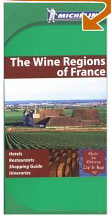
Book review: The Wine Regions of France

Michelin, The Wine Regions of France

A guide to cathedrals might seem like the logical shift toward themes for the Michelin green guides, traditionally organized by country or region. But I came across one with another theme: French wine regions.

On the whole the book offers the first time tourist a bird’s eye view. The first 70 pages provide a brisk overview of wine and France that is balanced and up-to-date enough to touch on the recent troubles of the French wine industry. In the subsequent twelve regional sections, each has a regional map with several itineraries laid out in typical Michelin style. Practical information ranges from select hotels and restaurants to good shops for wine and other regional products in the main towns.

However the major drawback is that the guide’s group author backs down from providing a star-ranking for the wine producers themselves. Michelin has no qualms about rating chefs, hotels, cathedrals, museums, indeed entire towns and villages in its other guides yet is unable to rate wine producers here either for the quality of their wines or the tourist appeal of their properties. Since many visits to wine country tend to be for a weekend or combined with other attractions in the area, such a ranking would provide the harried traveler a useful thumbnail sketch of the top wineries in the area. Suggesting a fun big name to visit as well as an independent grower that few might have heard of would be helpful way for a tourist to balance an afternoon. In Champagne, for example, why not offset the slick tour at Moet with a visit to Jacques Selosse whose extraordinary champagnes are not exported to the US.

Although it is a book of all wine producing regions of France, the tourist is probably only likely to visit one region. Thus the book must be evaluated on the strength of the regional coverage. It’s a pity then that the regional sections are too thin with too much material recycled from the regional green guide and not enough opinion and information satisfy the wine tourist. The maps indicate only a few winery locations among the other sites and hikes. While the unstarred winery blurbs do provide useful contact info and some visitor hours, their descriptions are often bland and not enough for the tourist to know what’s worth visiting.

Even if they pull their punches by not giving star reviews, that’s not the case here. I give the book one star, or “worth a browse.” In the end this book resembles Michelin’s thin rival guide, Zagat, since it is mostly useful for the contact information and hours (when correct).

tags: | |


winepoliticsamz

Wine Maps


Monthly Archives

Categories


Blog posts via email

@drvino on Instagram

@drvino on Twitter


winesearcher

quotes

One of the “fresh voices taking wine journalism in new and important directions.” -World of Fine Wine

“His reporting over the past six months has had seismic consequences, which is a hell of an accomplishment for a blog.” -Forbes.com

"News of such activities, reported last month on a wine blog called Dr. Vino, have captivated wine enthusiasts and triggered a fierce online debate…" The Wall Street Journal

"...well-written, well-researched, calm and, dare we use the word, sober." -Dorothy Gaiter & John Brecher, WSJ

jbf07James Beard Foundation awards

Saveur, best drinks blog, finalist 2012.

Winner, Best Wine Blog

One of the "seven best wine blogs." Food & Wine,

One of the three best wine blogs, Fast Company

See more media...

ayow150buy

Wine books on Amazon: