At Dr. Vino classes, find more than fine wine!

As we went around the room to introduce ourselves at my University of Chicago class on Saturday afternoon, one participant had a surprising tale to share with the class.

He said that he and the woman to his right had taken my class there on October 1, 2005 on the politics of wine in Chile, Argentina, and Spain. He remembered the date because it was his birthday. But he also remembered it because he and the woman met that day and they had been “drinking wine together ever since.”

Food and wine pairing? Forget it! They got a life pairing!

Reader mailbag: which wines for a BBQ on Mother’s Day?

Dear Dr. Vino,

Which wine would you recommend for a Mother’s day barbecue?

Thanks,

Erin

Dear Erin,

Hmm, that’s a tough one. When I think BBQ I think “big red” to go with the grilled meat. But “mom” and “big red” are not the first wine and people pairing that leaps to mind.

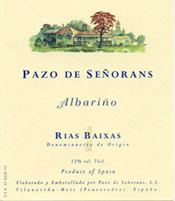
Since mom is the star of the show on Sunday, I’d check with her to see if she likes big reds. If not, I’d consider structuring the menu toward lighter fare such as grilled fish and vegetables.I’d try the Pazo de Senorans albarino 2005 from northwestern Spain. It’s a bit more expensive than entry-level albarino at $20 (find this wine) but it has a beautiful mouthfeel thanks to aging “on the lees” (dead yeast cells–don’t ask) to round out the minerality and acidity. It’s a great complement to grilled white fish.

If you wanted to do some ginger grilled shrimp, I’d try some bubbly or faintly spicy gewurztraminer. On the bubbly side, you could go for the value play with the wonderful, dry Bisol “crede” prosecco for $15 (find this wine) or pay a bit more for the Falmet brut Champagne, a full-bodied bottle of champers thanks to being 90 percent from pinot noir and pinot meunier. For a gewurz, I’d try the Zind-Humbrecht to really hit a home run (find this wine).

If your mom likes reds and grilled meats, then I’d try a mencia from Bierzo for around $12. At that price point the wines are unoaked and lots of food friendly acidity and fruit. Try the Peique (find this wine–or the Abad dom Bueno). For a lush red, try the Terra Rosa malbec for $12 (find this wine) or the Castillo de Jumilla monastrell for same price (find this wine). I had an excellent Gigondas recently, the 01 Domaine Le Mas des Collines Regis de Taxis, for about $21 that would be great with heartier grilled meats (find this wine). If you really wanted to splurge, go for the Ridge Lytton Springs zin (find this wine) to leave your relatives and mom with a lasting impression.

Fingers crossed for good weather on Sunday!

Cheers,

Drinking wine in India


This postcard from India is by Dini Rao, formerly in the wine department at Christie’s, and currently finishing her MBA at Harvard Business School.

raoindia2.jpg

raoindia3.jpg

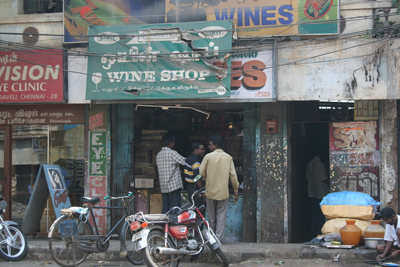
My wine experience during my stay in India was eye-opening. If you told me five years ago that Indians would put down their bottles of Johnny Walker Black Label for a glass of Shiraz, I would laugh. After spending the first portion of my trip in the southern city of Chennai (formerly Madras), my concept of an Indian wine shop was bleak: a wine stand (see the first photo above) with men standing around in lungis all day, taking shots of “wine” i.e. liquor or port.

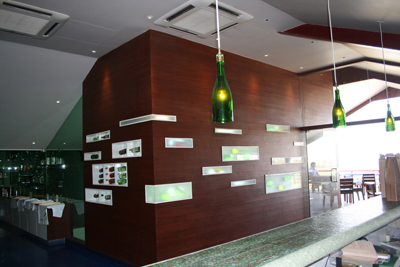
Then I arrived in Mumbai where swank hotels and restaurants serve Veuve yellow label for Rs. 2000 or $50 a glass. Top wineries attract Indians eager for tours with beautiful tasting rooms (see the second photo). As if welcoming me to the city, the current issue of Time Out Mumbai featured “Wine: Why we’re all drinking it,” a 12 page spread about wine bars, producers and sommeliers around town. According to a Newsweek International online article, Bollywood, which just graduated to showing its first scandalous on screen kiss on the lips, features stars sipping wine in recent movies.

Wine, while trendy, also seems to have serious takers. A friend publishes the wine magazine Sommelier India that circulates to India’s growing wine enthusiasts. When invited to witness a Wine Society of India tasting, I quickly dropped my previous plans to see Stephen Spurrier speak to 500 assembled Indian guests (see photo).

India’s wine future seems bright. Euromonitor predicts 100% growth from the 9 million bottles currently consumed in India over the next five years. Consumption per capita is low in the billion-person country, but concentrated, as Mumbai drinks 40% of wine by value and will continue as one of the highest growing markets. No wonder the WTO, led by the EU and US, pressures India to change the import duties on foreign wines which currently reach up to 550%.

Perhaps the most surprising aspect of India’s wine culture is its own wine production. More on this in Wine in India, Part 2.

Reminder: meetup tomorrow at Juicy Wine Co in Chicago

All right, Chicago people. No doubt you have cleared your post-work schedule and are ready to drop by the hip and happening Juicy Wine Co tomorrow from 5:30 – 7:30!

Fun vino-philes, local bloggers of note, and many others that I haven’t met before have let me know they’re coming. Get your weekend started on a good note–hope you can make it!

When: Friday, May 11, 5:30 – 7:30 PM
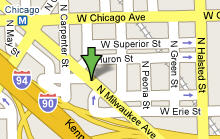
Where: Juicy Wine Company, 694 N. Milwaukee Ave. (bet Chicago and Erie)
Who: you – and feel free to bring a friend!

See the original posting.

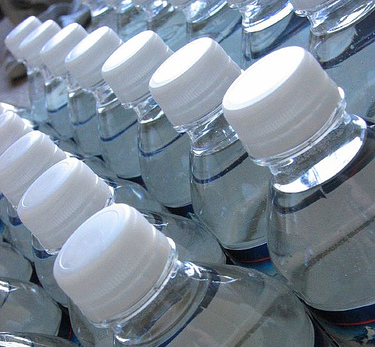
Carbon neutral: keep wine, ditch water

bottleh2o.jpg

I’m giving up water for 30 days. Bottled water that is.

In the discussion of the carbon footprint of wine here last week, I floated the idea of purchasing carbon offsets to assuage carbon guilt. In case I had any doubt of the efficacy of this matter, an excellent column in the Financial Times last week on the subject of offsets made me put paid to this notion.

A hilarious quote compared the system of carbon offsets to “the medieval system of indulgences, in which corrupt priests absolved sins for haggled fees.” The author, John Guthrie, went on to say that the practice of buying tracts of forest land for protection as offsets may be out of favor now. The band Coldplay bought 10,000 mango trees in southern India to offset the carbon produced by the release of their second album. Five years later, the trees have now withered and died.

So if I am to make my wine drinking carbon neutral, I can’t buy my way out of it: I actually have to give something up. I figure I should go beverage-for-beverage, in other words, keep wine, and give up something else. I’d love to say that I would give up soda, but since I haven’t had a soda in something like 15 years, that would kind of be like my giving up snowmobiling, jet-skiing, and being driven to work in a stretch Hummer limousine (oh wait, that last one actually WILL be tough to give up).

Because the kind of wine that I enjoy is a unique product that can’t be replaced locally, I have another target in my sights that can: bottled water. It’s one of those paradoxes of the global era to be able to buy spring water from the French alps or the islands of Fiji in New York when there is abundant drinkable tap water available (unlike some countries, the efforts of a current UNICEF campaign). And, as a commenter pointed out in a previous posting, this chart shows that bottled water’s growth rate is faster than wine–it must be stopped!

So for 30 days I’m not going to consume any bottled water. Just what kind of a sacrifice will that be? Granted, not a huge one. I might save the world something like 30 bottles of water. But it’s a start. And I may even extend it if I can live without my favorite Gerolsteiner. So if you’ll excuse me, I have to go and fill up my water bottle at the drinking fountain.

(image)

Which wine would you pour if the Queen were coming for dinner?

qe2gwb.jpg

The question of which wine to serve the Queen is not one that arises in Washington very often. But last night it did at the state dinner for 130 honored guests. The Teetotaler-in-Chief went with an all-domestic–nay, Napatastic!–youthful, line-up (though somehow a “Champagne” dressing appeared on the salad).

Straight from the White House, last night’s menu:

Spring Pea Soup with Fernleaf Lavender
Chive Pizzelle with American Caviar

Newton Chardonnay “Unfiltered” 2004 (find this wine)

Dover Sole Almondine
Roasted Artichokes, Pequillo Peppers and Olives

Saddle of Spring Lamb
Chanterelle Sauce
Fricassee of Baby Vegetables

Peter Michael “Les Pavots” 2003 (find this wine)

Arugula, Savannah Mustard and Mint Romaine
Champagne Dressing and Trio of Farmhouse Cheeses

“Rose Blossoms”

Schramsberg Brut Rosé 2004 (find this wine)

Reader mailbag: what to get a colleague to celebrate a promotion? (budget edition)

Dear Dr. Vino,

I’m finishing my Ph.D. and my committee advisor has just been appointed the new Dean of Liberal Arts at [name withheld]. I’d like to get him a nice bottle of wine (he loves Spanish wines normally, he travels to Latin America frequently, and is an American history buff) that can be afforded on a grad student budget (~$30). What would you recommend?

Thanks!!!
Amy

Hi Amy, Read more…

Getting plowed: Sonoma forests to vineyards

In last week’s posting about the carbon footprint of wine, I intentionally just focused on the often overlooked and carbon-intensive distribution aspects. But certainly the vineyard and winery practices need to be considered as well when looking at the environmental impact of wine.

No practice might have more impact on the environment than the act of making a vineyard out of forest. A four-minute film from the Sierra Club (thanks, Jack!) demonstrates some of this deforestation/vineyard construction in Sonoma. Using images from Google Earth, they document some vineyards already carved out of forests. Then they discuss the Premier Pacific Vineyard’s proposed development of close to 2,000 acres of forest land for 90-acre “vineyard estates,” or residences set among the vines.

On their website, Premier Pacific has a statement of environmental responsibility and commitment to sustainability:

Premier Pacific appreciates its unique opportunity to help protect the environment. We take our mandate as a responsible steward of the land seriously and have invested considerable time and resources toward designing each vineyard to be as sustainable and low impact as possible…Sustainable practices are not just environmentally responsible, but less intrusive, more natural vineyard management techniques that are being recognized as an important part of growing luxury wine.

Check out the video clip (click here if the above does not work) and feel free to sound off in the comments.

Related: ” Sonoma Coast winemakers living on the edge” [NYT]


winepoliticsamz

Wine Maps


Monthly Archives

Categories


Blog posts via email

@drvino on Instagram

@drvino on Twitter


winesearcher

quotes

One of the “fresh voices taking wine journalism in new and important directions.” -World of Fine Wine

“His reporting over the past six months has had seismic consequences, which is a hell of an accomplishment for a blog.” -Forbes.com

"News of such activities, reported last month on a wine blog called Dr. Vino, have captivated wine enthusiasts and triggered a fierce online debate…" The Wall Street Journal

"...well-written, well-researched, calm and, dare we use the word, sober." -Dorothy Gaiter & John Brecher, WSJ

jbf07James Beard Foundation awards

Saveur, best drinks blog, finalist 2012.

Winner, Best Wine Blog

One of the "seven best wine blogs." Food & Wine,

One of the three best wine blogs, Fast Company

See more media...

ayow150buy

Wine books on Amazon: