Carbon footprint: should wine be shipped in bulk tanks?

cargo.jpg
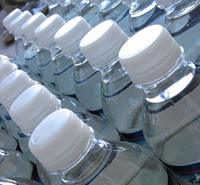
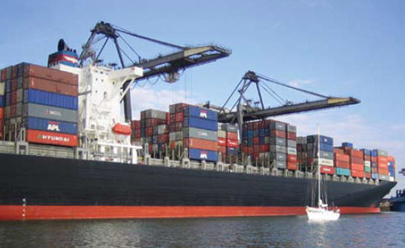
Should wine be imported in bulk tanks to the country of consumption and then bottled there? It reduces the carbon footprint of wine. But what about the quality?

At the London International Wine & Spirits Fair (LIWSF) today, a group made such a case. The Waste & Resources Action Programme presented a paper study today arguing for the efficiencies. They no doubt have a commercial interest to gain in such a switch but here’s an example of their reasoning:

“Shipping wine from Australia [to the UK] in bulk reduces CO2 emissions by 164g for each 75cl bottle, or approximately 40% when compared to bottling at source,” they write. They continue to say that 10,584 liters of bottled wine fits in one container versus 25,000 liters of wine in a bulk tank. (But did they count for the bottles making a round trip?)

My initial reaction to this would be a big “no tanks.” After all, shipping and rail have to be so much incredibly more efficient from a carbon perspective than trucking or (gasp!) air.

As a wine geek, I’m worried about quality first and carbon second. But I recently had the charming Terra Rosa malbec from Argentina, which is brought to California for bottling so it may not be such a dire tradeoff. As long as everything is properly labeled, maybe there is a future for entry-level wines to be transported this way.

What do you think? Sound off in the comments!

Related: “Bottling Wine in a Changing Climate” [WRAP]

Decanting the critic: Tasting with Dr. Jay Miller, the right hand of Robert Parker

We all know that Robert Parker’s The Wine Advocate essentially sets the market for wine. But how do the critics there taste the wines that they will make or break with their ratings?

Last week I had the chance to taste with Jay Miller, Ph.D., whose duties include vast swathes of the wine world ranging from Australasia to Iberia to the Pacific Northwest. I met with him to taste wines of Argentina. Dr. Jay and Dr. Vino, mano a mano. Or at least Riedel a Riedel.

I didn’t have to travel to Monkton, Maryland. The setting was actually the Argentine Consulate in midtown Manhattan. I walked into the palatial room, which must have been 40 x 25 w 12 ft ceilings, complete with friezes. On one side, Jay Miller was seated at a table with two settings. On the other side were hundreds of wine bottles, even more hundreds of Riedel glasses, and a small flock of people to pour. Read more…

Survey says: wine is the new black

“Wine is the new black.” So I said recently (and was quoted in the NY Sun) at a conference discussing wine and the “youth market” (roughly 21- 25 year olds, aka “millennials”). Even though I’m a Gen Xer, someone felt I was still young enough to qualify and offer some perspective on younger drinkers

Wine is trendy for younger people (stretching “young” to a generous under 40), particularly young, urban professionals. There’s a huge thirst for wine knowledge in this demographic.

But just what them there “youts” want in wine and how they learn about it is an open question for wine marketers. Vinexpo, the French trade show organizers, surveyed a few of the youngest, legal wine drinkers in a variety of countries. Their sample size per country was very small and the findings were not really eye-opening and as Peter Hellman points out in the NY Sun story.

What I found much more interesting were the results of an informal survey of 181 Columbia Business School students conducted by the indefatigable Philippe Newlin, Tasting Director at Wine & Spirits magazine and wine instructor at Columbia. Two-thirds of those responding to this survey were between 26 and 30, so slightly older than the “millennials” but an interesting group nonetheless given their relative youth and future earning power.

Here are some of the take aways from the survey:

* Image: 86% of respondents felt wine had an image that was “Sophisticated” versus “Cool & trendy“ (5%) or “Snobbish/Elitist“ (5%).
* Health: While the majority agreed that wine is a healthier choice, 65% of those surveyed agreed that health concerns do not impact their choice to drink wine.
* Frequency: 65% of respondents drinking wine 2 – 4 times per week or more (only 6 % for an every day glass of vino).
* Recommendations from friends were another significant factor in the group’s wine purchases.
* Social: 39% of those surveyed rank restaurants as the their primary venue for drinking wine, followed by groups and social settings.
* Grape varieties were the first thing on the label 35% of respondents look for when buying wine, followed by country of origin and price. Interestingly, brand was important for only 2%.
* Average spend per bottle is rising for the group versus two years ago with bottles priced between $15 – 20 now out pacing $10 – 15 as the biggest category of expenditure
* Edu-ma-cation: 61% believed they would drink more wine if they knew more about wine in general

I tool a quick survey of participants in my NYU classes and the majority said that most recommendations come from friends and family. That signals a possible generational shift, away from critics that consumers will never meet and toward a more social form of wine recommendations with the possibility for feedback. Did you like a wine? Share it with a friend. Or not like it? Tell a friend to steer clear. Like a blog it makes wine more contingent, subjective and fodder for discussion. I’ll drink to that.

Where you do get your wine recommendations from?

Click here for the executive summary of Philippe Newlin’s study.

Photo caption: have your say with rosé!

The following photo may be too gruesome from some readers (it’s still safe for work though, just not for the faint of heart). Thus I have put it after the jump. It awaits your captioning! Read more…

Update: bottled water ban

As I was watching planes take off and land last Friday at LaGuardia, I contemplated the folly of my bottled water ban. Jets roared overhead burning carbon and spewing emissions and I am doing what–not drinking a few bottles of water in the name of carbon neutrality? My ban seemed so piddly.

But that doesn’t mean it is easy! I had to remembered to bring my water bottle with me, filled up from home. Then I had to chug it in line at the TSA to go through devoid of fluids. Then fill it up again on the other side of TSA at the drinking fountain.

Nor have I been without transgressions–yes, I fell of the water wagon in less than a week! At a lunch, an overly enthusiastic waiter poured me a glass of Pellegrino. Then I had the ridiculous choice of throwing away perfectly good water or drinking it. I drank it and asked for tap water next time. As the level of that water lowered, I got refilled with Pellegrino.

It would be so much easier to drink bottled water at will and just pay $15 and buy some carbon offsets…

Wine market zooms, blogger buyout, NYC BYOB, and points mania — tasting sized pours

Liquid assets
“I’d bought the wine before it was even bottled, as futures, for $350, and I unloaded it for enough money to purchase a car.” Elin McCoy on her 1982 Chateau Lafleur in a piece on the wine market today. The bluest blue chip? Lafite. But could a correction be coming? [Bloomberg]

Blog buyout
Gary Vaynerchuck, video blogger and owner of the store Wine Library in Springfield, NJ buys out the social networking site, Cork’d. I wonder what Dan and Dan are uncorking tonight? [via Lenndevours]

BYOB in NYC
NY mag has a list of six BYOBs with decent wine shops conveniently located around the corner. [NY mag]

Crank it up to 11
“Another barroom brawl on the BB…hey, is that what BB really stands for?” -Commenter in the fray about point inflation over on eBob. Keep scrolling (post 242) to when Mark Squires compares Parker to Galileo! [eBob]

Related: “Lake Wobegon wines” [Dr. V]
Map of New York City wine shops [Dr. V]

Eternal summer, altitude, and the gyropalette boondoggle: making wine in India


This postcard from India is by Dini Rao, formerly in the wine department at Christie’s New York, and currently finishing her MBA at Harvard Business School. You can read her first postcard here.
raoindia4.jpg
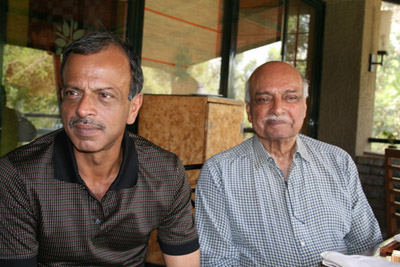
Wine pioneers Kapil and Kanwal Grover fell in love with wine after purchasing 1961 Mouton from Christie’s

While you can always drink wine while it’s hot, as Indians are starting to do, how do you make wine in the heat of India?!

India’s climate does not allow grapevines to become dormant, as is typical in winter. With the opportunity for two harvests, growers prune back vines to collect a single harvest per year, allowing for more concentrated fruit. Using the mild, dry winters as the growing season, harvest occurs from February to March as in the Southern Hemisphere. During the forced dormant months of April through September, the heat of summer precedes monsoon rains that nourish the vines.

High altitudes in foothill areas around Nasik and Bangalore create moderate temperatures conducive to wine grape cultivation. Maharashtra state is home to over 40 wineries, with half near the holy city of Nasik, 80 miles northeast of Mumbai. At 2000′ altitude, the wine temperature fluctuations between day and night in Nasik allow for additional flavor development.

Nasik’s viticulture began with excellent table grapes for eating, which garnered high prices due to cool temperatures and excellent water sources. Now contract grape farmers supply the burgeoning wine production with vinifera grapes such as Chenin Blanc, Cabernet Sauvignon, Shiraz and Zinfandel, but Thomson Seedless still finds its way into many bottles. Limits on agricultural land holdings require wineries to rely on farmers who lack proper training and tend to over-irrigate.
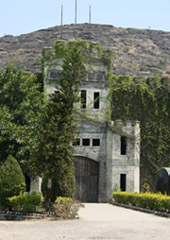
While much sweet, high-alcohol wine still exists, modern winemaking has arrived in India with gusto. Large, air conditioned wineries are being built at an alarming rate equipped with French oak barrels, temperature-controlled fermentation tanks, and pneumatic presses. A big mystery is the use of gyropalettes, which substitute capital for labor in a country where labor is so cheap that they pay someone to press the button and give you a ticket number when you enter the Air India office. Instead of having a person come along and “riddle” the bottles of sparkling wine as they mature in the cellars, producers have invested in gyropalettes to do this task automatically (someone talked this winery into buying the bridge…).

Flying winemaker Michel Rolland has consulted for Grover Vineyards in Bangalore since 1995 and other foreign consultants present their solutions to various wineries for hefty fees. Winemakers learn to compensate for varying fruit by acidifying, adding enzymes for color, and making other adjustments with no regulatory controls. As site selection, viticulture and experience improves, Indian wine has both the potential and the market to thrive. The next hurdle will be temperature controlled shipping and storage.

Wines to watch for:

Grover Vineyards: the 2004 “La Reserve” (about $20; find this wine) carries the modern Bordeaux influence of Rolland and pairs nicely with masala lamb chops; I enjoy the dry Shiraz rosé (find this wine) and Cab/Shiraz blend for $10 – $15. (find this wine)

Sula Vineyards: the crisp, fresh and zingy Sauvignon Blanc for $12 is a must try, especially with a Kerala fish curry. Sula is owned by Stanford grad Rajeev Samant who is on his way to making Sula India’s top brand. (find this wine)

Reveilo: gets my vote for most promising winery and will be imported to the US soon; I tasted a great range of Sauvignon Blanc, CS, Shiraz and a late harvest Chenin there.

Mountain View is another up and coming quality producer, yet to be imported to the US.

Finally, if you plan to visit Nasik, I recommend a stay at Renaissance Winery‘s guest house with a European restaurant and wine bar next to the villa-like winery to sip their fresh Chenin Blanc. More photos and captions after the jump. Read more…
We came, we saw, we juiced

The Friday meetup at Juicy Wine Co in Chicago was a good time. Former participants in my U of C classes, some site readers that I had never met including a sommelier and a leading econoblogger were there. As was the inimitable team from Upgrade: Travel Better.

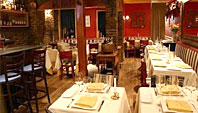
Juicy offers a compact but cool environment that even made this New Yorker jealous. Why? The wine bar/wine shop is not legally an option in New York thanks to silly laws prohibit wine consumers from buying a bottle to go or to stay. Juicy charges a $15 corkage, or in their parlance, “chill out” fee over the retail prices, which makes it the cheapest place to sit down and enjoy a bottle of Krug in the city.

I stuck with the wines by the glass enjoying a Kerner from Alto-Adige and a plate of American artisanal cheeses. Charcuterie is also available but no hot food. The wine list is not enormous but the selections are well-chosen with many selections I wanted to try. Oddly, for being a wine destination, the wine list has no vintages.

We were served by the wildly knowledgeable and personable Linda Violago who has served many a fine wine at Charlie Trotter’s, her main gig, for the past few years. She is leaving Chicago in ten days to assume the chief wine duties at Mugaritz in San Sebastian, Spain. If readers of this blog go to that restaurant in the near future (and I am envious, yes), then give her a shout!

Juicy Wine Company
694 N. Milwaukee Ave.
(312) 492-6620


winepoliticsamz

Wine Maps


Monthly Archives

Categories


Blog posts via email

@drvino on Instagram

@drvino on Twitter


winesearcher

quotes

One of the “fresh voices taking wine journalism in new and important directions.” -World of Fine Wine

“His reporting over the past six months has had seismic consequences, which is a hell of an accomplishment for a blog.” -Forbes.com

"News of such activities, reported last month on a wine blog called Dr. Vino, have captivated wine enthusiasts and triggered a fierce online debate…" The Wall Street Journal

"...well-written, well-researched, calm and, dare we use the word, sober." -Dorothy Gaiter & John Brecher, WSJ

jbf07James Beard Foundation awards

Saveur, best drinks blog, finalist 2012.

Winner, Best Wine Blog

One of the "seven best wine blogs." Food & Wine,

One of the three best wine blogs, Fast Company

See more media...

ayow150buy

Wine books on Amazon: