Dr Vino's wine blog
wine talk that goes down easy
Add some juice to your wine dollar: buying tips
With an unlimited budget, finding great wine is easy: proceed to auctions for the old vintages and leading shops and the wineries directly for the current releases. Yes, there are some details such as struggling to get on the latest cult winery mailing list but the general point remains the same: if price is no object, there are a lot of choices in the wine world.
What’s really hard is trying to find good, exciting wine that doesn’t break the bank. So if the household budget has limits on wine, or even if you are trying to find an expensive favorite for the lowest price, several strategies can maximize the wine dollar.
Where to shop
When bigger is better. Large format retailers drive hard bargains with producers and distributors and mostly pass those cost savings on to the consumer. However, in order to keep costs down, the range wines offered may be neither large nor exciting. If Kendall Jackson Vintner’s Reserve Chardonnay is what you’re after, then Costco is the place for you.
Small is beautiful. While small wine shops are lots of fun, it can be difficult to find bargains. Usually owned by a proprietor who works on the premises, small shops can have a specialty (often a particular country). They are conveniently located either around the corner in a city or next to a supermarket in the country mall. Talk with the staff, particularly the owner, and find out where the shop’s strengths lie. And take advantage of any discounts or freebies listed below, such as free tastings on Fridays or Saturdays.
Mid-sized may be the sweet spot. The mid-sized chain has enough clout with distributors to move the goods and deliver low prices yet may not have forsaken its small shop roots. San Francisco’s The Wine Club and Chicago’s Binny’s and Wine Discount Center are some good examples of low prices and great selections.
Clicks and mortar: The internet has proven a great place to shop for books, DVDs and the latest electronics, but the full potential of the internet has not yet been realized for wine consumers. The recent Supreme Court decision will hopefully radically reshape this landscape very soon. Amazon’s recent partnership with Wine.com could be a sign of things to come in this dynamic space.
How to shop
Taste on someone else’s tab. With so many thousands of wines produced every year, consumers can be easily overwhelmed. And retailers know that. So many of them pour their wines for free! Check you local store for free tastings, often held in evenings during the week and during the day on Saturday. Tasting through all the wines at any given tasting (and yes, spitting is allowed!) will give you a better understanding of the different wine styles available, which over time, will help sharpen your own knowledge and preferences.
Take advantage of seasonal sales. Wine retailing is a business and businesses care about inventory. Certain times of the year demand is slow or new products arrive to push the old ones out the door and consumers should prey on these opportunities. Spring and fall are common times for sales so stock up. One consumer told me recently that he buys about 10 cases of wine a year for his house and buys four or five cases at the spring and fall sales. Walking out of the shop pushing a cart full of multiple cases may seem like a lot, but not only is it economically prudent, it also provides a heady feeling having all that wine (but be sure to store it properly).
Buy in bulk. Large discount retailers claim to offer shoppers “the best prices every day” and therefore don’t rely on sales. Most other shops, however, has some sort of loyalty program or incentive to have you buy more. The most common discount is after bringing a mixed case (12 bottles) to the register, the whole purchase receives a discount of 10, 15, or 20%. This is also a handy index to markups at a shop: the higher the case discount, the more you know the average per bottle price is ripping you off.
Become a regular. Wine shops can offer a “friend’s price” to regular patrons through various loyalty schemes. I recently went to a shop that offered 10% off a single bottle and 20% off cases to members of their club. The only way to become a member of the club, however, was to buy 50 different bottles of wine. This works if it is the shop near you; if you are just visiting the relatives out of town, it may be better to bring wine from home. Loyalty also has the perk of having the staff either reserve certain hard-to-find wines for you or to make accurate and personal recommendations for you.
Check for specials. Bottles that don’t sell can wind up as “bin ends.” Sometimes these are bottles that have had a hard time selling. However, use caution with these wines—a “how can you go wrong for $5.99?” attitude can end up costing you $5.99 if you just end up pouring it down the drain! Check the label for a lack of wine stains and push the cork to check for looseness, both of which may indicate the wine had been improperly stored. Discounts can also be thematic for a week or a month (for example, I recently saw “Pinot Envy” at Union Square Wines in New York in honor of the movie Sideways which discounted Pinots by all 10-25%).
Search the web. I recently bought a camera for cheap through Yahoo Shopping by plugging in the model number and then doing “sort by price.” Wine on the web is not quite at this level of pure price competition yet several search tools do bring it somewhat closer. Wine Searcher and WineZap offer buyers who are looking for specific wines the opportunity to type in a producer and a vintage, which generates multiple vendors. While many local shops may be able to ship across state lines thus avoiding sales tax, it is essential to check the shipping rates as this alone can eat up any cost or tax savings.
Let someone else carry it home for you. Many shops, particularly urban shops, have free delivery to customers in range. While it is not exactly a cost savings to get someone else carry your wine for you, it can be convenient not to have to schlep the 40 pound case any more than you have to.
Happy value hunting. Cheers!
May
17
2005
1
Value vino list thirteen
Nypmh whites (young and flowery)
Viognier de Campuget, Cuvée Prestige, vin de
pays d’oc, 2003. $9.99 Find
this wine
Viognier is a peripatetic grape that has landed in the Andes and
California recently. This excellent value example has traveled only
a few dozen miles from the grape’s ancestral home of Condrieu. Hand
harvested from low-yielding vines grown in the Costieres de Nimes
region but bottled as a vin de pays, this 100% Viognier has
excellent aromatics of flowers and white peach. Crisp acidity makes
it very food friendly. Impress your friends with this cuvee prestige
as the weather warms up and dining starts to be al fresco. Winery
and vineyard photos;
Robert Kacher Selections, importer.
| Cusumano, Insolia, IGT white, 2003. $8.50 Find this wine From under the Sicilian sun, this youthful white will brighten even a midwinter day. Not a brand, Insolia is actually the name of the local white grape used in this wine. This family-owned winery with 140 acres of vines produces some excellent value vino (including a great red Nero D’Avola) as this distinctive white from 10 year old vines shows. Golden in color with fresh, floral notes similar to a Viognier, this food friendly wine is even robust enough to accompany the flavors of a channa masala. |
 |
Dry rosé
Castano, Monastrell rose (rosado), D.O. Yecla,
2003 $7 Find
this wine
I have praised the red wines from Bodegas Castaño before, but this
rosé (aka “Rosado”) wine deserves attention as well. A dry rosé
pressed from the Monastrell (Mourvedre), this clean, not cloying,
pink wine is a great way to get in a summer state of mind. Even
if the thermometer is not yet hitting summer highs, this rose is
a refreshing and versatile food wine-it paired well with an aromatic
and gently spicy curry. Eric Solomon, importer.
Big reds
Etim, Falset Marça, Montsant, 2001. $13 Find
this wine
Wow, why do the good bottles go so quickly? This wine, Grenache
from 60 year old vines with 15% Cabernet Sauvignon blended in, hails
from a cooperative in Catalonia’s Montsant region (a lower rent
terroir near the famed Priorat). Silky smooth, with hints of minerality,
blueberry, supple leather, oak influence and faint spice, the greatest
question a consumer of this wine will have is why the bottle is
empty so soon after popping the cork. Yes, this Etim comes in over
the $10 grade but it would be a great accompaniment to an Easter
meal or weekend occasion. Langdon Shiverick importer.
Fairview, Pinotage, (Paarl) 2002. $10 Find
this wine
Charles Back is known for his goats. The owner of the Fairview “wine
farm” in Paarl, South Africa, not only has goats on the property
to make wonderful cheeses, but goats adorn the labels of many of
his wines. (The best known is the light-hearted Goats do Roam, the
largest South African wine brand exported to the United States.)
This wine under the Fairview label is made from the native Pinotage
grape. Forget food friendly; at its worst, Pinotage is not even
friendly! But this Pinotage made in a New World style and has smoldering
dark fruits as well as smoky, leathery aromas that make it compelling
in its distinctiveness. Stump your wine geek friends with this one
in a blind tasting! Importer: Vineyard Brands.
Bodegas Palacio, Cosme Palacio y Hermanos,
red, Rioja, 2001 $10.49 Find
this wine
Hijos de Antonio Barcelo have assembled an attractive portfolio
of value vino producers that includes Viña Mayor and Peñascal. This,
their winery in the Rioja, is new world in its business orientation:
it has no vineyards and purchases all its grapes. Surprisingly,
despite being aged for 10 months in new French oak, the 100% Tempranillo
is not overly oaky (the way many Riojas can be) but has some good
acid as well as the more customary dark fruits, leather and smooth
tannins. The excellent finish really pushes this wine over the edge
to excellent value vino!
| Lyeth, Meritage, Sonoma, 2002, $11 Find this wine Remember when Sonoma wines used to be good and affordable? |
 |
Light, fruity reds
Imus, Montsant, 2002. $6. Find
this wine
This is one Imus to enjoy in the evening. Of course this wine has
nothing to do with the radio shock jock known for the radio program
“Imus in the morning.” The wine hails from the Falset-Marça cooperative
in the Spanish region of Montsant where the locals undoubtedly pronounce
it EEE-mousse. With the light sweetness that is typical of Grenache,
the wine punches above its low price point with good balance and
concentration. A great pizza wine, also try substituting this for
a beaujolais. Importer: Langdon Shiverick.
| Las Rocas de San Alejandro, old vines Grenache, 2003, $8.50 The 2003 Las Rocas remains a compelling value vino. However, this vintage of the old-vine Grenache from the viticulturally obscure region of Calatayud, is the reverse of the 2002: unlike last year’s (Parker 91 pts), which I suggested needed 30 minutes of decanting, this vintage is best right after the (synthetic) cork is popped (although after 24 hours uncorked on the counter, it had few signs of deterioration, an honor generally reserved for wines at much higher price points). The light and clear red color gives way to complex aromas of cherry, leather and some spice with an impressive finish for a wine of this price point. After 30 minutes of open air, by contrast, this vintage gained astringency and tartness. So best to drink up quickly! Las Rocas rocks. Importer: Eric Solomon. Find this wine |
 |
Domaine de Perrieres, Costieres de Nimes, 2001. $9.99 Find
this wine
Marc Kerydenweiss of Alsace and Burgundy bought a small vineyard
in the Southern French region of Costieres de Nimes in 1999. He
has farmed it using biodynamics, sort of an enhanced organic method
that throws in some astrology. The resulting wines are “concentrated,
rich in minerals and energizing” he claims on his web
site. I did not find myself particularly energized by this wine,
nor was it overly concentrated; instead, there was a distinct minerality,
acidity, and a faint barnyard finish. This blend of Syrah, Carignan
and Grenache would be a wine endorsed by the movie Mondovino
since it is so terroir-driven. A good pick for Earth
Day. NOTE: lovers of “hedonistic fruit bombs” should avoid this
wine. Importer: Wilson
Daniels.
Beyond the grade (but worth it):
Pierre Jourdan NV Cuvee Rose. (pink sparkler, Paarl) $17. Find
this wine
Bianchi Particular, Merlot 2003. (Mendoza) $30 Find
this wine
Bodegas Tikal, Corazon, 2001. (Mendoza) $29 Find
this wine
Dehlinger, Cabernet Franc, 1995. (Russian River) $?? Find
this wine
Guiseppe Quintarelli, Secco Ca’del Merlo, 2003. (Veneto) $35 Find
this wine
Apr
29
2005
Comments Off on Value vino list thirteen
Best wine list for 2004
|
From the United States to the Ukraine, the leaders of one billion people were up for grabs in 2004. With voting a hot topic, elected officials serve as the lens for this year’s best wine list. While my usual lists focus on wines under $10, this year-end list gives me a chance to recommend some more expensive selections still bearing in mind good values (or QPR as it is known in wine geek parlance: quality to price |
  |
| Best wines, mayors Mayors have limited budgets and provide lots of services aimed at making voters happy-all while keeping an eye on the price. Fortunately, many wines are available in this category. For American mayors, an excellent choice is the House Wine 2002 from Magnificent Wine Co ($10) a big red blend from Washington State. For those foreign or cosmopolitan mayors the I Portali, Basilicata, Aglianico del Vulture, 2002 ($10) represents great value from the boot of Italy, the Las Rocas de San Alejandro, 2002 ($9) of old vine Grenache from Spain, and the Duboeuf Julienas Flower Label 2003 ($10) all have a refinement and delicacy well above their price point (read: they drink like $30+ wines). More specifics on these wines are available in my lists of best wines under $10. |
 |
|
Best wine, governors With prices rising faster than the hilly countryside in Priorat, savvy buyers are turning to Montsant. L’Alleu, |
 you can call me gov |
|
Best wines, presidents |
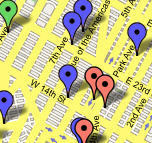 Check out my interactive map of NYC wine shops |
Best wine for the Defense Department
Shafer, Relentless
2001. ($55) A blend of Syrah and Petite Sirah, this profound and indefatigable wine comes from Shafer’s prime hillside vineyard. Although it’s expensive, with a budget such as theirs, no one will notice.
Best wine for Red Sox fans
Chateau d’Yquem, 1918 ($1,029). This bottle is from the vintage of their last World Series victory. How sweet it is!
Best wine for Howard Dean
Any grands crus Bordeaux from the 2000 vintage. The quality—and the prices!—would
make anyone scream.
|
Best wine for ousted corporate executives who have to give back bonuses Three Thieves, Zinfandel, NV, 1L jug ($9.99) |
 |
Best wine for Martha Stewart
During the trial: Turley,
Old Vines 1997 ($50). The 16% alcohol helps the trial.
In jail: Big House Red, 2002, $8 (or 20 packs of cigarettes)
Upon release: Louis Roederer, Cristal, 1990, ($150) by the case!
Best wine for Kobe Bryant
Chardonnay. Feeling the pressure from the ABC (anything but Chardonnay) crowd, Chardonnay’s popularity has declined. But not as precipitously as Kobe’s whose jersey used to be the top seller and now has dropped to 90th.
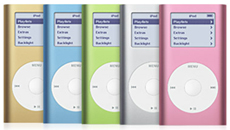
| Best wine for owners of an iPod Pinot Noir. The hottest product in consumer electronics needs the new "hot wine." And thanks to the movie Sideways, Pinot Noir is the new darling of California. Move over Merlot! Here comes something better! (and more difficult to do well) |
 |
Best ‘wine’ when Donald Trump declares "you’re fired"
Boone’s Farm, NV, Sun Pink Peach, ($2.49). Very affordable while in bankruptcy (like Trump’s Taj Mahal casino).
Dec
19
2004
Value vino list number eleven
White
 Nussberg, Alte Reben, 2001, Wiener Wein, $9.99 (sale price) Find this wine
Which European capital has the most vines? Paris? Prague? No, Vienna! Competing for expensive real estate with coffee shops and residences, 1700 acres of vines lie within the city limits. So it is small wonder that the Vienna wines are expensive, but is the terroir good? (A hint of tramway?) This white wine from the Nussberg vineyard on the banks of the Danube demonstrates why vines still tenaciously cling here: dry and crisp thanks to the steel tank fermentation, and excellent depth and complexity with notes of grapefruit and pears. This Gruner Veltliner knocks the socks off most whites and will no doubt impress even the most skeptical guests. Great match with seafood. Imported by VinDivino.
Big Reds
 House Wine, Magnificent Wine Co, 2002. $9.49 Find this wine
Think of this wine as punk rock in a bottle with its loud label and fruit at high volume. Charles Smith, who used to manage a punk band in Demark, now owns K Vintners as well as the Magnificent Wine Co. in Walla Walla Washington. Although he is known for his Syrahs (including K Syrah–hahaha), this House Wine is mostly Cabernet. This “hedonistic fruit bomb” with juicy tannins and little oak influence is a steal at under $10.
Woop Woop, Shiraz, 2003. $9 (sale, $12 normal) Find
this wine
In my profile of Ben Hammerschalg of Epicurean Wines I discovered his excellent portfolio of wines from Australia. All of his wines represent a tremendous quality to price ratio but only this Woop Woop is around the Dr. Vino mark of $10. Usually it is around $12 but many wine shops have October sales so seize this opportunity to

scoop it up for under $10. With its colorful label, this wine has plenty of appeal with soft tannins and smooth notes of juicy blackberries and chocolate. Food friendly, try pairing it with grilled meats or salmon. The name is hard to forget and so is the wine. Importer: Epicurean Wines.
Nuhar, Rapitala, 2002. $8.99 Find
this wine
A struggle is underway in Sicily and it does not involve “la famiglia.” This struggle (as is playing out in much of the Old World) is over the use of local grape varietals versus more of an international style. This wine walks the fine line between these two camps and but ultimately falls onto the international side. The localists will be pleased with the presence of 70% Nero d’Avola while the internationalists will be pleased with the 30% Cabernet Sauvignon. Indeed, if you think Italian reds are too light-bodied this has additional heft with pleasant aromas of dark fruits. Goes great with pizza. Fredrick Wildman, importer.
Medium-bodied reds from off the
beaten path
Evel, Douro, 2001. $7 Find
this wine
The Duoro region of Portugal, once known almost exclusively abroad for producing the grapes for port, has had a recent shift to table wines. The reds are turning out quite well and they are generally good values. (It’s not that their importers have hedged the currency risk successfully; they’re just cheap with improving quality) This producer is emblematic of the transition: during the first century after its founding in 1756, Real Companhia Velha was a regulatory body for the Port trade, subsequently becoming a private company and very recently transitioning to table wines as well hiring a Californian, Jerry Luper, as winemaker and technical director. This least expensive wine in their portfolio has a relatively truncated flavor profile of red berries and some spice but is smooth and light to accompany food. Importer: Admiral Wine Merchants.
Rocche Costamagna, Dolcetto D’Alba, 2002. $8 Find this wine
The wines of Piedmont have escaped these pages for too long. One reason is obvious-although the Barolos and Barbarescos are fabulous wines in the glass, the often stratospheric pricing does not make them good values. Enter dolcetto. This full flavored red wine not only comes with an affordable price tag but also is a perfect accompaniment to autumnal cuisine. This week and next, I will feature affordable doclettos (or dolcetti to the cognoscenti). Big but not tannic, this Rocche Costamagna with notes of plum and spice will impress your guests with something from off the beaten path. Importer: Laird and Co.
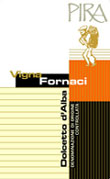 Pira, Dolcetto D’Alba, Vigna Fornaci, 2002. $9. Find this wine
The steep hillsides of this Piedmont estate are evoked in a whimsical way on the label with the presence of a backpacker. But any hiker who brings this bottle along will no doubt have fellow hikers carry the pack home out of gratitude. Inky purple in color, this young wine has plenty of fruit and sees no oak aging—only in stainless steel and the bottle. Try it with mushroom dishes and shock your dining companions with the value since it tastes like a $25 bottle. Importer: Montecastelli selections.
Dec
3
2004
Comments Off on Value vino list number eleven
Value vino list number ten
Fresh, crisp white
Clos Roche Blanche, Sauvignon blanc, AOC Touraine, 2003, $9.99. Find this wine
If you have ever wondered what a “handcrafted” wine were like, you need look no farther than this wine. Beyond simply organic, which the proprietors have had their wines certified since 1995, the wine is manipulated almost exclusively by gravity from maceration to its unfiltered bottling (by hand). This minimal intervention assures a pure expression of the chalky soils, which follows through on the palate with a flinty minerality as well as crisp acidity and hints of gooseberry. Light and unpretentious like the appellation, the wine is better than your average summer quaffer. And it is a good way to end Le Tour (de France) this week since it hails from the city of Tours! Louis/Dressner imports.
Dry, refreshing rosé
Domaine de Saint Antoine, rosé, Costieres de Nimes, 2003. $8. Find this wine
As the Tour de France closes in on the Nimes area this week it is a great chance to highlight this dark-hued rosé. One of several good value dry rosés from the region, it has notes of wild strawberries that practically leap from the glass. Stick this one in your picnic basket this summer-or drink this pink while cheering Lance on to the Yellow Jersey. Imported by Robert Kacher.
Medium-bodied reds
Castaño, Monastrell 2003, $6.99. Find this wine
It is a sign of the times that this is the recommended wine from Castano, a reliable family-owned producer from the remote D.O. Yecla. In previous years, their old vine Solanera has been under $10 but with the rise of the euro we now have the straight Monastrell (aka Mouvedre) in that price category. But we should be easily consoled since it such a great value. The opaque, dark ruby wine in the glass immediately signals seriousness while the big aromas of dark berries and gentle spice make it a leading contender for the title of House Red. Eric Solomon, importer.
Castelmaure, “Tryptic” AOC Corbieres, 2001. $7.49. Find this wine
Perched in a high valley, just a stone’s throw from the Mediterranean, this cooperative winery is a great place to get the rustic authenticity that the Corbieres can make so effortlessly and cheaply. Better than many of its peers from the region, this medium-bodied blend of Syrah, Carignan, and Grenache (20-40-40) has rounded, earthy notes full of red berry and some spice all of which makes it an excellent accompaniment to grilled food (try it with chiles rellenos stuffed with gorgonzola). A great way to escape inflationary pressures of imported wines. Imported by Kysela Pere et Fils.
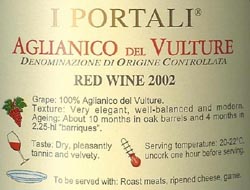 I Portali (red), Basilium W, Aglianico del Vulture DOC, 2002. $9.99. Find this wine
Budget-minded enthusiasts who turn to this wine from the southern Italian region of Aglianico del Vulture will be amply rewarded. The Aglianico grape that comprises 100% of the wine may be unknown in the US but has been in the region for 3500 years (and is very timely given the Athens Olympics since Aglianico means Hellenic, referring to the probable origins of the varietal). A dark reddish-purple in color, this full-bodied bodied wine has a silky smooth character that comes from the hand-harvesting and selection of the grapes as well as 14 months in oak. It is an excellent compliment to hard or aged cheese, such as pecorino, or grilled meats. Importer Gregory Smolik deserves recognition for providing such an informative back label–others should follow. Join the “vulture culture”!
Chateau Guiot, Costieres de Nimes, rosé, 2003. $9. Find this wine
The Costieres de Nimes region has produced many excellent values as readers of these pages know. Mas de Guiot had an excellent red in 2001. And — wow! — this rosé from the same producer (confusingly known as Chateau in this bottling) is excellent stuff. Not overly tart as are many rosés and a more reddish hue of pink, this wine is a full and rounded accompaniment to a wide variety of foods, especially when consumed al fresco. And it is not at all sweet. Robert Kacher, importer.
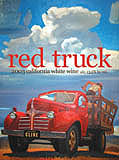 Red Truck, red table wine, California, 2002. $9.99. Find this wine Is this another gimmicky wine name (as with the many animal names on labels) that is worth a laugh but not a buy? In fact, Red Truck not only has potentially the most eye-catching label of the year but is worth taking for more than a metaphorical test-drive. And without a grape variety on the label, it is worth checking under the hood to find that this wine has a blend of Mourvedre and Syrah as well as some Merlot and Pinot Noir. Sourced from several vineyards in Contra Costa County owned by Cline Cellars, the producer, the wine in the glass has tons of red fruit aromas and flavors, a short-ish finish, but enough character to makes it a good accompaniment for the barbeque. With oil prices so high, reach for this red truck instead of the one in the garage.
Domaine D’Andezon, Cotes du Rhone, 2001, $9.49. Find this wine
Why is Syrah fast becoming the world’s most popular red grape? One sip of the wine will let you know. Unlike most Cotes du Rhones that blend Grenache and Syrah, this Domaine D’Andezon is pure Syrah, from about 50 year old vines, bottled unfiltered. In a blind tasting it could easily be mistaken for an Aussie Shiraz with its very lively nose of dark fruits including plums and
berries, but the good acidity indicates a cooler growing climate and gives it an excellent concentration. Very food friendly. Importer: Eric Solomon, European Cellars.
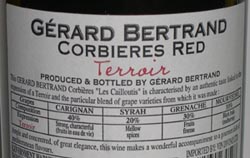 Gerard Bertrand, Les Cailloutis, AOC Corbières, 1999. $9. Find this wine
A red blend from the Corbieres appellation of Languedoc might look enticing but leave you wondering: just which grapes varietals are in the wine? Well, thanks to an informative back label, the consumer knows with precision what makes up this yummy wine from Gerard Bertrand (Carignan, 40%; Syrah, 20%; Grenache 30%; Mourvedre, 10%). With an inky-purple color and a solid mid-palate, this earthy wine with notes of dark berry is ready to drink now and goes great with a pizza. Importer: VinDivino.
Big Red
Chateau La Sentinelle, AOC Cotes de Castillon, 2000. $9.99 Find this wine
Bordeaux is often considered to be either the world’s premier address for quality wine or a place of uninspiring bulk wine. But there is a third, often neglected, category of producers in far-flung appellations who are making interesting wines at a fraction of the price of the top chateaux. Such is the case in the Cotes de Castillon, which lies beyond celebrated St. Emilion. This Chateaux La Sentinelle has an inky-purple color with the classic Bordeaux terroir on the nose of this mostly merlot blend. And at $10, this is a Bordeaux 2000 for everyday consumption!! Importer: Wine Vine.
Sep
24
2004
Comments Off on Value vino list number ten
Value vino list number nine
Rosé
Chateau Mourgues de Gres, Les galets roses 2002, $9.99.
Rosés aren’t just for summer any more. But since summer weather is now upon us, we have all the more reason. Dry rosés are versatile food wines that have gotten a bad rap. Once dismissed as mere “summer wines” or tainted by the sweetness of such travesties as white Zinfandel, rosés are coming into their own. And there are few better bargains than this Morgues de Gres, which is excellent despite the region being submerged by floods at the time of the harvest. Les Galets rosés has a heft and complexity that makes it more like a red than most rosés (which come from red grape varietals). Great with an African spice rub or salade nicoise. US importer: Weygandt-Metzler.
Whites
Chateau Campuget, blanc, AOC Costieres de Nimes, 2002. $7.
Bargain hunters should run-not walk!-to find this wine. Given the difficult conditions of the 2002 vintage (flooding) this reliable, value producer stands out for a fine white blend of Roussane and Grenache blanc. More than simply a “summer wine” it has greater depth with notes of melon and minerality that make it a great match for seafood and salads. Robert Kacher, importer.
Huber, “Hugo” Gruner Veltiner, (Austria) 2003, $8.79.
While “extreme-value” in the US has brought wines at $2 a bottle, this $9 wine is about as extreme as the value will get from Austria. Although the mountainous vineyards are producing excellent whites, the prices are generally too high to make the Dr. Vino grade. It is hard to get fresher than the wine – or the winemaker, Markus Huber, who at a mere 23 years old (!!) has already won the acclaim of his peers with the Winemaker of the Year title in 2002! This is a bright, clean example of the local grape, Gruner Veltliner (aka “Gru V”). Though not as complex as more expensive Gruners, the minerality, acidity and faint spice make it a refreshing complement to dinner on the deck. Importer: Boutique Wine Collection.
Indaba, Sauvignon Blanc, 2003. $6.50
South African wines have come a long way in the past 10 years of democracy. One noticeable change has been the planting of more “international” grape varietals as opposed to the traditional ones (e.g. pinotage) that had predominated before the world market opened up for South African wines. Mzokhana Mveme, winemaker at Indaba, offers this fresh, crisp Sauvignon Blanc, perfect for sipping on the deck. Imported by Cape Classics. www.capeclassics.com
Montes, Sauvignon Blanc, reserve, 2004, Chile. $8
Fresher than a Beaujolais nouveau, this sauvignon blanc was just harvested at the end of the Chilean summer in March and is now on retailers’ shelves. Montes has a line of “reserve” wines that offer excellent value for around $10. Thanks to steel tank fermentation and aging, this pale yellow SB has crisp aromas of clean fruit and a smooth finish. Not likely to be long-lived, but perfect for drinking this summer-or during next summer down under. This SB is no BS.
Reds
REDS, 2001 Laurel Glen Vineyards, $9.
What better way to celebrate the Fourth of July than with a bottle of REDS? (The white and the blue are up to you.) This wine hails from Lodi, gold country in the days of the Gold Rush, and given that it is harder to find a good, domestic bottle under $10 now than it was to find gold back then, this is indeed a useful nugget. Made from a blend of Zinfandel, Petite Sirah, and Carignane, this concentrated wine comes from some vines that date from before 1900. The dark red colors of the wine in the glass come from the low yields of the old vines (only half as many cases were produced with this vintage-and, admirably, the price as not taken off) and the enticing flavors of red berry make it a great match for the best of the barbeque.
Patricia Green, Pinot Noir, Oregon 2002. $17
The 2002 vintage from Oregon has produced excellent-and excellent value-pinot noirs. Pinot noir has proven fickle and difficult to grow successfully outside of the cool climes of Burgundy, the region that made it famous. So it is small wonder that the prices of Pinots tend to be higher than other, more hearty, varietals. Oregon is a clear leader in American pinot noir production. Patricia Green produces a large line of fine pinots at reasonable price points, many from single vineyards or even single corners of vineyards known as “blocks.” But why have a single vineyard when you could have the whole state? This generic “Oregon” designation not only gives this these more limited production wines a run for their money, but costs a lot less of it too. Wonderful aromas of wild strawberry and hints of earthiness and tobacco yield to smooth and supple tannins with a long finish. Astute readers will note that this wine is in fact not under the usual $10 threshold, but it is such a good value, consider splurging on it as a “wine of the weekend.”
Ravenswood, Shiraz, Vintner’s Blend, southeastern Australia, 2002, $7.99.
The recent trend toward globalization is epitomized in a glass of this Ravenswood Shiraz. Ravenswood, based in Sonoma, was sold (for $148 million) in 2001 to Constellation Brands (formerly Canandaigua). Constellation subsequently bought BRL Hardy in Australia to become the world’s largest publicly traded wine producer. The Ravenswood winery that had a cult following thus became a mere brand in a large portfolio of wines. But Joel Patterson stayed on with Ravenswood and this Shiraz is a product of the new, global company. The “no wimpy wines” motto still applies to this big red from down under fruit. Hints of mint and eucalyptus in the sweet tannins make it have pleasant complexity, a perfect companion for grilled meats. I would take this wine with kangaroos on the label over another (ahem), more famous one.
Chateau Montroche, Costieres de Nimes, 2001. $7
Bobby Kacher should become the honorary president of the Costieres de Nimes appellation. The American importer has unearthed so many great bargains from the region that he definitely makes the Dr. Vino importer Hall of Fame at the very least. This Chateau Montroche is yet another excellent syrah-grenache. Although it is light in color, the flavors and aromas of dark fruit and tar are pleasantly potent. Rather than opening a Montrachet, this Montroche will sufficiently impress the neighbors on a weeknight.
Villa Maria, private bin, Hawke’s Bay, Cabernet/Merlot, 2002, $9.99
When you think of New Zealand wines, which grapes leap to mind? Certainly not cabernet and merlot. Nonetheless, Villa Maria blends the two popular red grapes into this wine, ruby red in color, rounded and smooth with notes of plum and spice and a pleasant finish. If you don’t finish the bottle in one sitting, just screw the screw cap back on. Vineyard Brands, US importer.
Jul
9
2004
Comments Off on Value vino list number nine
Value vino list number eight
White
Hugel et Fils, Gentil, Alsace, 2002. $9
Etienne Hugel is a confident and funny guy. His confidence in winemaking must come from being the 12th generation to own Hugel et fils. His humor? Well, maybe it comes from his confidence in his wines and wine making. Hugel says he is as proud of this Gentil, his largest production wine, as he is of his excellent limited production Jubilee Riesling ($45). More floral than your grandmother’s couch, this racy white is an unoaked blend of Gewurztraminer, Pinot Gris, Riesling, Muscat and Sylvaner—a veritable catalogue white varietals. Yellow/green in color, the wine has a perfumed sweetness that is not cloying and is great for quaffing on the deck or with seafood. Wildman, importer. www.hugel.com
Reds
Castano, Hecula, 2002, $9.99
This wine turns heads. Guaranteed to have even your biggest wine-geek friends thinking that it costs well over $10, this is a “Parker-style” hedonistic fruit bomb. The Castaño family now has an excellent line-up of big-style, budget reds from their out-of-the-way winery in Yecla. The 100% monastrell (aka mourvedre) wine, aged in American oak for 6 months, will impress even those whose palates have turned to leather. Back up your cart and buy this one with both hands. Importer, Eric Solomon.
Domaine de la Gasqui, vigne du loup, vdp Vaucluse, $9 (sale)
Life may not be a bowl of cherries, but this wine is a glass of red berries. With the gentle sweetness that is typical of Grenache, these 80 year old vines from the base of Mt. Ventoux have produced an approachable and medium-bodied wine, light in color. Although not officially organic according to the new USDA standards (no wine meets the USDA standards) the wine does meet the “agiculture biologique” standards of Ecocert. Jeffrey Davies, importer.
Domaine de la Petite Cassagne, AOC Costieres de Nimes, red. 1999. $4 (sale, $9.99 regular)
Dr Vino readers are already familiar with the wines of Grande Cassagne but this one from Petite Cassagne bears mentioning, particularly at the petite sale price. Wonderful textures of the Grenache, Syrah, and Carignan make this probably the best $4 wine I have ever tasted (I would even pay full price for it!) with notes of blackcurrant that contribute to its full flavor. Consider this the “4 buck Charles” as you buy it by the case. Robert Kacher, importer.
Chateau St. Germain, Coteaux du Languedoc, red, 2000. $6.60 (sale, $9.99 regular)
Think ink, as in inky purple. Purple label, purple cap and inky-purple wine, this vigorous Chateau St. Germain has gobs of purple fruits such as plum and blackberries. Although the wine has 15% alcohol a good balance makes it rounded and not heady. Languedoc has made a significant qualitative turn in the past decade and this Syrah-Grenache blend of hand harvested fruit, grown chemical-free, is a good representative. Jeffrey M. Davies, importer.
Baron Rothschild, Carmenere, Reserve, 2001. $9
Carmenere, the fraternal twin of Merlot, is in safe hands Chez Rothschild. Except that this is the Rothschild chateau away from the chateau at their property in Chile. With notes of blackcurrant, this lush black cherry colored wine has a smooth finish. Bold design on the label makes it a good wine to bring to a party since your selection will stand out. An easy food match, try it with smoked meats. Importer: Caravelle Wine Selections.
Moulin d’Eole, 2001, Costieres de Nimes. $9
The Costieres de Nimes region is cranking out lots of excellent value reds in a Rhone style. This excellent one, imported by Kysela, resembles a Cotes Rotie with delicate floral notes in the aroma followed by the usual notes of leather, dark berries, smoked meat, and that southern France flavor of garrigue. Best at room temperature, the soft tannins lead to a longish finish. Knock the socks off anyone you’re having over on a weeknight with this wine!
Encuentro, Ribera del Duero, 2000, $8
While good bargains are becoming increasingly hard to find in Spain’s Ribera del Duero region, Trader Joe’s grocery stores have tracked down a good value vino. Encuentro, or “meeting” in Spanish, is a good example of a Ribera, although a bit lighter and not as full bodied as other wines that are now above the $10 price point. One does wonder where this 100% Tempranillo crianza (12 months oak cask aging) has been since the 2000 vintage, but it still has smooth notes of plum and leather making it a good accompaniment to lamb or simply easy drinking at your favorite encounters. Plum Ridge imports for TJ’s.
Habitat, red blend, Napa Valley, 2002. $9.
A California red for under $10 that is worth drinking?! The only thing more amazing is that this yummy red is also made from organically grown grapes (although since no wine technically meets USDA organic standards, the producers opted for the more oblique “handcrafted” on the label). The blend of 50% pinot noir, 25% cab, 25% merlot actually works and comes off as a rounded red, with a welcoming aroma of dark fruits and a finish that leaves you saying “hey California, how about some more good under $10s!?!” Send back the screw-cap top and the winery will donate $1 to an ecological cause. You don’t need to save this one for Earth Day since it would be a good house wine for your domestic habitat.
Las Rocas de San Alejandro, old vine Grenache, 2002, $7.79
Las Rocas “may be the greatest wine value I have ever tasted” according to Robert Parker who bestowed 91 points on this Grenache from 75 year old vines in the remote Calatayud region. With many great wines under $10 available, Parker’s comments may seem hyperbolic, but the Las Rocas does have has certain stand-out characteristics. Most notable is an ability to evolve in the glass that is rare for wines of this price. When first opened, the wine is closed, without striking aromas or flavors. But left to open up for an hour, the wine’s aroma becomes more complex with a sweet black cherries and smoke and a long, pleasant finish. Decanting essential. Eric Solomon, importer.
Beyond the grade (but worth it):
Domaine Weinbach, Gewurztraminer, Cuvee Theo, 2002 ($20)
Belles Soeurs, pinot noir, Willamette Valley, 2001 ($40)
Elizabeth Spencer, Napa, Cabernet 2000 ($26)
Mas de la Barben, Coteaux de Languedoc, 1999 ($12)
Apr
30
2004
Comments Off on Value vino list number eight
Why national wine recommendations are stupid (but I still make them anyway)
With so many wines hard to find, why do it?
Bob in Minneapolis faithfully prints out the Dr. Vino lists of ten wines under $10 and brings them to his local store. With almost the regularity of the lists, I get an email from Bob to the effect of “why the heck can’t I find any of these?”
Many wine consumers have surely had a similar experience when reading a write-up of a great sounding wine in a wine newsletter or magazine only to call the local shop and find the wine is not available. More than many other pleasurable consumer products, it seems, wine can come with its own disappointments in simply tracking it down. It’s often a lot easier to find a limited edition book or the latest Louis Vuitton handbag than it is to find a wine.
This begs a couple of questions: Why is it so hard to find wine picks in the US? And why bother even making wine recommendations for a national audience?
Clearly supply and demand play a key role to explaining why it is hard to find some wines. A supermarket wine manager often faces a choice among 25,000 wines to stock. And for the more creative wine shop manager the choice is even greater with new producers emerging in exciting corners of the wine world every year. Thus tough competition for shelf space means that a manager may choose not to stock some lesser known or smaller production wines.
Further, many good wines have limited supply. Some of these are limited production from the boutique wineries of Napa. But some good, inexpensive wines are also limited, particularly ones imported from small producers overseas.
High demand also means that good wines, particularly good value wines, often fly off the shelves. Influential critics (the initials RP and WS leap to mind) are an important part of sorting through the rubble but these picks then create demand.
But beyond supply and demand, which affect wine consumers around the world, the American market has the idiosyncrasies of the states. The uneven repeal of Prohibition means that each state really acts like a sovereign state with rules on “importing” wine (even if that it is from remote locales such as California). Since this effectively divides the country into 50 markets, it is no surprise that the distributors (and thus consumers) in smaller states cannot get the attention of producers and importers, especially if the production is at all limited or in high demand.
So why make recommendations at all? There are a few good reasons.
Even if consumers can’t actually try a certain wine, it is at least reassuring that a great wine is being made-whether it is exquisite or simply an exquisite value. Reading a Parker review of Screaming Eagle (500 cases production and $250+ per bottle) is about as close to fun as most wine drinkers will get to this wine. Or reading a Dr. Vino review of the succulent Higueruela wine that sells for around $7 may frustrate bargain hounds like Bob who can’t find it. Knowing might be nice, but drinking is better.
In order to connect consumers with good wines, I provide information on the winery (if domestic) or the wine’s importer (if from overseas). Importers are a good proxy for quality since an importer’s taste permeates the entire portfolio of wines he or she has available. Further, if you like a wine review, then you can contact the importer and find out if it is available in your state or town—or pressure them to make it available if it is not.
For those consumers who live in limited wine markets, there may be the opportunity to ship or travel. Retailers often can ship wine to more states than producers based on the logic that it has cleared the distributor channel somewhere. And what trip to New York, Chicago, or Los Angeles is complete for the wine geek without a trip to a local wine shop? Although security measures post 9/11 restrict carry-on luggage on air travel, there’s always the trunk of the car…
Reviewing wines that sound attractive but are difficult to find also has the advantage of recognizing quality producers and importers. Starting demand at the bottom, repeated consumer inquiries at the local shop may lead to repeated calls to the distributor who then might gain access to certain wines.
In the end, the best wine picks may be local ones since if the critic actually bought them in the local market, then there’s a better chance that you can find them there too—as long as you can beat your neighbor to the store.
Mar
4
2004

Wine Maps
Monthly Archives
Blogroll
Categories
- American wine
- announcements
- Argentine wine
- auctions
- Australian wine
- Beer
- best wines
- Bling
- books
- Bordeaux
- bottled water
- Box wine
- Burgundy
- business of wine
- Celebrity wine
- Champagne
- Chicago
- China
- cocktails
- cognac
- corks
- corkscrews
- dining
- eco wine
- events
- foie gras
- food and wine
- French wine
- German wine
- giveaway
- grapes
- green wine
- guest post
- highlights
- how to
- Italian wine
- leaders and liters
- Mature wine
- meetups
- New York City
- On notice!
- photo captions
- podcasts
- Polls
- Port
- Portuguese wine
- power list
- reader mail
- rose
- sake
- Sommeliers
- South Africa
- Spanish wine
- spirits
- tasting sized pours
- The real wine world
- TV and movies
- Uncategorized
- videos
- vinexpo
- Weather
- wine and health
- wine and sports
- wine and tech
- Wine Blogging Wednesday
- wine blogs
- wine classes
- wine collecting
- wine gifts
- wine in india
- wine labels
- wine picks
- wine politics
- wine quizzes
- wine random
- wine science
- wine scores
- wine shops
- wine technology
- wine travel
- Wine under $10
- wine writing
- winemaking
- winespeak
 Blog posts via email
@drvino on Instagram
@drvino on Twitter
Advertise

quotes
One of the “fresh voices taking wine journalism in new and important directions.” -World of Fine Wine
“His reporting over the past six months has had seismic consequences, which is a hell of an accomplishment for a blog.” -Forbes.com
"News of such activities, reported last month on a wine blog called Dr. Vino, have captivated wine enthusiasts and triggered a fierce online debate…" The Wall Street Journal
"...well-written, well-researched, calm and, dare we use the word, sober." -Dorothy Gaiter & John Brecher, WSJ

Saveur, best drinks blog, finalist 2012.
One of the "seven best wine blogs." Food & Wine,
One of the three best wine blogs, Fast Company
Books for wine geeks

Wine books on Amazon: