Dr Vino's wine blog
wine talk that goes down easy
Amazon tests one-hour wine (booze) delivery

Amazon will bring booze to your door in an hour.
It is pretty amazing, even for the logistics champion. I mean bringing anything to your door that fast is pretty astonishing (why ever leave?) but wine/beer/liquor? Some people might become hermits.
The service is currently available only in the Seattle market. Delivery in an hour carries a $7.99 surcharge; delivery within two hours is free. There’s a limited number of products available but does include things as diverse as TVs and some groceries.
The folks at Geek Wire tried it out. They paid for the hour delivery and placed their order for a bottle of Absolut vodka, some orange juice, a six-pack of beer, and some chips. How did it go?
“Thirty-four minutes later, we were pouring screwdrivers in the break room.”
Impressive! Now just throw in some trousseau and you get the wine geeks clicking on the app. And bring the drones! The service delivers from 8 AM – midnight.
Amazon Prime Now is available (sans alcohol) in New York City, Atlanta, Dallas, Chicago and various other markets.
“Amazon expands Prime Now, offers U.S. alcohol for first time” [Reuters]
Aug
26
2015
3
Pop: Champagne delivery in 10 minutes
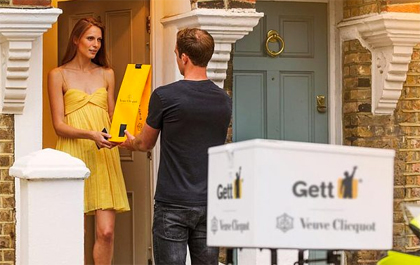
Have you ever urgently needed a bottle of Champagne? How about one delivered to you in 10 minutes?
Well, for all your romantic, corporate celebration, and dinner party needs, if you live in London, you are in luck. And, in a surprise, there are no drones involved! Gett, a ride hailing app service, is debuting the Champagne delivery within a limited part of London and only one brand of bubbles–Veuve Clicquot yellow label. The price is £50 ($75), apparently not that much of a markup over retail but still overpriced for mediocre champagne, and it does include two flutes. Interestingly, Gett will be using cabbies-in-training (who are studying for the notoriously difficult exam that black cab drivers must pass in London) to perform the deliveries on scooters.
The only crucial question: will it be chilled but not shaken?
Could this come to the US? It’s possible but it would vary by location since different municipalities have different rules and regs governing the sale of alcohol. But where there’s a will, there’s possibly a way!
HT Business Insider
Photo: Gett
Aug
5
2015
Vinous SCOTUS
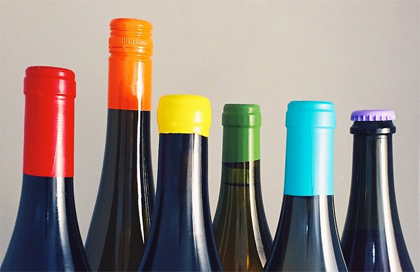
Jill Bernheimer, the owner of Domaine LA in, well LA (6801 Melrose Ave) posted this vinous tribute to SCOTUS today on Instagram. Brilliant!
Jun
26
2015
Q&A: Jean-Marc Roulot
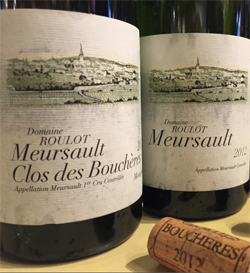 I met up with Jean-Marc Roulot recently. Not only does he make the excellent wines at Domaine Guy Roulot in Meursault but he has pursued a parallel acting career, with 52 credits to his name including Haute Cuisine (fire it up on Netflix during this blizzard).
In case you missed it, you can check out the Q&A I did with him over on wine-searcher.com.
Jan
26
2015
Comments Off on Q&A: Jean-Marc Roulot
Next NYU wine class starts Feb 4
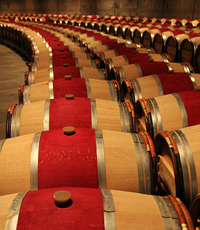 Make good on your new year’s resolution to learn more about wine and sign up for my next wine class at NYU. It’s open to all adult learners and, fear not, there are no grades so you don’t have to worry that your parents will be disappointed if they were to see a bad grade in a wine class on your transcript.
The course meets six consecutive Wednesday evenings, starting on February 4. We will explore some basics, including how to taste as well as understanding France and the US. We will also explore hot-button issues and topics, such as natural wine, wine auction markets, the role of critics, and how to navigate a wine list with confidence and style. Each class will have a tasting of at least six wines.
So what are you waiting for–sign up now! Hope to see you there.
Jan
15
2015
Wine picks from my NYU class
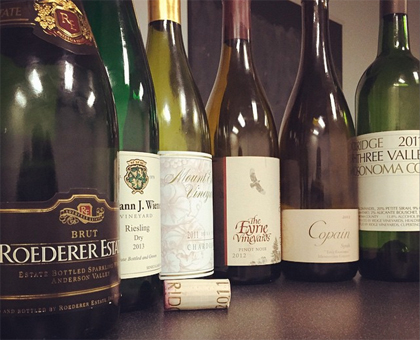
In my six-week NYU class ended recently. In the class, we taste six wines (blind) around a certain theme every week and I poll people on their visceral reaction to each wine before we discuss it. The wines that have weak polling numbers have to be put out to pasture or run for election in marginal shops where the mere act of getting a placement will be given polite golf claps. But the wines that poll well–generally 90+%–have the power to sweep, scoring huge wins at cash registers at wine shops across the land. I try to post the winners on my instagram feed after each class.
In the photo above, we had the highest percentage of unanimously liked wines in any class of the semester. Our theme that evening was the wines of America. We kicked off with the Roederer Estate Brut from Anderson Valley that was greeted with a roomful of thumbs up for bubbles and balance (and, perhaps, because it was the first wine after work). [Find Roederer Estate at retail] The next unanimously liked wine was the Copain, “Tous Ensemble,” Syrah 2011 for its elegant flavors and complexity. [Find Copain Syrah at retail] Finally, the Ridge, “Three Valleys,” 2011 got thunderous applause, perhaps because it was poured last but more accurately because it yet has good intensity and mouthfeel without the high octane rating that accompanies most California Zinfadel (the three Valleys is actually a Zinfandel-based blend, and the other grape varieties may also help the freshness of the wine). Oh, and they loved the price, rolling in in the low $20s. [Find Three Valleys at retail]
Dec
10
2014
Wine around $20: Copain Syrah Tous Ensemble
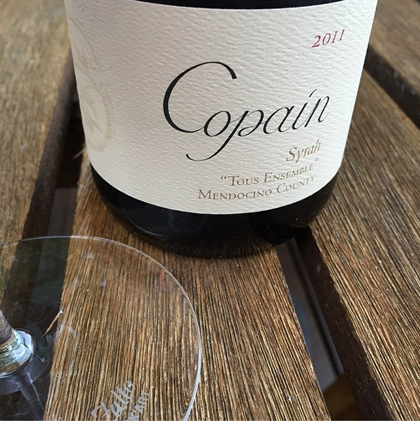
The signature characteristic for syrah from the Northern Rhone is an alluring savory character with a note of black olives. This Copain Syrah, “Tous Ensemble,” 2011, comes from three vineyards in Mendocino County and sees nine months in neutral oak. It’s in the Northern Rhone vein, favoring restraint instead of anything over the top–no “gobs” of anything here. It’s not that California syrah has to ape France; it’s just that Wells Guthrie of Copain favors that style, as do I.
I poured this wine at an event recently and it was very well received; I bought it again for $24 and it was a superb transition to fall with richer foods and cooler weather. And at $21.60 on the case, it is one heckuva a good wine for the price.
Oct
11
2014
Comments Off on Wine around $20: Copain Syrah Tous Ensemble
Wines under $20: Ott (Gruner edition)
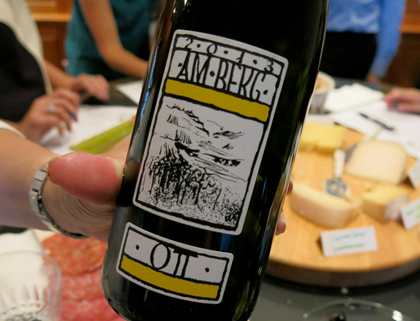 There’s a hilarious story that runs every August: they’re running out of rosé in The Hamptons! Predictably, it ran again this week. There are tons of great rosés out there (both still AND sparkling, ahem, Hamptons-goers) but the good ones do tend to sell out early in the season. So stock them early for subsequent stashing in sea planes!
Rather than mention other rosés, I’m going to pivot and talk about Ott. Domaine Ott is the pink object of much desire in the Hamptons. But wine enthusiasts would be very will served to take an Austrian turn and try Bernhard Ott’s 2013 Gruner Veltliners. I poured the Am Berg at a private tasting on the Upper East Side the other day and this was the crowd favorite for its verve, minerality and crackle. The best thing too: it was the cheapest 750ml wine at the tasting, ringing up at $19.99, in part thanks hailing from the Wagram rather than the more tony Wachau. (Find Ott Gruner Am Berg at retail)
Oh, and if you want some bubbly, the 2012 Knauss Riesling Sekt Zero also turned heads with stylish packaging (below) as well as purity on the palate. (Find Knauss Sekt Zero at retail)
Actually, I take it all back: who needs these prices to run up? Read more…
Aug
29
2014

Wine Maps
Monthly Archives
Blogroll
Categories
- American wine
- announcements
- Argentine wine
- auctions
- Australian wine
- Beer
- best wines
- Bling
- books
- Bordeaux
- bottled water
- Box wine
- Burgundy
- business of wine
- Celebrity wine
- Champagne
- Chicago
- China
- cocktails
- cognac
- corks
- corkscrews
- dining
- eco wine
- events
- foie gras
- food and wine
- French wine
- German wine
- giveaway
- grapes
- green wine
- guest post
- highlights
- how to
- Italian wine
- leaders and liters
- Mature wine
- meetups
- New York City
- On notice!
- photo captions
- podcasts
- Polls
- Port
- Portuguese wine
- power list
- reader mail
- rose
- sake
- Sommeliers
- South Africa
- Spanish wine
- spirits
- tasting sized pours
- The real wine world
- TV and movies
- Uncategorized
- videos
- vinexpo
- Weather
- wine and health
- wine and sports
- wine and tech
- Wine Blogging Wednesday
- wine blogs
- wine classes
- wine collecting
- wine gifts
- wine in india
- wine labels
- wine picks
- wine politics
- wine quizzes
- wine random
- wine science
- wine scores
- wine shops
- wine technology
- wine travel
- Wine under $10
- wine writing
- winemaking
- winespeak
 Blog posts via email
@drvino on Instagram
@drvino on Twitter
Advertise

quotes
One of the “fresh voices taking wine journalism in new and important directions.” -World of Fine Wine
“His reporting over the past six months has had seismic consequences, which is a hell of an accomplishment for a blog.” -Forbes.com
"News of such activities, reported last month on a wine blog called Dr. Vino, have captivated wine enthusiasts and triggered a fierce online debate…" The Wall Street Journal
"...well-written, well-researched, calm and, dare we use the word, sober." -Dorothy Gaiter & John Brecher, WSJ

Saveur, best drinks blog, finalist 2012.
One of the "seven best wine blogs." Food & Wine,
One of the three best wine blogs, Fast Company
Books for wine geeks

Wine books on Amazon: