Dr Vino's wine blog
wine talk that goes down easy
Zipz wine gets $2.5 million funding on Shark Tank
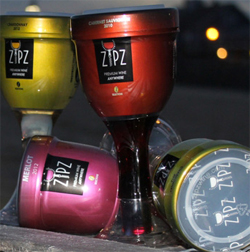 The sharks love them some wine. Especially Kevin O’Leary.
The self-proclaimed “Mr. Wonderful” on the ABC show “Shark Tank” reached an agreement to invest $2.5 million in the single-serve wine company called Zipz. That gave Zipz the $25 million they were seeking.
Making the presentation for Zipz was Andrew McMurray. McMurray is more known in the wine world as Read more…
Dec
7
2014
2
RT this: Winery tweet jeopardizes license
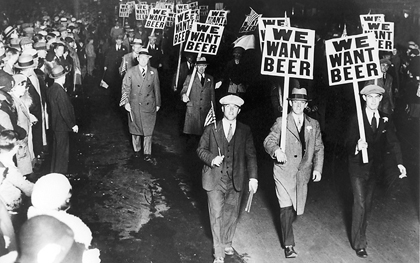
Here’s today’s bit of wine law crazee: back in June, the Sacramento Visitor and Convention Center tweeted a link to a local supermarket’s annual consumer tasting, which has over 300 local wineries (and many breweries) pouring their wares. One participating winery’s account on Twitter retweeted that tweet. And now, they are getting rapped on the knuckles by the Cal ABC, the state’s liquor regulatory authority.
A chill has since frozen the fingers tapping out winery tweets across the Golden State. If a winery’s license could be jeopardized by a generic retweet to a huge tasting, wineries may fear what right to freedom of speech they have. Read more…
Nov
12
2014
The box wine Mark Cuban spent $1 million on
 Box wine made an appearance on ABC’s Shark Tank last Friday. And like blood in the water, this startup had the sharks in a feeding frenzy with all five sharks bidding (or trying to bid).
Before wine enthusiasts get too excited, it’s worth noting that the beverage is more wine-arita than winery. Let’s break it down. Called Beatbox wines, it comes in a box styled as a beatbox. Nice! Two 5-liter boxes sell on their site for $64.99, which comes out to the equivalent of about $5 a bottle. So they’ve got the value pricing covered. And now, the content: this “wine-based” beverage with 11.1% alcohol comes in several flavors including Blue Razzberry Lemonade and Cranberry Limeade. Oh, and these serving instrux: “Try BeatBox on its own, with a mixer, in a cocktail, or as frozen BeatBoxicles!”
Billionaire Mark Cuban put it best on the show: “You’re not selling wine. You’re selling fun.”
Kevin O’Leary tasted it and proclaimed, “This tastes like S**t!” And then he bid on a slice of the company.
But it was Cuban who came out ahead, giving the Austin-based entrepreneurs five times the amount of money they were seeking for a third of the company’s equity–at a 50% higher valuation than they were seeking.
Given the myriad laws governing wine retail and distributing, here’s hoping that BeatBox doesn’t give Mark Cuban a $1 million hangover.
See the whole episode on Hulu Plus or read a blow-by-blow over on BI.
Oct
27
2014
Comments Off on The box wine Mark Cuban spent $1 million on
Club W raises $9.5 million
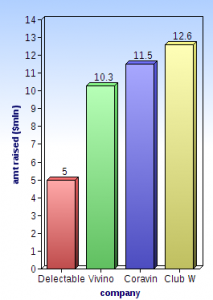 Club W, a wine club that sells private label wine directly to consumers, has raised $9.5 million in its latest round of funding. The company, led by CEO Xander Oxman, had previously raised $3.1 million in a seed round. The WSJ reports that Bessemer Venture Partners led this round; the previous round was led by Crosscut Ventures. The WSJ did not state the company’s valuation at either round.
Part of the Club W pitch includes calling themselves a “global winery” that cuts out all the tiers of the wine biz, including winery, importer, wholesaler, and retailer to offer wines at about $13 each (three a month for $39). Wines have names such as “So this happened…” and “Alchymist noir red blend.” Their web site does not state how they have cracked the perennial wine shipping nut though if the LA-based company is acting as a bonded winery and a licensed importer, the number of states they could ship to could run into the dozens.
In the recent wine venture capital beat, Club W has now soaked up the most funding. Coravin, which stuck its needle into the biotech community, is second. Vivino, the wine app based in Denmark, is running third. Silicon Valley’s Delectable, which closed a $3 million round in May, is fourth.
Lot 18 raised the most venture capital for a wine business post-recession at $44 million. But the company has had layoffs and abandoned the “flash sale” model. In other private equity news, The Wine Advocate sold an controlling stake for reportedly $15 million in late 2012.
Sep
24
2014
Faiveley buys Billaud-Simon in Chablis
 Domaine Faiveley of Burgundy has announced the acquisition of Billaud-Simon for their first vineyard purchase in Chablis. The 50-acre estate includes 4 acres of Grand Cru sites in Vaudésir, Les Clos, Les Preuses and Blanchots. They also have 22 acres of premier cru sites. Domaine Faiveley now has 350 acres in Burgundy.
I have always liked Billaud-Simon’s wines, so it is sad to see the end of an era. However, Erwan Faiveley (who chatted with us a few years ago), has really steered S.S. Faiveley in a good direction since taking the helm. So I will look forward to seeing the results of this acquisition.
Aug
6
2014
Comments Off on Faiveley buys Billaud-Simon in Chablis
Wine economics: How much does that bottle cost?
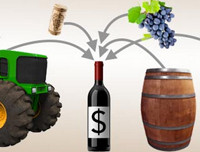 Have you ever wondered about wine economics–what are the costs of a bottle of wine? While the industry, made up mostly of private companies, often keeps margins shrouded in mystery, I spoke with one vintner who broke down the price of barrels, corks, grapes as well as the three tiers for me. And since that vintner was Bo Barrett of Chateau Montelena and Barrett & Barrett, he offers perspective on a range of (higher-end) wines. I also dig up some info on lower-end wines.
Margins are something that always pique the interest of consumers. So check out the piece over on wine-searcher.com and let us know your thoughts.
Jun
19
2014
Who will be the Elon Musk of the wine industry?

Elon Musk is an innovator–probably everyone who’s picked up the business pages recently knows that. Not that I’ve ever driven a Tesla, but I am a huge fan of everything he’s doing. While the gigafactory, the hyperloop and the electronic car that goes 0 – 60 in 5.6 seconds may have gotten most of the attention, he’s also taking on a lot of entrenched interests.
First and foremost is how cars get sold in America. States regulate the sale Read more…
Mar
12
2014
No, NYC doesn’t have too many wine shops
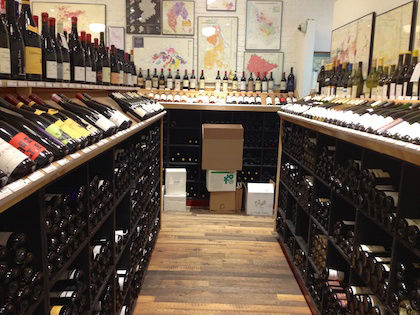
Crain’s New York ran a piece over the weekend pointing to a 14% rise in wine shops in NYC since 2010. Will the proliferation of shops “bottle up profit” they wondered?
The short answer is: no.
There’s a huge thirst for wine in America right now and especially in New York City. The city has some terrific shops and, throwing in the knowledge and offerings at the city’s restaurants and wine bars, it is today the best wine destination on the planet (here’s looking at you, Paris). Sure, the existing 1,368 wine shops can serve the city’s residents and tourists. But a growing market that’s relatively protected (grocery stores can’t sell wine) will probably mean more stores in the coming years.
Today, there are discounters and full-service shops. There are ones focusing in small estate wines and others with lots of well-known brands. There are shops with particular slants such as selling wines made by women, wines from California or Chile, wines from a single importer, shops that sell wine by occasion or food pairing rather than region, or shops that have tastings every day of the week.
Not all of them will succeed. But the more the merrier. While some of the unsuccessful approaches may be reoriented in another four years, I’d venture to say that, barring economic collapse or a shift to allow chains or wine in grocery stores, the number of wine shops will be higher still, by a similar measure as over the last four years.
One thing that could improve the finances of these small shops (chains are not allowed in NY), is if they could also sell craft beer. That happens in Connecticut and levels of social unrest are not higher as a result. In places like Illinois or New Jersey, wine shops can even sell gourmet comestibles, such as cheese. Imagine!
Jan
14
2014

Wine Maps
Monthly Archives
Blogroll
Categories
- American wine
- announcements
- Argentine wine
- auctions
- Australian wine
- Beer
- best wines
- Bling
- books
- Bordeaux
- bottled water
- Box wine
- Burgundy
- business of wine
- Celebrity wine
- Champagne
- Chicago
- China
- cocktails
- cognac
- corks
- corkscrews
- dining
- eco wine
- events
- foie gras
- food and wine
- French wine
- German wine
- giveaway
- grapes
- green wine
- guest post
- highlights
- how to
- Italian wine
- leaders and liters
- Mature wine
- meetups
- New York City
- On notice!
- photo captions
- podcasts
- Polls
- Port
- Portuguese wine
- power list
- reader mail
- rose
- sake
- Sommeliers
- South Africa
- Spanish wine
- spirits
- tasting sized pours
- The real wine world
- TV and movies
- Uncategorized
- videos
- vinexpo
- Weather
- wine and health
- wine and sports
- wine and tech
- Wine Blogging Wednesday
- wine blogs
- wine classes
- wine collecting
- wine gifts
- wine in india
- wine labels
- wine picks
- wine politics
- wine quizzes
- wine random
- wine science
- wine scores
- wine shops
- wine technology
- wine travel
- Wine under $10
- wine writing
- winemaking
- winespeak
 Blog posts via email
@drvino on Instagram
@drvino on Twitter
Advertise

quotes
One of the “fresh voices taking wine journalism in new and important directions.” -World of Fine Wine
“His reporting over the past six months has had seismic consequences, which is a hell of an accomplishment for a blog.” -Forbes.com
"News of such activities, reported last month on a wine blog called Dr. Vino, have captivated wine enthusiasts and triggered a fierce online debate…" The Wall Street Journal
"...well-written, well-researched, calm and, dare we use the word, sober." -Dorothy Gaiter & John Brecher, WSJ

Saveur, best drinks blog, finalist 2012.
One of the "seven best wine blogs." Food & Wine,
One of the three best wine blogs, Fast Company
Books for wine geeks
Wine books on Amazon: