Value vino list number four

Spain
Castaño, Solanera, Monastrell, 2001. $10.46
From the obscure Spanish region of Yecla comes this superlative red wine. One of only four producers in the D.O., Castaño has hit their stride working with importer Eric Solomon (They would be S.O.L. without SOLOMON). This Solanera from old-vine monastrell (aka mourvèdre) has impressive nose, which decanting for one hour made even more intense with dark fruits and black cherry. The penetrating and all-encompassing mouthfeel yields to a smooth and long finish. Wow! This is surely the leading candidate for best wine of the year for under $10. Oops. The price increased from $9 last year. Pity we have to pay up, but if you are going to breach the $10 limit, make this the one!

Louis de Vernier, Blanc de blancs, Cava, NV. $9
Cava? Not well-known in the US, Spanish sparkling wine has grown to account for half of the sparkling wine market in the UK. This cava is a sparkling example of what has made it such a good export product. Dry and refreshing with vigorous bubbles, this wine is good year-round, from summer parties to New Year’s Eve. Even though it sells for about $4 in Barcelona, the low price tag here means that we can be more Spanish and not just save this for special occasions.

Castell del Remei, Gotim Bru, 2000, Costers del Segre. $10.41
This wine delights the palate while going easy on the wallet. Sadly, however, the price rose over 15% from last year’s vintage putting it above $10, thus leaving me with the dilemma of whether to review it at all. But it is still a terrific wine value, one that is too good to pass up. From Catalonia in northeastern Spain, this super smooth, complex blend (cabernet sauvignon, merlot and tempranillo) hits is mark like an arrow rather than a “hedonistic fruit bomb.” An excellent nose, with black currants and supple tannins on the palate, all give way to a lasting finish. Try it with a range of foods, from pork to paella. www.castelldelremei.com

Chile
Haras, Cabernet Sauvignon, 2000 Maipo Valley. $9
This winery epitomizes current trends in Chilean winemaking: young, export-oriented, well-capitalized, and a tasty wine. With their first vintage only a decade ago, the winery blends the two passions of Chilean businessman Eduardo Matte, horses and wine, into this horseshoe-shaped winery (a horse sketch also adorns the label of this wine). This 100% Cabernet cuvée for the US market is a dead ringer for a young, peripheral Bordeaux, where it would have cost double. Purple-red in color, with dark fruits on the nice nose, this wine has seen some oak for smoothing out. Fans of “big reds” will enjoy this wine but its supple and medium bodied mouthfeel do not make it overwhelming. Imported by Fine Vines, LLC. www.harasdepirque.com

Terra Rosa, Cabernet Sauvignon, Chile, 2000. $9.99
Patrick Campbell, the Sonoma winemaker, headed south, not just for the winter, but also for this wine. Campbell has an excellent focus not only on quality (with his Laurel Glen wines sell for $50) but also on value. The two Terra Rosa wines come from vineyards on both sides of the Andes. This one from Chile has a base of Cabernet Sauvignon (85%) but it is the added Carmenère (similar to a Merlot) that give this wine a voluptuous lushness that I have not encountered in other Cabs from Chile. Dark fruits with light notes of spice make this well-structured red a real crowd pleaser. www.laurelglen.com

Italy
Falesco, Vitiano, 2001, Umbria IGT $8
Viti-ano. When thinking Italian wine, why not think in Italian? Viti, a Latin root for grape; ano is similar to the word anno for year. Grape of the year? Well, a wine of the week at the very least. The alluring deep purple color draws the drinker in through the eyes while the intense aromas of black cherry and plums draw the drinker in through the nose. This medium bodied red has added complexity to sangiovese with good proportions of cabernet sauvignon and merlot. This one is a winner in the Italian wine under $10 category.

South Africa
Goats do Roam, Red, 2002, Western Cape, South Africa. $7.
Great skepticism accompanied the tasting of this wine. Was the witty name that plays on the Côtes du Rhône region of France covering up poor wine quality? (Goats do, in fact, roam on the property as Charles Back, the winemaker, is also a leading regional producer of goat cheese.) Was the pinotage, a leading red wine grape from the South Africa, going to be a disappointment as it had in the past? The wine itself dispelled the skepticism. A blend of several grape varietals including pinotage and the Rhône staples of grenache and syrah, this medium-bodied wine has a surprisingly concentrated nose with spice and dark fruits on the palate. From one of South Africa’s largest exporters, this wine is also easy to find.

France
Commanderie de Bargemone, rosé, AOC Coteaux d’Aix en Provence, 2001, $8.
When the thermometer rises and the humidity jumps, who wants a massive Cab? For those hot summer days, try a dry rosé. This quaffable choice, derived from Grenache, Cinsault, and Syrah, has just enough substance to be interesting, no sweetness to be cloying, and served chilled it is very refreshing. Pair it with some grilled white fish and you are on your way to an excellent summer barbeque.

Mas de la Bergerie, VdP Coteaux de Bessilles, 2001. $8
Folies Bergères? No, this vin rouge is not Moulin Rouge. This turbo-charged red from the Languedoc clocks in at 13.5% alcohol but doesn’t feel heady. One of the wines from the ever-growing Domaines Paul Mas, this vin de pays is a blend of syrah, merlot, old-vine carignan, and cabernet sauvignon. Ruby in color, the wine has a concentrated nose of dark fruits and strawberry jam and holds together well on the palate. Try it with thyme-infused meat dishes.

Chateau Pesquié, Les Terrasses, AOC Côtes de Ventoux, 2001. $9.99
The slopes of the Mont Ventoux, which have been such a showcase for the skills of Lance Armstrong in the Tour de France, also show the quality of this region’s winemaking. A blend of Grenache and Syrah, this ruby red wine is light in color and in tannins. Hints of earthiness and cloves are present in the excellent nose. On the palate, the wine has a bracing acidity and the wine evolves in the glass even though it is a young wine. Just as Lance makes going up the Mont Ventoux look easy, Chateau Pesquie makes their wines go down easy.
Tasting size notes from Vinexpo

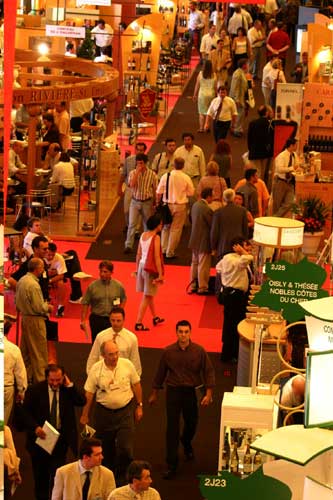
vinexpoWhat do you get when you blend 2,500 exhibitors from 47 countries with record-breaking summer heat in Bordeaux? Why, this year’s Vinexpo, the biennial wine trade show, with 48,000 visitors who came to sample the latest vintages, schmooze, and do deals.

Vinexpo illustrated three of the main trends in the wine world right now: tensions between France and America, increasing globalization of production, and rising quality. To give you a flavor for what it was like at the event, I have excerpted some tasting size pours from my notes…

Cuvée Libération
Everyone attends Vinexpo, even the guys who sell barrels. Oak barrels are all the rage among quality wine producers and are a major cost (particularly for those who buy French oak denominated in euros). I lunched with a barrel salesman responsible for North Africa and the Middle East, an area that has been gripped by wine fever. Hmm, Arabic wine? It takes all kinds. Indeed, good wines now come from such places as Morocco, Tunisia, and Lebanon. With even a conservative country such as Syria planting vines (for wines, not for raisins, he assured me), the barrel salesman would not be surprised if the Americans planted vines in Iraq. One wonders what they would call it—Cuvée Liberation 2003?

Oh, Canada!?
“Vines love it here” the enormous sign at the Canada stand exclaimed. I guess that beat out the slogan “beyond icewine,” Canada’s best-known viticultural product. Canada remains much more of a wine consuming country than a producer, but the small growing areas are producing wines from the “noble varietals” of France. With more countries of the north producing wine, such as England, might global warming make these the vineyards of the future? Time to buy that vineyard property in Norway?

The brave face
During the week of Vinexpo, retail sales figures for French wines in the US showed a decline of 25% over the same four-week period one year earlier. Awe and incredulity were the reactions I encountered from industry participants on both sides of the Atlantic. The diplomatic tensions between France and the US have led to American boycotts of French wine. But the general sentiment from the French side is that “time heals all wounds.” The thaw seen earlier in the month at the highest level was also on display here in Bordeaux as the French PM Jean-Pierre Raffarin pressed the flesh of the US ambassador.

Swirl and spit
What if you have a party and nobody comes? Or at least the guest of honor? Such was the case in March at the Bordeaux annual barrel tasting when Robert Parker, world’s foremost wine critic, decided not to attend. That was the nail in the coffin for the 2002 vintage, which saw prices tumble after already being pressured by economic malaise and bad weather last August. As your stalwart correspondent, I braved the crowds of adults with purple teeth making gurgling noises to taste through the top chateaux of the vintage and found it a solid one. Yum. Swirl and spit accurately.

Red hot Chili
Chile is hot. The Chileans staked out a large corner of the main hall and their stands were buzzing. Buoyed by the prospect of a Free Trade Arrangement with the US as well as an influx of investment from Europe and North America, Chile is hoping to increase exports even more. But the leading Chilean producer Concha y Toro decided to forego the main exhibition hall for the sanctity of an outdoor private tent in exclusive the “Club des Marques” area. However, with temperatures over 100 degrees (40 Celsius) it was the smaller producers in the air conditioning who had the last laugh as more than one Concha y Toro representative sought relief inside.

Greenback blues?
As if the diplomatic crisis weren’t enough for the French, the euro has strengthened significantly against the dollar for a year or more. This makes the prospect of imports to the US more expensive-for all European wines. But the same currency move makes US exports to Europe cheaper. Are the US producers licking their lips? Yes and no. With only 15% of production exported, and many boutique producers who have small production and high demand, the US remains a net importer of wine. So what motivates US producers to attend international trade shows and sell their wares overseas? According to Margaret Duckhorn of Duckhorn Vineyards, “We make a world-class wine and we want to sell it to the world.”

Just eat it
The greenback’s weakness has cramped the European producers, but will they be the only ones to eat the currency swing, if at all? Many, particularly those with strong sales, steadfastly refused to lower their price out the winery door. But US importers, who stress the importance of retail price points, are certainly giving producers the squeeze. While the threat of unsold stock makes importers wary, they may have been protected against the currency move. According to a leading US retailer, if the cost to them goes up, then the price goes up, simple as that. So that leaves the consumer likely to foot the bill when the dollar weakens. How about giving us something back when the currency strengthens? Slim hope…

Liquid Assets?

Mixing pleasure with profits is a tantalizing blend. But buyers should beware; investing in wine is not always as sweet as a wine from Sauternes. In fact, the best approach may be to just drink your profits from other pursuits. For most people, pleasure before profits is an unbeatable strategy.

But if profit enters the calculation, investors have three main ways to invest in wine: land, financial products, and “the juice.” First, you can buy vineyard property. California vineyards are being hit hard by the current grape glut and many are vineyard owners are uprooting vines or selling the property. Wine growing is a cyclical business and right now the cycle is at the bottom. Vineyard land in Argentina has also been beaten down thanks to a recent currency crisis, but it seems like the worst is behind them so pick up your Mendoza property now.

The obvious benefit of buying vineyard property is that you can live in a wonderful climate and location and be the object of envy of all your city dwelling friends (on that note, Mrs. Vino and I would be happy to test-drive anyone’s property for them). But owning property is high maintenance and decidedly big ticket. As with hotels, location matters. Those considering this strategy should focus on a location with a good viticultural pedigree to protect the investment. And also bear in mind the California aphorism that “the best way to make a small fortune in the wine business is to start with a big one.”

Another strategy for investors has come with the advent of a secondary market for wine. This has only fractionally more wine enjoyment factor than owning shares of Cisco. In 2001, Euronext, the European exchange, introduced wine futures. Fully 35 of the top Bordeaux wines are now available as tradable derivatives. Bordeaux Index also trades wine futures and has their data available on Bloomberg terminals. How insulting to the connoisseur to have Château Lafite flipped like a sack of pork bellies! Sacré bleu!

Shares and funds are other options long on finance and short on pleasure. Many wine producers have been getting bigger and are listing their shares on equities markets. This asset class mostly provides liquidity in the wrong sense. Further, money managers, in their creativity for new investment products, have also devised wine hedge funds. Hopefully they have profits, because there is not much pleasure in the glass.

But for most people considering investing in wine, the most common route is simply buying bottles of the stuff. Remember, it is always easier to become a collector than an investor, so caveat emptor! Almost any good wine reference book has tips for collecting and investing in wine, so I will be brief. Basically, most wines are not worthy of storing, nor do they have any investment value. Proper storage is essential for anyone considering investing in physical bottles of wine!

The best places to buy investment-grade wines are stores with big portfolios and long histories as well as auction houses (don’t forget to factor in the buyer’s premium though). Big stores often sell wine as “futures,” also known as en primeur in the UK. These futures have some risk but a lot more pleasure than the Euronext futures. Purchasing these futures means that you are purchasing the right to buy wine, already harvested but not yet bottled, that will arrive in the shop sometime in the future. The risk is that the shop could go out of business, so stick with big shops with good reputations for futures purchases.

Which wines are good to buy now? As I have discussed in previous columns, geopolitics has driven down the price of French wines currently on the shelves. The economic slowdown has reduced the froth of wines at auction. Some real bargains may be in the 2002 Bordeaux futures. The great Robert Parker cancelled his spring trip to the region, so the world is without his ratings, which have served as a pricing guide for the Bordeaux trade for the past two decades. Thus futures on the 2002 Lafite are $100 a bottle, the lowest initial price for this wine in years. To make the investment have more scarcity value, why not go for a magnum (1.5 liters)?

The real benefit of buying 2002 futures (or 2001 for that matter) is a hedge against currency fluctuations. The US dollar has fallen by about 25% against a basket of other currencies in the past year. Will bulging budget deficits, deflation, slow growth, and declining consumer confidence drive the dollar lower? If so, then the 2002 futures are a good way to lock in the current exchange rate. Of course the risk is that Parker will pan the vintage that received only a tepid endorsement from other critics. At least you would have some nice wine to drown your sorrows!

Coalition of the Swilling

No topic has dominated wine as much as politics in the past few months. Frayed international relations have led to recriminations and reprisals. Although 11 of the 15 UN Security Council members were on the fence or opposed to the Iraq war, France has caught the most popular and elite ire in the US.

Given their highly symbolic nature, much of this sentiment has been targeted at French wines. Those who supported the war have denounced French opposition by boycotting or not drinking French wine. (Others bought French wine to ceremoniously pour down the drain, a type of protest that comedian Lewis Black described as “having a bouquet of…idiot!”) On the other hand, those opposed to the war often went out of their way to buy and drink French wine, as reported in the SF Chronicle. But the net result is that the “nays have it” as French wine sales declined by 20% from mid-February to mid-March, according to Wine Spectator.

This is not likely to affect the 10 largest brands imported to the US since only one of them is French. According to the annual Impact wine market survey, and reported by Frank Prial in the NYT, George Duboeuf, the Beaujolais producer, was the only French firm in 2002, ranking eighth.

The rest of the top ten brands come from countries that were members of the “coalition of the willing” in the war effort. Australia, which contributed 2,000 troops, also contributes three of the best selling wine brands, Rosemount, Lindeman’s, and Yellow Tail, a brand launched last year and rapidly sold 1.4 million cases in the US. Italy, where popular opposition to the war topped 80%, ended up contributing logistical support to the war. To the US wine market, Italian producers dropped five “big ones,” including Riunite, Bolla, and Ecco Domani. With jug and flavored wines like those, it sounds more like a coalition of the swilling…

Chile’s Concha y Toro produced the largest imported brand to the US with 2.1 million cases. Chilean opposition to the war may have escaped popular attention, but it has not escaped the eagle (hawk?) eyes in the Bush administration. They have delayed a free trade agreement with Chile and accelerated one with Singapore, a more supportive country. Hmm, that’s not much help to wine lovers.

But Chile has not been unaffected. In one of the more humorous stories on this war and wine, a Mississippi wine retailer decided to make a political statement and give away his stock of French wine. Finding high demand for this free wine, he threw in some German wine as well. Having that stock also rapidly exhausted, he threw in a few bottles of Chilean wine for good measure. However, instead of using the trash can ceremoniously placed by the shop door, people put the free bottles in the back seats of their cars and drove off. (Clarion-Ledger 2/28/03)

There is a lesson from Mississippi for all those who can separate wine from international relations. While French wine sales are down sharply, total wine demand has remained stable. That means the shift has been only away from French wines. With plenty of French wines on their shelves, retailers are likely to try to move them through sales and discounting rather than giving them away as in Mississippi. Even the future prices for the Bordeaux 2002 vintage have declined, thanks in part to Robert Parker’s cancelled trip to the spring barrel tasting. Thus frayed international relations have caused bargains from “Old Europe” for wine lovers. Let’s hope that we don’t start looking to “New Europe” for our wine imports!

Value vino list number three

Chile and Argentina are similar insofar as they are both Spanish-speaking, largely Catholic countries in the Southern Cone of Latin America that have experienced dictatorship and democracy over the past few decades. Despite these similarities, the two local rivals have contrasting winemaking styles and histories. Chile, with a smaller domestic economy, has been quite outward-looking to find markets for its wine. Argentina, by contrast, is one of the world’s largest producers but a relatively weak exporter. Climatologically, Chile is influenced by the prevailing Pacific weather patterns while Argentina has high deserts on the other side of the Andes.
Both countries are becoming very international in their winemaking as many companies from France, Spain, the USA, have come to make wines or to consult in winemaking. While the $10-and-up categories from both countries are mostly strong, the wines under $10 remain patchy. Two recent tastings defied expectations: the Argentine Malbecs were overly smoky and the Chilean Sauvignons Blancs tasted too much like what the French call pipi du chat; I liked several of the whites from Argentina and some reds from Chile. While the exciting winemaking in the region makes it very much worth watching, here are a few recommendations for now…

Chile
Casa Silva, Carmenère, Classic, 2000 (Chile) $8.
Carmenère has recently resolved a case of mistaken identity. In Chile, it was previously thought to be Merlot. However, DNA testing (no, this is not just reserved for paternity lawsuits) revealed about a decade ago that the carmenère is, in fact, distinct from its fraternal twin, merlot. The long-standing confusion between the two grapes means that it is quite similar to Merlot in taste and appearance. This wine is easy on the wallet and on the palate. It is purple red in color, with a nose of dark fruits and a good finish. It certainly stacked up well against two other watery carmenères. And it would probably be even better with food (pork chops?).

Concha y Toro, Casillero del Diablo, Cabernet Sauvignon, Maipo Valley, 2001. $8
The Devil is in the details. Legend (read: marketing department) has it that old man Don Melchor used to keep the staff out of his best wine cellar by telling them that the Devil lived there. Although this wine is good, it may have come from the wrong cellar since it is not the best wine this winery produces. But it is good value for money. The nose is closed at first but opens up into a ripe cherry and herbal aroma with similar notes on the palate. Slightly tannic and aged in some oak, this South American red will please red lovers who are accustomed with the North American style. From one of the biggest firms exporting wine to the US, it’s also easy find.

Argentina
Alamos, Chardonnay, Mendoza 2001 $9.99.
Nicolas Catena is probably Argentina’s leading producer. He makes a wine that sells for $90 a bottle so he is definitely a locomotive pulling Argentina behind him. His neo-Mayan winery at the base of the Andes produces several lines of wines and the Alamos label is the most affordable. Sleek styling on the label and heavy bottles make the wine noticeable from the get-go. On the inside, this Chardonnay is pale yellow in color and hints of butterscotch on the nose. It doesn’t have that creamy buttery taste of many Chardonnays and there is a hint of citrus, but it is agreeable, easy drinking and has a pleasant finish. This solid effort makes it easy to remember Álamos.

Navarro Correas, Cabernet Sauvignon, Colección privada, Mendoza. 2000. $10
This winery has seen the benefit of foreign investment. Diageo (former owner of Burger King), the international drinks conglomerate that also owns Guinness beer as well as many other wineries and spirits brands, has lent the winery their winemaker from Beaulieu Vineyards in Napa. The results are good with this fruit-forward Cabernet made in an international style. The nose is excellent with complexity and dark fruits although not all the complexity transfers to the palate. This smooth medium-bodied wine is at its most expressive with food, from pasta to grilled meats.

Santa Julia, Torrontés, Mendoza, 2002. $7.
Move over chardonnay, here comes Torrontés? Well, maybe not anytime soon. This varietal is widely planted in Argentina (in fact, they claim it to be of domestic origin) and almost unknown elsewhere. It should be better known though. Pale in color with a floral nose, the taste is clean and crisp. This refreshing wine is definitely good to keep on ice for sunny days on the deck. Torrontés can be easily overwhelmed by food though. But hey, maybe that’s OK sometimes—the wine doesn’t always have to be trying to shout down the food.

Spain
Abadia Retuerta, Rivola, 2001. ($9.99 with discount)
This extremely well capitalized winery produces a line of excellent red wines from the Sardon de Duero region of Spain. Located just outside the Ribera del Duero, the wines are not D.O. wines and are instead classified as table wines from the Castilla and Leon region. That does not harm the wine in the bottle as mulberries, cherries and hints of vanilla and good mouthfeel make this Rivola very alluring. The distinct downside to the fact that word is getting out about this serious winery is that their prices are creeping up with every vintage. Although it may be hard to pronounce (think 12th century abbey Retuerta), it is worth remembering.

Italy
Di Majo, Norante Sangiovese (IGT Molise) 2001. $7.
From the hills of Molise on the Adriatic comes this excellent Italian (organic) red. Although the producers follow local traditions, they classify the wine “IGT” or the Italian analogue to “vin de pays” (not appellation). Sangiovese, the predominant grape of Tuscany, is generally considered a “food wine” that doesn’t often stand out on its own. This one is good with food or without. It has a ruby color with hints of black currants on the nose, black cherry on the palate, and a pleasant finish. Since I have sadly harbored skepticism about Italian red wines under $10, it is nice to be proven so wrong.

USA
Laurel Glen Vineyards, Reds, 2000. $8
The California wine industry is fortunate to have Patrick Campbell—and so are we. Not only is he an industry leader in terms of organization but he also is an excellent winemaker with a full range of wines, including this yummy wine under $10 (a rarity in California these days). Reds is a blend of 5 red grape varietals that come from growing areas throughout the state. Sound like a hodge-podge? Perhaps in someone else’s hands. Medium-bodied with spice on the nose, Reds also has hints of blackberry and blackcurrant on the palate. If this wine were the official selection of the Communist Party of the Soviet Union, the party might have fared better!

France
Chateau Marjosse, red, AOC Bordeaux, 2000 $8
The 2000 vintage from Bordeaux has been widely touted in the press. From Pierre Lurton, also the winemaker of the esteemed Chateau Cheval Blanc, comes this very good wine from the under 10 group. A “generic” AOC Bordeaux, the wine has dark fruits on the nose, a nice weight-but not overweight-at mid-palate with hints of mineral, and a smooth finish. This selection is ready to drink now and also provides an affordable option from Bordeaux-an increasingly difficult proposition

Portugal
Costas de Santar, Dão, 2000. $8.
The Dão of Pooh? No, this Dão is from the center of Portugal. A blend of three local varietals makes this light-bodied and approachable red perfect for people who don’t like big reds with heavy tannins. Light in coloring, the nose has a mixture of raspberry and lollipop that follows through on the palate. A pleasant wine, if a little fleeting.

Beyond the grade (but worth it):
Bodegas Weinert, Cabernet Sauvignon, 2000 $11
Escudo Rojo, 2000 $12
Crios de Susana Balbo, Torrontés, 2002 $13 (white)
Catena, Chardonnay, 2000, $16

Argentina: falling peso, rising quality

balbo winery

Argentina has been in the headlines recently for its currency devaluation and defaulting on its international loans. But what hasn’t been in the general news is the quality of the wines. Given that the country is now “on sale,” are we likely to see discounted prices here in the US? Sadly, the answer is probably not. But at least we have good quality to console us.

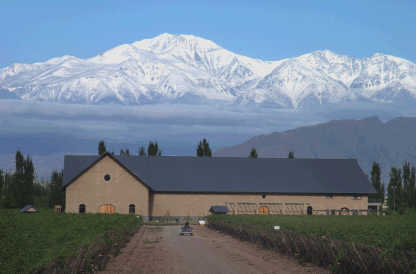
Endowed with an excellent growing climate for wine, an association for Argentine growers claims they are on “the right side of the Andes” (a not-so-subtle jab at their neighbor and rival, Chile). The Mendoza province, where most of the wine growing occurs, lies on the flanks of the Andes where vistas of rows of vines evaporate into snow-capped peaks. The high desert has growing areas between 2,500 and 4,000 feet that provide for hot summer days and cool nights, a perfect climate for wine grapes.

But sadly the natural potential of Argentina went largely untapped for too long. Argentina has always been a prolific producer of wine with harvests that make the country one of the largest producers in the world (it is currently fifth behind France, Italy, Spain and the US). Indeed, quantity—not quality—was the prevailing orientation of the winemakers throughout the 1970s and into the 1980s. Yields were kept high as grape prices were set simply by harvest weight without quality considerations.

It is not surprising, therefore, that most of this production remained on the domestic market. What is surprising, is that people drank it! As recently as the 1970s, Argentines drank an astonishing 90 liters per person. Exports accounted for very little of the production and Argentine wines were largely unknown overseas.

Declining consumption rates, however, snapped the producers to attention. With the rising popularity of beer and soft drinks, wine consumption declined dramatically (today it is 39 liters per person, about the same as France and Spain and four times that of the US). Suddenly, the producers found surplus wine driving down prices. Many went out of business and vineyard area declined by about one-third during the 1980s.

Quality production emerged as a strategy to combat the trend of falling prices. However, in the mid-1980s, the time was not right as hyperinflation plagued the Argentine economy. Inflation of 2,500% a year prevented producers from purchasing the necessary equipment to stage a transition to quality. As the currency sagged noticeably from day-to-day things such as new oak barrels that producers had to import became increasingly expensive.

In an effort to slay the beast of hyperinflation, the Menem government took the bold step in 1991 of pegging the peso to the dollar. This achieved the price stability that the economy had been lacking (but would prove disastrous ten years later). Price stability had two key impacts on Argentine wine production: quality winemaking equipment from abroad became more affordable and Argentina became more attractive to foreign investors.

For wine regions to grow qualitatively, it is helpful to have a leader who achieves a major breakthrough. In French, such a leader is known as a “locomotive” pulling the region along behind. One of Argentina’s locomotives is Nicolas Catena. An economist by training, he gambled that the dollar peg would bring economic stability and invested in quality. His wines received favorable reviews and attracted international attention.

Foreign capital started to flow in. Now, the Argentine wine industry has possibly the most international group of firms participating in any wine growing area. Wine producing firms from Bordeaux and Champagne, the US and even Chile have bought up assets. Since most of the recent trend occurred before the recent devaluation, it is not attracting simply the value players. Just this week, the owners of Chateau Cheval Blanc, one of the highest-regarded Bordeaux producers announced that they will be making a red wine from Argentina and calling it “little Cheval-Blanc” with a price tag of $80.

The crucial questions for American consumers now are: will the current crisis decrease the quality of the wines? And are we likely to see better values emerge?

Quality will likely continue on its upward trajectory. The excellent growing environment has not been affected by the political and economic instability. Further, for foreign investors, the country now is selling at a discount as the good land is cheap. In fact, the low prices may soon be gone as the peso appears to have bounced off the bottom (the Argentine stock market is up 22% this year in dollar terms). Domestically capitalized wineries, however, have seen their costs triple on imported items needed for quality production.

Wine prices, unfortunately, are not likely to decline in the US. Given that the major obstacle for Argentine wines is a lack of recognition, a good stint of high quality at low prices would benefit the entire industry (not to mention that strong exports would help the economy). However, the good producers already have solid foreign demand for their product thanks to favorable reviews. And a recent rise of wine bars in Buenos Aires has made more demand for quality wines at home. But all participants in the industry, in Argentina and the US, would be well-advised not to let this economic window of opportunity close before the consumer has had a chance to benefit.

While there is now good quality available, it remains patchy from producer to producer and stuck at a frustratingly high price point. Several bargain wines are available for under $10, but it may be a few more years before quality is consistently good across the whole range of production. The dynamism and potential definitely make Argentina a country to watch.

Terroir, what is it and where can you get some?

In a fine Parisian restaurant, a DrVino.com reader recently overheard
an exchange between an English diner and a French diner that went
something like this: the Englishman observed the recent success
of wines from Australia and New Zealand. And the Frenchman scoffed:
“But they do not have terroir!”

What is this mysterious variable that the Frenchman invoked to dismiss the entire production of two countries? Jay McInerney sums
up terroir as “location, location, location.” More than only the soil or the geology of the growing area, terroir also includes the local microclimate such as amount of sun or rain, the winds, the topography of the area and temperature fluctuations.

The general logic behind terroir (pronounced ter-WAHR) is that the more distinctive a grape growing area, then the more unique its wines will be. Consider Bordeaux, where the loose, rocky soil with a slight slope makes it terrible for growing wheat but excellent for growing wine. The breezes from the Bay of Biscay blow over the vineyards and keep the zone temperate. The wild card is the rain at harvest time, which can ruin a vintage. All of this makes Bordeaux wines distinctive, with a bit of mystery from left bank to right bank and from vintage to vintage—but all have the taste of the terroir in the bottle.

Try sampling six Chardonnays from around the world and the differences of terroir will probably be covered by differences in winemaking (those darned oak chips). But try tasting six different Chardonnays from Burgundy where it is easier to control for winemaking differences, and the effect of the growing area, or terroir, is easier to apprehend. The concept of terroir is spreading to other agricultural products too such as coffee or apples that boast distinctive tastes based on their origins. In France, the appellation system, which protects terroirs, now encompasses a wide array of agricultural products from some types of cheese to chicken from Bresse to green lentils from Puy.

Contrast the richness that terroir expresses with the caricature of grape growing in a place such as Australia. The vineyards are large, the sun beats steadily all year, and the vines are irrigated. This combination of factors has a tendency to produce a homogenous, undifferentiated, unexciting product. This standardization can lead to unchallenging wines for consumers and direct price competition for producers. It is a difficult game to play, one that relies on economies of scale, which explains some of the recent mergers in the industry.

But New World winemakers have also discovered terroir. In the 1940s, Professor Maynard Amerine from the University of California at Davis devised a classification of California growing areas based largely on temperature. Since then, the concept has been refined with other variables added. But the net result is that many California growers have an acute sense of terroir. As evidence, consider all the single vineyard wines that have emerged.

The intrigue of terroir also has a dark side, which is the possibility of getting a clunker. Simply because a wine comes from a certain growing area does not solely determine that a wine will be good. Who hasn’t had a bottle of Bordeaux from an unknown château that is awful?! While terroir is not a guarantee, it can offer good guidance.

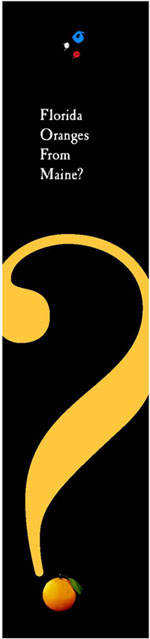
A recent advertising campaign in US magazines by Champagne producers emphasizes their terroir as what sets them apart from other sparkling wine producers (see sidebar for part of the campaign). This provides a sharp contrast to the firm-oriented marketing strategy
of corporate brands—marketing terroir is not simply a product of one firm’s marketing department, but several producers making a collective pitch around their territory.

Although it is not guaranteed, I would take my chances with terroir over industrial swill. The Frenchman who scoffed at the Australian production probably knew that wine from France and Australia does not fall neatly either into terroir or plonk. In fact, France has its share of plonk although it does have a lot of terroir wines. But Australia and New Zealand also have many distinctive growing areas, such as the Barossa Valley or Marlborough. Sure the wines may not taste like French terroir, but they have a unique taste of where they come from. And they are often very good. So I say “vive la différence!”

Leaders, wine and war: a taste test

Heads of state, heads of governments, leaders of the sovereign—whether they sit atop dictatorships, democracies, or feudal orders—often have a passion for the fruits of the vine. Louis XIV kept the aristocrats well lubricated at Versailles. Thomas Jefferson tried (unsuccessfully) to plant vines at his property in Virginia following a stint as Ambassador to France. Winston Churchill celebrated the end of WWII (and everything else) with some Pol Roger Champagne.

Today’s leaders have brought us to the brink of war. Can their wine preferences help us predict the outcome? I have sorted through my clip file and have this quiz to offer. Connect the leaders involved in the current realpolitik with their preferred drink.

Mix ‘n match—who likes what?

Leader list Wine preference choices
1. Jacques Chirac a. “Lots of French wine, in big glasses”
2. Tony Blair b. Teetotaler
3. Vladimir Putin c. “Sickly sweet Portuguese rosé”
4. George Bush d. French wine and lots of it
5. Saddam Hussein e. Anything goes
6. Gerhard Schroeder f. Teetotaler
7. Kim Jong-Il g. Doesn’t linger over a bottle the way he used to

Before revealing the answers to the quiz, the general theme here of wine in international relations does provide the opportunity to mention a couple other instances of wine as a political symbol.

Pity the French who are the major victims of this being the world's largest wine exporter. Indeed, when trade disputes break out among advanced industrial societies, symbolic products such as wine or cheeses are often the targets of stiff tariffs (or even those nasty non-tariff barriers). Beyond trade, the ruffling of diplomatic feathers provokes a similar response. When the French announced nuclear tests in the south, what did the Australians do? Why boycotted French wine, of course. Whenever the Americans do something controversial, flags are burned, McDonald's windows broken, Coke is boycotted. Wine hasn't made it to a national symbol yet for the US.

So, getting back to our leaders, who are the teetotalers among them? Surely they must include the only Islamic leader in the bunch. In fact, no. The two teetotalers are George Bush, who now has sworn off the stuff, and Vladimir Putin.

Several contenders are out there for the French wine title. Surely one must be Jacques Chirac? Indeed it is. He likes lots of French wine having been embroiled in a scandal while mayor of Paris for having improperly spent 2.2 million euros (about $2.3 million) on food and wine from 1987-1995 (The Independent, October 30, 2002).

Who else? Kim Jong-Il, it turns out, likes "lots of French wine, in big glasses" according to a source in the Financial Times (October 19, 2002). Maybe Chirac has more diplomatic leverage here than previously thought?

Anything goes? Well, that, of course, is Tony Blair. At the Anglo-French meeting at Le Touquet on February 4, the wines included Saint Aubin premier cru 1997 and Taittinger Champagne (FT 2/5/03). But he has also been photographed returning from the bar with a couple of pints. (Prince Charles, for what its worth, who was in France recently promoting and eating British beef, declared "nothing enhances the flavor of beef like a glass of good French red wine." Unfortunately there was none on hand and the staff had to scramble to find some. Daily Telegraph, 2/7/03)

So who doesn't have the time to enjoy wine the way he used to? Must be Saddam, bracing himself. In fact, no it is Gerhard Schroeder, the German Chancellor. Winning re-election in September has given Schroeder new issues to brood over. The Times of London claimed that "instead of lingering over a bottle of wine as he [Schroeder] would four years ago, he rushed back to his papers" after a non-political meeting (12/16/02). "He is like a dog that cannot settle" the columnist quoted a Schroeder "courtier" as saying.

Lastly, that leaves the brutal dictator Saddam Hussein with "sickly sweet Portuguese rosé" (NYT, 12/15/02). Indeed, in his recent book on the Iraqi leader, "King of Terror," Con Coughlin chronicles Saddam's rise to power in the 1970s and how he developed a taste for the sweet Mateus rosé (along with American-style ribs, fancy suits, and racetrack gambling). Wow. Rosé. Hopefully this information will make it to the Security Council.

The answers

Leader list Wine preferences
1. Jacques Chirac d. French wine and lots of it
2. Tony Blair e. Anything goes
3. Vladimir Putin b. Teetotaler
4. George Bush f. Teetotaler
5. Saddam Hussein c. "Sickly sweet Portuguese rosé"
6. Gerhard Schroeder g. Doesn't linger over a bottle the way he used to
7. Kim Jong-Il a. "Lots of French wine, in big glasses"

winepoliticsamz

Wine Maps


Monthly Archives

Categories


Blog posts via email

@drvino on Instagram

@drvino on Twitter


winesearcher

quotes

One of the “fresh voices taking wine journalism in new and important directions.” -World of Fine Wine

“His reporting over the past six months has had seismic consequences, which is a hell of an accomplishment for a blog.” -Forbes.com

"News of such activities, reported last month on a wine blog called Dr. Vino, have captivated wine enthusiasts and triggered a fierce online debate…" The Wall Street Journal

"...well-written, well-researched, calm and, dare we use the word, sober." -Dorothy Gaiter & John Brecher, WSJ

jbf07James Beard Foundation awards

Saveur, best drinks blog, finalist 2012.

Winner, Best Wine Blog

One of the "seven best wine blogs." Food & Wine,

One of the three best wine blogs, Fast Company

See more media...

ayow150buy

Wine books on Amazon: