Tasting sized pours – Dr. Vino edition

For those of you new to the site–and those of you just dying to look in the rear view mirror–I compiled this roundup of some notable posts on the blog in 2006. Things that you frittered away your time reading when you probably should have been working on a spreadsheat–or better yet, drinking wine!
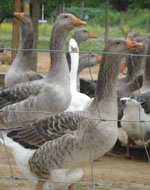
Goose Gitmo, I suppressed my gag reflex and visited a foie gras goose farm in France.

Cantu feel the love tonight, I crossed swords (laser beams?) with Chef Homaro Cantu of Moto restaurant

Meeting Michel Rolland: The controversial winemaker’s jet touched down in NYC; I listened and tasted.

Quality guaranteed? Does recorking older wines guarantee quality or commit adulteration?

Malbec, a backup or a star? I found a midpalate and more in Mendoza.

Mourvedre, the next big red? It’s big. It’s wild. But is this grape ready for the big time? I tasted ten wines to find out.

The best affordable wines you’ll never have this fall

Grower champagnes: a lunch with importer Terry Theise

Dear Jorge Ordonez, please bring us a good box wine.

Grapes on the half-shell
: Steve Smith, a New Zealand wine maker, basks his grapes in reflected glory.

No monkeying around: A biodynamic wine maker in South Africa who makes an excellent syrah–and keeps the baboons at bay.

I got the poop on how to make compost.

I ventured off the beaten path to join the Wine Century

Give the gift of big red
…and a roundup of memorable wines of 2006.

Bordeaux, Bordeaux, Bordeaux! You’re probably sick of hearing about it. Posts ranged from new language on labels, to price insanity, an export turnaround, the bottom of the barrel, urban sprawl, and finding good values among the rising prices.

A bipartisan meal? Yes, I got a jump on what must now be more common in DC.

I brought wine on a plane and made a screenplay about it. That’s not true–that was the snakes. But it was a happy ending in my story since the wine didn’t break.

Last year the Supreme Court made it easier to buy wine directly from wineries. So why is it so hard to buy from some out of state stores I wondered?

Jay-Z flashed a new champagne. But is he behind it?

Should wine be sold in Massachusetts’ grocery stores? I argued yes. The voters said no.

Wine shop madness! Find favorite shops from other bloggers in the WBW roundup. I even visited a few wine shops in Paris. And I kept an eye on the NYC retail scene visiting Bottlerocket, Moore Brothers , and the new Astor.

In fact, I visited more than that and plotted an interactive map of NYC wine shops. Four more maps followed, all listed on the sidebar.

Who’s on notice?
Wine tasting robots
Cider
United Airlines
Chef Homaro Cantu

David Sinclair bites the grape that feeds him: resveratrol researcher admits “I don’t care about red wine.”

And some excellent guest posts:
Taste the terroir of the Marlboro Man, visiting Utah’s wineries
Gallo invents valleys, defines statewide terroir
A wine after its time, how to make vinegar and more with leftover wine.

You certainly had your say with comments, but here they were directed at the TSA.

But enough looking back! Onward to discover new wines and good times in 2007!

tags: |

Farmer fizz, for less

There’s a lot of talk these days about “grower champagnes,” sparkling wines made in the Champagne region by the grape growers themselves (see my backgrounder). In all the rush to talk about this farmer fizz, the fact that growers also make bubbly outside of Champagne sometimes gets lost.

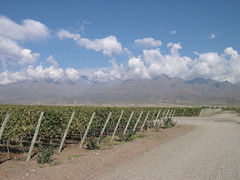
When I was in Argentina earlier this year, I tried some of the local bubbly. Moet controls the Argentine market for bubbly through its local subsidiary. In fact, their local label has risen to a level of brand awareness on par with Kleenex and Xerox. Instead of asking for a glass of “champagne” Argentines mostly ask for a glass of “Chandon.”

The sparkling wines made at the Mendoza Chandon winery serve many Latin American markets but don’t ever go north of Panama. Domaine Chandon in Napa provides American domestic sparklers to the US market alongside the Champagne brands in the LVMH portfolio such as Moet, Veuve Clicquot, and Krug.

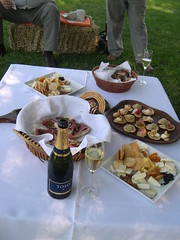
In Argentina, Pascual Toso plays the Avis of the bubbly market to Moet’s Hertz. This family-owned company has been making wine since 1880 and now provides something like five percent of the bubbly to the Argentine domestic market. But unlike Chandon Argentina, which you would have to go there to taste, Toso brut is exported to the US. It is a blanc des blancs made of chardonnay and chenin blanc. If you’re looking for a bargain bubbly, to stock for a large party or simply for a break on the budget, the Toso retails for between $6-8 in the US (find this wine). Light in color, with notes of yeasty brioche, it’s some farmer fizz that will add bubbles to your budget.

tags: | |

NYE in NYC

If you plan on mingling with the masses at Times Square on New Year’s Eve then you know where you’ll be (and what you’re getting in for).

Otherwise you could head to a wine bar to find somewhere less crowded (maybe) and with better drink options available (definitely).

Check out my map of NYC wine bars to check out some good venues. If you know of anything that sounds worthwhile, feel free to post it in the comments.

tags: | |

NY Sun sets on 2006

In a story in today’s NY Sun, I was quoted as saying that a memorable wine for me was the Hofstatter pinot nero 2005. True enough. But you already knew that. Newspapers have space limitations that don’t apply here on the web. So let me mention a few more!

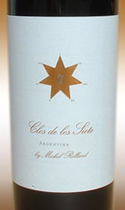
If I had to choose one wine to sum up 2006 it would be the Clos de los Siete 2004 (find this wine). Yes, I’ve mentioned it before and I don’t want you to think that it was the only wine I drank last year (I actually tasted over 2,000!), but it encapsulated the year in a bottle for a variety of reasons.

I visited Argentina in April of this year and I went to the dramatic Clos de los Siete winery. The vast project of over 2,000 acres was mere scrub brush in the late 1990s. Michel Rolland led a team of six other investors from Bordeaux. The wines under the Clos de los Siete name are the collaborative wine but the goal is that each investor will produce wines individually as well (I like the Cuvelier des Andes, 2004, about $30, find it). On a further personal note, I had the opportunity to meet Michel Rolland and taste through some of his wines with him.

Beyond these personal experiences the wine encapsulates 2006 in other ways. In a sign that wine and Argentine wine in particular is starting to reach the masses, TIME magazine declared Argentine malbec as “hot” in their year-end issue. Beyond being mostly malbec, the Clos de los Siete is a further sign of the times. It’s about $15, which is the new $10. And it is a big, bold, extracted, high-alcohol, wine and doesn’t seem particularly age-worthy.

I’ve enjoyed many other wines this year. I sprung for Savennieres early in the year and explored the other wines of the Loire later in the year. I tossed back some torrontes. I tasted some amazingly vibrant older whites from Austria. Some pinot noirs from around the world moved me and I was particularly thrilled with the quality of Oregon pinot. I learned a lot about biodynamics and tried an excellent wine that had been protected from marauding baboons by lion dung. And found some good value Bordeaux. I wondered whether mourvedre and malbec, traditionally backup singers, had star power. And my year-end bubbled with some farmer fizz from boutique growers.

I look forward to sharing many more fun wines with you in 2007, either together offline at one of my classes or meet-ups or through the virtual vicariousness of the web. Cheers!

tags: | |

HOWTO: open a champagne bottle


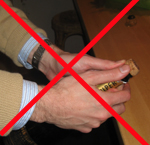
Look like an aggressive moron: Remove foil and wire basket around cork. Clasp bottle with both hands by the neck and work cork out with both thumbs. Shaking optional. For safest results, this method is only recommended off the side of a boat.


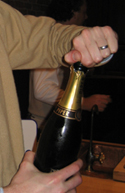
Look like a sommelier: Remove foil and wire basket. Place palm of left hand over cork. Clasp and gently twist cork. Pour chilled champagne into nearby flute. Switch hands if you’re left handed or want a “10” for degree of difficulty.

Look like a ninja sommelier (champagne sabering): Remove foil completely from the neck of the bottle and wire cork basket. Find the seam of the bottle with your thumb. Find a saber, machete or other sword-like instrument lying around. Holding the bottle firmly in your left hand, position sword at the base of the neck of the bottle on the seam. Swiftly move the sword up the the seam and strike the glass lip right where the seam meets it. Ideally the cork and top portion of the bottle will fly off. Note: best done outside. Also note, this will require much practice so as they say, “don’t try this at home”–or on a date since you might end up looking like this guy and wasting an entire bottle of bubbly (not to mention looking like a dork).

Recommended boutique, grower champagnes:

Pierre Gimonnet, nonvintage, $34 find this champagne
A blanc de blancs (only from chardonnay grapes) that has pleasant notes of green apple.

Lamandrier-Bernier, nonvintage, $38 find this champagne
A fresh, crisp wine from a boutique producer who practices biodynamics, a sort of “organic plus” style of farming.

Jean Milan, Terres de Noel, 2000, $70 find this champagne
This is also a blanc de blanc although richer than the other two in part thanks to the single vineyard where the grapes are grown but also because of a dash more sugar though it is hardly perceptible.

See my previous notes on rose champagnes.

tags: | |

Servin’ up the good stuff


As we are in the home stretch of holiday entertaining, the question at the forefront of every host’s mind regarding wine is no doubt “when should I serve the good stuff?”

There are several approaches.

1. Serve the good stuff first. This sort-by-price approach has the benefit of creating a strong first impression. And some guests might only want one glass anyway so this ensures they will get something good. However, wine style matters. Don’t lead with a humongo Napa cult cab–those kind of wines you have to work into.

2. Serve the good stuff second.
This is my preferred strategy. I like to open with a strong wine that is intriguing yet not overwhelming. Good picks for whites are: a wine from greco di tufo using an indigenous grape of southern Italy; a pinot blanc (such as Leon Beyer); a bubbly; or a wine from the Savennieres region of France. Then you and your guests will be ready for a great red, either light bodied such as a pinot noir, or a big red, such as a cabernet sauvignon or a syrah. I’d recommend two bottles for four people as a good ratio for a dinner party. Then have a decent third wine in reserve, what I call “balast.” Solid stuff, but easy on the wallet as well as the palate (check out my lists of wines under $10).

3. Start with great stuff and keep it flowing. Who can argue with this approach? Just serve the wine by style–lightest bodied to fullest–and everybody will be happy.

4. Serve no good stuff. A sad strategy and one to avoid. However, some family get togethers may require quantity over quality.

Happy holidays!

-Dr. V

tags: | |

Bruni bottle blow

Frank Bruni one-stars the new and apparently-not-improved Russian Tea Room in today’s NYT. The restaurant owners must be rethinking their wine service right about now. Gotta love the anonymous critic. Snip:

Outdated menus with erroneous information were put on the table. Drinks and food were ludicrously slow to arrive. Servers responded dismissively to complaints, one of them telling us that we shouldn’t bother him with questions about a fugitive bottle of wine. It was, he shrugged, the sommelier’s problem.

And what a problem. Although we had ordered a 1998 French Burgundy for $84, we got a 2001. We flagged the discrepancy, and for the next 15 minutes, as we ate our appetizers and thirsted for pinot noir, both the wine and sommelier were on the lam. When he showed up, he presented us with a similar 1998 — the listed one was unavailable — for $20 more. He paused, seemingly waiting for us to agree to spend that.

Then, in the manner of a car salesman, he said: “I’ll make you a deal. We’ll call it an even $90.”

Could he throw in cruise control? A leather interior?

He later dropped the price to $84, the right end to a wrong situation that typified the restaurant’s clumsiness.

[NYT]

tags: |

Give the gift of big red

When you’re giving a gift this holiday season–or any time of year, actually–you want it to scream class. Unless, of course, you are giving it to insufferable relatives when you’d probably opt for quantity over quality.

Here is a list of a few reds that will impress the most distraught holiday hosts. They have three things in common in order to qualify: great presentation value (bonus points for heavy glass); great taste that is way above their actual price; and under $20 retail.

Ex Libris, Cabernet Sauvignon, Washington State. $15. find this wine
Bottle: heavy! Cabernet: classy! I really have no idea why this wine is priced so low (I found some for $13)–perhaps it is the Washington State discount? Whatever it is, seize it now and give in abundance. I have a half a case already. Fans of the Da Vinci code will especially like this wine because of the label.

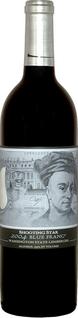
Blue Franc, Shooting Star, Washington $12 find this wine
Who would ever think about marketing a wine from a grape called Lemburger? Sounds awfully cheese-like. Well, Jed Steele has taken on this Herculean task with aplomb. Lemburger is also known as Blaufrankisch in Austria so he played off that and designed a handsome label with an old 50-franc bill–you remember, the blue one? Nice bottle, beautiful label. The slightly unusual aromas of forest floor make this perfect for the artsy host who likes to venture off the beaten path.

Drouhin, Moulin-a-Vent, 2005. $16 find this wine
Gamay was such a threat to pinot noir that Phillip the Bold banned it from Burgundy in 1395. Scoop up some of this food-friendly red that hails from Beaujolais, the poor man’s Burgundy. I recently had this in a restaurant where it worked very well with seared tuna but this versatile wine would do well with ham and sides at a feast too. Bring this one to your uncle who reminisces about wines that don’t hit you over the head with alcohol and tannin.

Clos de los Siete, Val de Uco, (Argentina), 2004. $15find this wine
The elegant, understated label with its seven point star (there were seven founding partners of the winery, including Michel Rolland) and heavy bottle help this mostly malbec blend pack a punch–both as a gift and in the glass. Do NOT give this to your elderly uncle who is used to drinking claret.

Montesecondo, IGT Toscana rosso. 2004 $14 find this wine
Great whimsical label with a toad (prince?) and a crown. The story here is that the producer was ready to age the wine in barrel but stopped and aged it in stainless steel tank instead. The action resulted in a wine too light in color to carry the Chianti DOC but the wine in the bottle is a star, with surprisingly vigorous tannins. 13.5% alcohol.

Chateau de la Bourree, Cotes de Castillon, 2003. $14 find this wine
This label has gold print and lots of grand words and medals on the label. Of course producers can use this to try to hype up completely mediocre wines. But in this case, the La Bourree delivers once you pull the cork as well with an alluring balance of fruit, acidity and tannin.

Chateau de Cadillac, Bordeaux Superieur, 2005 $10 find this wine
producer pain does not always equal consumer gain. But many producers in the humble appellation Bordeaux Superieur have fallen on hard times. I don’t know the backstory at Ch. Cadillac, but a nice label, solid notes of Bordeaux make this one perfect for your Caddy-driving uncle in Florida.

And, lest we forget…
Tres Picos, old vine grenache, Borja, Spain, 2004. $12 find this wine
I served this wine at a wine tasting party for my mom’s 65th birthday recently. This was one of the popular favorites there. It costs $12 but tastes like $25 or more. This grenache comes from old vines (I called them senior citizen vines for my mom and her friends) and has wonderful berry notes combined with faint sweet notes and a light pepper on the finish. It is a value knockout. And you probably could knock somebody out with the extremely heavy bottle. Bonus gift points for that.

Related: “The best affordable wines you’ll never have this Thanksgiving” [Dr. V]

tags: |


winepoliticsamz

Wine Maps


Monthly Archives

Categories


Blog posts via email

@drvino on Instagram

@drvino on Twitter


winesearcher

quotes

One of the “fresh voices taking wine journalism in new and important directions.” -World of Fine Wine

“His reporting over the past six months has had seismic consequences, which is a hell of an accomplishment for a blog.” -Forbes.com

"News of such activities, reported last month on a wine blog called Dr. Vino, have captivated wine enthusiasts and triggered a fierce online debate…" The Wall Street Journal

"...well-written, well-researched, calm and, dare we use the word, sober." -Dorothy Gaiter & John Brecher, WSJ

jbf07James Beard Foundation awards

Saveur, best drinks blog, finalist 2012.

Winner, Best Wine Blog

One of the "seven best wine blogs." Food & Wine,

One of the three best wine blogs, Fast Company

See more media...

ayow150buy

Wine books on Amazon: