Judge this cognac by its bottle

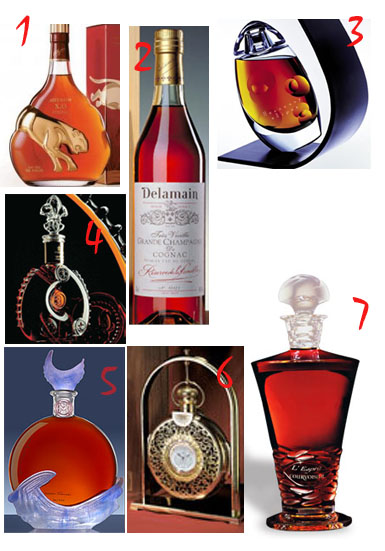
Cognac bottles come in all shapes and sizes. In fact the relatively new Cognac Museum has a whole room dedicated to their historical evolution. Some look like wine bottles while others look more like perfume bottles.

In this assortment of bottles, which one do you think is the most expensive? And the least expensive? And how about your faves? Have your say in the comments!

In a future post, I’ll tell you what’s what–and how much.

tags: |

Mummifying cognac in demi-johns


Perhaps you’ve read about–or even tried–cognacs that are over a century old. But given that it can’t last more than 55 years in the oak barrel, what’s the next step?

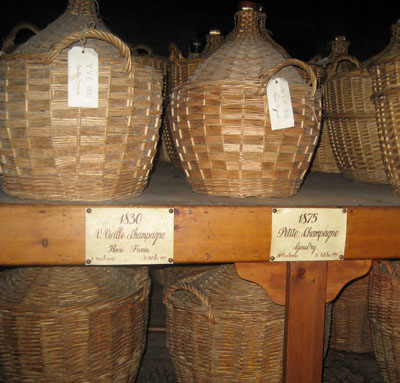
Demi-johns. These large glass containers, shrouded in wicker or burlap to keep out the light, protect the cognac after the transformative magic of the oak barrel. As Dominique Touteau, cellar master at Delamain, put it to me, the cognac is “mummified” in the bottle. Unlike wine, there’s no such thing as bottle aging in Cognac. It simply maintains the properties acquired from the barrel, the vintage and the growing area. Even though the cellar for the demi-johns is airless and timeless, its not really a tomb as much as it is a preservation chamber. Cryogenics, if you will. They are often stored in an inner-sanctum known as the “paradis,” translated as paradise or Heaven. The term sets the bar high, but then again, these old cognacs can be ethereal.

The demi-johns, or Dames-Jeannes as they are known in French, are stored tightly sealed, upright and out of the light. Every ten years they are given a new cork.

When the cellar master deems it the right time, small amounts of the cognac in demi-johns can be added to the finest blends. I saw one at Martell that was supposedly from 1830, which is mind-blowing to think of the history it’s seen–or not since it has been hidden in a dark cellar.

Stay tuned to find out my tasting notes from the oldest cognac I tasted on my trip! (Bonus points for anyone who can guess the vintage in advance)

tags: |

Klum or sprockets?

Guess which wine is sponsoring Fashion Week in New York? You might think that it would be part of a conglomerate with wine, handbags and scarves in the portfolio. But you’d be wrong. I’ll give you a hint: Heidi Klum.

That’s right, Wines of Germany will be this year’s wine sponsor according to this article in the NY Sun.

It’s not usually worth commenting on who’s sponsoring what (their ad dollars are speaking for them after all). But this year the fashionistas will be sipping on Kabinett, Spatlese, Auslese and Trockenbeerenauslese. Or will they?

German wine makers have been trying to make their labels easier to read. “People are tired of these Prussian-style labels. They say, ‘I don’t want to have a language barrier before I can drink.” Thomas Haehn, national sales director for Rudi Wiest Selections, the largest importer of German wines to the United States told the SF Chronicle in a story about the trend.

The Mosel-Saar-Rewur recently shortened its name to simply Mosel. And a new crop of wines, mostly entry level, are losing German altogether.

While it may be sweet for producers to target a larger, younger, global market, how will we know just how sweet the wine is without the olde tyme nomenclature? Since the word dry has been corrupted in the wine world I would propose another globally recognized form of communication: numbers. Tell us the grams of residual sugar on the back label. Now that’s something even the fashionistas could be interested in.

Related: last year they drank “eccotinis
In case you don’t remember Sprockets

Tasting sized pours – wine beats the dollar, resveratrol, who’s in, who’s out, NYC free wine

Red wine beats the greenback
“Like chocolate was to the Aztecs, wine has become the ultimate currency,” said Daphne Derven, an independent scholar on food and wine based in Eugene, Ore. “It appears that the thieves, whoever they were, had more faith in the stability and accruing value of the ultimate bottle of wine than the American dollar.” The big wine heist in Silicon Valley [NYT]

Red wine makes greenbacks for entrepreneurs (almost)
In a cover story with a provocative headline, Fortune magazine profiles Sirtris, the biotech start-up that is trying to commercially develop resveratrol. The research into naturally occurring compound in red wine has been led by Dr. David Sinclair, red wine hater, at Harvard. It may hold the key for fighting diseases associated with aging. [Fortune]

IN: Yves Bénard
Yves Bénard, head of the Champagne division at LVMH and co-president of the regional Champagne body (CIVC), is likely to assume the presidency at the French wine regulatory body, INAO. Given that Champagne is one of the most commercially viable wine regions and Bénard is no stranger to brands, is he the man to lead the appellation system out of the morass they are in? [Decanter]

OUT: Michel Rolland
Two years after Michael Broadbent criticized their wine in the documentary Mondovino, the owners of Chateau Kirwan have dumped him. Begin the Rolland backlash? [Decanter.com–link mysteriously removed]

Wine for no greenbacks in NYC
Free, public tasting of 2005 Chateauneuf-du-Pape with importer Alain Junguenet, at Tribeca Grill on Feb. 3rd from 12:00-4:00. Six winemakers will be there pouring samples.

tags: | |

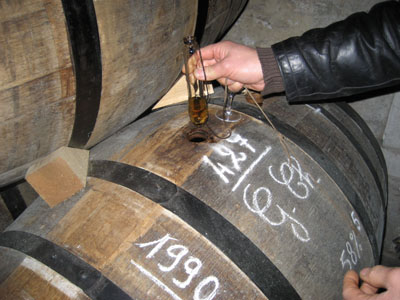
Cognac in the barrel and in the cellar


Wine, how young it is. Although winemakers follow different protocols, two years is generally a safe bet for how long wine stays in a barrel. For cognac, that’s just warming up.

Since cognac hits the barrel out of the alembic somewhere between 65 – 72 percent alcohol, it can withstand the tannins of oak longer. Much longer. Although each cognac house follows different norms, the official rules on barrel aging different grades are:

VS = a blend with at least two years in the barrel
VSOP = a blend with at least four years in the barrel
XO = a blend with at least six years in the barrel

Beyond that, it’s up to the individual producers. Many age portions of their XO for more than three times as long as the minimum. And almost all have something older (and more expensive) than XO calling it “extra” or some sort of proprietary name.

The wood for the barrels can only come from France according to law. The two main sources of the oak are the Limousin and Troncais forests, each with its own character. Oak from the Limousin is wider grain, which gives more “woody” character to the resulting cognac. The barrels are also larger than wine barrels often rolling in at 350 liters versus 225L for wine.

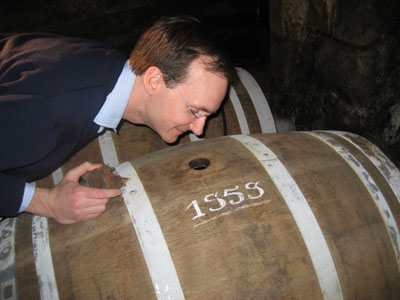
Cognac hits its peak in the barrel at about 55 years. After that, the consensus among cellar masters that I spoke with was that it starts to decline in quality.

Each year some of the alcohol and some of the water in the barrel evaporate in a euphemism that is delightfully known as the “angels’ share.” Wine, in barrels, also evaporates. But because cognac is such a higher alcoholic strength than wine, I’d venture to say the angels in cognac cellars are a lot happier. And with a loss of something like 2.5 percent a year to vapors, that’s the equivalent of about 3 million bottles of cognac. The accountants in the region must not like to think about that kind of money literally going up in fumes.

The angels have to compete with another life form: a black mold known locally as “mushrooms” that permeates all of the cellars. Driving around the town of Cognac and the region, it is easy to pick out the buildings that are (or were) cellars since the inescapable black mold, which thrives on the alcohol vapors, clings to the high walls and roofs. One cellar master told me that the Nazis even used aerial photography during the War to identify the cognac cellars from above.

Most of the cellars in the region are semi-permeable membranes to the outside world. Some cellars that I went in had windows, others had cracks to the outside. As a result, the temperatures inside the cellars often reflect the outside, although in a less extreme way (more on how this affects taste soon). When I was there last week, temperatures were around freezing but the cellars were about 45 degrees. In the summer, they can even go higher than 70. Local cellar conditions can vary as some underground storage areas have less temperature fluctuation and higher humidity. But the angels are happy whatever the conditions.

Stay tuned for the next step in aging the oldest and rarest cognacs.

Related: “Barrel sample, cognac style

tags: |

Peter Meltzer responds to your questions on wine collecting

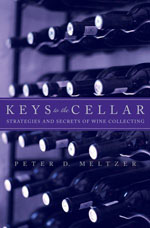
With incredible speed, Peter Meltzer, author of Keys to the Cellar: Strategies and Secrets of Wine Collecting replies to your questions. His answers follow in italics:

At 1:33 PM, January 29, 2007, Anonymous said…
Just this weekend I opened the first bottle of ’90 Figeac purchased at an HDH auction last year. It was flawed. It tasted more cooked than corked. What, if any, are my chances of recourse from HDH, and should I try to return the rest of the lot? I have purchased from HDH both at auction and at retail and this is the first flawed bottle from them.
Rick
Chicago

At auction, in most instances you are buying “as is,” and if the wine is off, you’re stuck. However, it sounds as if you have a pre-existing relationship with HDH, so why not contact them and dispatch an “offending” bottle of the ’90 Figeac for them to sample. Auction houses are not generally in the business of making enemies, so HDH might make an exception. In the future, however, don’t wait a year before sampling your purchases. Try a bottle right away so that you can detect potential problems in a timely fashion.

At 2:15 PM, January 29, 2007, Anonymous said…
I’m just starting to think about collecting, and I don’t have a fancy cellar or anything in place yet, just a cool (but probably not constant-temperature) basement. Should I invest in a wine refrigerator before proceeding?

It all depends on your game plan. While a temperature and humidity-controlled storage unit is always preferable, if you plan to focus on wines for immediate consumption, you can probably get by with your existing basement space. (However, if you have any intention of selling your wines at auction, a climate-controlled facility is preferable to a passive one.) If you plan to lay down fine bottlings that require extended aging, you should definitely invest in a wine refrigerator. It’s always best to choose a unit with a capacity that exceeds your present stash so that you have room to expand. If you have a modest starter collection, however, you may want to consider a small unit like the Haier (whose 93-bottle unit costs about $1,000) for your better or best bottles.

At 2:16 PM, January 29, 2007, Kasie said…
How do I know when I wine has peaked? I have a ’94 that recently went up in value, but does that mean it’s time to drink it?

Price is really not an issue here, as many wines (including oldies like 1982 classified Bordeaux, and select California bottlings from 1985 and 1987) continue to escalate in value but are not yet past peak. Vintage charts and “drink” recommendations are always helpful in determining a wine’s shelf life. Ultimately, you and your palate are the best judge. Periodically open a bottle that you think might be approaching maturity. If the color has turned to mahogany and you detect an earthy aroma and sweetish taste, it’s time to drink up.

At 2:18 PM, January 29, 2007, Anonymous said…
Maybe I’m a cynic, but it seems that people can get really competitive at auctions, and rational pricing can sometimes go by the wayside. Is there any systematic way to get real values at auction?

Yes. Probably the best recourse is to place realistic absentee or “order” bids instead of attending the auction in person. That way, you don’t risk getting swept up by auction fever. In addition, consult the Wine Spectator auction index (available online to website subscribers) which contains thousands of prices for frequently traded wines. It’s a powerful tool to cross-reference estimates against recently realized prices.

At 4:21 PM, January 29, 2007, Bruce said…
What is the best single source for tracking the progress of specific vintages of specific wines (most importantly Bordeaux) so that I know when to pull them out of the cellar? (I know, I know, depends on storage conditions, etc., but let’s assume they are “perfect”)

See above.

At 2:28 PM, January 30, 2007, Mike said…
I’m curious if you have a rule of thumb as to when a pre-auction tasting is a good value? Or perhaps how to make the most of such a tasting?

A pre-auction tasting is a wonderful opportunity to sample wines from diverse regions and vintages, many of which may be unfamiliar. It gives you a heads up on wines you may contemplate acquiring, without having to go to the expense of buying a bottle before the sale. Most auction houses list the roster of wines to be presented at the tasting (either in the catalog or online) so if you see something interesting, don’t hesitate to attend.

At 5:34 PM, January 30, 2007, Ben said…
Does the auction site matter? E.g., do you get better values at Chicago auctions vs. New York auctions?

It’s difficult to generalize, as prices will vary from lot to lot and location to location. Overall, Zachys has a large number of high winning bids – but it also has quite a number of low ones. Prices at Bonhams & Butterfields (San Francisco) can be lower than the Manhattan competition, and Hart Davis Hart may offer great value. But when HDH auctions a 20 year vertical of Château Lafleur this weekend (estimate $300,000-$400,000), don’t expect any bargains.

I have a case of 1989 Mouton in my basement (cool but passive storage conditions). How can I check the value? And what is the best way to sell it?
Thanks,
Kevin
Boston

According to the Wine Spectator second half 2006 auction index (printed bi-annually in the magazine and updated monthly for website subscribers) the average price for Mouton-Rothschild 1989 was $258 per bottle or $3,096 per case. Its high was $373 per bottle. At retail bottles range from $245-$489. If you have a friendly local wine merchant, see if he will make you an offer. Otherwise, contact one of the major commercial auction houses.

• Acker Merrall & Condit, (877) 225-3747
• Aulden Cellars-Sotheby’s (New York) , (212) 606-7050
• Bonhams & Butterfields, (415) 861-7500, ext. 307
• Edward Roberts International, (847) 295-8696
• Hart Davis Hart, (312) 482-9996
• Morrell & Co., (212) 307-4200
• NYWinesChristie’s (New York), (212) 463-8600
• Zachys (New York), (914) 448-3026
• Winebid.com

At 11:50 AM, January 31, 2007, Schliecker said…
I just bought a house and have a basement where the temp is between 60F and 65F with humitity between 30%-45% depending on the day. I have some wines I want to keep cellared for a while (not anything like an ‘82 Lafite mind you). What are your thoughts on those conditions. Good enough or would you go for a Vinotemp or something like it.
Thanks – Dave S. – Brooklyn, NY

These conditions are acceptable for short-term storage of good wines. However, have you any idea what the temperature rises to in the summer? The humidity level is on the low side.
(See second answer above for more details.)

tags: | |

Betting wine for football – edition XLI

With the Super Bowl looming on February 4, some wine geeks may be wondering what to drink during the event — while others may be wondering how they can win some wine.

Betting and sports have a long (March Madness) but limited (Nevada) tradition in the US. But it is only thanks to Las Vegas we have an indication of what the odds are of one team winning over another. The most common indicator is the “spread” or number of point margin of victory of one team over another. In this year’s Super Bowl XLI the Indianapolis Colts are the favorite by seven points over the Chicago Bears.

Thus a fan of the Bears could take seven points, see her team lose 21-17 but still win on the bet. You win while the team loses. This suboptimal outcome means that your bet is not aligned with your enthusiasm for the team.

I put this puzzle to my friend who writes about sports on and he advised me of the “moneyline,” which awards different values to bets while not offering any point spread. Thus if your team wins, you win the wager. The moneyline for the Superbowl is Indianapolis -240 and Chicago +200. That means that to place a $240 wager on the Colts in Las Vegas would win back your original wager plus $100. A $100 bet on the Bears would yield the original wager plus $200.

Thus wine geeks who are fans of the Bears could bet a $10 wine with a friend and Indianapolis supporter who would put up a $22 bottle of wine. Say, a Texier Cotes du Rhone 2004 (find this wine) for a Heinrich Mayr-Nusser 02 Lagrein Riserva (find this wine)? Or raise the stakes to double those price points if you are so inclined. But at the end of the day–or football season–the best way to celebrate friendship might just be if you had to drink the bottle together.

Assuming, of course, that you both are over 21 and live in Nevada.

The original version of this post appeared on January 27, 2006.

tags: | | |

Meetup NYC: Wined Up, February 9

It’s official! Back by popular demand, we are having the next offline meet-up on February 9 at Wined Up! Our slow-motion, NYC pub wine bar crawl makes a second stop this year after starting at Varietal last month.

The meet-up is simply a chance to meet in the real world, off the internet, with wine enthusiasts, in particular, readers of this site and people who’ve taken my wine classes at NYU. There’s no charge other than what you order at the bar. Consider it a happy hour. Or two.

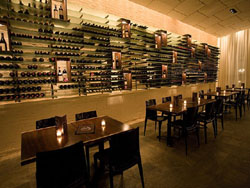
Wined Up opened in November above Punch in the Flatiron District. We will put their 30 wines by the glass to the test. Ditto for the cured meats and cheeses (I’ll leave it to you if you want to try the pumpkin hush puppies). And perhaps even pull a bottle off their 100′ backlit display wall. Come one, come all and kick off your weekend between 6 and 8ish on Friday, Feb 9.

When: starting 6PM, Friday, February 9
Where: Wined Up
Second floor above the restaurant Punch (repeat: it’s upstairs)
913 Broadway, nr. 20th St. Map it
Flatiron District
Who: you! And bring a friend if you like

tags: |


winepoliticsamz

Wine Maps


Monthly Archives

Categories


Blog posts via email

@drvino on Instagram

@drvino on Twitter


winesearcher

quotes

One of the “fresh voices taking wine journalism in new and important directions.” -World of Fine Wine

“His reporting over the past six months has had seismic consequences, which is a hell of an accomplishment for a blog.” -Forbes.com

"News of such activities, reported last month on a wine blog called Dr. Vino, have captivated wine enthusiasts and triggered a fierce online debate…" The Wall Street Journal

"...well-written, well-researched, calm and, dare we use the word, sober." -Dorothy Gaiter & John Brecher, WSJ

jbf07James Beard Foundation awards

Saveur, best drinks blog, finalist 2012.

Winner, Best Wine Blog

One of the "seven best wine blogs." Food & Wine,

One of the three best wine blogs, Fast Company

See more media...

ayow150buy

Wine books on Amazon: