License to chill

The man who brought the world the $99 hamburger in 2003 (it’s now $120 but still comes with truffles) now wants to play landlord–to your bottles.

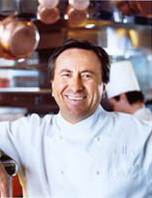
Chef-preneur Daniel Boulud will offer diners at his Bar Boulud, slated to open this fall on the Upper West Side, 36-bottle wine storage for $15,000 a year according to the NY Post. Yes, that’s $1,250 per month for three cubic feet!

Lest you think this fridge with your plaque on it would be stocked, it’s not. Eater runs the numbers and declares it “doable” at five bottles a month. The catch: their back of the napkin calculations make sense only for bottles bought at $150 retail that the restaurant might have marked up to $400.

In case you want in on the action, you’ll have to wait. The Post reports that there’s already a waiting list.

tags: | |

Leaders and liters of wine: Angela Merkel


While German Chancellor Angela Merkel may get (unwanted) pats on the back from George Bush–literally–will she win plaudits from Jacques Chirac for her wine choice? “Hell yes” seems to be her answer.

As the current chair of both the EU presidency and the G8, Merkel has to set the agenda not only for talks on trade and the EU constitution–but also the wine list for the formal dinners at the summits.

Chirac may be her toughest critic since he was unable to restrain himself when Britain held the EU presidency a few years ago. Referring to the British, he told Vladimir Putin and Gerhard Schröder, “You can’t trust people who cook as badly as that. After Finland, it’s the country with the worst food.”

While trying to keep Chirac from making off-handed remarks in front of open mics may be tough, Merkel had no trouble to find a riesling for the gatherings according to DeutscheWelle (although they fail to mention what it is).

But the red was more of a challenge. She chose a 2003 “Assmannshausen Höllenberg Spätburgunder,” a pinot noir from the Rheingau region to pour at the EU summit in March and the G8 summit in June. The wine’s name literally translates as “Hell’s Mountain,” a reference to the steepness of the vineyard where the grapes grew. And with an a New Worldy 15 percent alcohol, if enough of the dignitaries drink the pinot noir, they may end up “Sideways” before the end of the conference. One hell of a summit, you might say.

Chirac will be on hand in March but his successor will represent France in June . We will be watching for stylistic differences. George Bush, a teetotaler since his 40th birthday, will perhaps stick with the Gerolsteiner.

Related:
Leaders and liters of wine: French presidential contenders 2007” [Dr. V]

tags: | |

Creative cocktails: Q&A with Brian Van Flandern

Brian Van Flandern was the man behind the bar for three years at Per Se in New York. Now he’s on his own revamping the list at Bemelmans Bar at The Carlyle among other places. Since he’s a a pioneer of food-friendly cocktails and has made many a cocktail for wine lovers, I thought if anyone could talk to us about cutting-edge cocktails, he’s our man. I caught up with him earlier this week.

If you have a question for Brian, post it in the comments below! He has said he will respond to the three reader questions.
Dr. V: Why should wine drinkers be interested in cocktails?
BVF: It’s a fun time in cocktail history. Last year was the 200th anniversary of the word cocktail in print. But only in the last decade or so have we moved out of the Betty Crocker era. The top chefs are sourcing meat and vegetables from growers, taking advantage of the terroir–wine is all about terroir.

Mixologists caught up with chefs in the last three or four years seeking out fresh ingredients, making their own tonics and tinctures. Ironically it is cutting-edge but also a throwback to a pre-Prohibition philosophy, when bartending was highly respected. Bartenders took care in making cocktails and sourcing ingredients, even if it took a long time to get them.

Now the cocktail is coming back as a wonderfully balanced libation. Cocktails are approaching the alcohol levels of wine at around 20-25 percent alcohol by volume and not the 35-40 percent alcohol that people may be used to. The alcohol level comes down with ice melting, adding juices, mixers, you end up with a cocktail just above some wines in terms of alcohol—and food friendly too.

A new generation of master mixologists is emerging. Culinary students are bringing food sense to mixology, and we’re starting to see a very professional mentality. And, thanks to FedEx, we’re able to source fruits and spices and unique food products that we were not previously accessible. You can have Australian finger limes any time of year. Same with Buddha’s Hand. Even fresh pomegranate juice was not available 5 yrs ago. Litchi, rambutan—these are all new flavor profiles.
A lot of times cocktails are just too sweet. Why? And what can a drinker do about it?

Yes. During Prohibition they were making high alcohol cocktails that were very poorly made. They threw a lot of sugar in there. The goal was to get schnockered before the cops busted down the door.

Reunite on ice was the bomb back in the day. So was box wine. But we have witnessed how wine has changed in the past 20 years. Now not only do we have cabernet sauvignon, but also gruner veltliner, tocai friuliano and so on.

Cut back to cocktails. They were all booze coming out of Prohibition—think Manhattan, martini, and Rob Roy. Then in the 1970s, there were the ice cream cocktails, the blended and frozen umbrella drinks. There were even sweet liqueurs like Kahlua, Frangelico, and Bailey’s. If a cocktail is not balanced, people can balance their own by requesting either a simple syrup or lemons and limes from the bar.

Now we’re latching on to the lessons of pre-Prohibition and applying what we have access to today.

Sounds good to me. What’s a red flag for people to know if the bar is not in this new generation?
Look around. In almost any bar, somebody is drinking a cosmopolitan. If it is clear, if it is red, I would be hesitant. If it is cloudy, bubble gum pink I would be intrigued.

Or ask “How do you make your cosmopolitan?” If they say they use Rose’s lime juice–get out! Run!

No fresh juices? That’s a red flag. If you listen and you don’t hear the “thwacka thwacka” of the shaker more than three times, that’s another red flag. Shaking drinks provides dilution, a nice texture and reduces the alcohol level.
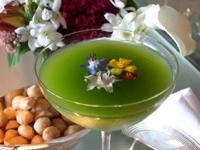
So what are the basics of making a cocktail?
Start with the base spirit—1 oz to 1 ¼ oz. Then add the modifiying spirit—just for flavor, like vanilla extract in cooking, not for alcohol–¼ oz to ½ oz. Then add mixers—fresh juices, soda water, cola, and so on. Incrementally build the cocktail. The mixer is going to provide sugar or acid–if you use a mixer of Sprite, add some lemon or lime to balance that out. If you’re using orange juice, it’s high in sugar and acidity and may not need anything else. Lime juice is tart needs simple syrup or, say, pineapple juice.

Acid, alcohol and sugar, that’s the mantra. Balance in proper proportion.

Flavored vodkas: is there one worth buying?

Yes, but I always use flavored vodkas as a modifying spirit. The vast majority of them have a very chemical finish. They smell wonderful–just like lemon, raspberry and so on–but you always wince on the finish. They should be used in moderation as a modifier not as a base. I also don’t mix vodkas made from different base products such as wheat, potatoes, barley—I use the same base vodka and the same modifier.

What’s the best vodka for making mixed drinks?
I like Ciroc with juices because it is distilled from grapes. But I don’t care for Ciroc as a traditional martini vodka. Belvedere is good and crisp. It’s from rye and is viscous, has more glycerin. For olives, I like rye vodkas.

The cosmopolitan was born as a promotion for Absolut Citron.
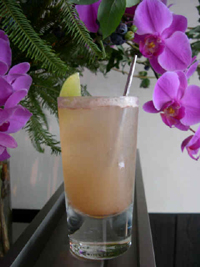
When you were at Per Se you made your own tonic water for your “tonic and gin”? What’s your beef with Schweppes?
Ha. Mass produced tonic water uses a quinine derivative, which is assertive in flavor. In an effort to balance it they use high fructose corn syrup. I use raw quinine powder in its natural state, which is much less sugar by volume. I should add that the HFCS is in American tonic water—I’ve had Schweppes in Spain that is delicious.

All right, rapid fire now. What are the top ten cocktails that people should know how to make at home?
1. Sidecar — a classic and very tasty
2. Margarita
3. Negroni
4. Aviation
5. Daiquiri/Hemingway daiquiri
6. Manhattan
7. Classic martini—gin or vodka
8. Mojito
9. Cosmopolitan
10. Bloody Mary-–actually quite a complicated process

What’s the most useful tool for the home cocktail maker?
A juicer! Fresh juice is so important.

What are some good cocktail reference books?

Craft of the Cocktail: Everything You Need to Know to Be a Master Bartender, with 500 Recipes, by Dale DeGroff
The Joy of Mixology, by Gary Regan
The Bartender’s Guide on how to mix drinks (1862 edition), by Jerry Thomas,
Killer Cocktails: An Intoxicating Guide to Sophisticated Drinking, by David Wondrich

When can people come visit you at Bemelmans Bar at the Carlyle?
I’ll be there with all new cocktails—and none of those ten I mentioned—as of March 20.

What’s the most underrated cocktail?

Brandy Alexander

And finally, if you were exiled to a desert island and could have one last cocktail, what would it be?
A sidecar.

Related:
MyMixologist.com, Brian Van Flandern’s web site
Riding sidecar with Brian Van Flandern” [Dr. V]

tags: |

Bread, wine and liberty

Du pain, du vin, du Boursin

Some wine, some bread, some Boursin cheese. So ran the national ad in France for Boursin, linking it to both wine and bread.

But what works in France might not work in America. Specifically, Connecticut.

Last weekend I had the pleasure of meeting Mitch Rapaport and Margaret Sapir. Throwing in the towel on corporate careers (and perhaps in spite of their business training since each holds an MBA), the couple decided to start a Wave Hill Breads, a bakery, as a second career. They apprenticed for three years with a baker in Vermont before finally finding space in Wilton, Connecticut a year and a half ago.

It’s a great bread for wine lovers since they mill their own spelt and rye at the bakery, activating wild yeasts and leading to…fermentation! The excellent, hand made breads made from just six ingredients are currently available at select stores in Fairfield and Westchester Counties (see a photo of them in their bakery here). Foodie Michael Stern even went so far as to say it is possibly the best bread on the East coast!

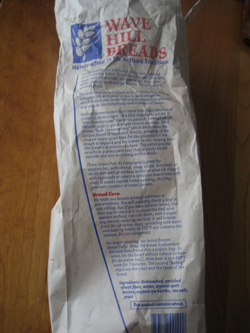
Mitch had a previous career in branding and thus told me that he took a particular interest in the bread’s bag. He wanted to include a couple of stanzas from the poem “Neighbours” by Robert Service that mentioned both wine and bread. But when he emailed the text to about a dozen friends, he said the opinion was split on whether to include the reference to wine, with the negatives particularly strongly opposed. So he decided to scrap the poem.

He wrote me in a follow-up email that some were “concerned that wine may be taboo in some homes, that parents may be concerned about the influence on children, and that many families contain recovering alcoholics. In other words, why take an unnecessary risk?”

I could possibly understand some people not wanting to put actual wine in front of recovering alcoholics or children–but the mere mention of wine?! Eegads, the Catholic Church with real bread and wine must pose difficulties…See right for the final packaging of the bread, which isn’t exactly short on words. Here’s the text from the poem that Mitch wanted to use:

My neighbour has a field of wheat
And I a rood of vine;
And he will give me bread to eat,
And I will give him wine.
So with my neighbour I rejoice
That we are fit and free,
Content to praise with lusty voice
Bread, Wine and Liberty.

What do you think? Have your say in the comments below!

Wave Hill Breads, 196 Danbury Road, Wilton CT 06897. Tel: 203.762.9595

Related: “You say oinos, I say oenos” [Dr. V]
tags: |

Reminder: meetup at Jadis tomorrow

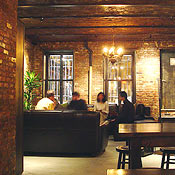
Reminder: the third installment of our NYC wine bar crawl will take place tomorrow! Come one, come all to Jadis on the Lower East Side.
See the original post here.

As a reminder, I’ll be buying a glass of wine for the person who comes from the farthest away! So even if you’re just visiting NYC, why not stop by for some vino?

When: March 8, 6 PM – 8ish.
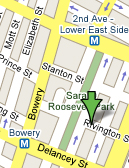
Where: Jadis, 42 Rivington (map it)
How: F, V at 2nd Ave; J at Bowery; 6 at Spring St.; taxi
Review: Jadis [NY Mag]
on the web: Jadisnyc.com

tags: |

Caveat Emptor Wine Co

The most frequent question I get via email from readers of this blog runs something like this: “I found _____ (wine name, vintage, quantity) in my ______ (Great-Aunt’s/grandmother’s/own) ____ (basement/attic/garage). How much is it worth?/Where can I sell it?/Is it drinking OK?”

I told this to a friend the other day and he said, “But are there any good names there? It might be worth a chance.” Then we devised a business idea for Caveat Emptor Wine Co., specializing in wines of unknown provenance. “The wines weren’t ours, but the risk is yours” could be the tag line. Needless to say, we have not contacted an an attorney to start the corporate filing yet.

But some other notable collectors have contacted their attorneys. And they’re not looking to start an LLC. They’re looking to stop fraud in wine auctions and have the wine’s seller or a broker accept responsibility. Needless to say, the main auction houses do a better job at assessing provenance than Caveat Emptor Wine Co. But how much they should stand behind their lots (and cases of wines sold through fine wine stores) is a question that is now getting a public airing before a grand jury in New York City.

The Wall Street Journal reports on page one that federal prosecutors have issued subpoenas to Christie’s, Zachys and some rare wine collectors in a probe into wine fraud at auction. In what might cool off the red-hot secondary market for fine wine sales, successful businessmen and wine collectors Russell Frye and William Koch are also taking action. Roll the tape:

Mr. Koch filed a civil suit last year in federal court in New York, alleging that a German wine merchant, Hardy Rodenstock, forged bottles of wine he claimed had belonged to Thomas Jefferson and had been discovered in a bricked-up cellar in Paris. Mr. Rodenstock also claimed to have other extremely rare wines, including a cache belonging to Czar Nicholas II of Russia, Mr. Koch alleged. Those allegations were detailed in September in a page-one story in The Wall Street Journal. In a Jan. 19 court motion, an attorney for Mr. Rodenstock denied the claims and deflected responsibility to the merchants who sold them directly to Mr. Koch.

“It’s not just Rodenstock,” Mr. Frye continued in the WSJ article. “Counterfeiting is a big problem, especially in the high end. These networks need to be exposed,” and merchants must be accountable, he said.

But fraud is just one problem, estimated at five percent in the WSJ story. So add to that, say, five percent corked, x percent improperly stored, y percent drunk too late–and small wonder the excellent old wines are just so…excellent!

Related:
“U.S. Investigates Counterfeiting Of Rare Wines” [WSJ, sub]
WSJ: fund with wine” [Dr. V]
Wine heist, part trois” [Dr. V]

tags: |

Mission: possible

Do you like to write? Are you between 22 and 29 in NYC? And thinking of having a dinner party with wine sometime soon? I have an “assignment” for you should you choose to accept it. Level of wine knowledge needed: knowing red from white.

Hit contact above to drop me a line.

tags: |

Lake Wobegon wines


In the pages of BusinessWeek, Robert Parker calls some under $20 wines from Gallo, Beringer, and Kendall Jackson “very good” to “excellent.”

Meanwhile, in the main arena of the Parker Empire, the Wine Advocate, his new hire Dr. Jay Miller handed out high scores like candy–including five 100-point scores–to Spanish wines.

Is Robert Parker’s world turning into an enological equivalent of Lake Wobegon where all the wines are above average?


winepoliticsamz

Wine Maps


Monthly Archives

Categories


Blog posts via email

@drvino on Instagram

@drvino on Twitter


winesearcher

quotes

One of the “fresh voices taking wine journalism in new and important directions.” -World of Fine Wine

“His reporting over the past six months has had seismic consequences, which is a hell of an accomplishment for a blog.” -Forbes.com

"News of such activities, reported last month on a wine blog called Dr. Vino, have captivated wine enthusiasts and triggered a fierce online debate…" The Wall Street Journal

"...well-written, well-researched, calm and, dare we use the word, sober." -Dorothy Gaiter & John Brecher, WSJ

jbf07James Beard Foundation awards

Saveur, best drinks blog, finalist 2012.

Winner, Best Wine Blog

One of the "seven best wine blogs." Food & Wine,

One of the three best wine blogs, Fast Company

See more media...

ayow150buy

Wine books on Amazon: