Bringing closure? A screwcap-cork showdown
Five years ago, Randall Grahm staged a funeral for the cork. The great marketer and label designer behind Big House Red and Ca del Solo among other brands staged a processional for his last cork at Grand Central Station of all places. From then on, all of his wines have been bottled “en screw.â€
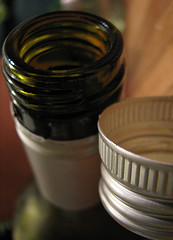 Since enjoying wine is in many ways a race against time (and oxygen), how a bottle of wine gets sealed is of utmost importance. Corks have their detractors since they can introduce the noxious chemical TCA that makes wines “corked.†Further, the pieces of tree bark can lose their elasticity as they age letting in wine’s nemesis, oxygen.
Screwcaps, by contrast, can provide such a tight seal that no oxygen gets in and there is no problem with TCA. Many proponents of screwcaps (or Stelvin closures, if you must) might suggest that the only thing standing between them and domination of the wine world is consumer resistance since wines bottled “en screw†have typically been seen as more downmarket. And what would you do with your $100 corkscrew if you only had to twist the cap off?
Screwcaps appear to be so controversial with their partisans for and against, you might think it impossible to find a producer who goes both ways. Fortunately the Wine Media Guild was able to find several examples of the same wines bottled under both closures for the March tasting.
Michel Laroche attended the tasting as speaker to share his experiences as well as several of his wines bottled under both closures. Laroche is a fifth generation winemaker from Chablis who has run his family firm since 1967 and now also makes wine in the Languedoc, Chile and South Africa.
For Laroche the transition to screwcaps started in 2001 when an unacceptably large amount of his wine was sold unknowingly with TCA that came through corks. Placing the estimate at 10 percent of his production that year, he expressed frustration because he said that consumers never complained so he didn’t know if they thought that flawed wine was actually his style.
So in 2002 he took action. He set up an alternative bottling line and bottled three percent of his production under screwcaps. He bottled the same day and from the same vats. He brought four of his wines that run the gamut of his line for us to taste, with a bottle under each closure.
The difference was shocking. Read more…