Free lunch, no. Reduced price, yes!

finedine1.jpg

Economists love to point out that there is no free lunch. But there is something else nearly as good: fine dining for lower prices at lunch time.

On a vacation with your partner or family, splurging on lunch can have many benefits, first of which is clearly money. Many top restaurants offer lower prices for lunch than for dinner. Consider Paris, where a quick scan of some top spots shows the spread: Taillevent has a 70 euro lunch compared with 140 or 190 euro dinner menus. At the summer dining room at the Hotel Bristol, there’s a 90 euro lunch menu as opposed to the more expensive a la carte in the evening. And at Pierre Gagnaire, it’s 90 euro prix fixe lunch vs 225 for dinner.

You might have noticed that this is still dropping over $100+ on lunch–and we haven’t even gotten to the wine yet (tax and tip are included, however!). But I chose these high-end restaurants because they illustrate the cost-savings that are available at many restaurants in Paris and beyond.

In New York, reasonable gourmet lunches abound and are a fraction of Parisian prices. Read more…

Has the wine auction market peaked? (with Fall auction calendar)

The recent turbulence on Wall Street has caused some pain: Bear Stearns is laying off 240 people, the easy money of the yen carry trade is drying up, and bonuses are rumored to be only 25 percent of what they were last year if the year ended today.

How does this affect the auction market for collectibles? Billionaire Eli Broad recently told Bloomberg that he thinks prices will decline for the high-end art market. As the fall auction season kicks into high gear, auctioneers must be wondering if the same fate awaits them for wine.

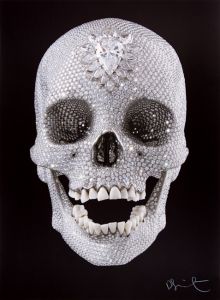
I think not for three reasons. First, there’s gotta be a pretty limited number of people who would pay $100 million for Damien Hirst’s diamond skull, while fifty cases of 1982 Lafite can be broken down to 50 different buyers if need be. Even 25 percent of last year’s bonus still buys a lot of wine. Ferrari? Maybe that gets the ax, but wine stays.

Size matters too: total US wine auction sales last year were $162 million, strong growth year over year, but at the rate of a skull, that doesn’t even add up to an entire diamond encrusted skeleton should Hirst ever do one of those. The $1.7 trillion hedge fund industry may be down, but it’s by no means out. And if you’re trading down from big ticket art, why not shift into lower-ticket but still investment-grade wine? There are a lot of new empty cellars in Greenwich, CT and beyond just waiting to be filled up.

Finally, it’s tangible. At the end of a day trading, going home and sitting in the 55 degree cellar and looking at the wine is fun. It’s there. It’s real, unlike many mortgage backed securities or derivatives thereof. And alluring. It might even make you want to uncork a bottle. As Napoleon is reputed to have said, “Champagne. In victory you deserve it; in defeat, you need it.”

What do you think about the market for collectible wines this fall? Have your say in the comments below.

Select wine auctions fall 2007: (after the jump) Read more…

Reader mail meets impossible food wine pairings: nori!

norilaver.jpg
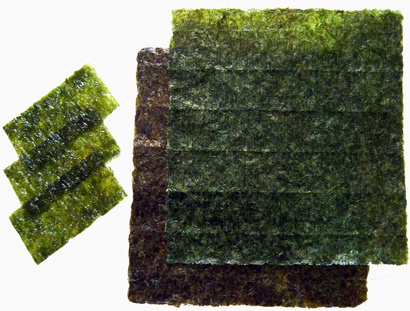
What follows below is an actual reader mail that crossed the transom last evening. Laver, similar to nori, is an edible seaweed high in sodium and iron found on rocks off the coast of Scotland and Wales. Mmm, it really is an impossible food-wine pairing! But her relationship is apparently at stake! Roll the tape:

Dear DR. Vino:
I’m a korean girl, and I have a boyfriend from france. Everything was fine until recently,we fought several times–upon my favorite
sneak — laver (dried & seasoned seaweed). Each time i eat it,he thinks i’m eating a piece of paper. And when i asked him to try some,he just stuck his nose up in the air and replied,” French people never eat anything that couldn’t pair with wine!”So i tried and tried,but no matter it’s a red or a white,it seems to just bring the “fishiness” or “sea stink”out of laver instead of its deliciousness. Is it really an impossible food to pair with wine? Or is our relationship unable to overcome our cultural differences?
-A frustrated girl that desperately needs your help

Help out this reader with your comments below!

(image)

Poll: should artisanal be banned?

artisanal1.jpg
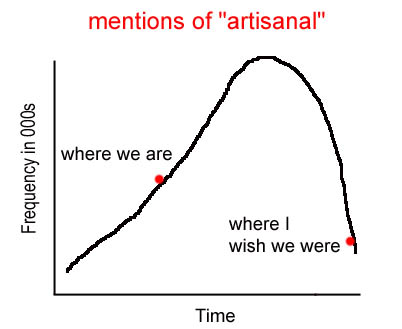
I was chatting with a friend the other day and somehow the crazy frequency of the word-du-jour, “artisanal,” came up. As in, you know, hand-crafted, made with care instead of mass-production. David over Goliath. I’m all for the process. But the word? I’m done with it.

I have plotted the worldwide frequency of the term above, not just in wine, but all things precious and artsy-craftsy. We appear to have a long way to go before the term dies of overuse.

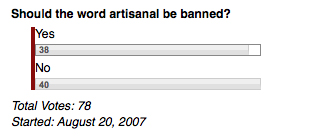
So what do you say–should artisanal be banned? Polls now open!

democracy12
poll now closed

Note: the graph was hand-crafted.

Go native! Wine Blogging Wednesday #37 – indigenous grape varieties

wbw37.jpg

Say goodbye Chardonnay and hello Falanghina! Or Romorantin! Mencia or, heck, Moschofilero! If you have just been waiting to venture off the beaten path, now is your chance to try an obscure grape variety from it’s homeland! The justification is the 37th edition of the internet wine juggernaut known as Wine Blogging Wednesday and our theme is to “go native” and try an indigenous grape variety!

Italy alone claims to have 2,000 of them. Spain has many, Portugal maybe even more. Greece is a hotbed of all things ancient, including some grape varieties that are coming back. And even the good ol’ USA has Norton and Scuppernong!

So here is your assignment, should you chose to accept it: sometime between now and September 12, pick a wine made from a grape variety that comes from a place it might call home. Taste it and write up a tasting note (our translators are standing by for foreign language contributions!) on your blog on that day mentioning your involvement in WBW and linking here if you choose. If you don’t have a blog but would still like to participate, then feel free to email me your notes. Then I will round up all the posts and notes, linking back to you, and we will have a giant list of wines from off the beaten path that are hopefully fun and delicious.

Some suggestions, prohibitions and outrageous bonus points opportunities:

France is the homeland to many grapes, so if you decide to venture there, skip the big six grapes (Riesling, Chardonnay, Sauvignon Blanc, Cabernet Sauvignon, Merlot, and Pinot Noir) since we’re trying new stuff. That still leaves plenty of things to try from la belle France.

There are many resources available to find out more about grape varieties. Appellation America has a witty, pictorial guide. Steve De Long has his beautiful Wine Grape Varietal Table (for a quick and dirty list, check his Wine Century Club form). And with a regional focus, the current issue of Food & Wine has a story by Ray Isle on “12 (Italian) grapes that are essential to know.” Feel free to post links to more resources in the comments.

Major bonus points will be given for either of two things. First, to anyone who drinks said wine IN the place where it is grown. Second, if you pair a grape from two growing areas including the ancestral home AND a new home (e.g. malbec from Cahors and Mendoza) you will win even bigger bonus points. Just what these bonus points accumulate to has not been decided and, like airline miles, they are susceptible to devaluation at any time. (Bonus points will probably be some form of additional bolding, gold stars and heaps of respect and admiration.)

So happy tasting and I look forward to your notes on September 12!

(image)

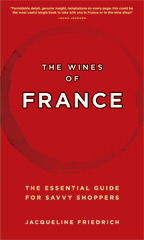
The Wines of France, by Jacqueline Friedrich

The wines of France in 360 compact pages? Heck, I’ve read a book longer than that on one region, the Loire! That was my incredulous reaction when I first spotted The Wines of France: The Essential Guide for Savvy Shoppers by Jacqueline Friedrich across the room at Barnes & Noble.

But upon closer inspection, what this svelte paperback ($13.75 on Amazon) sacrifices in depth, it makes up for in breadth. Friedrich has no shortage of tasting experience–or opinions–and wheels around her quick tour de France in what is essentially an annotated directory. She dispenses with such page-consuming graphics as maps, label images or chateau pictures. Divided into regions, each section leads with a one page overview and then heads straight into an alphabetical listing of producers and subregions. Her favorite producers receive a star, ones to watch get an up arrow, and she usually notes in the text if a producer is “eco-friendly” or not.

This is great for skimming and finding an instant nugget of information, as I could see a flummoxed sommelier or shopkeeper doing. Or you can say “hey what is this Vouvray region I’ve been reading about?” for example. Bam–a couple of ‘grafs on Vouvray and a list of her favorite producers including a paragraph on her six faves (Aubuisieres, Champalou, Chidaine, Gaudrelle, Huet, and Clos Naudin/Foreau for all you Vouvray junkies out there). This can be great for setting up an itinerary. But once there, you may want more info on the producers, which is possible in this case to get from Friedrich since she wrote that 400-page book on the Loire. So when can we expect other regional guides from Friedrich?

So just how are those opinions that she hands out with such ease? Well, they seem quite good on the whole–to wit, I had not tried the Chateau des Jacques wines from Beaujolais that she was rhapsodic about and included them in my recent Bojo tasting and I was very glad I did. However, the parsimony of the star system on display in the tiny Vouvray breaks down in areas where there are many good producers. Consider St. Emilion, where no fewer than 28 producers receive stars. This isn’t an undue amount, but it’s just that fast simplicity is lost. She goes some distance to making up for that with her “Bordeaux crib sheet,” which again narrows the field and includes many worthwhile producers. She seems to punt on the extracted/not-extracted issue, starring the likes of Bon Pasteur and Pavie, while commenting that the controversial 03 Pavie tasted “port-like.”

Ten months on from the publication date, as the 06s have been harvested and the 07s are about to be, I have only one question: what are the chances of getting a 2008 update to this handy little reference?

Wine cops, bagged wine, 2007, suds, NYC wine bars — sipped and spit

SIPPED: Nose jobs
Twenty five cops have been trained as sommeliers to sniff out fraud in Italy (reacting to fraud in olive oil, perhaps?). That would make for great TV! “‘The ability to remain lucid is at the core of every undercover activity, without exception,” said one of the officers. [Decanter]

SIPPED: bagged wine
Not as in a blind tasting bag, as in the wine pouch–with handle! [wine.co.za]

Sipped AND Spit: the 2007 harvest
Hottest in 400 years makes it “another 2003”–decidedly mixed to me. But this reporter thinks it’s better: “Fiercely hot, true, for months now, but without that pitilessly dry, hot spring that we had four years ago.” [Guardian]

SPIT: high alcohol wines
A journalist suffers a boozy night and then limps off to taste through Tesco new a line of low-alcohol wines. [Guardian, thanks Mark!]

SPIT: Wine on Bali
An overhaul of the corrupt Customs agency has left this resort island virtually dry. “It is becoming a serious issue,” said Michael Burchett, the general manager of the five-star Conrad hotel and head of the Bali Hotel Association. “Some hotels are reporting a 40 per cent reduction in the number of items available on their wine lists. If something doesn’t happen soon most of the hotels are going to have very serious problems by the end of September.” [FT.com]

SPIT: warm beer
“In the UK, beer lost 5 percent year-over-year, while wine gained 6 percent. Rose wine has enjoyed the greatest sales boom – up 188% since 2005 to hit 49 billion liters this year.” [Sky news]

SPIT: Cipriani
After guilty plea to tax evasion, the NYC restaurant owner who may lose liquor licenses [AP]

SPIT: Punch & Judy closes, ditto for Bourgeois Pig Cafe. See the updated NYC wine bar map.

Get your Bojo working – cru Beaujolais in the height of summer

In 1395, Philip the Bold, Duke of Burgundy, was so afraid of gamay that he banned it. That’s right: a man named “the bold” feared a grape. You need to use his fear to your advantage.

Philip was afraid that gamay would encroach on the turf of pinot noir, the native red grape of his home area. And indeed it might: high in acidity with red fruit notes and very food friendly, you could easily see why the Duke of Burgundy might be running scared.

So over the weekend, we had some friends over to the Dr. Vino World Headquarters and tried a dozen Beaujolais. There are ten small appellations, or growing areas in the region, and we didn’t quite cover all of them. But it was a representative enough sample to get a lay of the land, something that definitely merits your attention, as blogger Neil is doing tasting through two wines from each appellation.

Since we live in a capitalist economy, I let the invisible hand take control of structuring the tasting, letting the friends bring whatever they found instead of trying to dictate which wines to bring. The distribution was surprisingly even with good representation of the appellations. I should note, however, that it wasn’t always easy finding them. For example, one friend reported that he asked for some cru Beaujolais at a respected store and the first clerk didn’t know what he meant (fortunately another did). And I went to an off-the-beaten-path store where the owner told me that he didn’t stock much French wine in part because the dollar made it more expensive (the other part was for patriotic reasons–does that sentiment still exist?!?). While that may be true from a currency exchange standpoint, it’s hardly the case for cru Beaujolais, which is almost entirely between $12 and $25. Read more…


winepoliticsamz

Wine Maps


Monthly Archives

Categories


Blog posts via email

@drvino on Instagram

@drvino on Twitter


winesearcher

quotes

One of the “fresh voices taking wine journalism in new and important directions.” -World of Fine Wine

“His reporting over the past six months has had seismic consequences, which is a hell of an accomplishment for a blog.” -Forbes.com

"News of such activities, reported last month on a wine blog called Dr. Vino, have captivated wine enthusiasts and triggered a fierce online debate…" The Wall Street Journal

"...well-written, well-researched, calm and, dare we use the word, sober." -Dorothy Gaiter & John Brecher, WSJ

jbf07James Beard Foundation awards

Saveur, best drinks blog, finalist 2012.

Winner, Best Wine Blog

One of the "seven best wine blogs." Food & Wine,

One of the three best wine blogs, Fast Company

See more media...

ayow150buy

Wine books on Amazon: