Dr. Vino spit bucket: vent! Rant! Bring it on!

Had a bad wine experience lately? At a shop or a restaurant or at home? And you don’t have a blog of your own to bitch about it? Consider this your open mic thread and let us know your wine disappointments. Hopefully we can collectively offer some advice or suggestions–or just laugh with you to ease the pain.

Vent! Rant! Bring it on!

(Image, cropped, resized)

2007 vintage verbatim: Tom Lubbe on biodynamics

Tom Lubbe, a biodynamic vigneron in Roussillon who hails originally from South Africa, writes in responding to the statement, “We’ll see who are the real biodynamic producers this year. If they’re really biodynamic, this year they won’t have any wine.” I tasted Tom’s excellent old-vine Grenache called Matassa earlier this year. To his email:

This is the kind of lunatic (no positive connection to lunar cycles) assertion that the Bordelais, or those who spend too much time in the environs, are prone to making. A difficult vintage should have no bearing on the basis of your cultural method in the vineyard. The assumption that no “truly” biodyamic (and organic?) vigneron could make wine in 2007 shows a paucity of comprehension for what biodynamics (and organics?) actually entails and the multiple benefits that issue from a more holistic, natural approach to viticulture. A naturally farmed vineyard’s ability to resist pathogens is dependent on the condition of the soil. If the soil is alive with a rich diversity of microbial activity (and the oft forgotten earthworm) the vineyard’s resistance to disease is naturally stronger , much like the bacteria we need in our gut . In fact, the real grape when fighting off pathogens such as oidium or downy mildew without the interference of systemic chemicals produces increased levels of polyphenols, which as we now know affect not just taste but our health and nutrition as well. In real wine I like to think these three elements (taste, nutrition and health) are as intimately linked as they are in real food.

Indeed, if a vigneron labours through the years to regenerate a living soil and still cannot take in a reasonable harvest this would be a sure sign that they are working a mediocre terroir for grapes and they should either relocate their viticultural efforts or plant rice. That Bordeaux was originally a swamp developed by the English and Dutch, two essentially mercantile/military nations with insatiable thirsts for cheap booze, does come to mind when regarding the nature and frequency of bad vintages in Bordeaux. (Does M. Rolland do sake?) Kampai, Tom

Related: “Green wine: the zen forest of Matassa, Roussillon
2007 vintage verbatim: Nicolas Joly on biodynamics

2007 vintage verbatim: Nicolas Joly on biodynamics

vydclouds2.jpg

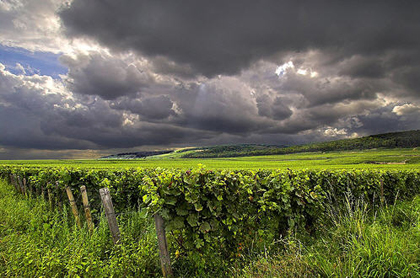
How will vintage 2007 turn out in France where it rained much of the summer? A few weeks ago, I posted a comment that someone in the trade in France told me: “We’ll see who are the real biodynamic producers this year. If they’re really biodynamic, this year they won’t have any wine.”

With a rebuttal today, via email from the Coulée de Serrant in Savennieres in Loire, we have Nicolas Joly. He is a leading practitioner of biodynamics and wrote the book “From Sky to Earth” to help vignerons around the world in their conversion to biodynamics. I say vignerons and not “winemakers” because his business card reads “Nicolas Joly, Gérant de la Société, Nature assistant and not a winemaker.” To his email:

All serious biodynamists had no problems with disease! I lost maybe 1% of the crop. There were as many people caught on the conventional side as on the organic/biodynamic side. Any serious person will confirm this. Those who were caught were those who have not much experience with mildew-rare though they are. Mildew’s development is a very fast–one or two days as opposed to a month for oidium–so you need to react very fast reaction. It’s simple: treat after the rain with very small doses of copper each time. We used around 5.5 to 6 kg of cooper per hectare this year, about 50% more than last years. We had the strongest pressure for 20 years.The 501 BD treatment was also very efficient. The negative statements come from people who either have no understanding of BD or who want to justified the fact that they did not move toward a better farming.

I have a new book coming in the US soon for consumers (it just came out in French ) and will be available in Italian, Portuguese and Spanish soon.

On February 9th and 11th part of the group “Return to Terroir” will be in Montreal and Toronto [for a tasting of biodynamic wines].

(image, with permission)

Bobby Kacher pulls a Gascon rabbit out of his hat

As the dollar falls further, wine importers have to dig deeper for values from the eurozone. For some consumers, that means: goodbye Burgundy, hello…Gascony?

At a media event last week, I tasted the excellent value white wines from Tariquet (priced $8 – $15) that well-known francophile Bobby Kacher is now importing. On the whole, they are rare steals in a world of more expensive wines. When I asked him how he found such good values, Kacher told me “We’re old. Money isn’t everything.” If he weren’t running his business as charity for frugal enophiles, I’d have said that he must be a magician to find values today–and he’d probably pair Sauvignon Blanc with the rabbit he pulled out of his metaphorical hat.
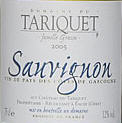
Look for the “Classic,” the Sauvignon Blanc and the Côté Tariquet, a late-ish harvest wine. Yves Grassa, the head of Tariquet (and Domaine de Pouy, another Kacher value) cut yields, and harvests them directly into mobile cooling units so that he doesn’t need to add sulfur to prevent fermentation from starting in the vineyard.

In a celebration of all things Gascon (complete with grumbling about the rugby), Ariane Daugin of D’Artagnan was there and we sampled some of the company’s fine meats. Fortunately I brought my Rapid Review (TM) software with and could generate these nuggets for you: Read more…

Poll: judge these books by their covers!

Book authors may not always envision their book covers the same way the publisher’s graphics team sees them. Sometimes a manuscript that the author has spent hundreds of hours on can be diluted by slap-dash cover art. And sometimes the graphic designer really “gets” the book and the image is good for a thousand words–or more!–of the book.

Here are some notable wine books and/or covers from 2007. Hopefully, we’ll judge them by more than just their covers soon. Check them out–then vote for the best cover art, after the jump! (And if you think they’re all “ick,” feel free to say that too.) Read more…

Impossible food wine pairings: breakfast burrito!

bigburrito.jpg
OK people. It’s Saturday morning. If you’re thinking about wine at all, it’s probably for tonight’s blowout dinner with friends. But before that, there’s brunch to consider.

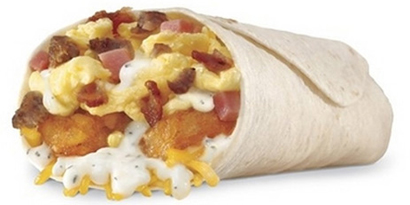
And what better than the new breakfast burrito bomb from Hardee’s! Let’s cut to the AP for the description:

two egg omelets filled with bacon, sausage, diced ham, cheddar cheese, hash browns and sausage gravy, all wrapped inside a flour tortilla. The burrito contains 920 calories and 60 grams of fat.

Now is that an IMPOSSIBLE wine pairing or what?!? Talk about a power breakfast. Don’t get faked out by the sheer quantity–just keep your eye on the components. Comments are open for your suggestions.

Hardee’s item via The Consumerist.

The Gourmet Institute: your thoughts for the wine & food blogging panel

On Saturday, I’ll be joining a panel called “Eat the Web: Blogging’s Effect on the Food World” at the Gourmet Institute. The moderator is Ruth Reichl, editor of Gourmet, and Ben Leventhal of Eater.com, Ed Levine of SeriousEats.com, and Ganda Suthivarakom of EatDrinkOneWoman.com will also be on the panel.

Since not everyone will be in New York on Saturday and even those in the city may not be able to attend, I thought I would ask you: if you were in the audience which subjects would you most like to hear discussed? The existential question of what is a blog? (zzzz) How blogging is revolutionizing journalism, food, wine and the world (or is it)? Just how much influence does blogs have and how can that influence be measured? Do journalists make good bloggers when their editors tell them to blog and they don’t get any extra pay? The ethics of blogging?

This last point was the subject of a recent WSJ article that accused some food bloggers of accepting free meals and “graft.” Some of the online forums may be indeed be very susceptible to manipulation–but bloggers? A point for discussion indeed. NY Mag’s Grub Street, one of the best mag-a-blogs out there thanks to its torrid pace of updates and punchy prose (though boo hoo it doesn’t take comments or have a blogroll), rode to the defense of food bloggers.

Beyond these questions, one thing of interest to me is why food and wine blogs often seem to operate in separate spheres. Yes, more people eat food than drink wine. But I post frequently about foods that go with recommended wines because–gasp!!–I think wine is best enjoyed with food! (and friends, but I’ll save that for another time). I’ll ask the food bloggers about this separation or even neglect of wine from their end. But we’ll have to see how much we can cram into the allotted hour…

Paris wine shops, a map!

parisshops.jpg

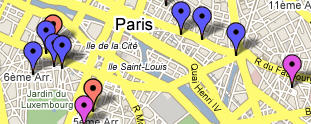
Are you in Paris today during the 24-hr public sector strike and wondering what to do? Why, set up a wine-drenched itinerary of local wine shops! Check out my brand new map of Paris wine stores–and wine bars that sell wines to go!

I give you the scoop on over 40 places including my faves, ranging from neighborhood places to super-luxury stops. If you’re a local looking for “natural” wines or a tourist looking for wines you can’t find at home, click through to start setting up your own itinerary for your next visit!

Paris wine shops, a map

Is one of yours not on the map? Drop me a line with the address and why you think it should be included.

Related: Bringing wine back with you from France
Paris/France wine round-up
All posts in French wine
The map room


winepoliticsamz

Wine Maps


Monthly Archives

Categories


Blog posts via email

@drvino on Instagram

@drvino on Twitter


winesearcher

quotes

One of the “fresh voices taking wine journalism in new and important directions.” -World of Fine Wine

“His reporting over the past six months has had seismic consequences, which is a hell of an accomplishment for a blog.” -Forbes.com

"News of such activities, reported last month on a wine blog called Dr. Vino, have captivated wine enthusiasts and triggered a fierce online debate…" The Wall Street Journal

"...well-written, well-researched, calm and, dare we use the word, sober." -Dorothy Gaiter & John Brecher, WSJ

jbf07James Beard Foundation awards

Saveur, best drinks blog, finalist 2012.

Winner, Best Wine Blog

One of the "seven best wine blogs." Food & Wine,

One of the three best wine blogs, Fast Company

See more media...

ayow150buy

Wine books on Amazon: