Red, white and blue wine: a wine lover’s guide to the presidential primaries

With the Iowa caucuses (finally!) happening tonight, we need a wine lover’s guide to the presidential election.

Mitt Romney: According to the NYT, he is so “vigilant about nutrition” (read: boring!) that he eats the same meals every day. Anathema to the wine lover! Added bonus: teetotaler. No love from wine geeks.

Mike Huckabee: He’s reputedly a charmer, plays guitar, knows (or knew) how to eat, and jogs every morning. But he’s also a southern Baptist minister, so he doesn’t dance and is a teetotaler. So close, yet so far. Wine pick: “Fre,” a de-alcoholized wine.
giuliani.jpgRudy Giuliani: Rudy used to like Long Island merlot but 9/11 changed everything. Now he’ll drink whatever is local, as long as it is American.

John McCain: He used to be more of a loose cannon eight years ago. Now, the fire in the belly appears as mere embers. His wine is a 10 year old Turley Zinfandel, fiery in it’s youth, now sadly without vigor.

obamaclinton.jpgBarack Obama: This man has got style. Heck, one commentator even said he was the “wine track” candidate some time back. So he’s our man for the White House. He’s also quite a blend himself, born in Hawaii to a mother from Kansas and a father from Kenya and lived early on in Indonesia. This eloquent American blend could be none other than one of the finest wines in America, with structure and spice: Ridge Monte Bello.

Hillary Rodham Clinton: We know Hillary hearts New York but is she cold as ice? Wine pick: Standing Stone, Vidal, ice wine 2005, Finger Lakes.

John Edwards: he’s made it far on his “two Americas” theme. We know what that means–beer America and wine America. We’ll split the difference and put him down for a Franzia box wine.

The wild cards
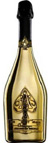
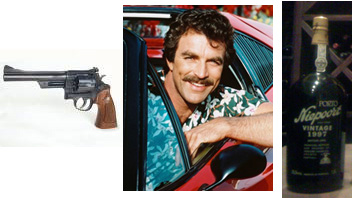
goldbottle.jpgRon Paul: this guy may be crazy–he wants to eliminate the IRS, the Federal Reserve and a host of government departments and restore the gold standard–but if he is, then he is rich and crazy thanks to his $19 million in fund raising last quarter. Wine pick: Armand de Birgnac, Ace of Spades, “gold bottle,” non-vintage Champagne $300.

Fred Thompson: This Tennessean seems like a natural fit for Bourbon. No love from wine geeks.

kucinichwife.jpgDennis Kucinich: Given his hhhhot young wife (born 1977), he clearly likes youthful reds. We’ll put him down for a California Pinot, most recent vintage available.

Christopher Dodd: His move to Iowa in a desperate attempt to score fourth place makes him seem pandering. And nothing tries harder to be a crowd-pleaser yet fails to inspire more than Merlot.

Bill Richardson: He’s big and he claims to have the most foreign policy experience. Wine pick: the brawny 2004 Numanthia from Spain.

Related: “Bush-Kerry 2004: an election guide for wine lovers

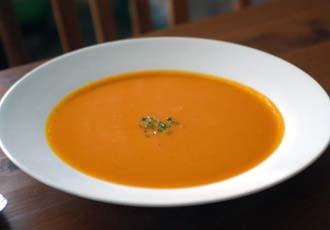
Impossible food wine pairings: butternut squash soup!

butternutsquashsoup.jpg

It’s really more of an autumnal dish but, hey, a reader just sent in this query: which wine would you pair with butternut squash soup? Post your thoughts in the comments below!

I like the soup to have the zip of ginger but yours can be as you like it. Michael Ruhlman would now doubt tell us it’s all about the stock used anyway.

Where in the wine world are we? Ancient edition

mystery0102.gif

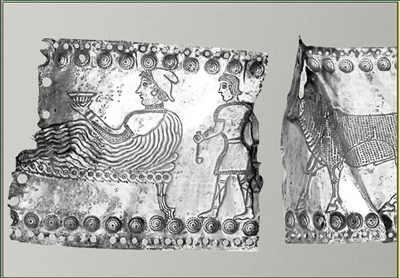
This ancient land was known for precious metals and wine–a fine pairing for any society! If we were teleported there right now, we could try wine from gold or silver vessels while wearing gold-spangled robes. And you thought wine and bling was sooo 2007!

In fact, some residents were so rich that they were buried with their gold wine service. And some were so kinky as to be buried with their servants or horses. But that doesn’t concern us.

Get a load of that silver cummerbund thing above! The scene depicts some grand poobah, complete with five o’clock shadow, getting served wine. Peeled grapes coming up next, no doubt.

Archaeologists have also unearthed a shrine to the god of wine complete with a large, ornate bronze cauldron presumably filled with the fruits of the vine.

Where was this ancient land? And why is it timely now? Win our respect and admiration–and a link back to your site if you have one–by being the first with a correct answer in the comments below.

UPDATE: We have a winner–in record time! Read more…

In the New York Times with a suggestion to “drink local”

greenwine.gifWelcome readers of the New York Times who saw my op-ed today. If you’re looking for some bullet points and discussion of my research with Pablo Paster on wine’s carbon footprint, check here. Consider subscribing to the site feed or the monthly email updates on the right sidebar.

If you’re a regular reader and wondering what I’m talking about, surf on over to the NYT where you can check out my op-ed in today’s paper. I suggest drinking local this New Year’s Eve if you are making it a resolution to turn a new, greener leaf in 2008. Local wines have a small carbon footprint because of minimal transportation, which is carbon intensive. And, heck, locavore is the word of the year according to the Oxford English Dictionary, so it’s trendy too!

Be sure to check out my maps of NYC wine shops and NYC wine bars if you’d like info on where to find local wines in the city. If you’re looking to find the Lieb blanc de blancs, click here to find it at stores.

But since it is a big bar night, a few places specialize in local fruits of the vine. The two branches of Vintage New York pour exclusively the wines of New York. Borough Food & Drink, which opened this past summer at 12 E. 22nd St., highlights–you guessed it–food and drink from the Empire State and has about 40 NY wines on its list. Home Restaurant (20 Cornelia St.) is a cozy West Village restaurant focusing on local food and wine and is owned by the couple that owns Shinn Estate Vineyards. The wine list has 30 selections from New York State, including two sparklers.

If you have some favorite places for finding local wines in the City or are a big fan of a certain local winery, feel free to hit the comments. And whatever it is you raise in your glass tomorrow night, may it be a happy new year!

Tasting sized pours – all Champagne edition!

champers.jpg
Growing pains?
Elaine Sciolino, an NYT France correspondent, ventures to Champagne. As demand for Champagne rises, she examines the fascinating politics of expanding the boundaries of the growing region–is it a boondoggle or a necessity? [NYT] Peter Liem of Wine & Spirits also addressed this question on this blog in September.

Small is beautiful
A Business section story tracks the “grower Champagne” trend, with picks. [NYT]

Big is beautiful
Mike Steinberger, who wrote about grower Champagnes several years ago, now rides to the defense of the big houses and their entry level, nonvintage blends. Shocking! Fortunately the world is still on its axis since he spanks Moët White Star rightfully calling it “execrably sweet, with a confected, cloying taste that made me want to run for my toothbrush.” [Slate]

Old is beautiful
Mike Steinberger fires off another piece this time observing the trend toward buying 30+ year old Champagne at auction. Paradoxically, buyers not much older than the bottles themselves seem to be the source of much of the demand. [Portfolio]

Champ-Angleterre?
Are Champagne houses really contemplating a move to England? Maybe the world IS spinning off its axis?! [Telegraph]

Budget bubbles
Executive Pursuits columnist Henry Hurt III fears a decline in his purchasing power next year. So he had a couple of friends over and poured them nine bubblies blind to see if he could get away with pouring sparkling wine instead of Champagne. They trash the, ahem, grande dame, and praise the lowly Boyer brut, a $9.95 sparkling Burgundy (find this wine). Booyah, Boyer! Happy new year, indeed! [NYT]

(image)

Dr. Vino goes bicoastal! Classes in SF and NYC

Buckle your seat belts for more wine classes in 2008! And should I tell you to stow you tray table and bring the back of your seat to a full and upright position?

Well, you might not have to get on a plane, but I do. On February 23, I’ll be offering a seminar at UC Berkeley. It’s a non-degree, non-credit (too bad!) program and all are welcome to enroll. Over four hours, we’ll swirl, sniff and discuss the topic of just how natural wine is in a seminar entitled “Red, White and Green wine: can you taste the difference?” We will blind taste several pairs of wines, comparing organic and conventional and see if you can taste the difference (no advance knowledge of wine appreciation is necessary). Saturday, February 23, 1:00 – 5:00 PM. Further details and registration now online. I hope to see you there! I hasten to point out that this same class is 25% less expensive than when I offered a similar course at the University of Chicago last spring–a rare discount in California?!

Registration is also open for my next six week class at NYU, Becoming a Wine Expert. This course has enrollment limited to 25 because of venue size–the wood-paneled Torch Club. Last time the wait list was 75, most of whom were probably trying to get into Richard Brown’s Movies 101 course but clicked the wrong box or something. Feb 27 – April 9 Details and registration.

And look for more one-session classes in 2008!

Where in the wine world are we: Christmas edition!

mystery1221.jpg

Time for a holiday edition of where in the wine world are we?! Although no vines are in this shot, it is in the heart of a wine region. And one where they know how to celebrate Christmas in style, as you can see.

Win our admiration and respect with a correct guess in the comments below!

UPDATE 12/26 with location revealed!: Read more…

Give the gift of big, green wine

magnumswine.jpg

Last year at this time, I wrote a post called “Give the gift of big red,” which suggested giving wines big in flavor profile and in heavy bottles. However, since my research into the carbon footprint of wine, I’m reformed. Now I know that magnums (1.5 liters) produce less carbon dioxide emissions per ounce of wine than regular bottles because of the more favorable wine-to-glass ratio.

So this year, here’s a list of impressive magnums that will impress your friends and relatives–and even with the bigger bottle, they’ve got a smaller carbon footprint. Providing they drink it all, of course.

While there are many magnums that are ridiculously priced since they are a favorite of collectors, these are in the realm of reasonable, under $100. All prices are for magnums.

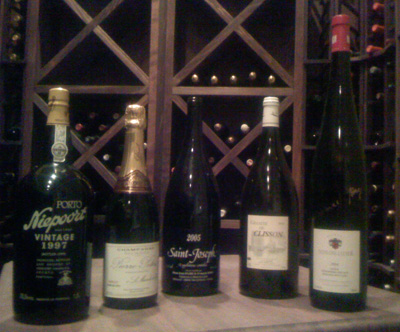
Pierre Peters champagne, $90 (find this wine). This champagne is a “grower champagne,” made by the people who grew the grapes (unlike the big houses who buy grapes from the 10,000 growers in the region). It’s from Mesnil, the home to big names such as Krug and Salon, so the vineyard site is excellent. So is the resulting Champange, a blanc de blancs, which I have served many times this year to guests and once from magnum to a class. Great bling at a fraction of bling price! Magnums are particularly good for aging so feel free to keep it for a few years.

Pepiere, “Granite de Clisson,” Muscadet 2005, $40 (find this wine). This producer is a leading quality in the area where the Loire river meets the sea. The wine is his richest and smoothest thanks to two years of aging but it still has good, zippy acidity to compliment seafood such as oysters. It’s also a doubly green wine because the grapes are hand harvested from an organic vineyard.

Schloss Lieser, Riesling Spatlese, Mosel, 2004, $68 (find this wine). I stumbled on this bottle in a wine shop and couldn’t resist it. The Riesling magnum is long and fluted and towers above other magnums. I served it at a party last weekend and the crowd loved it and had fun pouring from such a long neck. The wine has a whiff of flintiness on the nose but had a beautiful balance of light sweetness and acidity on the palate.

Dard & Ribo, Saint-Joseph, 2005, $68 (find this wine). I almost didn’t get a chance to taste this wine because I served it at a party and the revelers almost finished it off before I got to it. But fortunately I did since the wine inside the magnum is terrific with a great balance of red berry fruit, tannin and acidity. This is also a “double green” wine since it is totally natural and this producer is a staple in the trendy natural wine bars of Paris. It makes an especially good gift for someone named Joseph as I found out at the party where a friend named Joe tried to run away with the bottle.

Niepoort, 1997 vintage port, $65 (find this wine). Vintage port is generally very expensive with recent vintages pushing $100 a bottle. Magnums, however, get a significant discount presumably because nobody can drink that much sweet wine in one sitting. Tip: have a party and serve it at the end with some Stilton and it will be an amazing farewell. Another tip: drink as much as you are able and decant it into a regular sized bottle and recork where it will stay good for a good while longer. Whatever you do with it, the stout bottle is an impressive gift.

Choose your Christmas magnum wisely.

magnummontage.jpg


winepoliticsamz

Wine Maps


Monthly Archives

Categories


Blog posts via email

@drvino on Instagram

@drvino on Twitter


winesearcher

quotes

One of the “fresh voices taking wine journalism in new and important directions.” -World of Fine Wine

“His reporting over the past six months has had seismic consequences, which is a hell of an accomplishment for a blog.” -Forbes.com

"News of such activities, reported last month on a wine blog called Dr. Vino, have captivated wine enthusiasts and triggered a fierce online debate…" The Wall Street Journal

"...well-written, well-researched, calm and, dare we use the word, sober." -Dorothy Gaiter & John Brecher, WSJ

jbf07James Beard Foundation awards

Saveur, best drinks blog, finalist 2012.

Winner, Best Wine Blog

One of the "seven best wine blogs." Food & Wine,

One of the three best wine blogs, Fast Company

See more media...

ayow150buy

Wine books on Amazon: