Dr Vino's wine blog
wine talk that goes down easy
Christmas smoking Bishop
 The Ghost of my Christmas Past is wassail. A warm drink of mulled red wine, with some juice, warm beer, and who knows what else from the spice cabinet tossed in, it’s the sort of drink that dampens the Christmas spirit as you have to struggle to make it through one cup.
But I like the idea of a warm punch on a wintry day. This year, I’ll relieve my parents of the years of wassail duty and introduce a new drink for my extended family, one that actually sounds delicious: Christmas smoking Bishop.
The drink dates to 18th century London and featured at as a crucial symbol in A Christmas Carol. When Scrooge was transformed for the good, the final act of his redemption was to take his ladle in hand and offer up some of the Bishop.
According to the recipe in How’s Your Drink, by Eric Felten, you’ll need a good bottle of ruby port, two lemons, cloves, and some mulling spices. Stud the lemons with the cloves and roast them whole in the oven until they are browned. Then slice them in half and put them in a half pint of water with the mulling spices and reduce half way. Add the port and steep for an hour just below simmer. Add sugar at your discretion.
Traditionally, the punch bowl was set alight but Felten writes that “port catches fire about as easily as soggy kindling…I say put away the matches and grab the ladle.”
Sounds like good advice to me.
On a related note, Saul M, Mark Marino and SPAZZNiBLET were chosen at random as winners in the How’s Your Drink giveaway.
Dec
17
2007
2
Tasting the tops: prestige cuvee Champagne with E Diddy
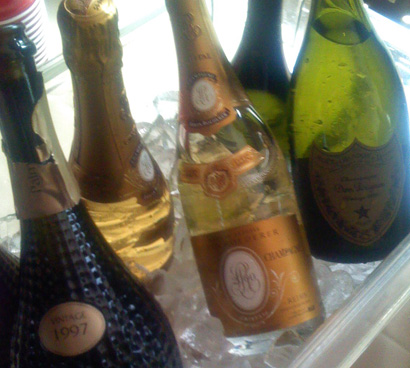
Yesterday I went to one of those lunches that comes around, oh, never. So much fine Champagne is rarely found outside the penthouse jacuzzi of a hip hop mogul.
 It was the December lunch of the Wine Media Guild with a theme of prestige cuvées. You got it–Krug, Dom Pérignon, Cristal and 20 other top wines from top houses. Leading us in the packed-house tasting was WMG member Ed McCarthy, photographed at right, author of Champagne for Dummies. I felt like calling him E Diddy with so many bling bubbles around him.
I’m not going to do a run-down of all the wines but here are some of my takeaways. Read more…
Dec
13
2007
Traveling with wine puzzle revealed! Mark Ashley of Upgrade: Travel Better

Last week I posted a wine travel puzzle: despite the FAA liquid ban, how could you actually bring a bottle of wine onto a commercial flight in the US?
With the ins and outs, please welcome friend of the blog, Mark Ashley, proprietor of the excellent travel blog Upgrade: Travel Better. Read more…
Dec
10
2007
Say yay for Aligoté! WBW 39
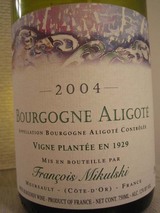 When the dollar heads south, so do Burgundy fans. Neil has organized us to head south to the Côte Chalonnaise or the Mâconnais, which he politely calls “silver Burgundy,†for this Wine Blogging Wednesday.
That gave me a chance to try the excellent Domaine Francois Mikulski Aligoté 2005 (about $17, find this wine). This grape, Chardonnay’s poor cousin in the area, has traditionally had crème de cassis dumped all over it in the regional aperitif, Kir (but hey, its not such a bad fate since the Kir Royale reserves that place for Champagne.)
This Aligote has an extremely alluring flavor profile that resembles a cross between the zip of sauvignon blanc and the stony minerality of a Chablis. I poured it for one of my classes at NYU and people were flipping for it. I think sales of Aligoté just tripled.
BREAKING: Turns out that this Mikulski Bourgogne Aligoté is from Meursault in the Cotes de Beaune. Oops! Well, it is still “silver” insofar as it is not Chardonnay. If Neil is being literal, then I recently enjoyed the Génot-Boulanger 2005 Mercurey 1er Cru Les Saumonts (find this wine) for $23. It had pretty red berry fruit with good acidity and a dollop of Burgundian terroir. A good way to play the ridiculously priced 2005 vintage in Burgundy.
Nov
15
2007
Previewing my thanksgiving wines 2007
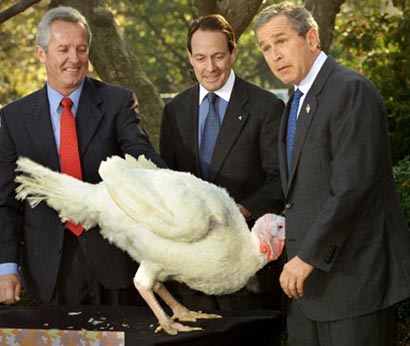
Every Thanksgiving has a challenge for the wine geek. Usually it is those dastardly side dishes like sweet potato with marshmallow and the cranberry sauce.
In my case this year, I’m adding the attendees and a budget to increase the degree of difficulty to Olympian proportions.
We’ll be heading to a family reunion with over a couple of dozen relatives, some distant cousins that I’ve never met. In fact, although we’ll be gathering in western Massachusetts, I’m not even sure where they all live–I know California (northern and southern), Minnesota, Chicago, Washington DC, and I think even Texas! I know some people are into wine but others might not really be that into it. I volunteered to coordinate the wines and was given a budget of about $15 a bottle ($400 for two dinners, one Wednesday and one Thursday).
So, what did I do? I called Chambers Street Wines in Tribeca and spoke with one of the owners, Jamie Wolff. Here’s what we cobbled together:
Bisol 2005 Prosecco di Valdobbiadene Crede Brut, $15 (find this wine)
Bubbles are always good, but they are expensive. This is a dry prosecco that I’ve poured at my classes before and people have liked. I figure I’m safe here.
Ferrara, Benito 2006 Greco Di Tufo, $19.99 (find this wine)
Jamie’s pick. Although I’ve previously enjoyed Greco di Tufo, a grape from the south of Italy that can make surprisingly full-bodied, dry whites with no oak, I’ve never had this particular one.
Erben, J. Geil 2006 Rheinhessen Bechtheimer Roseng Riesling Kabinett $13.99 (find this wine)
I wanted something off-dry and this is what Jamie recommended. He said it is a great Riesling, the kind that wine newbies will love and people who say “I don’t like Riesling” will want a second glass–providing I don’t tell them what it is ahead of time.
Hureau 2005 Saumur-Champigny Grande Cuvée $13.99 (find this wine)
I really wanted to include either a Loire red or a cru Beaujolais in the lineup. Jamie recommended this one, which I had heard was great too. Add to cart.
Richaud, 2005 Cotes du Rhone $18 (find this wine)
I wanted two full-bodied red wines. I don’t think that they go particularly well with the foods on offer for thanksgiving but many people–particularly men of a certain age–seem to love big reds. As Chambers doesn’t stock many American wines, I opted for a Rhone and a Bordeaux. I haven’t tried this one but Jamie recommended it. It’s a current staple in Parisian bistrots.
Peybonhomme 2005 Côte de Blaye Cru Bourgeois $12.49 (find this wine)
Cote de Blaye–ever heard of it? Exactly. This is a big, tannic Bordeaux that I poured at a class recently to the delight of many. Although it’s mostly Merlot, this one would even keep the interest of any “Miles” characters in the group. It’s organic too for any Slow Food types.
Total: 4 bottles of each, $382 including tax and a 10% case discount. My tasting notes to follow in the last week of November! What are your constraints (if any) and plans (if any) for your Thanksgiving day feast?
Nov
5
2007
Music, oak chips, tickers, three tiers – sipped and spit
SIPPED: Mozart and Merlot!
Clark Smith, wine industry revolutionary, insists that they music playing can affect your evaluation of a wine. I demand that the Wine Advocate and Wine Spectator release their playlists along with scores!! [SF Chron]
SIPPED: NASDAQ move over, here comes Sotheby’s!? 
The auction house announces a real-time ticker for wine auction prices. But will the data be archived, free and searchable?
SPIT: oak barrels
More California winemakers are using oak alternatives, such as oak staves (planks) and chips. Derrick Schneider goes inside the barrel–er, bag o’ chips. [SF Chron]
SIPPED: Crossover wines
Rob Kasper emailed me about wines that go both ways. That sure got my attention. Then I realized he was talking about food-friendly wines. I make some picks for wines that go will with fish and meat and can keep a table happy. [Baltimore Sun]
SPIT: the three tier system
Tom Wark has started a new blog for the Specialty Wine Retailers Association. He’s no fan of the legally mandated three tier system, which all too frequently limits consumer wine choices, raises prices, and, of course, prevents the specialty retailers from expanding their business. Good message, Tom, but please ditch the black background behind the white text! [Wine without borders]
SPIT: Apfelwein
New EU laws may restrict “wine” to only coming from grapes. Auf wiedersehen, apple wine? “We will not allow our traditional name to be sacrificed to regulatory madness in Brussels,” says the Hesse state governor. [IHT]
Nov
2
2007
Bobby Kacher pulls a Gascon rabbit out of his hat
As the dollar falls further, wine importers have to dig deeper for values from the eurozone. For some consumers, that means: goodbye Burgundy, hello…Gascony?
At a media event last week, I tasted the excellent value white wines from Tariquet (priced $8 – $15) that well-known francophile Bobby Kacher is now importing. On the whole, they are rare steals in a world of more expensive wines. When I asked him how he found such good values, Kacher told me “We’re old. Money isn’t everything.” If he weren’t running his business as charity for frugal enophiles, I’d have said that he must be a magician to find values today–and he’d probably pair Sauvignon Blanc with the rabbit he pulled out of his metaphorical hat.
 Look for the “Classic,” the Sauvignon Blanc and the Côté Tariquet, a late-ish harvest wine. Yves Grassa, the head of Tariquet (and Domaine de Pouy, another Kacher value) cut yields, and harvests them directly into mobile cooling units so that he doesn’t need to add sulfur to prevent fermentation from starting in the vineyard.
In a celebration of all things Gascon (complete with grumbling about the rugby), Ariane Daugin of D’Artagnan was there and we sampled some of the company’s fine meats. Fortunately I brought my Rapid Review (TM) software with and could generate these nuggets for you: Read more…
Oct
23
2007
Grenache, the ultimate back-up player, breaks out
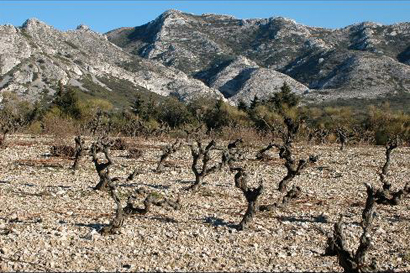
In the chorus of Rhone varieties, Grenache rarely gets to perform solo. But at the most recent lunch for the Wine Media Guild in New York City, we put it on a stage all alone with twenty five examples of the grape from five countries.
Which is the most planted red grape variety in the world? According to our speaker and grenache-o-phile, Jean-Francois Ey, it’s grenache. The grape often appeals to winegrowers because of it’s workhorse-like productivity in early years of the life of the vine. But it may appeal to consumers, particularly as the vine ages, because of wines light in tannin that can have a faint sweetness and high degree of alcohol. Even though the day of our tasting was still warm, it strikes me now as an excellent transitional red as the weather has cooled.
Our tasting consisted exclusively of old-vine grenache. “Old vine” appears to be the wine label term du jour and producers toss it around–like “reserve”–with so little regulation. Jean-Francois, 30, imports several wines from Roussillon under the Ey Vineyards label and put the question of age into perspective for Grenache. In the Mediterranean climate (with no irrigation or fertilizer), the vines take five years just to get going. Then they have 25 bountiful years with abundant yields. But as the vines age, he said, they yields become so miserly that one vine produces enough fruit for just one bottle of wine. At 30-35 years of age, a producer can make good money but after 50 years, they will make good quality he said.
Turning to the wines, we had two white grenache, one rose, several 100% red grenache and some blends, and finally a Banyuls sweet wine. Read more…
Oct
16
2007

Wine Maps
Monthly Archives
Blogroll
Categories
- American wine
- announcements
- Argentine wine
- auctions
- Australian wine
- Beer
- best wines
- Bling
- books
- Bordeaux
- bottled water
- Box wine
- Burgundy
- business of wine
- Celebrity wine
- Champagne
- Chicago
- China
- cocktails
- cognac
- corks
- corkscrews
- dining
- eco wine
- events
- foie gras
- food and wine
- French wine
- German wine
- giveaway
- grapes
- green wine
- guest post
- highlights
- how to
- Italian wine
- leaders and liters
- Mature wine
- meetups
- New York City
- On notice!
- photo captions
- podcasts
- Polls
- Port
- Portuguese wine
- power list
- reader mail
- rose
- sake
- Sommeliers
- South Africa
- Spanish wine
- spirits
- tasting sized pours
- The real wine world
- TV and movies
- Uncategorized
- videos
- vinexpo
- Weather
- wine and health
- wine and sports
- wine and tech
- Wine Blogging Wednesday
- wine blogs
- wine classes
- wine collecting
- wine gifts
- wine in india
- wine labels
- wine picks
- wine politics
- wine quizzes
- wine random
- wine science
- wine scores
- wine shops
- wine technology
- wine travel
- Wine under $10
- wine writing
- winemaking
- winespeak
 Blog posts via email
@drvino on Instagram
@drvino on Twitter
Advertise

quotes
One of the “fresh voices taking wine journalism in new and important directions.” -World of Fine Wine
“His reporting over the past six months has had seismic consequences, which is a hell of an accomplishment for a blog.” -Forbes.com
"News of such activities, reported last month on a wine blog called Dr. Vino, have captivated wine enthusiasts and triggered a fierce online debate…" The Wall Street Journal
"...well-written, well-researched, calm and, dare we use the word, sober." -Dorothy Gaiter & John Brecher, WSJ

Saveur, best drinks blog, finalist 2012.
One of the "seven best wine blogs." Food & Wine,
One of the three best wine blogs, Fast Company
Books for wine geeks

Wine books on Amazon: