Dr Vino's wine blog
wine talk that goes down easy
Decanting the critic: Tasting with Dr. Jay Miller, the right hand of Robert Parker
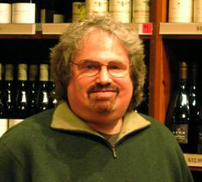 We all know that Robert Parker’s The Wine Advocate essentially sets the market for wine. But how do the critics there taste the wines that they will make or break with their ratings?
Last week I had the chance to taste with Jay Miller, Ph.D., whose duties include vast swathes of the wine world ranging from Australasia to Iberia to the Pacific Northwest. I met with him to taste wines of Argentina. Dr. Jay and Dr. Vino, mano a mano. Or at least Riedel a Riedel.
I didn’t have to travel to Monkton, Maryland. The setting was actually the Argentine Consulate in midtown Manhattan. I walked into the palatial room, which must have been 40 x 25 w 12 ft ceilings, complete with friezes. On one side, Jay Miller was seated at a table with two settings. On the other side were hundreds of wine bottles, even more hundreds of Riedel glasses, and a small flock of people to pour. Read more…
May
21
2007
23
Wine market zooms, blogger buyout, NYC BYOB, and points mania — tasting sized pours
Liquid assets
“I’d bought the wine before it was even bottled, as futures, for $350, and I unloaded it for enough money to purchase a car.” Elin McCoy on her 1982 Chateau Lafleur in a piece on the wine market today. The bluest blue chip? Lafite. But could a correction be coming? [Bloomberg]
Blog buyout
Gary Vaynerchuck, video blogger and owner of the store Wine Library in Springfield, NJ buys out the social networking site, Cork’d. I wonder what Dan and Dan are uncorking tonight? [via Lenndevours]
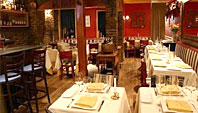 BYOB in NYC
NY mag has a list of six BYOBs with decent wine shops conveniently located around the corner. [NY mag]
Crank it up to 11
“Another barroom brawl on the BB…hey, is that what BB really stands for?” -Commenter in the fray about point inflation over on eBob. Keep scrolling (post 242) to when Mark Squires compares Parker to Galileo! [eBob]
Related: “Lake Wobegon wines” [Dr. V]
Map of New York City wine shops [Dr. V]
May
16
2007
Critiquing the critics
On Saturday at the University of Chicago, we had a fun time “critiquing the critics.” We discussed what is certainly one of the hottest hot-button issues in wine, the use of scores, and assessed a variety of other ways for evaluating wine. We tasted our way through ten wines and munched through some artisanal cheeses and breads.
The wines were from a range of styles and included bubbly, red and white. Some of the faves were:
* Bisol prosecco, NV (about $13; find this wine). Controversy came with this wine with high praise from Wine & Spirits (93 points) and faint praise wine Wine Spec (86 points). The yummy sparkler got a thumbs up from the group.
* William Fevre, Vaudesir, Grand Cru Chablis, 2004 (about $45; find this wine). I didn’t even realize that Rovani/Parker tasted Chablis but Rovani slapped a 93 on this one. ‘Tis good. Wonderful minerality with delicate acidity, which makes for a very nice mouthfeel and it has an excellent finish. No unanimity on this wine to be sure, with others preferring the American chardonnay, but I thought it was excellent, if pricey.
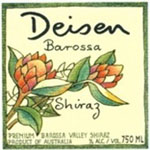 * Deisen, shiraz, Barossa, 2002 (about $50; find this wine). A brawny shiraz from down under with 15% alcohol. Parker 94. The class loved it with no dissenters. While the wine is very user friendly as far as shiraz-ma-taz is concerned, I found the alcohol to be somewhat off-putting.
* Castano, Hecula, monastrell, 2004. (about $10; find this wine). This is a darned good value vino since many participants thought it was at least $30. It’s got hints of that mourvedre gamey-ness and I think it could do with a few years in the cellar to tame it a bit. But still, it’s vigor would be great with game or grilled meats.
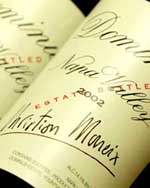 * Dominus, Napa, 2003 (about $100; find this wine) This was the most critically contested wine of the day with a huge spread between Parker’s 95 and the Wine Spec’s Jim Laube zinging it with an 81 (a score so low that the Wine Advocate would not even publish it). Laube didn’t even grumble about TCA, the usual cause of his zingers, simply going with the “disappointingly dry and austere.” I poured it blind and there were lots of pros and only two cons before I revealed the “controversy.”
It was a hedonistic afternoon. If you’re interested, there may be a couple of spaces left for my next class in May. Hope to see you there!
Apr
17
2007
Lake Wobegon wines
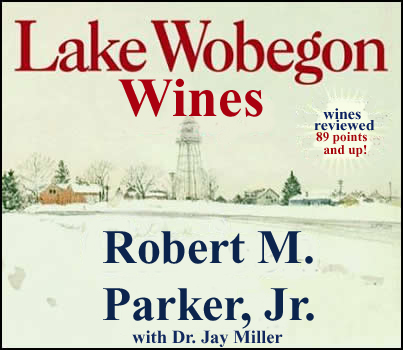
In the pages of BusinessWeek, Robert Parker calls some under $20 wines from Gallo, Beringer, and Kendall Jackson “very good” to “excellent.”
Meanwhile, in the main arena of the Parker Empire, the Wine Advocate, his new hire Dr. Jay Miller handed out high scores like candy–including five 100-point scores–to Spanish wines.
Is Robert Parker’s world turning into an enological equivalent of Lake Wobegon where all the wines are above average?
Mar
5
2007
Pointless
Points: they’re possibly the most polarizing thing about wine. While many critics use the 100 point scale and many shops sell wines with flaps of paper touting the point scores, there is a backlash against points. A growing number of retailers favor staff-written “shelf-talkers” and many wine reviewing web sites–including this one–don’t use point scores in reviewing wines choosing instead the old-fashioned form of communication known as words.
While I understand what makes points popular and have to a certain extent made my peace with them, I still find them to impart a false sense of precision and objectivity while totally neglect the consuming context (e.g. “does this wine go with a my grilled asparagus?”). Moreover, once everyone starts rating wines out of 100, whom do you believe when two reviewers give the same wine different scores? I just found something that makes me want to reach for the dump bucket: Justwinepoints.com.
This apparently new web site only gives wines a point score out of 100. No words. No mention of who is the taster handing out the points. Just wine points because as their tag line reads, “because nothing else matters.” And, oh, they don’t mind sticking the producer for “added value” by charging to have a label image next to their points.
Surely this is so new and so decontextualized that nobody will care, right? Wrong. I just got an email blast from Sam’s Wine in Chicago (map it) touting the introductory vintage of a $15 sauvignon blanc from New Zealand. They turn to justwinepoints.com for the score: 99 points. But they had to add the words “lovely, rich and crisp.”
Let me give justwinepoints a review they’ll understand: 62. And the only reason that’s above failing is so that they don’t came and see me during office hours.
Related: “Are wine ratings running out of gas?” [NYT]
 tags: wine | wine scores
Feb
27
2007
What’s the point?
One recent afternoon I tasted with a wine critic. I was impressed with his palate. At the end of the long tasting we were chatting about numerical ratings, which he is compelled to use. I was surprised when he told me that numerical ratings are “stupid” because they impart a “false sense of objectivity.” He wouldn’t use them if they weren’t required for his job (he has a rent to pay after all).
Do you use scores in your notes at home, where your job doesn’t depend on it?
Related: “Wine Ratings Might Not Pass the Sobriety Test” NY Times
tags: wine | wine ratings
Jan
17
2007
He said, she said
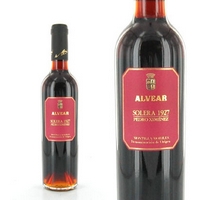
In my critics class at NYU last week I poured a contentious wine. Sadly, it wasn’t the famed Pavie 2003 (we are on an academic budget after all). The contentious wine this time was the Alvear Pedro Ximenez 1927, a fortified wine from Andalucia that actually started the year my grandfather graduated from college. (find this wine)
Sqaring off in one corner was the Robert Parker. And in the other was HRH Jancis Robinson. I won’t insult your intelligence and tell you who said what. Jancis made me laugh though. Roll the tape:
“The impressive 1927 Pedro Ximenez Solera, from a Solera begun nearly 80 years ago, boasts a dark amber color as well as an extraordinary nose of creme brulee, liquefied nuts, marmalade, and maple syrup. Huge and viscous, yet neither cloyingly sweet nor heavy, it is a profound effort priced unbelievably low. It is meant to be drunk alone at the end of a meal. 96 points.”
“There is also a super-stickie Alvear Pedro Ximénez Solera 1927 Montilla-Moriles for £12 a half-litre that should sweeten any 80th birthday celebrations next year – very, very dark, like ancient raisins steeped for years. If the octogenarian still has their own teeth, this should put paid to them.”
For what it’s worth, the class gave the wine a thumbs up.
tags: wine | wine writing
Dec
5
2006
Tasting sized pours
St. Emilion announced the brand new 2006 clasification yesterday (see my backgrounder). Stephen Brook, author of Bordeaux: People, Power and Politics, sums it up for Decanter.com. The garagistes were excluded.
In a twist, W. R. Tish critiques the critics and rates the magazines that rate wines. Wine and Spirits ends up smelling like a rose–with a hint of pipe tobacco and blackcurrant. Oh wait, points! He rates it a 91. [Wines & Vines]
With 14.8 million visitors in 2003, tasting rooms are bulking up the bottom line for California wineries. More evidence that wine by the glass is highly profitable to those doing the pouring. [SF Chron]
Does Sonoma mean Sonoma? Jess Jackson and the California legislature say yes; Korbel and the Wine Institute say no. It’s up to Gov. Schwarzenegger to sign the bill, as he should. [Press Dem]
UPDATE: Pete Wells, James Beard Award-winning author and NOT on the staff of the NYTimes, has been named the new editor of the Dining section of the Times. An outside hire? A great writer? Sounds excellent to me! [Eater]
tags: wine | wine news | St. Emilion classification
Sep
8
2006
Comments Off on Tasting sized pours

Wine Maps
Monthly Archives
Blogroll
Categories
- American wine
- announcements
- Argentine wine
- auctions
- Australian wine
- Beer
- best wines
- Bling
- books
- Bordeaux
- bottled water
- Box wine
- Burgundy
- business of wine
- Celebrity wine
- Champagne
- Chicago
- China
- cocktails
- cognac
- corks
- corkscrews
- dining
- eco wine
- events
- foie gras
- food and wine
- French wine
- German wine
- giveaway
- grapes
- green wine
- guest post
- highlights
- how to
- Italian wine
- leaders and liters
- Mature wine
- meetups
- New York City
- On notice!
- photo captions
- podcasts
- Polls
- Port
- Portuguese wine
- power list
- reader mail
- rose
- sake
- Sommeliers
- South Africa
- Spanish wine
- spirits
- tasting sized pours
- The real wine world
- TV and movies
- Uncategorized
- videos
- vinexpo
- Weather
- wine and health
- wine and sports
- wine and tech
- Wine Blogging Wednesday
- wine blogs
- wine classes
- wine collecting
- wine gifts
- wine in india
- wine labels
- wine picks
- wine politics
- wine quizzes
- wine random
- wine science
- wine scores
- wine shops
- wine technology
- wine travel
- Wine under $10
- wine writing
- winemaking
- winespeak
 Blog posts via email
@drvino on Instagram
@drvino on Twitter
Advertise

quotes
One of the “fresh voices taking wine journalism in new and important directions.” -World of Fine Wine
“His reporting over the past six months has had seismic consequences, which is a hell of an accomplishment for a blog.” -Forbes.com
"News of such activities, reported last month on a wine blog called Dr. Vino, have captivated wine enthusiasts and triggered a fierce online debate…" The Wall Street Journal
"...well-written, well-researched, calm and, dare we use the word, sober." -Dorothy Gaiter & John Brecher, WSJ

Saveur, best drinks blog, finalist 2012.
One of the "seven best wine blogs." Food & Wine,
One of the three best wine blogs, Fast Company
Books for wine geeks
Wine books on Amazon: