Dr Vino's wine blog
wine talk that goes down easy
The 2022 wine harvest is well underway
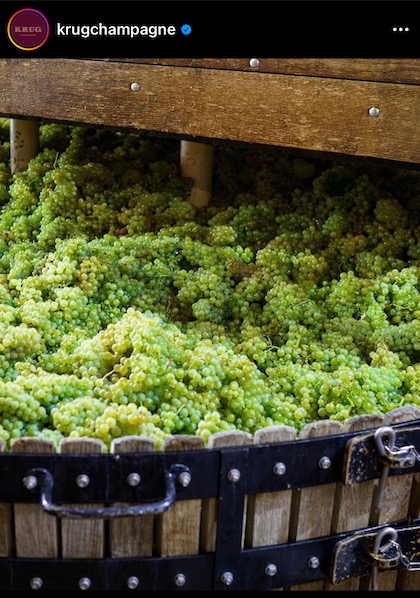
The 2022 wine harvest is underway! I’ve been reposting some winery photos and videos over on my Instagram account as stories. This wine harvest incredibly early: mid-August for some grapes in Northern California, the third week in August for Champagne (incredible for one of the most northerly wine regions), and some pinot nero in Piemonte.
In case you haven’t been outside this summer, it has been incredibly hot and dry–everywhere. Nazi ships that sunk long ago have reappeared in the Danube because the water level has receded so much, the Rhine has been almost impassible, there’s even a drought in southeast England, and the Loire is showing way too much sandy bottom. And we haven’t even gotten to the wildfires that have battered Spain, Portugal and even Bordeaux…
We’ll have to see ultimately what this means for the quality of the vintage. But fingers crossed and best of luck to all those vignerons! The past three years have all been crazy, one way or another. Read more…
Aug
29
2022
3
Wine tariff comment period ends today
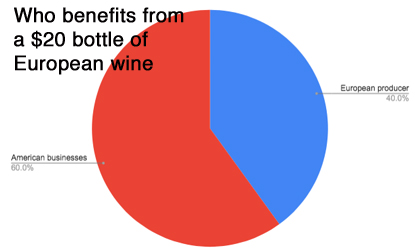 Tariffs of 100% may soon hit European wines in America. The price of some wines will double. But mostly it will mean that many of the most coveted wines will no longer be available. The comment period ends today at midnight over at the site of the United States Trade Representative. Fully 24,071 people have submitted comments. Add yours! My take on the situation is that it’s a code red: after “big, beautiful” negotiation with China and a new agreement in North America, the administration is more likely to turn to Europe. Hopefully, cooler heads will prevail…Anyway, I made a pie chart! It shows that more American businesses profit from a bottle of European wine than the producer. Overly simple, but trying to make the point that these tariffs are an own goal.
Here are three pieces I wrote on tariffs for Wine & Spirits magazine last month. And here’s my letter to the USTR:
January 13, 2020
Ambassador Robert Lighthizer,
I am writing to express my concern regarding the escalation of tariffs on wine. Read more…
Jan
13
2020
European wines face a potential 100% tariff
Another day, another wine tariff post…
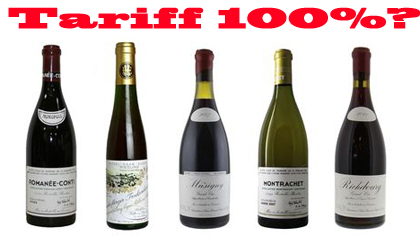
Last week, news trickled out that the US Trade Representative might raise the tariff on European wine to 100%. Oh, and the tariff on 31-pages of other items. Unsatisfied with progress in the aircraft dispute with Airbus, which was the cause of the 25% tariff imposed on some European wines on October 18, the USTR has threatened to take it to 100.
I discussed the issue with Blake Murdock of Rare Wine Co, Dixon Brooke of Kermit Lynch Wine Merchant, and Rocco Lombardo of Wilson Daniels. Each of them is taking a different approach–I filed two stories for Wine & Spirits magazine that you should check out.
If you don’t want European wine prices to double next year in this country, make your comments heard over at regulation.gov. Comments accepted until January 13.
Ugh. How long will they last, if imposed? It’s anybody’s guess.
Full list of items in the federal register
Dec
16
2019
How did champagne dodge the tariff bullet?
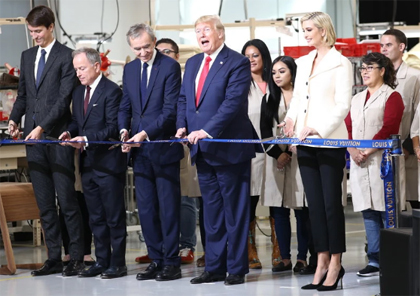
For those looking to explain the oddities of the recent tariffs on French wine, a clue may have come last week in Texas.
But first, those oddities. It is not really going out on a limb to say that this administration has a haphazard, govern-by-tweet style of policymaking. So it should not be a surprise that there were some head-scratchers in the wines affected by tariffs. since not all of the $2.1 billion of wines that the US imported from France last year were included. Notably omitted from the list was the high-value category of champagne (sparkling wines were all exempted). Cognac and French spirits were not affected, another large, high-value. (And neither were French handbags or fashion–by contrast, cashmere sweaters from Scotland were hit). And wines over 14% alcohol were not affected. And those in “containers” of over two liters. And Italian wines were exempted since Italy is not a part of Airbus–yet parmigiano reggiano was hit with a 25% tariff? Hmmm…
For a possible clue for explaining some of those loopholes, we take you to Johnson County, Texas Read more…
Oct
25
2019
Questions on French wine tariffs!
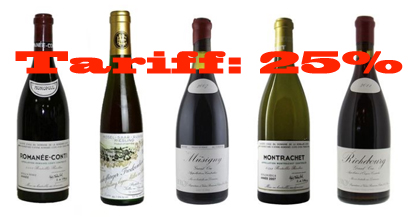
Our post about the 25% tariff that will be imposed on the $.2.5 billion of wines imported from France, Spain and Germany as of October 18 raised some questions. We respond:
Rick: How do you suppose this will affect futures orders that are in place?
Dr. Vino: They will be hit by the 25% levy if they arrive in the US after October 18. This could lead to the smart collector’s money either (A) diverting toward wines already in the US that are available at auction (they have the added bonus of being perhaps more ready to drink) or (B) perhaps the merchant that sold you the future is prepared to hold off on taking delivery until the tariffs are called off. This trade dispute can’t go on forever, right?!
Carol: Since Italian wines are not hit by tariffs, will this be a Prosecco New Year’s Eve?
Dr. Vino: Champagne somehow dodged the tariff bullet so your choice of bubbly will be tariff-free.
Carol, with a follow-up: So will wine prices be rising this holiday season?
Dr. Vino: It is unclear if there will be price hikes on store shelves (and restaurant wine lists as soon as December). Many shops or restaurants could conceivably buy now to insulate themselves and distributor warehouses are probably pretty full in anticipation of both year-end madness and perhaps this tariff move. One rep I spoke with said their distributor is not expecting price hikes for six months. But who knows–others may not be as well positioned and have to pass these tariffs on to consumers sooner.
Jade: Should I pre-buy my wine now for the rest of the year?
Dr. Vino: Sure! I never would tell you not to! There are so many great wines in the market right now plus a lot of stores offer discounts on 12+ bottles. And you know the holidays are coming…oh, and have you seen the news recently? Oh, man…might make you want to crack into your stash.
Juliette: so will French rosé next year be 25% more expensive?
Dr. Vino: If the issue remains unresolved and the tariffs are still in place, then yes. Any 2019 wine from these three countries would be impacted–even Beaujolais Nouveau!
Leslie: How exactly do the tariffs affect the auction market? If a past vintage passes from an affected EU country will that be subject to tariff? Do auction wines now become more valuable if they are unaffected by the tariffs?
Dr. Vino: Wines in the US before Oct 18 are not hit by tariffs. So, yes, there’s a chance that if futures buyers like Rick divert their funds to collectible wines that are slumbering in cellars across America now, then, yes, there could be a bump in the auction market for French (and German and Spanish) wines.
Okay, that’s all the questions for now. But I did want to reproduce the text of the directive on French wine tariffs (and Spanish and German and UK wine): “Wine other than Tokay (not carbonated), not over 14% alcohol, in containers not over two liters.”
So weird that wine over 14% alc gets a pass! so all Chateauneuf du Pape comes in unaffected? To Juliette’s point above, maybe we will see some 14% alc roses? 😛 Also, game on for double mags of French wine! And champagne!
Also, final fun fact: $16 million of wine was imported from the UK last year! I knew it was, uh, small beer, but that is actually more than I thought!
UPDATE: this post was edited to reflect the fact that champagne will not be affected by the tariffs. Neither will cognac or handbags so a big wine for LV to the MH.
Oct
4
2019
Trump to slap tariff on French wine

The trade war gets real! As if tariffs on hundreds of billions of consumer goods made in China weren’t real enough, the latest escalation from the Trump administration has found a new target: French wine.
Late yesterday, word came down that the Trump administration will impose $7.5 billion in tariffs on goods from our European allies. The impetus is subsidies to the plane consortium, Airbus, which is backed by France, Spain, Germany and the UK. Thus the tariffs affect symbolic goods from those countries, including all wine, olive oil, whisky and some camera parts. The long-simmering dispute entered a new phase yesterday as the WTO ruled in favor of the US. Hopefully there will be a negotiated settlement but as announced yesterday, the levy will be imposed on all goods on the list that enter the country as of October 18.
The fourth quarter of the year is by far the biggest quarter for wine sales. Many of the wines that will be sold during that time are already in (climate controlled) warehouses on our shores. But not all. If these tariffs become reality, it remains to be seen how importers of French and Spanish (and German and British) wine will adjust prices in the near term. But, if these tariffs linger, prices for these wines will inevitably rise sharply in the new year. It is worth noting that tariffs are paid by importers, not the producers (although in some instances, importers may request producers share the pain to mitigate price increases but with a tariff this large, there’s not a lot they can do other than see prices on store shelves rise and placements on wine lists decline.)
Wine is highly symbolic of France. Thus, it has been the subject of protests and over time, such as in New Zealand over the Rainbow Warrior or in 2003 over the Iraq war. (See the wines served at Macron’s state dinner.)
France was the biggest supplier of imported wine to the US market, sending $2.1 billion of wine to the US in 2018. Spain was fifth with $383 million, Germany ninth with $103 million, and the UK 14th with $16 million in wine (!). [source]
Clearly, the biggest winners here are domestic wineries, which provide two of over three bottles of wine consumed in America. Italy, the second largest provider of imported wine to the US, is not hit by the tariffs since they do are not a part of the Airbus consortium. As such, they stand to benefit greatly and the Italians, New Zealanders, Chileans and Australians are probably slack-jawed at this opportunity that has been handed to them.
If the tariffs indeed get imposed, how long they remain in place is an open question. So far, Trump has not rolled back any tariffs against China, so it is entirely possible that the only way for the tariffs to be removed is when there is a new occupant of the Oval Office.
Oct
3
2019
Reboule du Rhone, second edition
The Reboule du Rhone is back for a second edition! The event last year feted winemakers and wines from the Northern Rhone with dinners and tastings, raising over $300,000 for the charity No Kid Hungry. Above is a quick montage of scenes from last year.
This year’s encore edition will include a series of singular dinners, November 15-17. The first dinner (at a private residence 50 floors up) highlights “legendary” vintages of the last 50 years, the second dinner has a focus on the “kings of Cornas,” and the third is a BYOB extravaganza. For those looking for a more budget-friendly event, it’s hard to outdo the value of walk-around tasting at 1 PM Saturday the 17th. Winemakers and leading sommeliers will pour over 100 wines from the region.
The event is the brainchild of Thomas Pastuszak and Dustin Wilson. Profits go entirely to No Kid Hungry.
List of winemakers after the jump. Read more…
Nov
5
2018
Hail strikes Burgundy and Beaujolais — again
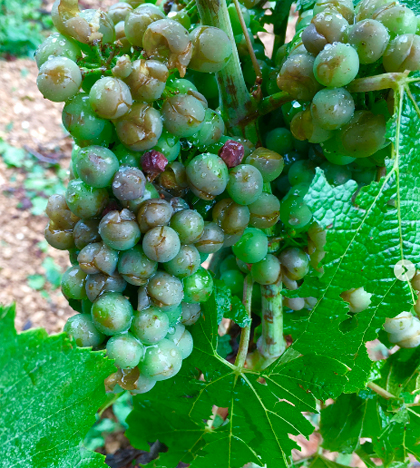
Climate change is a bitch. Severe weather events have roiled wine growing areas with depressing regularity in recent years. Burgundy seems to be on the forefront of this plagued by floods, hail storms, late frosts and other events that have reduced (or in some places even eliminated) the crop.
Jeremy Seysses, owner and winemaker at Domaine Dujac, posted the above photo to instagram along with this description.
Yesterday night, 10th July, brought heartbreak in the form of hail. Of our vineyards, the top of the hill of Morey was hit hardest, Monts Luisants worst, probably 30-40% damage; Clos St Denis and Clos de la Roche next, then Combottes. Bonnes Mares had minor damage. The rest of the domaine seems ok. The leaves like they were put through a shredder. The fruit is pummeled. The shoots battered. We’ll still make some wine, though!
There was also severe weather in Beaujolais for the second year in a row…gah! I feel sorry for the vignerons who try to make a living in this increasingly unpredictable endeavor.
Jul
11
2017

Wine Maps
Monthly Archives
Blogroll
Categories
- American wine
- announcements
- Argentine wine
- auctions
- Australian wine
- Beer
- best wines
- Bling
- books
- Bordeaux
- bottled water
- Box wine
- Burgundy
- business of wine
- Celebrity wine
- Champagne
- Chicago
- China
- cocktails
- cognac
- corks
- corkscrews
- dining
- eco wine
- events
- foie gras
- food and wine
- French wine
- German wine
- giveaway
- grapes
- green wine
- guest post
- highlights
- how to
- Italian wine
- leaders and liters
- Mature wine
- meetups
- New York City
- On notice!
- photo captions
- podcasts
- Polls
- Port
- Portuguese wine
- power list
- reader mail
- rose
- sake
- Sommeliers
- South Africa
- Spanish wine
- spirits
- tasting sized pours
- The real wine world
- TV and movies
- Uncategorized
- videos
- vinexpo
- Weather
- wine and health
- wine and sports
- wine and tech
- Wine Blogging Wednesday
- wine blogs
- wine classes
- wine collecting
- wine gifts
- wine in india
- wine labels
- wine picks
- wine politics
- wine quizzes
- wine random
- wine science
- wine scores
- wine shops
- wine technology
- wine travel
- Wine under $10
- wine writing
- winemaking
- winespeak
 Blog posts via email
@drvino on Instagram
@drvino on Twitter
Advertise

quotes
One of the “fresh voices taking wine journalism in new and important directions.” -World of Fine Wine
“His reporting over the past six months has had seismic consequences, which is a hell of an accomplishment for a blog.” -Forbes.com
"News of such activities, reported last month on a wine blog called Dr. Vino, have captivated wine enthusiasts and triggered a fierce online debate…" The Wall Street Journal
"...well-written, well-researched, calm and, dare we use the word, sober." -Dorothy Gaiter & John Brecher, WSJ

Saveur, best drinks blog, finalist 2012.
One of the "seven best wine blogs." Food & Wine,
One of the three best wine blogs, Fast Company
Books for wine geeks

Wine books on Amazon: