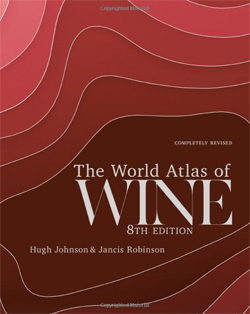
 “Wine is geography in a glass,” Hugh Johnson said recently. He and Jancis Robinson were in town to promote the new edition of the World Atlas of Wine. He said that back in 1970, the publisher was unsure if a book of wine maps would really fly. So he had to impress upon the publisher how wine and maps were a natural fit. The market shouted a reply: by 1973, the book had sold 500,000 copies. Lifetime, he said, the volume has sold more than 5 million copies.
The book gained a new lease on life when Jancis Robinson became a co-author in the fifth edition. Jancis and her team do the heavy lifting now and this eighth edition has been fully revised. The tome has added new areas of coverage such as the Savoie and the Judean Hills. In all, it has 300,000 words, 230 maps, 400+ pages and weighs almost five pounds. Even with all this heft, it is admittedly not going to be the last word on any region. But, because of its breadth, it is often the first word for many readers, particularly on far-flung regions.
Someone recently asked me what is the one wine book I would recommend: this is it. If you are trying to generally to learn more about wine and have a slightly more than casual interest, and are not looking for a edge-of-your-seat narrative, this is the one for you. I consult to a restaurant where I put together the wine list and work with the staff. I have this book on the shelf there. It is essential. I use it all the time to show where wines hail from. It’s useful to drill down from a country map, to a regional map and then even villages to let the staff and even some guests see where the wines come from.
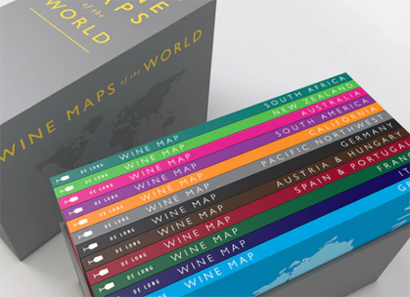
There is really a ton of interest in wine maps. Many are available on the internet, but it is fun to really pore over a map in your hands, such as this World Atlas of Wine, or hang them on the wall. Steve DeLong has been making the latter for a decade now, blending his architect’s visual sensibility with his love and knowledge of wine. He has a kickstarter going now for a new product, “Wine Maps of the World.” This set of foldable maps blend cartographic precision with a good design aesthetic. His kickstarter campaign has raised/sold $50,000 and has four days to go.
 One other huge advantage is that we can be joined by winemakers! Such is the case for a public tasting I am leading on Thursday, 5/28 at 6 PM eastern. Anthony Filiberti, winemaker at
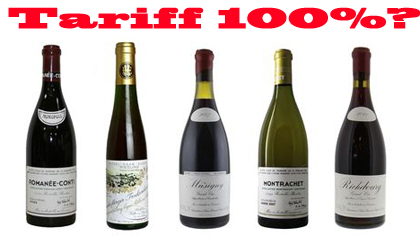
 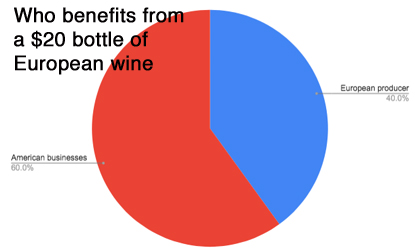 Tariffs of 100% may soon hit European wines in America. The price of some wines will double. But mostly it will mean that many of the most coveted wines will no longer be available. The comment period ends today at midnight over at the site of the United States Trade Representative. Fully 24,071 people have submitted comments.