Dr Vino's wine blog
wine talk that goes down easy
“Dr. Vino’s verdict” over at FoodandWine.com
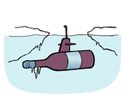 I’m doing a series of micro-pieces over at FoodandWine.com in a space they’re calling “Dr. Vino’s Verdict.” I can’t promise the wisdom of Solomon but hopefully the verdicts are better than those of Judge Judy. So far I’ve weighed in a few topics, such as the the fastest way to chill wines, how to save leftover wine for free, and which corkscrew offers the most bang for the buck.
The magazine has commissioned original art for each post and I can unabashedly say (since I had nothing to do with it) that the art is fantastic.
They have very good folks contributing wine posts to their enhanced wine coverage; the best ways to keep up with it, should you care to, is to sign up for the weekly email “The Wine List” or follow them on Twitter.
Aug
28
2013
4
France to muzzle wine bloggers and tweets?
 Factions in France, a country whose national image has historically been intertwined with wine, are waging a bizarre campaign against wine. They opened a new front in their battle last week: trying to ban blogs and social media from talking about wine.
The initiative, part of a report from Professor Michel Reynaud with the cheery name “Damage related to addictions and strategies for reducing the damage,” would seek to limit promotion of wine in the internet, extending and updating the 1991 Evin law. Winery websites would be exempt but Decanter has a summary; the full report is available in full as pdf here.
“We need to formally ensure that no media about alcohol can be aimed at young people, or potentially seen by young people, including the internet (except producer sites) and social networks,” Reynaud writes on p. 56.
Clearly, this is absurd. Not being able to discuss wine at all also means not being able to discuss how to consume wine in moderation or with food. Or its role in history, culture and economics. Or its plant biology, making it a forbidden fruit. The report is out of step with discussion on the internet, unenforceable, and is as boneheaded as it is blunt in its proposals.
Fortunately, an effort with a petition has emerged, called “Touche Pas a Mon Vingernon.”
Jun
13
2013
And so it begins…the monetization of Brand Parker
Want to buy a five-pack of Bordeaux wines that Robert Parker scored 100 points? Given the proliferation of 100-point wines these days, that’s not the hardest thing to come anymore. No, the ne plus ultra now is a five-pack of RP 100s, sold as a signed set by Robert Parker!
 SudOuest has the full story (picked up en anglais over at wine-searcher). Suffice it to say that the five-packs don’t include Haut Brion and Petrus. Interestingly, the negociant who put it together said that this would not have been possible before Robert Parker sold a substantial stake in the Wine Advocate late last year to Singaporean investors. The negociant didn’t reveal the details of this autographing arrangement, but said there was no commercial angle to the transaction.
No photo was available of the five-packs, so we run one of KISS, who similarly cashed in on autographed items. What will be the next in the Robert Parker line? Stemware by Christmas? After all, Suckling already beat him to that one. Maybe there will be some signed Ralph Nader memorabilia for old times’ sake.
Jun
4
2013
The Wine Advocate introduces new terms for the trade
Continuing the significant changes unfolding at the Wine Advocate over the past six months, the publication has announced new terms and rates for trade subscribers. Previously, subscriptions were line-priced at $99 a year. Going forward, trade subscriptions will be $199. What do they get for the extra fee? Employees can use the same login. And trade accounts get to reproduce the WA’s scores and tasting notes as shelf talkers.
This is a bizarre choice for at least three reasons: it’s hard to enforce, any enforcement would breed ill-will among the trade, and it significantly reduces free marketing for the publication in the form of shelf talkers. Retailers who use scores are not loyal to publications; rather, they are mostly loyal to high scores and will use whichever is highest and free of legal entanglements/copyright issues.
Further, the new T&C insist on the shelf talkers use RPWA–Robert Parker’s Wine Advocate–for the publication as well as identify the critic by initials and use the publication’s logo.
I guess the new owners are making a calculated risk that by doubling the price, fewer than half the trade subscribers will bolt and they will still come out ahead on revenues. To me, it’s hard to see how these changes will expand the audience for “The Independent Consumer’s Guide to Fine Wine.” If you’re in the trade, what do you think of the new rates and terms?
May
17
2013
Parker on bourbon – and bourbon writer on Parker
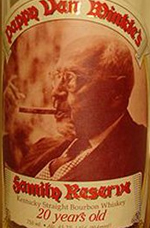 Robert Parker included some tasting notes on Bourbon in the most recent Wine Advocate. Over at the blog Scotch & Ice Cream, the author didn’t take too kindly to the fact that Parker put “his loafer-clad foot in our turf and has deigned to tell the masses what bourbon everyone should be drinking.”
I’ll leave you to discover the gems of the post yourself. But here’s one: “Apparently the wine world regards scarcity as a measure of quality.” Okay, and a spoiler: “The know-it-all wine critic has decided he is the arbiter of taste and quality on the American whisky scene while seemingly managing to not do even the most basic bit of research and self-education on the subject.”
FWIW: Scotch & Ice Cream thinks the Pappy Van Winkle 20 beats the snot out of the Pappy 23.
May
14
2013
What they’re drinking: The Wine Advocate, Inc.
It’s pretty common to post pictures of which wines you’re drinking on Instagram or Twitter. If you’re drinking really great stuff, I suppose it’s a little douchey (although those photos do get the most “likes,” etc).
But what if you pre-post a lineup of 34 magnums you will be tasting over the next few nights? That’s what Bob Parker did for the Wine Advocate staff (and owners? Note “SECOND” office reference.) meetings this week. Seems to cross the line–especially in a “blue-collar city.” Maybe they are drinking out styrofoam cups? Also, are these wines are worth a detour, let alone a journey from Singapore? Have your say!
Big time in the blue-collar city of Baltimore….the entire staff is arriving today, including our three new full-time writers which will be announced in the next 48 hours….the team from the SECOND office in Singapore, and we hope to put in place some very exciting plans…I am playing sommelier, and pulled the following wines out of the cellar for the three nights of *%^@#%$#&*&%^^$$….
Tonight-all magnums as there are 16-17 of us Read more…
Apr
24
2013
Celebrity wines, tasting terms, court date – sipped & spit
 SPIT: celebrity wine
Buzzfeed asks sommelier Michael Madrigale to taste and rate celebrity wines in a blind tasting. Hilarity ensues.
SIPPED: hermaphroditic Himalayan elderberries
A funny send-up of tasting note terms from Keith Levenberg.
SPIT: say pleas
Rudy Kurniawan went before a Manhattan judge yesterday; trial is set to start September 9, or thereabouts. [AFP]
True headline: “Your Wine Habit Is Threatening Endangered Pandas” #rolleyes
Apr
11
2013
Comments Off on Celebrity wines, tasting terms, court date – sipped & spit
The end of en primeur?
Wine writers and members of the wine trade descended on Bordeaux this week for tasting samples of the 2012 vintage, which was a difficult vintage. Even though the malolactic fermentations have barely finished and the final blends are nowhere near completed, the Bordelais pre-sell each vintage (en primeur) two years before it is actually released.
The events set off a clusterschnook on Twitter about whether en primeurs are simply marketing at this point. Guy Woodward, former editor of Decanter, expressed his pleasure at not having to attend the “increasingly futile” and predictable events for the first time in a decade. He described the process thusly: “Critics taste unfinished wines (non-blind) earlier than ever but only one verdict counts; producers feign humility & refuse to discuss price…Don’t doubt most critics’ good intentions, but is now primarily a marketing exercise.”
Howard Goldberg’s tweet sparked the longest and possibly most productive wine thread to ever appear on Twitter: “Britain’s wine-writing Establishment is again plunging headlong into en priemur to play willing handmaiden marketing advisor to chateaus.” Read more…
Apr
5
2013
Wine Maps
Monthly Archives
Blogroll
Categories
- American wine
- announcements
- Argentine wine
- auctions
- Australian wine
- Beer
- best wines
- Bling
- books
- Bordeaux
- bottled water
- Box wine
- Burgundy
- business of wine
- Celebrity wine
- Champagne
- Chicago
- China
- cocktails
- cognac
- corks
- corkscrews
- dining
- eco wine
- events
- foie gras
- food and wine
- French wine
- German wine
- giveaway
- grapes
- green wine
- guest post
- highlights
- how to
- Italian wine
- leaders and liters
- Mature wine
- meetups
- New York City
- On notice!
- photo captions
- podcasts
- Polls
- Port
- Portuguese wine
- power list
- reader mail
- rose
- sake
- Sommeliers
- South Africa
- Spanish wine
- spirits
- tasting sized pours
- The real wine world
- TV and movies
- Uncategorized
- videos
- vinexpo
- Weather
- wine and health
- wine and sports
- wine and tech
- Wine Blogging Wednesday
- wine blogs
- wine classes
- wine collecting
- wine gifts
- wine in india
- wine labels
- wine picks
- wine politics
- wine quizzes
- wine random
- wine science
- wine scores
- wine shops
- wine technology
- wine travel
- Wine under $10
- wine writing
- winemaking
- winespeak
 Blog posts via email
@drvino on Instagram
@drvino on Twitter
Advertise

quotes
One of the “fresh voices taking wine journalism in new and important directions.” -World of Fine Wine
“His reporting over the past six months has had seismic consequences, which is a hell of an accomplishment for a blog.” -Forbes.com
"News of such activities, reported last month on a wine blog called Dr. Vino, have captivated wine enthusiasts and triggered a fierce online debate…" The Wall Street Journal
"...well-written, well-researched, calm and, dare we use the word, sober." -Dorothy Gaiter & John Brecher, WSJ
Saveur, best drinks blog, finalist 2012.
One of the "seven best wine blogs." Food & Wine,
One of the three best wine blogs, Fast Company
Books for wine geeks
Wine books on Amazon: