Dr Vino's wine blog
wine talk that goes down easy
Who’s your god-daddy? Hanna Agostini, Robert Parker and the question of influence
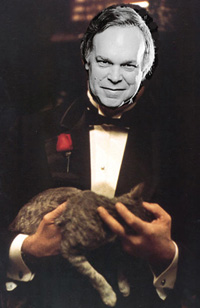 Alain Raynaud, owner of Parker-fave Chateau Quinault L’Enclos, asked Robert Parker to be the godfather of his child. Parker told Elin McCoy in Emperor of Wine “he didn’t see how he could refuse.” Why is the world’s leading wine critic on such close terms with the people whose products he says he independently evaluates? Or, as the saying goes, who’s your daddy?
These questions and more will be publicly aired with a new tell-all book from his former assistant in Bordeaux, Hanna Agostini. Agostini helped Parker with translations from 1995 – 2003 and controlled his calendar while he was in the region, often twice a year. Late in her tenure with Parker, she became embroiled with scandal of influence peddling, trying to cash in on her control of Parker’s schedule and sending out invoices for her consulting on his letterhead. After standing by her for a time, he let her go.
Now she’s fighting back with her own book, Robert Parker: Anatomie d’un Mythe, just published in France (and just purchased via amazon.fr by Dr. Vino). While she has respect for his palate, she accuses Parker of recycling his tasting notes, pokes fun at his prose, and even evaluating wines in print that he hasn’t even tasted. Here’s an excerpt from her interview with the Bordeaux paper, Sud-Ouest (link to cache; my translation):
In bringing up his relations with the winemaker Michel Rolland, and the négociants Archibald Johnston, Jeffrey Davies, Bill Blatch and Dominique Renard, his friendship with Jean-Bernard Delmas, the former head of grand cru haut Brion and the Moueix family, I’m not saying anything that’s not already widely known…I only want to show that there’s a yawning gap between his rhetoric and his actions.
The situation does raise the larger question of how close should a journalist be with his or her subjects? On the one hand, distance maintains journalistic independence. On the other hand, proximity and access make for a more nuanced understanding of what’s at stake and the players involved. Oh wait! Parker doesn’t even claim to be a journalist, but a critic–THE critic–so there’s no scoop for him to get. Just wines and tannic barrel samples, by the hundreds.
And, by the way, Alain Raynaud tried to block the book’s publication because he says Parker is not godfather to his daughter. A court in the region ruled against him last week.
Oct
28
2007
4
Should wine magazines review wines by style instead of regions?

When I was half way through a blind tasting of 42 wines from Rioja, a thought struck me: why do magazines still organize their correspondents along regional lines? Some of the Rioja wines I was tasting had regional character and they, obviously, could be evaluated alongside some of the other wines from the region.
But some of the wines were so extracted, bathed in lavish oak, and made in a new world style and clearly seeking Parker points and high prices. These wines, it seems to me, should be evaluated against other such wines. Araujo versus Aro if you will.
In fact, we could carry the logic even further and change labels to state what really matters for these wines. See above.
Oct
4
2007
Doing the strippaggio with olive oil
 We wine tasters are not the only ones tasting under blind conditions–consider this excerpt from the excellent August 13 New Yorker article about fraud in the Italian olive oil market. But we’re more social, since many wine tasting panels don’t isolate tasters in cubicles but actually welcome discussion among the tasters. Also, I’d gladly slurp–sorry, do a strippaggio–with wine instead of EVOO any day. To Italy, after the jump: Read more…
Aug
13
2007
Wine descriptions: who said it?
Who wrote these words:
“The tannin has become more supple, the texture is sensational, and the wine is like a towering skyscraper in the mouth without being heavy or disjointed.”
a) Santiago Calatrava
b) Donald Trump
c) Robert Parker
d) the DC Madam
Jul
19
2007
Robert Parker admits to “the emotion of the moment,” threatening the basis of wine scores!
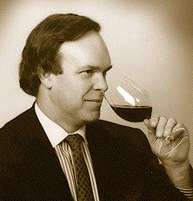 OK, people, did you really think that numerical wine ratings were objective? This gem has just been transmitted to the Dr. Vino Mobile World Headquarters, from Robert Parker’s interview earlier this year with the Naples (FL) Daily News:
For most people, I think, giving 100 points is almost setting up a situation for the people who are reading it … to be disappointed because you have somebody who’s well-known and has credibility saying it’s perfection in wine. And there’s always the issue: Is there perfection in wine?
I’ve always tried to explain it saying that, you know, I’m a very passionate person and an emotional person. I really think probably the only difference between a 96-, 97-, 98-, 99-, and 100-point wine is really the emotion of the moment. (emphasis added)
He admits elsewhere to being a supertaster, but here he says he’s no cyborg! There you go: relativism in ratings! That’s what I just mentioned in the comments section to Jay Miller, a critic at the Wine Advocate. Join the fray with your comments! Or see Jay Miller’s comments on the science of olfactory analysis.
Jul
2
2007
Grade inflation, 100-point Spain, and powertasting: Jay Miller has his say
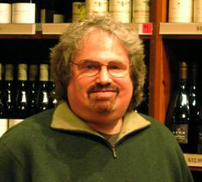 Jay Miller, critic at Robert Parker’s Wine Advocate, entered the fray with a couple of comments yesterday. Since these postings received many reader comments initially, I thought I would flag his reactions for you here since sometimes new comments can get lost.
Here’s the thread on grade inflation in wines. He comments about the trend and specifically discusses his recent reviews of Spanish wines, which included many high scores.
And here’s another one when I met him and tasted some Argentine wines with him.
Here’s a taste of his comment:
The palate fatigue argument, frankly, is total hogwash. The principal difficulty for amateurs is maintaining concentration, mental fatigue, not physical fatigue. Someone mentioned doing no more than 12 wines; that’s 30 minutes work. You taste, you spit, you write a note, taste again, spit, add (or not to your note) and on to the next wine. When you’ve had practice doing this, it’s simply not difficult.
But he concludes with this compliment: “Anyway, I like this site. I’ll try to get back more often.” Always welcome!
Jun
28
2007
Mondavi, points, boxed wine, futures – all quotes edition – tasting sized pours
House of Mondavi’s crumbling foundation
“But by early 2004, Robert Mondavi Corp.’s reputation for high-quality wines had eroded, and the House of Mondavi was rent by conflict. His hand-picked successor, son Michael, had been removed as chairman, and the Mondavi family was on the brink of losing control of the company. Indeed, behind Michael’s ouster was a closely guarded secret: Robert faced a personal financial crisis that threatened to embarrass him and destroy his legacy.” [WSJ, with video!]
Are wine ratings pointless?
“A wine gets rated one time — a nanosecond in its life cycle,” says Sebastiani winemaker Mark Lyon. “From then on, its fate is determined. Aren’t wines always evolving? Shouldn’t they be rated every year?” From a story by W. Blake Gray in today’s SF Chron
Slow drinkers
“Boxed wine really does keep for six weeks, but would we keep one in our refrigerator for that long? There are so many interesting, affordable wines on the shelves that we’d rather taste several wines than one in a big box.” – John Brecher and Dorothy Gaiter. But what about the low low price per glass if you can find a good one?!? [WSJ]
Do futures have no future?
“Wouldn’t it be nice if we didn’t have to play this game? I hope 2006 will not be a success. I hope it will really show the Bordelais the shortcomings of the system.” –Jancis Robinson in a podcast on Bordeaux futures, aka “en primeur”
Jun
15
2007
Robert Parker is “omnipresent”
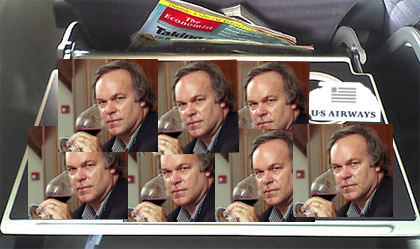
So has he jumped the shark?
“BusinessWeek, US Airways in ad deal: Magazine will put Welch and wine columns in skies” [SF Chron]
Consumers who suspect they may never escape the omnipresence of wine god Robert Parker and management gurus Jack and Suzy Welch will soon have one more reason to think so: Starting next month, columns by Parker and the Welches will be laminated onto airplane pull-down tray tables as part of a deal to sell advertising on US Airways planes.
Jun
1
2007
Wine Maps
Monthly Archives
Blogroll
Categories
- American wine
- announcements
- Argentine wine
- auctions
- Australian wine
- Beer
- best wines
- Bling
- books
- Bordeaux
- bottled water
- Box wine
- Burgundy
- business of wine
- Celebrity wine
- Champagne
- Chicago
- China
- cocktails
- cognac
- corks
- corkscrews
- dining
- eco wine
- events
- foie gras
- food and wine
- French wine
- German wine
- giveaway
- grapes
- green wine
- guest post
- highlights
- how to
- Italian wine
- leaders and liters
- Mature wine
- meetups
- New York City
- On notice!
- photo captions
- podcasts
- Polls
- Port
- Portuguese wine
- power list
- reader mail
- rose
- sake
- Sommeliers
- South Africa
- Spanish wine
- spirits
- tasting sized pours
- The real wine world
- TV and movies
- Uncategorized
- videos
- vinexpo
- Weather
- wine and health
- wine and sports
- wine and tech
- Wine Blogging Wednesday
- wine blogs
- wine classes
- wine collecting
- wine gifts
- wine in india
- wine labels
- wine picks
- wine politics
- wine quizzes
- wine random
- wine science
- wine scores
- wine shops
- wine technology
- wine travel
- Wine under $10
- wine writing
- winemaking
- winespeak
 Blog posts via email
@drvino on Instagram
@drvino on Twitter
Advertise

quotes
One of the “fresh voices taking wine journalism in new and important directions.” -World of Fine Wine
“His reporting over the past six months has had seismic consequences, which is a hell of an accomplishment for a blog.” -Forbes.com
"News of such activities, reported last month on a wine blog called Dr. Vino, have captivated wine enthusiasts and triggered a fierce online debate…" The Wall Street Journal
"...well-written, well-researched, calm and, dare we use the word, sober." -Dorothy Gaiter & John Brecher, WSJ
Saveur, best drinks blog, finalist 2012.
One of the "seven best wine blogs." Food & Wine,
One of the three best wine blogs, Fast Company
Books for wine geeks
Wine books on Amazon: