Dr Vino's wine blog
wine talk that goes down easy
Who’s taking Constellation’s money now? Agustin Huneeus
 Word came out today that Constellation wines is buying The Prisoner wine(s) for a whopping $285 million. The seller was Agustin Huneeus who bought The Prisoner wine for $40 million in 2010.
And who said there’s no money in wine?
The Prisoner wine was started in 1998 by Orrin Swift and Dave Phinney as heady red blend. The wine became popular but I always find it too intense–a cold wine, if you will, because if you have a cold, the oopmh from this zinfandel-based blend varieties and 14+% alcohol will still penetrate your congested sinuses. But there’s no arguing with the market, where the wine sells for $35 and up. (find this wine at retail)
In 2010, Wine Spectator reported that Huneeus Vintners paid $40 million and production volume of The Prisoner was 70,000 cases. At the time, Agustin Huneeus, Jr. told Wine Spectator that in selling The Prisoner, Phinney “wanted someone with a larger sales organization and someone with experience with big brands, and I have that.” Saldo is one of five other labels included in the sale.
Agustin Huneeus, Sr, now 82, has had a career spanning several continents and bulk wine as well as boutique. He started out at Concha y Toro in his native Chile, then worked for Seagram, ultimately landing in California in 1977. In 1985, became partner/president at Franciscan Estates. He sold that to…wait for it…Constellation Brands in 1999 but retained a stake in one of their brands, Veramonte in Chile (later buying it outright). Huneeus Vintners now has many holdings in North America including Quintessa, which they founded in the Rutherford District of Napa Valley in 1990. They also own Faust and Illumination from Napa Valley and have a majority stake in Flowers Vineyards.
Last year, Constellation bought Meiomi for $315 million from Joe Wagner, then 33 years old and whose family is best known for Caymus and Conundrum.
Remember in the 90s tech scene, the game was to make start up and then be bought out by Microsoft? In the wine world now, I guess is it the similar, except sell to Constellation?
In separate news, Constellation reported earnings that delighted Wall Street with wine sales up 7% to $737.2 million in the most recent quarter. So the plan seems to be working for all parties.
Apr
6
2016
2
Gov Cuomo deals wine shipping a setback
Late on Friday, Governor Andrew Cuomo vetoed a bill that would have made wine shipping easier for New York wine retailers. The bill protects wine retailers from being penalized by the NY State Liquor Authority for potentially violating the laws of other states. That’s right: other states.
In vetoing the bill, Cuomo said that he did not want to make New York a “haven for entities intent on breaking other states’ laws, avoiding other states’ legitimately imposed taxes and regulations and selling to minors with impunity.” (see full text of the statement)
Why would the Governor veto a bill that both houses passed by 90% last summer? Your guess is as good as mine. But that language about selling to minors is usually the hallmark of wholesalers’ argument against liberalizing wine shipping–technology exists to collect taxes and provide age verification. Now it remains to be seen if the legislature will override the veto with a two-thirds majority.
The Governor also called on the SLA to hold “a series of roundtables” on how to modernize the industry starting next March. We shall see if these roundtables include any consumer representatives but since a recent SLA ad hoc committee did not, I will not hold my breath.
The bill stems from a long-running case of Empire Wine, a retailer in the Albany area that is active in internet sales. The SLA had sanctioned Empire for violating other states’ laws and the legislature saw that as overreach, thus passing the bill.
Dec
14
2015
Policy shift jeopardizes New York wine lists
New York City is arguably the best place on the planet to be a wine consumer. A crucial contributing factor to this status is the abundance of wines available. While breadth of that bounty, from Assyrtiko to Xinomavro, and talented people making wise selections can be found in many places throughout the US, what really places New York at the apogee of the wine world is the depth of older vintage and rare wines available. These quicken the vinous pulse of the city and if you have not tried some, consider a splurge (while back-vintage Burgundies are pricey, it doesn’t always cost an arm and a leg to uncork a time capsule from the Loire, Germany or Northern Italy). Whether these flow through shops as well as onto restaurant wine lists their source remains the same: private collections.
A new proposal threatens to restrict that flow. A proposal currently before the regulatory body for wine in New York aims to effectively shut down this trove of exciting wines. Private collectors would be barred from selling wines from five (for whites or rosés) to ten years (reds) from the vintage they were made. Moreover, they could not sell any wine within two years of purchasing it. Oh, and if you don’t have the original purchase receipt then you can’t resell it.
Recent changes in the way super high-end wines are allocated by NY wine distributors mean that shops and restaurants receive and ever-smaller amount of top wines. Thus buying some younger wines as well as older can help round out a wine list or a shop’s offerings, making them the objects of a wine geek’s eye.
Levi Dalton has a good piece on Eater about the effect of this on restaurants. Check it out.
Most other states prevent shops and restaurants from buying directly from consumers. So New York will still have wine even if this goes through. But it is a big step in the wrong direction; no wine consumer anywhere in America wants to see fewer choices in the marketplace.
What’s particularly galling to consumers in New York is that there is no consumer representative on the working group that put together the proposal. (Full list follows below–note there are no retailers present either). And the new Chairman of the State Liquor Authority, Vincent Bradley, applauded Governor Cuomo for his selections. So make your voice heard by writing the SLA about private collections at: Secretarys.Office@sla.ny.gov January 14 is the next date for discussion.
Dec
1
2015
Blue Apron adds wine delivery – and huge ambitions
 Another day, another company that wants to deliver wine to your home!
Today, it’s Blue Apron who is adding wine delivery. The Brooklyn startup offers “fresh ingredients, great recipes delivered weekly to your home.” Although I haven’t tried it, lots of people have since the company says they deliver three million meals-in-a-box per month now. Started in 2012, the company closed a $150 million round of funding at a $2 billion valuation.
They have just announced that wine will now be able to be delivered with the ingredient boxes. Sounds great! But which wines? They are mum on that. The only option is to sign up for the $65.99 monthly sampler, which includes six bottles. There’s a catch: the bottles are only 500ml, or two-thirds the size of a regular bottle. This unusual size means that they are not buying wines off the shelf but rather having a (domestic?) winery source the wine and put it in their unusual bottle size.
This particular arrangement could be a good thing–it could reduce prices to the consumer by some form of buying directly from wineries. But without knowing any producers going into the subscription, I’d be leery. Once bitten, twice shy–good thing you can cancel any time. An email to Blue Apron seeking further clarification of sourcing and how they are navigating the regulatory red tape was not returned.
But wait: The story is not over! In their piece on the news, Reuters quotes the Blue Apron CEO, Matt Salzberg, as saying “We think because we already have our large customer base already cooking meals with us on a regular weeknight basis, over time we can be the largest wine e-commerce company in the country.”
Wine e-commerce is mostly a snarl of red tape, and most companies in the space are private so it is hard to get information on revenues. Wine.com’s CEO posted that they had $75 million in sales in 2013. Further, Amazon is testing wine delivery in several markets and they are a formidable competitor in any area. Fresh Direct sells and delivers wines now. Some wine stores do tens of millions of dollars of e-commerce business. So Salzberg must have had a double shot of ambition in his coffee this morning to think Blue Apron wine is going from $0 to $75 million+ with (possibly) unknown wines in 500ml bottles!
Have you gotten wines from them? If so, how are they? Hit the comments!
Sep
22
2015
New York Times wine club on ice
 Members of the New York Times wine club residing in New York are not receiving wine–and shipments might not resume until July.
The Albany Times Union has a detailed account of the wrangling that has led to the suspension (indeed, on the NYT wine club site, New York is not even an option for sign-ups–the wine club continues in other states). The NYT wine club is run by a group called Global Wine Company and does not, as the Club’s web site states, make selections with the NYT wine critic or members of the newsroom. The Club offers six-bottle shipments for $90 or $180 on various monthly schedules. Global Wine Co also fulfills the club shipments for the Williams-Sonoma, the Washington Post and Food & Wine.
The Times Wine Club told its New York subscribers last week that it would have to suspend shipments until July because of uncertainty over New York’s rules and regs about shipping. However, the State Liquor Authority spokesperson told the Times Union that the Club’s local retailer had stopped doing business with them since Global Wine Co, based in California, had received cease-and-desist letters.
I’m not a huge fan of wine clubs in general–I’d opt for spending a monthly budget at a local store where the wine discussion is free and you have more choices to get exactly what you want. But there’s no reason that New York consumers should not be allowed to subscribe.
While this particular incident revolves around the Gray Lady, what consumers and businesses need is to get out of a gray area: hopefully the new head of the NY SLA will clear the air and issue understandable guidelines for businesses to ship into and out of the state.
Apr
22
2015
File under classy: Southern wine reps taunt former supplier
Wine made Page Six! This should be good, right?
The NY director of sales and the district manager at Southern Wine & Spirits (SWS), one of the country’s behemoth wine and spirits distributors, hold the honor. According to the NY Post, they lost Laurent-Perrier champagnes from their portfolio. So they decided to go to a night club, The Hustler Club, order two bottles of the wine for $1,000, then be photographed dumping the wines out. Oh, and one of the pictures had a stripper fondling the sales director’s crotch.
Badda bing! Then they sent the pix to Sabine Lapatie of Laurent-Perrier. Keepin’ it classy! Small wonder Laurent-Perrier left Southern. See the pix over at nypost.com
Since the Post story, Southern says that the two have been suspended pending an investigation into what it called the “disturbing allegations.”
Mar
5
2015
The fondue dilemma and the Swiss Franc surge
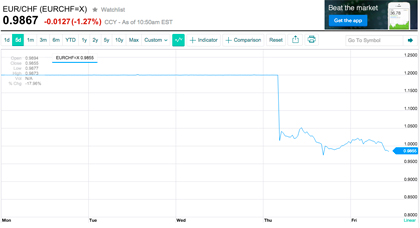
The Swiss franc surged in foreign currency trading yesterday as the central bank decided to stop defending the 1.20 floor with the euro. Last trade in the EURCHF was 0.99, so that’s a 20% surge for the Swissie. The CEO of Swatch was appalled at the currency move will likely send prices higher in foreign markets for the “Swiss made” watches. James B. Stewart, one of my favorite financial journalists, has an article in today’s Times examining the role of currency moves on various luxury products (and was kind enough to include a quote from Dr. Vino).
So, because I know you loooove talking currency moves even more than uncorking a good white wine from Neuchatel, what does the Swiss franc surge mean for wine? Read more…
Jan
16
2015
Why the Euro at nine-year low won’t hit wine shelves soon
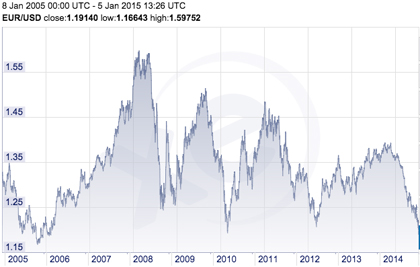
The euro hit 1.18 against the US dollar overnight, a level last seen in 2006. One might think that suddenly Barolos, Burgundies and Champagnes will become cheaper here in the US. Well, a European wine lover can dream…Here are eight reasons why we won’t see discounts on wine shelves in the immediate future.
1. Retailers have stock on their shelves already. They have to clear that inventory. On that note: Read more…
Jan
5
2015

Wine Maps
Monthly Archives
Blogroll
Categories
- American wine
- announcements
- Argentine wine
- auctions
- Australian wine
- Beer
- best wines
- Bling
- books
- Bordeaux
- bottled water
- Box wine
- Burgundy
- business of wine
- Celebrity wine
- Champagne
- Chicago
- China
- cocktails
- cognac
- corks
- corkscrews
- dining
- eco wine
- events
- foie gras
- food and wine
- French wine
- German wine
- giveaway
- grapes
- green wine
- guest post
- highlights
- how to
- Italian wine
- leaders and liters
- Mature wine
- meetups
- New York City
- On notice!
- photo captions
- podcasts
- Polls
- Port
- Portuguese wine
- power list
- reader mail
- rose
- sake
- Sommeliers
- South Africa
- Spanish wine
- spirits
- tasting sized pours
- The real wine world
- TV and movies
- Uncategorized
- videos
- vinexpo
- Weather
- wine and health
- wine and sports
- wine and tech
- Wine Blogging Wednesday
- wine blogs
- wine classes
- wine collecting
- wine gifts
- wine in india
- wine labels
- wine picks
- wine politics
- wine quizzes
- wine random
- wine science
- wine scores
- wine shops
- wine technology
- wine travel
- Wine under $10
- wine writing
- winemaking
- winespeak
 Blog posts via email
@drvino on Instagram
@drvino on Twitter
Advertise

quotes
One of the “fresh voices taking wine journalism in new and important directions.” -World of Fine Wine
“His reporting over the past six months has had seismic consequences, which is a hell of an accomplishment for a blog.” -Forbes.com
"News of such activities, reported last month on a wine blog called Dr. Vino, have captivated wine enthusiasts and triggered a fierce online debate…" The Wall Street Journal
"...well-written, well-researched, calm and, dare we use the word, sober." -Dorothy Gaiter & John Brecher, WSJ

Saveur, best drinks blog, finalist 2012.
One of the "seven best wine blogs." Food & Wine,
One of the three best wine blogs, Fast Company
Books for wine geeks

Wine books on Amazon: