Dr Vino's wine blog
wine talk that goes down easy
Mafia-free wine, White House, Justice Roberts, wine service – sipped and spit
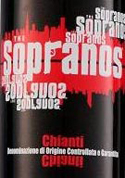 SPIT: Bada-bing!
Sustainable wine? Organic wine? Been there, drank that. Now: Mafia-free wine! The Sicilian label, Libra Terra, will guarantee that pasta, olive oil and wine will have the “taste of freedom.” [Global Post]
SIPPED: American wine
The White House continues pouring only American wines, so far from four states at official events. The first state dinner is coming up next month–stay tuned for what the Obamas pick for Prime Minister Manmohan Singh! [Obamafoodarama]
SPIT: American wine; SIPPED: generosity
While dining in lower Manhattan last weekend, Chief Justice John Roberts and his wife Jane sipped a bottle of Villa Mangiacane, a Chianti. When they finished their meal, they offered the rest of the wine to a neighboring table, specifically, Gay Talese who blogged about it for City Room.
SIPPED: wine service tips
A budding restaurateur offers his first 50 service tips for his staff, including several wine related ones including “For red wine, ask if the guests want to pour their own or prefer the waiter to pour.” [You’re the Boss, NYT]
SPIT: old vines; SIPPED: apartment complex
Philip White, a wine writer in Australia, has a scathing critique of Constellation, one of the world’s largest wine makers and marketers, and their apparent plans to scale back in Australia. Particularly irksome to him was the uprooting of John Reynell’s 161-year-old vines at Reynella; 41 “tiny apartments” will replace the vines. [INDAILY]
Oct
30
2009
16
Maker of Yellow Tail sues Bronco over Down Under
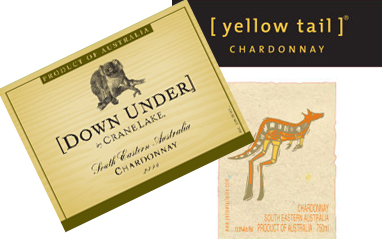
The Wall Street Journal reports today that Casella Wines, the maker of [yellow tail], has sued two companies associated with Fred T. Franzia over their new Australian wine, Down Under. Franzia’s Bronco Wine Co. also makes “Two Buck Chuck.”
The suit, filed in U.S. District Court in Manhattan yesterday, alleges that the label for [Down Under] is substantially similar to and infringes on the trademarked label for [yellow tail].
“Bronco’s use of Casella’s iconic square brackets and its use of Australian-centric wording in connection with the sale of Australian wine are likely to confuse consumers,” the lawsuit said.
[Down Under] sells for about $3, or half the price of [yellow tail]. Both wines come in high-shouldered bottles and have duotone capsules as seen in the image after the jump.
If you were presenting evidence to the judge, what would you say in this case? Read more…
Aug
13
2009
Broadbent sues, California’s anxiety, NY retail, wine cheaper than water
 GULP!
GULP!
Michael Broadbent, founder of the wine department at Christie’s, has sued Random House publisher of The Billionaire’s Vinegar (buy on amazon). The Daily Mail writes: “The Broadbent claims the book suggests he invented a bid for another of the Jefferson wines – a half-bottle of 1784 Margaux – to ensure the successful bidder paid more than was necessary.” Random House will defend the lawsuit. The Billionaire’s Vinegar is also being made into a movie. (Image: The Daily Mail)
SPIT: sales
The NYT summarizes the effect of the recession on the California wine industry: “Brutal.” It continues: “Cash may be trickling, but anxiety is gushing forth.”
SWISHED: retail change in NY
A proposal to reform New York’s retail and allow wine sales in supermarket failed earlier this year. One state Senator has introduced new legislation that would allow not only wine sales in supermarkets but also food sales in wine stores and a “medallion” system instead of licensing. Owners could operate more than one location in New York, also a change. Time will tell whether this initiative fares differently. [LoHud]
SIPPED: ultra low prices
An (unlabeled) Australian wine is selling for $1.99 at a store in Sydney, or “cheaper than water.” Meanwhile, John Brecher and Dorothy Gaiter estimate that the value of juice in Fred Franzia’s new Down Under Chardonnay (retail: about $3) costs “about 35 U.S. cents or less.”
SIPPED: Schmoozing and blogging
Wine Business Monthly reports from the Wine Bloggers’ Conference; Jim Gordon of Wines & Vines has tips for bloggers.
SPIT: stems on Air France
Air France has introduced a new line of stemless wine glasses in Business and First (aka Affaires and La Première). Are the wines served any good? Hit the comments with your on-board experiences.
Jul
29
2009
Apera, topaque, vintage, lickoffable – Aussie fortifieds grasp new names
Earlier this year on this blog, we put our heads together to try to come up with a name for port style wine, made in America. Well, thanks to a new bilateral accord with the EU, Australian winemakers found themselves in a similar situation of needing to find a new name. And here’s what they came up with: nothing. That’s right, they will scrap use of the word “port” and describe their fortified, port-style wines as either “vintage” or “tawny,” depending whether it is from one vintage or a blend of several and whether it is aged in bottle or in barrel.
However, other fortified wines whose names conflicted with European place names have gotten new names. Heretofore, when ordering a glass of sherry style wine made Down Under, the proper term to use is Apera, which is a gentle riff on aperitif. And the wines formerly known as Tokay, a name that clashed with the sweet wine from Hungary, will now be known as Topaque. Eegad, that sounds like something from a medicine chest, not a liquor cabinet.
But if the Australian group for renaming fortified wines had listened to one suggestion they might have come up with something zippier. At a recent tasting, a non-Australian member of our group described these unctuous sweet wines as “lickoffable,” as in you want to drizzle them on your partner’s body and lick it off. Yikes! What a way to boost…sales!
 James Godfrey (pictured right), winemaker for thirty years at Seppeltsfield in the Barossa Valley, told me that he saw the new names as an opportunity. The term sherry has “a lot of baggage,” he said, elaborating that the new name will give them an opportunity to energize their new category of aperas, including dry, medium dry and medium sweet (which replace Fino, Amontillados and Oloroso), with younger consumers.
To find the names, a trade group generated about 200 names that could still be trademarked and then ran them by some producers, journalists, sommeliers and shop owners to come up with a list of 20 finalists. Then they surveyed 600 consumers to come up with the winners, apera, topaque, vintage and tawny. (If you want to see more on their strategy for developing the “New Era” names, check out their incredibly detailed report here as pdf.)
What do you think about the new names? A clean break or sour grapes? And what of “lickoffable”?
And stay tuned for part two of this exciting story to see what I call it when I actually taste a bottle of Topaque!
Jul
7
2009
Photo post: Hewitson 1853 Mourvedre – and Orlando (and a kookaburra)
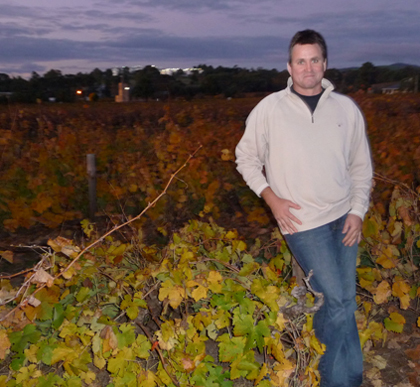
Although I’d like this photo post to speak 1,000 words on its own, I’ll add a few of explanation.
In the foreground, Dean Hewitson stands in the Old Garden vineyard, which was planted in 1853 and grows today without irrigation. As you can see, the bush vines lie in unruly rows since they aren’t trellised. I tried the 2002 Old Garden Mourvedre and it had gamey aromas characteristic of the grape, as well as dark fruits and smooth sweet tannins. (find this wine; I’ll have to stick it in a blind tasting of mourvedres if I do one of those again.)
In the photo, the lights visible on the hill beyond Dean are illuminating the vast Orlando (Jacob’s Creek) wine making facility. Consider it a study in contrast.
We visited the vineyard at dusk and on the way back to the car, I heard a kookaburra laugh echo across the vineyard. For all you birders out there, you can see/hear the kookaburra here.
Jun
16
2009
A historic tasting Down Under – Bin 60A, Grange, Hill of Grace
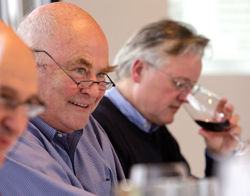 Eyebrows arching, James Halliday spots an opening and intercepts the ball. He dribbles to the other end of the court, pulls up for a jumper right before the three point line, shoots, and scores! Orlando over the Lakers at the buzzer!
Okay, Halliday, the 71 year old former vintner and author of some fifty wine books, wasn’t really in the NBA finals. But a tasting last week in the Barossa Valley did showcase some of Australia’s most amazing wines of all time. By showcasing talent old and new, it was kind of like one of those sports questions about who would be better head-to-head, Kareem Abdul-Jabbar vs LeBron James or Hank Aaron vs A-Rod kind of thing. While the younger wines showed some flash, for me it was the seniors that stole the show. Read more…
Jun
12
2009
249 bottles of wine on the wall
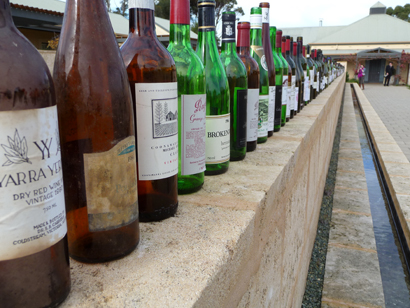
I’m back from the fantastic Landmark Australia Tutorial. Above is a picture of (some of) the wines opened during the tremendous five days. Yes, it’s 249 bottles of wine on the wall!
Over the next few days and weeks, I’ll be posting on and off some of highlights of the conference/event, sharing my new found knowledge. Really, I could post about each and every session since they were all so interesting and informative. But I’m not turning this into an Australian wine blog (though I do wonder why there isn’t one of those focusing on the lesser-known wines; it could even be called “beyond the fruit bomb”). If you’d like to have a similar experience applications are apparently now open for the Tutorial in 2010.
After the jump, check out the above lineup in motion as I walked down the line with the video rolling. Also, check out a complete list of wines, broken down by session. Read more…
Jun
8
2009
Australian Riesling – Can it age? – Grosset, Steingarten and Leo Buring
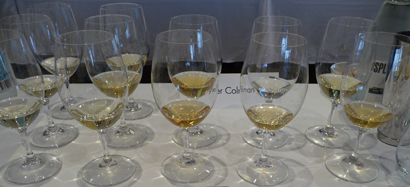
One question that led me to Australia is whether Australian Riesling can age. The wine is almost always released within a year of harvest so the tendency is to drink it young when it can be very refreshing. Riesling from Australia tends to be dry and is almost always bottled under screwcap now.
The youngest Riesling I’ve tasted was a tank sample of the 2009 Jacob’s Creek Steingarten Riesling. The Steingarten vineyard was originally about 1000 vines planted in the 1960s at the top of Trial Hill, a windy spot on the edge of the Eden Valley. At the outset, it was a single vineyard wine of tiny production. But now although most of the vines come from an altitude of 500 meters, it makes no claim to be site specific; the Steingarten name is a brand. The tank sample was brimming with citrus intensity but not yet really formed as a wine. The 2005, by contrast, was in a very nice spot, exhibiting more muted lime and floral character. The 1998 was oddly phenolic and, while quite solid, not as rewarding today as the 2005. Read more…
Jun
4
2009

Wine Maps
Monthly Archives
Blogroll
Categories
- American wine
- announcements
- Argentine wine
- auctions
- Australian wine
- Beer
- best wines
- Bling
- books
- Bordeaux
- bottled water
- Box wine
- Burgundy
- business of wine
- Celebrity wine
- Champagne
- Chicago
- China
- cocktails
- cognac
- corks
- corkscrews
- dining
- eco wine
- events
- foie gras
- food and wine
- French wine
- German wine
- giveaway
- grapes
- green wine
- guest post
- highlights
- how to
- Italian wine
- leaders and liters
- Mature wine
- meetups
- New York City
- On notice!
- photo captions
- podcasts
- Polls
- Port
- Portuguese wine
- power list
- reader mail
- rose
- sake
- Sommeliers
- South Africa
- Spanish wine
- spirits
- tasting sized pours
- The real wine world
- TV and movies
- Uncategorized
- videos
- vinexpo
- Weather
- wine and health
- wine and sports
- wine and tech
- Wine Blogging Wednesday
- wine blogs
- wine classes
- wine collecting
- wine gifts
- wine in india
- wine labels
- wine picks
- wine politics
- wine quizzes
- wine random
- wine science
- wine scores
- wine shops
- wine technology
- wine travel
- Wine under $10
- wine writing
- winemaking
- winespeak
 Blog posts via email
@drvino on Instagram
@drvino on Twitter
Advertise

quotes
One of the “fresh voices taking wine journalism in new and important directions.” -World of Fine Wine
“His reporting over the past six months has had seismic consequences, which is a hell of an accomplishment for a blog.” -Forbes.com
"News of such activities, reported last month on a wine blog called Dr. Vino, have captivated wine enthusiasts and triggered a fierce online debate…" The Wall Street Journal
"...well-written, well-researched, calm and, dare we use the word, sober." -Dorothy Gaiter & John Brecher, WSJ

Saveur, best drinks blog, finalist 2012.
One of the "seven best wine blogs." Food & Wine,
One of the three best wine blogs, Fast Company
Books for wine geeks

Wine books on Amazon: