Dr Vino's wine blog
wine talk that goes down easy
Napa quake registers 6.0
An area south of Napa was the center of a big earthquake overnight. The 6.0 quake, the biggest in the Bay Area in 25 years, shook wine barrels and bottles off of shelves and onto the ground. What the damage is remains to be seen; we hope that it is fixable and that the barrels bounced and weren’t broken.
Here are some pictures from Twitter of the Napa quake (#napaquake is a common tag):
Steve and Jill Matthiasson, whose wines are a popular choice among wine geeks, posted this dreadful picture, saying “Will be barrel pickup sticks #napaearthquake.” He also posted a picture of severe damage to their house. It is is “not a wipeout,” Matthiasson commented. Thankfully!
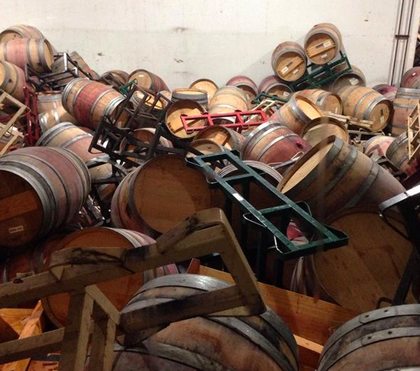
And this from Silver Oak: Read more…
Aug
24
2014
3
LA County tries to crush Malibu wine
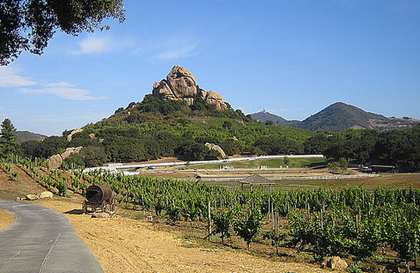
California…celebrities…vineyards…Throw in some hills, glitzy real estate with water views and it sounds like a match made in some screenwriter’s Heaven.
But LA County authorities are taking a dim view of such a scene. The part they find objectionable, oddly, are the vines! Yes, what is now LA was the home to some of the earliest vines in California. And the new Malibu Coast just won federal approval for putting on wine labels. Rather than cultivate this heritage, and nurture the new Malibu wine recognition, County authorities are moving to ban new plantings and uproot some existing ones.
What is this–Europe? Do residents of Malibu need planting rights as in the EU? The logic is not entirely clear as organic farms will be tolerated but organic vineyards would not. And equestrian facilities installed without permits will be allowed? Hmmm. LA Weekly has the full story but the motives of County officials remain unclear. The story concludes that the rule looks to be voted through in a meeting on August 26.
Image credit via creative commons
Aug
19
2014
California law allows undergrads to sip and spit–for credit
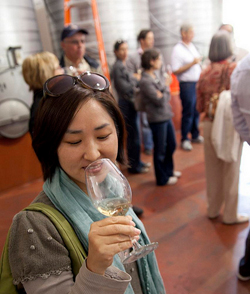 Being an undergrad and drinking may appear to go hand in hand. But now they can legally go together in California. Well, sipping and spitting, that is.
Governor Jerry Brown signed into law a the so-called “sip and spit” bill last week. As of next year, California students enrolled in beer or winemaking classes will legally be able to sample beer and wine in a class. They do have to be at least 18, but that’s a three-year jump on the legal minimum age for drinking. California has many places to study winemaking, including UC Davis is one of America’s leading faculties in viticulture and enology. The Golden State also produces 89% of American wine and is home to many leading craft breweries, including stalwarts like Sierra Nevada as well as Stone, Russian River Brewing, and Lagunitas, among many others.
While the law may seem silly–no swallowing, young’uns!–it is a terrific advance for American wine. Many colleges and universities across America are offering wine appreciation classes as wine consumption has risen for 20 consecutive years. Hopefully, this new law will inspire other states to consider similar legislation and remove a legal obstacle to the next generation of hipster wine and beer makers. If there’s something that really sets (young) American wine consumers apart, it is their curiosity and relatively high level of knowledge. This new law will only help the trend.
Jul
29
2014
Wine economics: How much does that bottle cost?
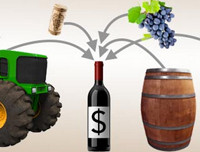 Have you ever wondered about wine economics–what are the costs of a bottle of wine? While the industry, made up mostly of private companies, often keeps margins shrouded in mystery, I spoke with one vintner who broke down the price of barrels, corks, grapes as well as the three tiers for me. And since that vintner was Bo Barrett of Chateau Montelena and Barrett & Barrett, he offers perspective on a range of (higher-end) wines. I also dig up some info on lower-end wines.
Margins are something that always pique the interest of consumers. So check out the piece over on wine-searcher.com and let us know your thoughts.
Jun
19
2014
The quest for vin glou-glou in California
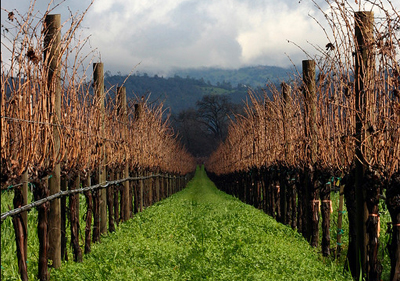
While the story of the stylistic shift in California winemaking (dubbed, inter alia, the “New California”) is arguably the most exciting story in American wine in the last decade, one aspect has been a stumbling block: price. Particularly as it relates to lower-priced, highly drinkable wines, known variously as vin de soif or glou glou wines. It’s something we’ve discussed, oh, here, here, here, and here previously.
So I was glad to see Wine & Spirits taking up the topic in their June issue. Their piece points to the price of grapes as the main obstacle, saying that at $1,000/ton, it’s possible to make a $20/bottle wine but $2,000/ton is “pushing it.” This has pushed the glou glou producers to far-flung parts of California and to pursue less premium varieties that are still refreshing.
Given that a wine that sells for 2 euros at a small domaine could easily sell for $10 here after all the markups, another way to make domestic glou glou production more financially viable would be to sell directly to consumers. Alas, given the three-tier system, that would reduce it to in-state sales. But even if drinking a glou glou wine were only an option locally in California? There’s still a lot to be said for that.
Jun
10
2014
Comments Off on The quest for vin glou-glou in California
A $1.6 million oops in Napa
 A Napa vintner hired a consulting enologist to cook him up a “cult” wine. It didn’t work out, the wine got flushed and the vintner is now suing the wine consultant to the tune of $1.6 million. See the Napa Valley Register for more details.
Who was that who said “I pity the fool who chases points”? Confucius? Mr. T?
May
27
2014
Dry wine: How does the California drought affect the wine industry?
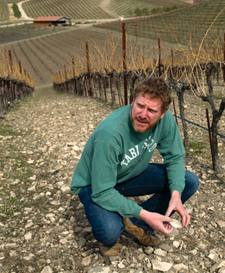 The rain in California falls mostly in the winter. I think that’s how it went in Pygmalion. At any rate, the rain has decidedly NOT been falling this off-season for the vines. While that doesn’t necessarily spell doom for California’s wine industry–some older vines have deep roots–it does mean less water to go around and and a descent into the politics of water scarcity. New vines and a lot of older vines in the Golden State rely on drip irrigation–it will be interesting if “dry farming,” which some claim produces wines that are more expressive of their terroirs then irrigated vines, catches on this season out of necessity. Also affected are increasingly popular “cover crops,” the nitrogen-rich plants that some vineyard managers sow between the vines to plow under and provide natural fertilization for the soil.
Jason Haas (right), of Tablas Creek in Paso Robles, one of the hardest hit areas in the state, told Bloomberg News that competition from overseas will limit how much California producers can pass drought costs on to consumers. Aquifers and wells may cover some of the shortfall, but, again, welcome to water politics, perhaps a dominant theme for this century in much of the country.
California produces 89% of American wine. The San Joaquin Valley alone cranks out 60%. The Central Valley also produces many of the country’s fruit, nuts and vegetables–America’s salad bowl, if you will, rather than its breadbasket. Mather Jones has a terrific infographic on how the California drought could affect you no matter where you live. (Btw, since it takes about 600 to 800 grapes to make a bottle of wine, they therefore claim it takes 180 – 240 gallons of water to make a bottle of wine. Vintners, winemakers: does that strike you as an exaggeration?)
On a somewhat optimistic note, rain is on the way. Randall Grahm, who makes his Bonny Doon wines on and around California’s central coast, tweeted today: “The fact that rain (and lots of it) is forecast for later this week is the best thing I’ve read in forever. #betterthan95ptsfromparker” Read more…
Feb
24
2014
Obscure grapes, wine finder, Walla Walla – sipped & spit

SIPPED: Jancis Robinson argues in favor of the “classics” over wines from obscure grapes just for the sense of obscurity. Twitter fight ensues.
SPIT: Eric Asimov tells how to find obscure wines (hint: wine-searcher).
SPIT: me. After I shrugged at the White House wine selections, commenters from Walla Walla descended on this blog (and Facebook) hurling epithets. Currently 108 comments long.
SPIT: the legislative efforts to mandate warehousing wine in NY for 24 hours prior to end delivery have regained some momentum, unfortunately. The NY Post argues it would add $2 to a bottle of wine. Some distributors and producers have bonded together so create a web site where NY consumers can send their legislators a note of protest. #stopthecorktax
Feb
18
2014

Wine Maps
Monthly Archives
Blogroll
Categories
- American wine
- announcements
- Argentine wine
- auctions
- Australian wine
- Beer
- best wines
- Bling
- books
- Bordeaux
- bottled water
- Box wine
- Burgundy
- business of wine
- Celebrity wine
- Champagne
- Chicago
- China
- cocktails
- cognac
- corks
- corkscrews
- dining
- eco wine
- events
- foie gras
- food and wine
- French wine
- German wine
- giveaway
- grapes
- green wine
- guest post
- highlights
- how to
- Italian wine
- leaders and liters
- Mature wine
- meetups
- New York City
- On notice!
- photo captions
- podcasts
- Polls
- Port
- Portuguese wine
- power list
- reader mail
- rose
- sake
- Sommeliers
- South Africa
- Spanish wine
- spirits
- tasting sized pours
- The real wine world
- TV and movies
- Uncategorized
- videos
- vinexpo
- Weather
- wine and health
- wine and sports
- wine and tech
- Wine Blogging Wednesday
- wine blogs
- wine classes
- wine collecting
- wine gifts
- wine in india
- wine labels
- wine picks
- wine politics
- wine quizzes
- wine random
- wine science
- wine scores
- wine shops
- wine technology
- wine travel
- Wine under $10
- wine writing
- winemaking
- winespeak
 Blog posts via email
@drvino on Instagram
@drvino on Twitter
Advertise

quotes
One of the “fresh voices taking wine journalism in new and important directions.” -World of Fine Wine
“His reporting over the past six months has had seismic consequences, which is a hell of an accomplishment for a blog.” -Forbes.com
"News of such activities, reported last month on a wine blog called Dr. Vino, have captivated wine enthusiasts and triggered a fierce online debate…" The Wall Street Journal
"...well-written, well-researched, calm and, dare we use the word, sober." -Dorothy Gaiter & John Brecher, WSJ

Saveur, best drinks blog, finalist 2012.
One of the "seven best wine blogs." Food & Wine,
One of the three best wine blogs, Fast Company
Books for wine geeks
Wine books on Amazon: